




Another Carrier Lowers Expectations, Three LTLs Hiking Rates
Forward Air Corp. has become the latest trucking operation to lower expectations ahead of releasing its next earnings report.


Forward Air Corp. has become the latest trucking operation to lower expectations ahead of releasing its next earnings report.
It is forecasting third-quarter 2016 year-over-year revenue growth to range from between a 2% decline to a 2% improvement, down from a previously announced range of 1% increase to a 5% gain.
The company also lowered its adjusted income guidance range to 48 cents to 52 per share from its earlier announced range of 61 cents to 65 cents. The change, according to a statement, is due to lower freight volumes.
“Since our second quarter earnings call, the economic environment has remained sluggish. While we are seeing the effects across our portfolio, less-than-truckload volumes have been noticeably soft,” said Bruce A. Campbell, chairman, president, and CEO. “Through Sunday, Sept. 18, our unadjusted year-over-year LTL tonnage per day for the third quarter was down 4.6%. While our yields and margins have held up, we no longer project that we will achieve our previously provided guidance ranges and are adjusting our outlook for the quarter.”
Forward Air operates four principal segments: expedited LTL, truckload expedited services, intermodal and pool distribution services.
The news follows LTL carrier Old Dominion Freight Line Inc. saying early this month that it saw less freight during August.
LTL tons per day decreased 1.4% compared to August 2015, which it attributed to a 1.5% drop in LTL shipments per day and a 0.1% increase in LTL weight per shipment.
“The decline in Old Dominion’s LTL tons per day for August reflects an operating environment that continued to be challenging,” said David Congdon, vice chairman and CEO. “The pricing environment has remained relatively stable, however, and quarter-to-date LTL revenue per hundredweight, excluding fuel surcharges, increased between 2% and 2.5% as compared to the same period of last year. As a result, our quarter-to-date total revenue per day was slightly below the same period of 2015.”
Since then ODLF has announced it will increase non-contract, general rates 4.9% beginning Sept. 26.
“Our general rate increase (GRI) will affect our class tariffs and is intended to partially offset the rising costs of new equipment, real estate, technology investments, and competitive employee wage and benefit packages,” said Todd Polen, Old Dominion’s vice president of pricing. “Although the GRI will impact each customer differently based on specific shipment lanes and distance traveled, it is consistent with our long-term yield management philosophy. The GRI also provides for a nominal increase in minimum charges with respect to intrastate, interstate and cross border lanes.”
The rate increases follow those announced earlier from LTL and parcel delivery giants FedEx and UPS.
FedEx Corp. will hike them on Jan. 2, 2017 with its FedEx Express, FedEx Ground and FedEx Freight, subsidiaries
The LTL carrier FedEx Freight will increase shipping rates by an average of 4.9%. This rate change applies to eligible FedEx Freight shipments within the U.S. (including Alaska, Hawaii, Puerto Rico and the U.S. Virgin Islands), between the contiguous U.S. and Canada, within Canada, between the contiguous U.S. and Mexico, and within Mexico.
FedEx Express will increase shipping rates by an average of 3.9% for U.S. domestic, U.S. export and U.S. import services. FedEx Ground and FedEx Home Delivery will increase shipping rates by an average of 4.9%. FedEx SmartPost rates will also change.
The move by FedEx also follows UPS saying early this month it was increasing rates, including a 4.9% jump in general rates for its UPS Freight division beginning this past Monday, Sept 19.
Plans call for average increases of the same amount starting Dec. 26 for UPS Ground and UPS Air.
More Fleet Management
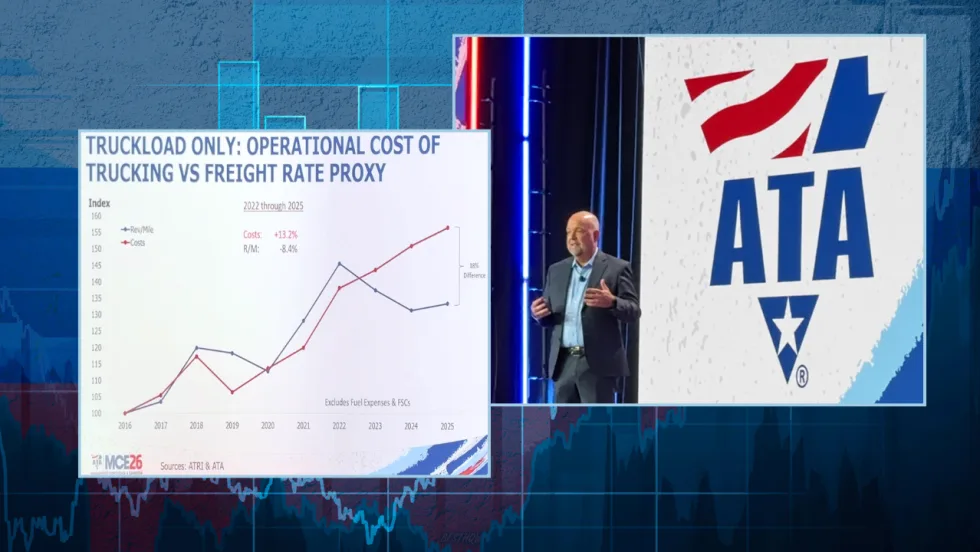
Why This Trucking Recovery Is Different
Freight demand remains sluggish, but rising costs and tougher enforcement have taken enough capacity out of the market to change the outlook for motor carriers.
Read More →
Platform Science Adds Dispatch and Safety Tools
Four additions to PS Fleet help fleets monitor loads, manage driver coaching, share truck locations and adjust video system settings.
Read More →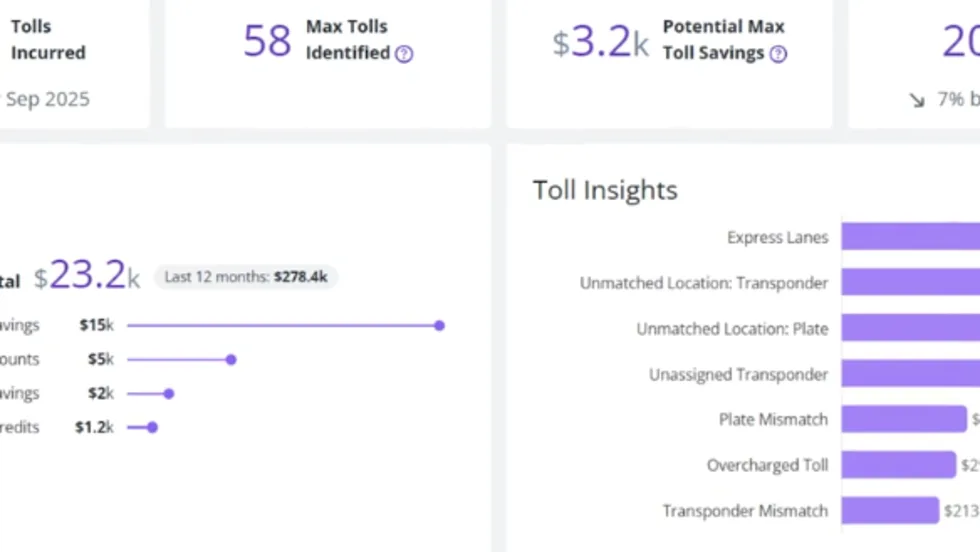
PrePass Intelligence Mines Fleet Bypass, Toll and Safety Data
PrePass Intelligence helps fleets measure bypass savings, flag potential toll overcharges, and spot suspicious transactions by combining data from separate systems.
Read More →
Motive Adds AI Agents for Fleet Operations
New tools automate follow-up on fleet data, from maintenance work orders to driver alerts, with two-way voice conversations planned for later this year.
Read More →
Can You Beat Our Trucking Trivia Challenge?
Test your truck knowledge with 19 trivia questions from Heavy Duty Trucking Exchange. Can you keep up with the fleet pros?
Read More →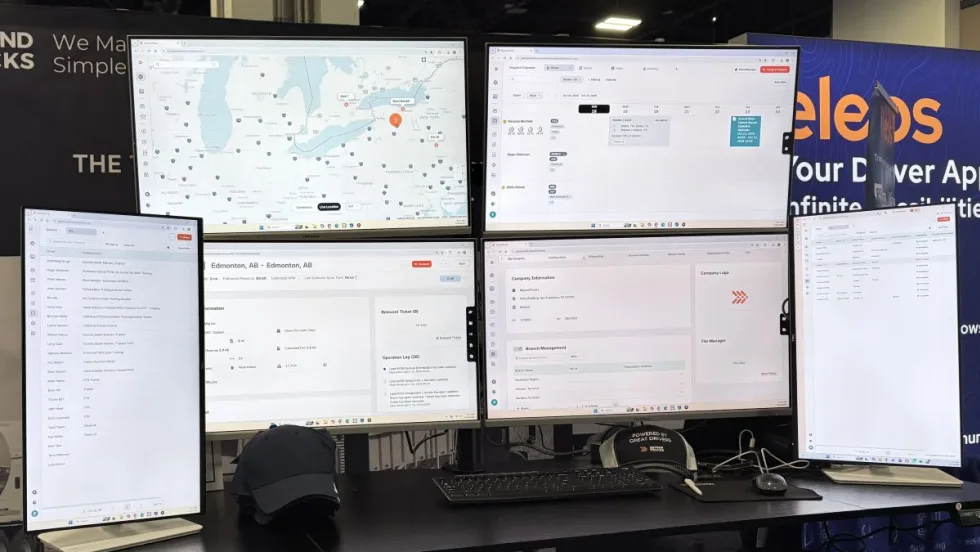
BeyondTrucks Adds Rules Checks to Dispatch
New Compatibility Engine checks driver qualifications, equipment requirements and fleet policies before loads are dispatched.
Read More →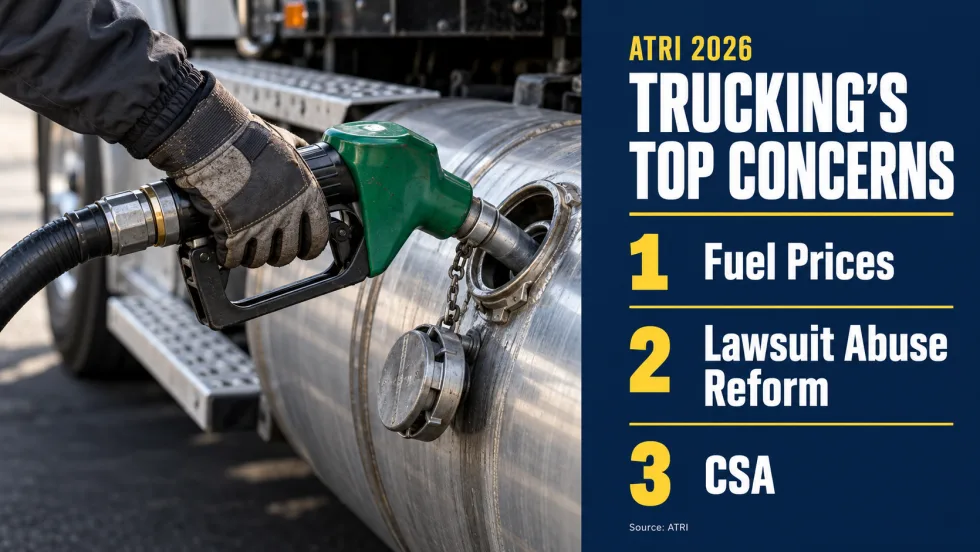
Diesel Prices Hijack Trucking’s Worry List
ATRI’s annual survey finds cautious optimism about freight, but diesel costs, litigation, and insurance continue to squeeze fleets. Drivers have different priorities on several issues.
Read More →
Nomination Deadline Extended for HDT Emerging Leaders
Just a few more days to nominate accomplished trucking fleet professionals under 40 who are making an impact and helping lead the industry forward for the HDT Emerging Leaders award. Deadline extended to October 20!
Read More →
What Will ATA’s New Leader Bring to Trucking's Table?
Incoming President and CEO Mark Colson’s record in Alabama offers clues about his priorities and approach following Chris Spear’s abrupt departure as the head of the American Trucking Associations.
Read More →
Volvo, Waabi Start Commercial Autonomous Operations in Texas
Volvo VNL Autonomous trucks, powered by the Waabi Driver, are hauling freight directly to third-party facilities for a customer in Texas.
Read More →