




Quarterly Intermodal Growth Streak Ends
Overall intermodal traffic recorded its first volume decline in the second quarter of the year following 25 consecutive quarters of growth, according to a new report from the Intermodal Association of North America.

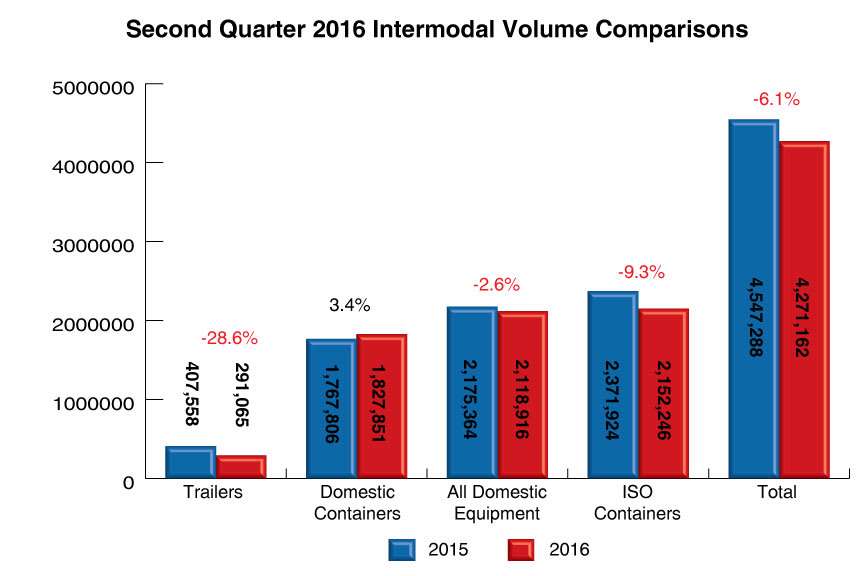
Graphic: IANA

Overall intermodal traffic recorded its first volume decline in the second quarter of the year following 25 consecutive quarters of growth, according to new report from the Intermodal Association of North America.
IANA found that Intermodal trailer volumes dropped 28.6%, continuing a multi-year downward trend, while international shipments fell 9.3%. Domestic container loads gained 3.4%, tempering the overall loss to 6.1%. The total number of intermodal loads fell to 4.28 million from 4.55 million a year earlier.
"The second quarter intermodal volume numbers reflected current market conditions," said Joni Casey, president and CEO of IANA. "Year-end projections are still tracking for growth in both the domestic container and international volumes, however."
The seven highest-density trade corridors, accounting for nearly two-thirds of total intermodal volume, collectively dropped 5.9% year-over-year, with each corridor showing a loss. In the Southeast-Southwest and the Northeast- Midwest lanes, container performance offset the drop in trailer volumes, resulting in the smallest declines of all the corridors. Containers did the opposite in the South Central-Southwest corridor, which finished the quarter in negative territory by 17.6%.
Likewise, every region showed second quarter declines, ranging from 1.6% in Mexico to 14.9% in the South Central. The fall in international shipments between the Southwest and South Central regions was enough to pull down the overall international numbers for the quarter, according to IANA. Regional results also varied by exposure to trailers. Regions that saw the least trailer activity, including Mexico, the Northwest and Western Canada, came the closest to breaking even.
Intermodal service providers again demonstrated clear gains in the highway sector, up 17% from the previous year, thanks to excess trucking capacity. Intermodal loads fell 18.1% The net result was a total volume decrease of 3.2%.
More Fleet Management
July Imports Poised to Set Container Record
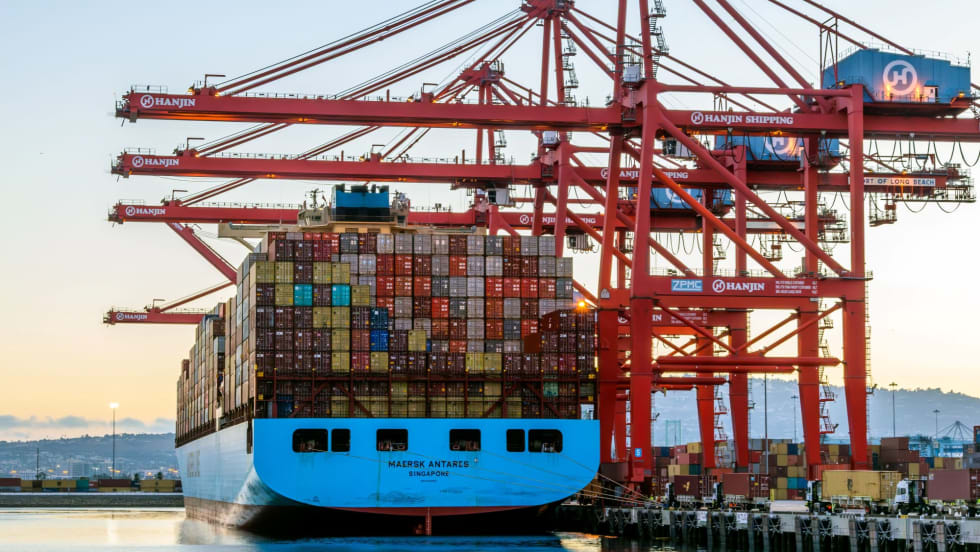
The National Retail Federation projects July container imports will surpass the pandemic-era record as shippers frontload freight ahead of expected August tariff increases.
Read More →
HDT Announces 2026 Truck Fleet Innovator Finalists
From AI and fleet electrification to safety, operations, and leadership, these HDT Truck Fleet Innovator finalists are changing how trucking gets done.
Read More →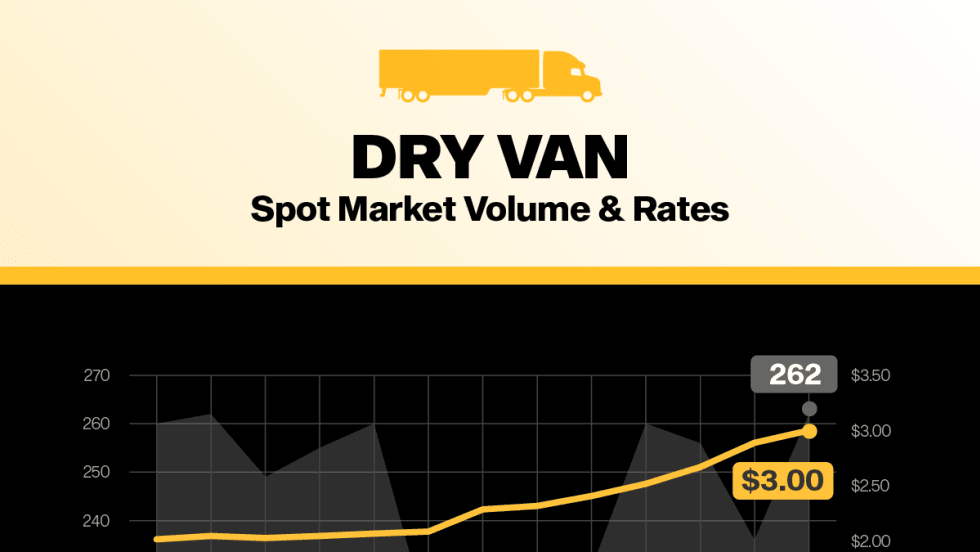
Van Spot Rates Top Contract Rates for First Time Since 2022
There’s more good economic news for the North American trucking industry according to the latest Truckload Volume Index report from DAT.
Read More →

Carrier Transicold Extends Refrigerated Trailer Life
Fleet Refresh enables refrigerated fleets to replace aging transport refrigeration units instead of entire trailers, while adding Lynx Fleet telematics and BluEdge service coverage.
Read More →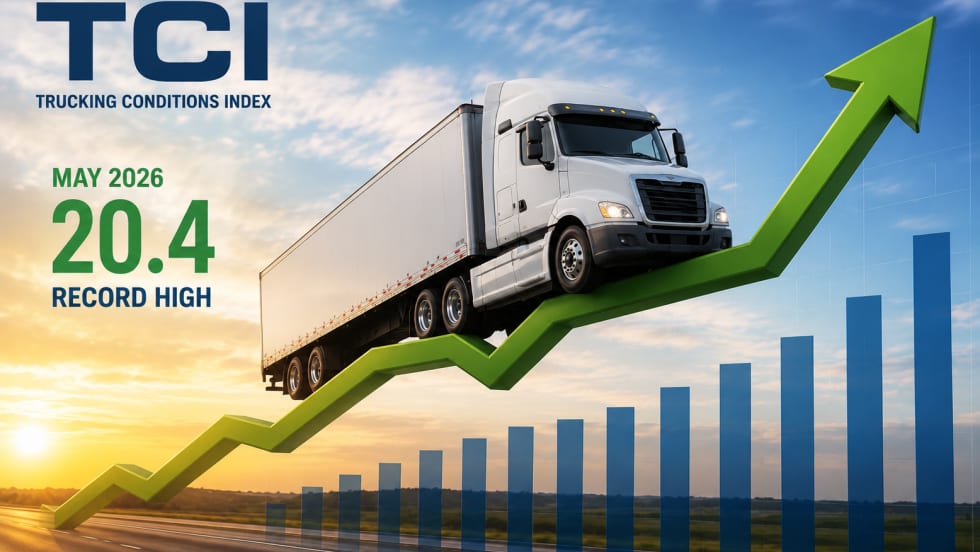
FTR Says Freight Rates Surged in May
FTR's Trucking Conditions Index surged to a record high in May, the analytics firm reports.
Read More →
Meet HDT's Truck Fleet Innovators at Heavy Duty Trucking Exchange
Heavy Duty Trucking Exchange brings fleet managers and suppliers together for the deeper conversations that lead to ideas, partnerships, and solutions. Time is running out to apply for HDTX, September 23-25.
Read More →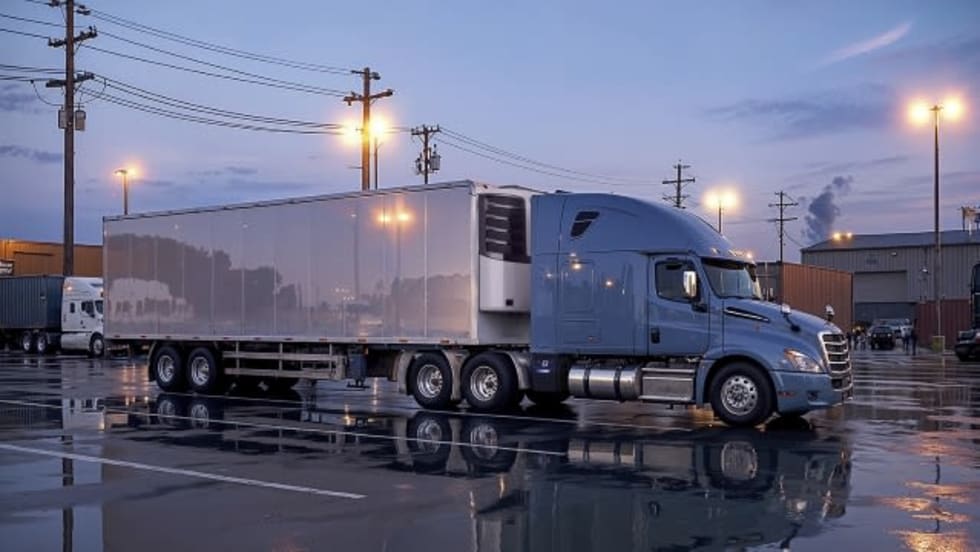
Enhance Fleet Performance with High-Efficiency Auxiliary Power Units
Drive sustainable cost savings while increasing driver comfort during short- and long-haul logistics operations.
Read More →
Is Your Parts Procurement Process Reactive or Proactive?
Ready to revamp your parts procurement process? Learn how now with “Strategic Parts Purchasing: A Process Checklist”
Read More →
What Trucking Events are Happening in 2026?
Looking for trucking-related conventions, expos, and other events? Heavy Duty Trucking has developed this list of national and larger regional trucking shows and events.
Read More →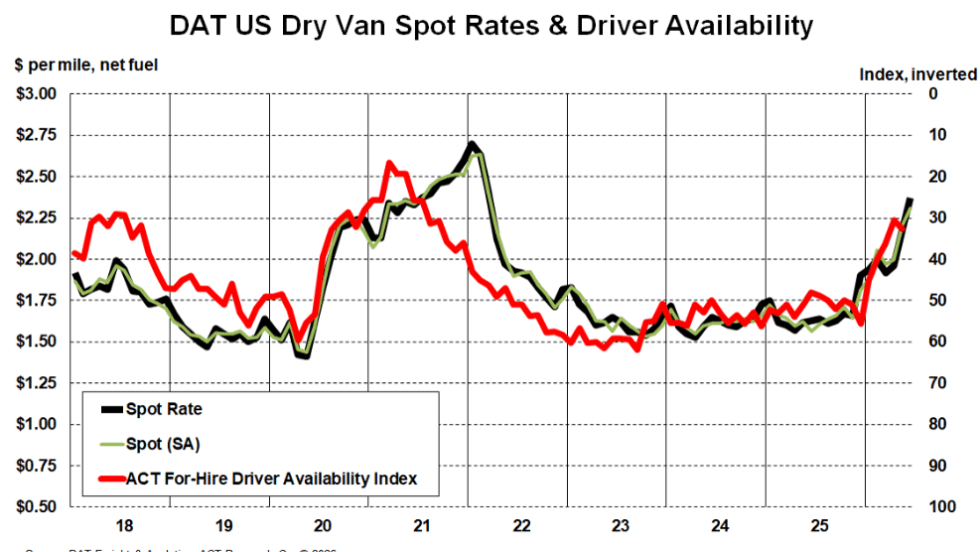
Truckload Rates Keep Rising as Tight Capacity Fuels Freight Market Recovery
Spot and contract rates continued climbing in May and June, not because freight demand is surging, but because fewer trucks and drivers are available.
Read More →