




Cargo Thefts Drop but Average Loss Rises
A new report reveals the number of reported cargo thefts in the U.S. fell during the second quarter of the year compared to the same period in 2015, but the average value of the heists increased, according to CargoNet.

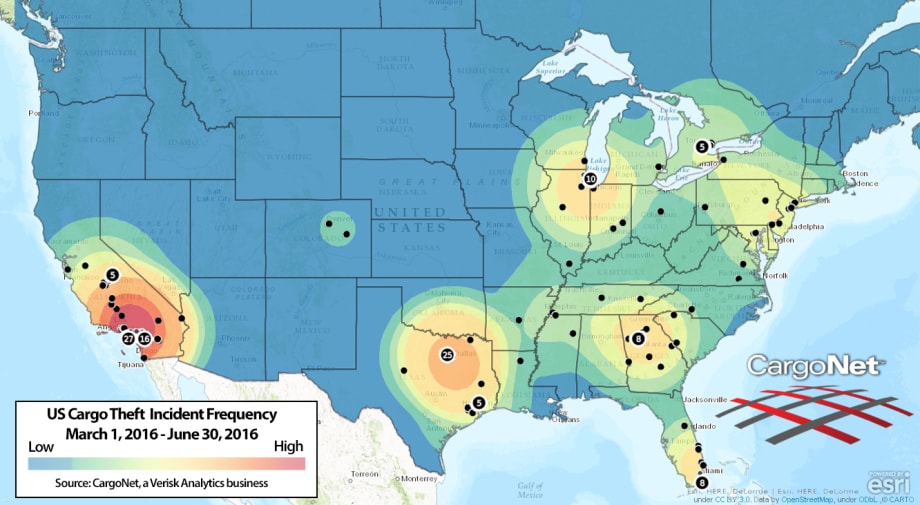
Highlighted areas show incidents of the most cargo thefts in the second quarter. Graphic: CargoNet
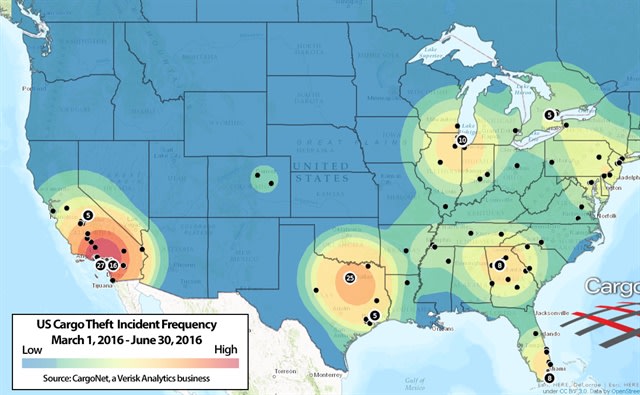
Highlighted areas show incidents of the most cargo thefts in the second quarter.Graphic: CargoNet
A new report reveals the number of reported cargo thefts in the U.S. fell during the second quarter of the year compared to the same period in 2015, but the average value of the heists increased, according to the cargo theft prevention and recovery service CargoNet.
Its command center logged 297 reports of cargo theft, identity theft, vehicle theft and other criminal intelligence matters relating to the United States and Canadian supply chain. Of these incidents, 192 involved thefts of cargo, down 15% compared to a year earlier.
An estimated $39 million in cargo was stolen in second-quarter 2016, up $1.3 million from 2015's second quarter. Sixty-one percent of incidents had a loss value recorded, averaging $330,339, up $63,243 from cargo theft incidents reported in second-quarter 2015.
Also in second-quarter 2016, CargoNet recorded eight cargo theft incidents worth $1 million or more and one was valued at an estimated $8 million.
During the most recent quarter, $14.6 million in electronics items were stolen in cargo thefts, the most costly category-- but not the most frequently stolen commodity. Food and beverage items were stolen most often, though losses in the category decreased 17% year-over-year, totaling $3.81 million.
Warehouse or distribution center locations were the most common location for cargo theft, with 53 thefts. Unsecured yards were the next most common with 29 cargo thefts, growing 45% year-over-year.
Fifty-nine percent of unsecured yard thefts occurred in Texas and California, though the Lone Star State had a larger share. In contrast, cargo thefts were down 26% at truck stops and were 36% lower at parking lots.
Many of the top states showed a decrease or little change in reported cargo theft when comparing the second quarters of 2015 and 2016. However, cargo theft incidents in California climbed 86%, from 37 reported incidents to 68 reported incidents, totaling $17.4 million in losses. Nineteen fictitious pickups were reported also in the state, eight more than in second-quarter 2015.
Across the United States and Canada, 139 trailers and 124 tractors were reported stolen in second-quarter 2016, down from 173 trailers and 143 tractors in second-quarter 2015.
More Fleet Management

Motive Adds AI Agents for Fleet Operations
New tools automate follow-up on fleet data, from maintenance work orders to driver alerts, with two-way voice conversations planned for later this year.
Read More →
Can You Beat Our Trucking Trivia Challenge?
Test your truck knowledge with 19 trivia questions from Heavy Duty Trucking Exchange. Can you keep up with the fleet pros?
Read More →
BeyondTrucks Adds Rules Checks to Dispatch
New Compatibility Engine checks driver qualifications, equipment requirements and fleet policies before loads are dispatched.
Read More →
Diesel Prices Hijack Trucking’s Worry List
ATRI’s annual survey finds cautious optimism about freight, but diesel costs, litigation, and insurance continue to squeeze fleets. Drivers have different priorities on several issues.
Read More →
Nomination Deadline Extended for HDT Emerging Leaders
Just a few more days to nominate accomplished trucking fleet professionals under 40 who are making an impact and helping lead the industry forward for the HDT Emerging Leaders award. Deadline extended to October 20!
Read More →
What Will ATA’s New Leader Bring to Trucking's Table?
Incoming President and CEO Mark Colson’s record in Alabama offers clues about his priorities and approach following Chris Spear’s abrupt departure as the head of the American Trucking Associations.
Read More →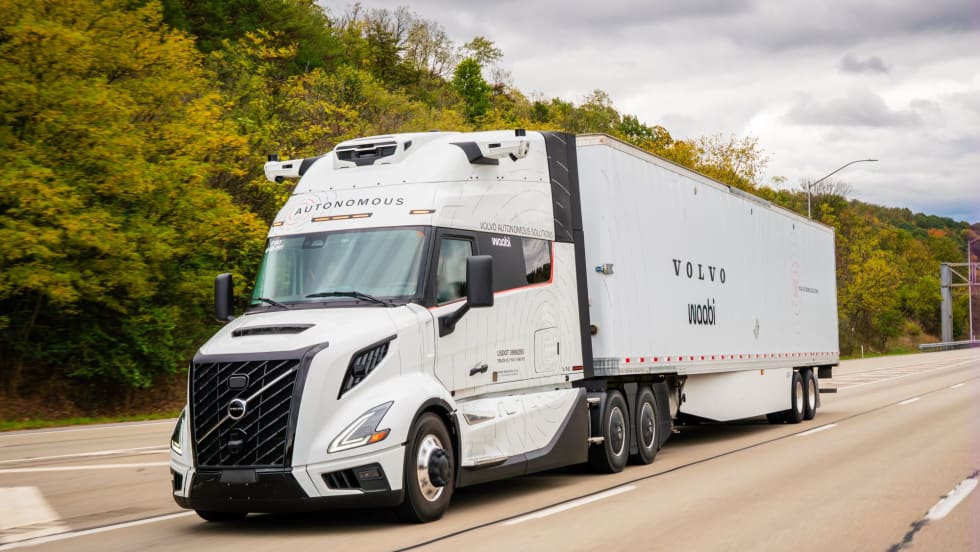
Volvo, Waabi Start Commercial Autonomous Operations in Texas
Volvo VNL Autonomous trucks, powered by the Waabi Driver, are hauling freight directly to third-party facilities for a customer in Texas.
Read More →
Samsara Launches Custom AI Agent Builder
Agent Studio lets fleets create AI tools for hours-of-service monitoring, reporting and driver support, including agents that communicate by phone.
Read More →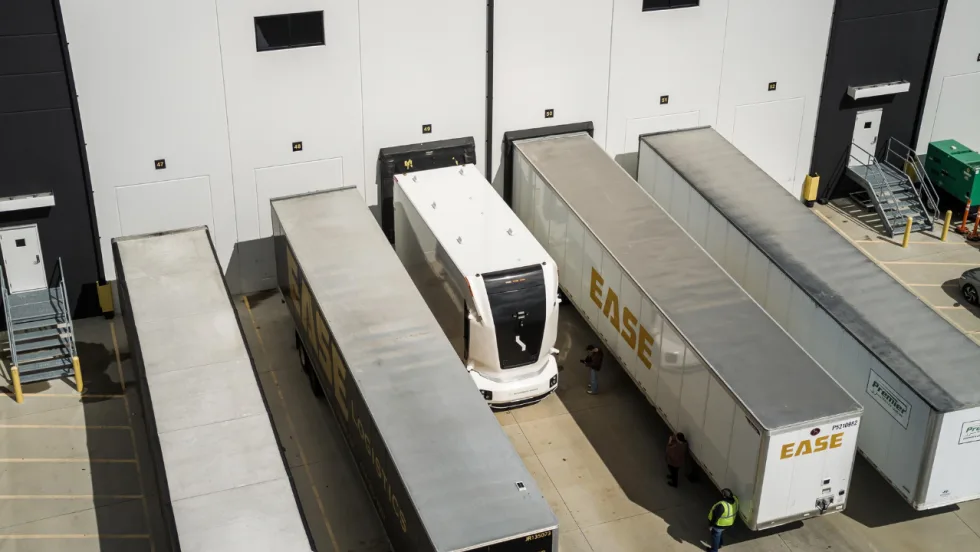
Einride Driverless Electric Trucks Begin Daily Freight Operations in Ohio
Two cabless electric trucks are hauling freight between EASE Logistics facilities in Marysville, Ohio, as part of a multi-state truck automation project.
Read More →
Geotab Links Fleet Card to Vehicle Data
The new card combines fuel discounts with telematics-based purchase controls. Geotab’s analysis also points to potential savings from choosing lower-priced fuel stops.
Read More →