




Teletrac Navman Director Platform Aimed at Mid-Size Fleet Market
Teletrac Navman has launched a new global software platform, Teletrac Navman Director, for the 50- to 500-vehicle market. It tracks trucks and other assets, collects data for analytics, and provides real-time feedback to drivers.

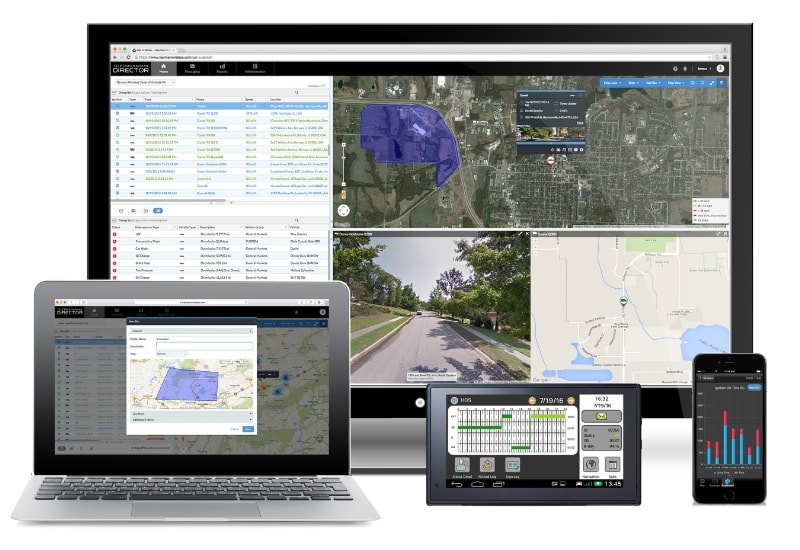
Teletrac Navman has launched a new global software platform, Teletrac Navman Director, which tracks trucks and other assets, collects data for analytics, and provides real-time feedback to drivers to help them improve their safety and fuel efficiency.
The new platform is the end result of harnessing the strengths of combining Teletrac, a U.S.-centric company strong on the fleet enterprise side, and Navman Wireless, a global company known for navigation, according to Renaat Ver Eecke, president of Teletrac Navman. In a call with reporters, he said, the new platform reflects “the strength of bringing Teletrac and Navman Wireless together, building a platform that will serve the transportation market in a very interesting way.”
The award-winning safety analytics from Teletrac, he said, allow behavioral understanding of drivers, while from Navman Wireless we see an emphasis around workflow and analytics.
The new platform is global, he said, while it can handle multiple verticals in different countries, such as trucking and construction.
Director is designed for companies from 50 to 500 vehicles, a market that Teletrac Navman contends is not well serviced by companies currently in the market.
Director offers fuel use tracking, messaging and routing, along with driver behavior analysis tools and concise reporting features. Its safety module, called Safety Analytics, scores driver performance based on company priorities and replays unsafe driving events to aid driver training. Director’s dashboards accumulate information to show trends.
"Director brings data about vehicles' location and activity, workflow and forms, real-time maps, maintenance alerts and safety into a single screen to serve as the nerve center for a fleet's operation," said Paresh Nagda, chief technology officer. "This versatility, further enhanced by advanced capabilities such as vehicle diagnostics, visual dashboards and comprehensive reporting, empowers businesses with unparalleled information about their assets and work in the field.”
Director is a completely web-based application for fleets in a variety of industries, from long-haul transportation to construction in markets from North America to Europe, Australia, and Asia, and is scalable to regions around the globe.
Setting it apart from much of the competition, officials say, is that it requires no up-front investment in hardware or installation, but instead is completely subscription-based, with monthly per-truck fees ranging from around $30 to $100 per vehicle, depending on features chosen.
The in-cab device was developed in cooperation with Garmin, while Android and Apple iOS abilities allow fleet managers to access information on the go.
Teletrac Navman is also developing the electronic logging device (ELD) feature, set to launch in early 2017.
Features and capabilities of the platform include:
• Configurable live alerts with email notifications for unauthorized vehicle use, excessive idle time or speeding;
• Workflow and dashboard features for quick assignments and easy job completion analysis;
• Live traffic maps powered by Google and search capabilities by address, site, latitude and longitude coordinates, or points of interest;
• Professional and enterprise reporting for fleet utilization, delivery schedules, driver-based fuel efficiency and safety factors, and maintenance and time management reports; and
• Administrative tools for API support, exporting vehicle summaries, developing configuration templates and managing user access, along with advanced tools for password security, user permissions, logs and activity reports, and Bulk Import Tools for driver and site management.
More information at www.teletracnavman.com.
Corrected 6 p.m. EDT: The name of the company that merged with Teletrac to create Teletrac Navman is Navman Wireless, not Navman.
More Fleet Management
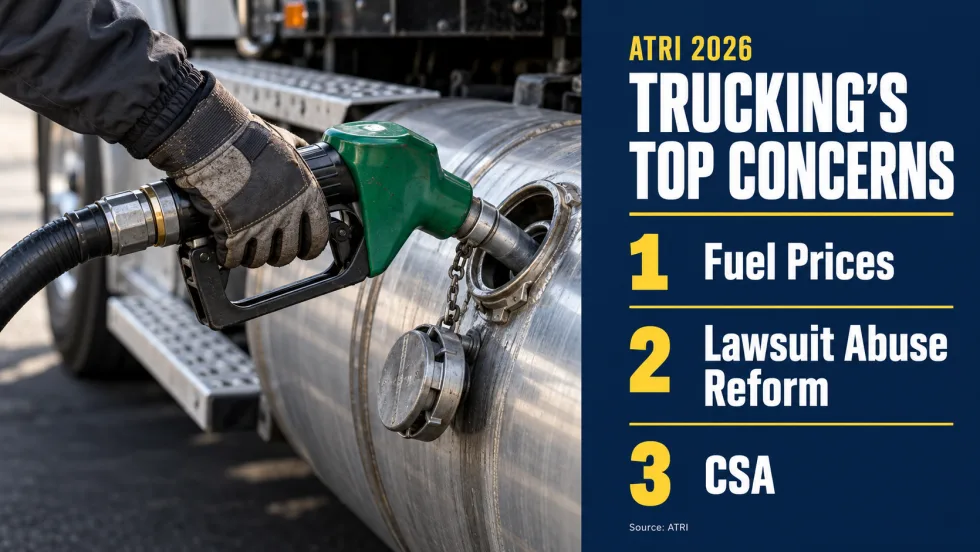
Diesel Prices Hijack Trucking’s Worry List
ATRI’s annual survey finds cautious optimism about freight, but diesel costs, litigation, and insurance continue to squeeze fleets. Drivers have different priorities on several issues.
Read More →
Nomination Deadline Extended for HDT Emerging Leaders
Just a few more days to nominate accomplished trucking fleet professionals under 40 who are making an impact and helping lead the industry forward for the HDT Emerging Leaders award. Deadline extended to October 20!
Read More →
What Will ATA’s New Leader Bring to Trucking's Table?
Incoming President and CEO Mark Colson’s record in Alabama offers clues about his priorities and approach following Chris Spear’s abrupt departure as the head of the American Trucking Associations.
Read More →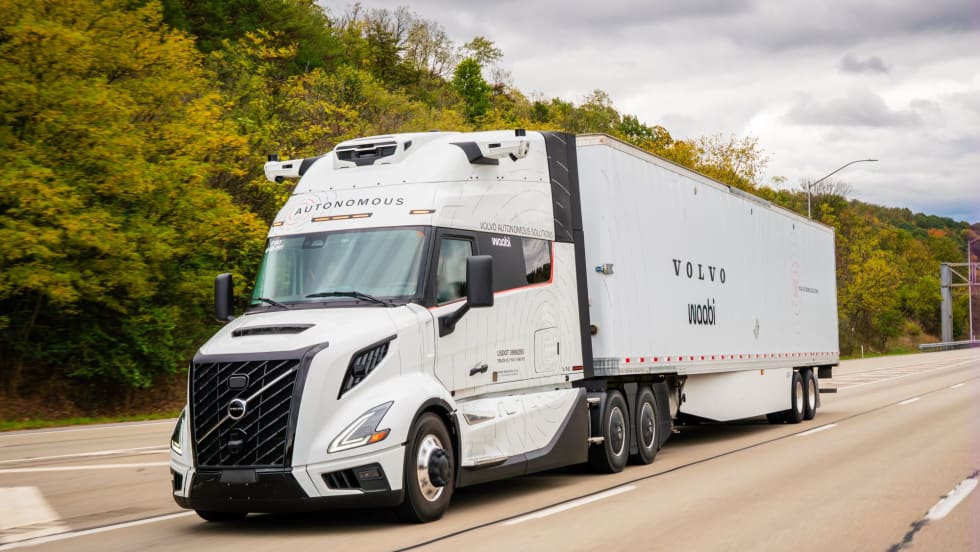
Volvo, Waabi Start Commercial Autonomous Operations in Texas
Volvo VNL Autonomous trucks, powered by the Waabi Driver, are hauling freight directly to third-party facilities for a customer in Texas.
Read More →
Samsara Launches Custom AI Agent Builder
Agent Studio lets fleets create AI tools for hours-of-service monitoring, reporting and driver support, including agents that communicate by phone.
Read More →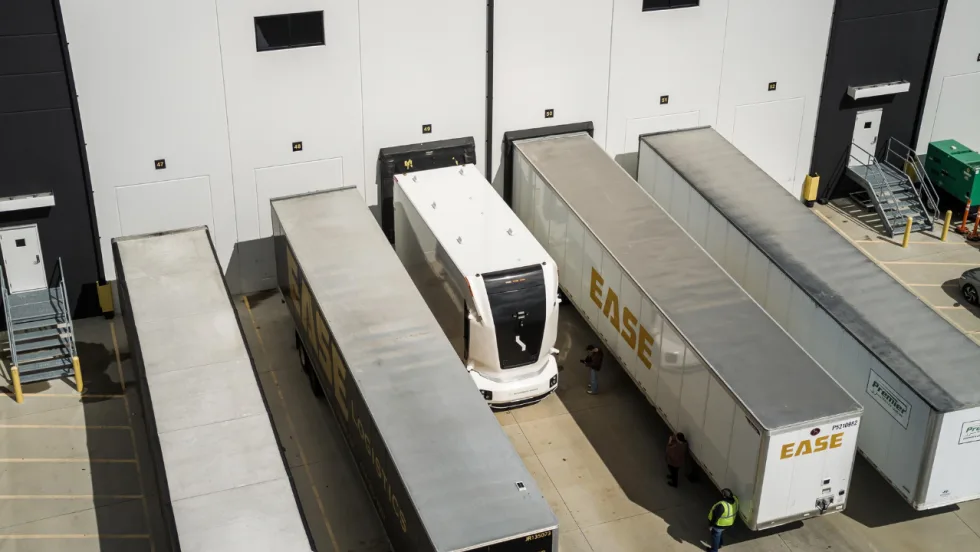
Einride Driverless Electric Trucks Begin Daily Freight Operations in Ohio
Two cabless electric trucks are hauling freight between EASE Logistics facilities in Marysville, Ohio, as part of a multi-state truck automation project.
Read More →
Geotab Links Fleet Card to Vehicle Data
The new card combines fuel discounts with telematics-based purchase controls. Geotab’s analysis also points to potential savings from choosing lower-priced fuel stops.
Read More →
How MFA Helps Protect Trucking Fleets
Multi-factor authentication adds protection when passwords are stolen. Here’s how it works and where fleets should start.
Read More →
How Better Freight Data Helps Trucking Teams Get Ahead of Disruption
Trucking and logistics teams have plenty of data. The problem is getting the right information in front of the right people soon enough to act. Better-connected data can help teams spot trouble earlier and make smarter decisions before small problems become big ones.
Read More →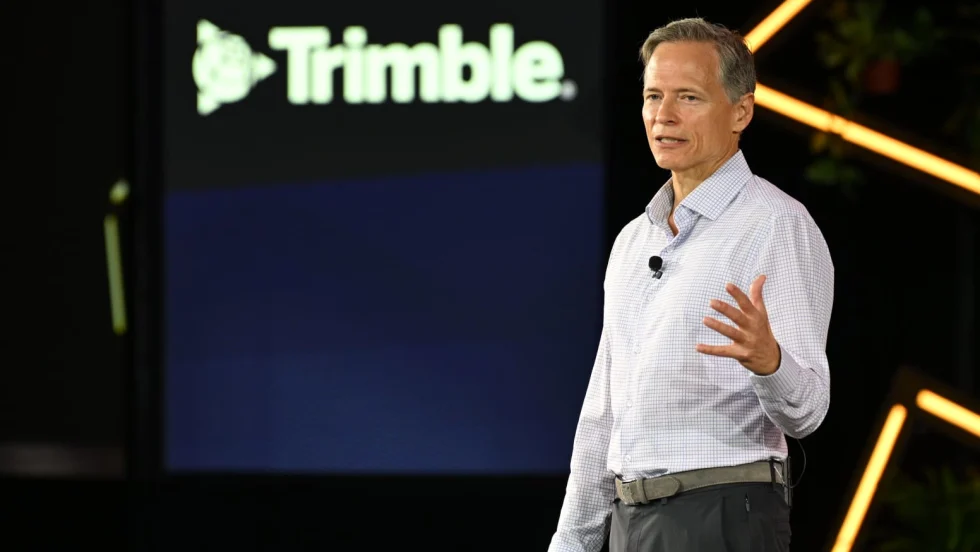
Trimble: Taking Artificial Intelligence in Trucking Beyond Faster Tasks
At Insight 2026, Trimble executives argued that fleets may need to redesign workflows to get more from AI as it introduced new products and enhancements. AI’s value will depend on how fleets combine automation with their people's knowledge.
Read More →