



Related:
FMCSA Study: Costs of Crash Accountability Outweigh Benefits
Commentary - What Does a Skateboarder Have to do with CSA?
 MENU
MENU SEARCH
Findings from a proposed demo program could lead FMCSA to allow the removal of certain non-preventable crashes so they do not count against a carrier’s crash-indicator score.
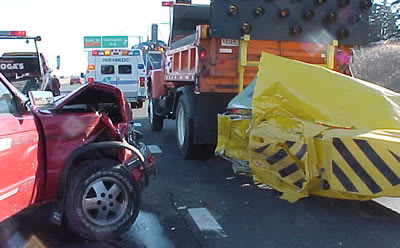
Image: Minnesota DOT
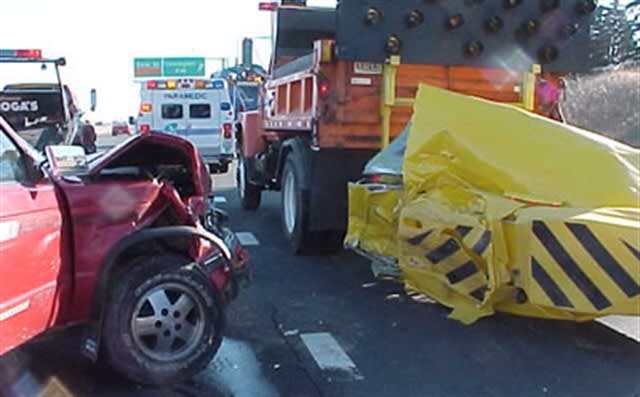
Image: Minnesota DOT
The Federal Motor Carrier Safety Administration is proposing to pilot-test a program to determine the preventability of certain types of “less complex” truck crashes. Findings from the demo program could lead to FMCSA allowing the removal of certain non-preventable crashes so they do not count against a carrier’s crash-indicator score.
During the project, the agency plans to accept Requests for Data Reviews (RDRs) that seek to establish the non-preventability of certain crashes through its DataQs national data-correction system.
FMCSA proposes that, as part of the demonstration program, the agency would accept an RDR when documentation establishes that a crash was not preventable by the motor carrier or commercial driver.
The pilot test may run for about two years, said Joe DeLorenzo, director, FMCSA Office of Enforcement and Compliance, in a July 7 conference call with reporters. He noted that a 60-day comment period on the proposal will commence once it is published in the Federal Register, which he expects will be within the next few business days.
The FMCSA proposal calls for allowing carriers to challenge certain crashes in which it is clearly evident a truck is not at fault, such as when another motorist was driving under the influence; was driving the wrong direction; or struck the truck in the rear or while it was properly parked. Also included would be single-vehicle accidents involving an animal strike, “suicide by truck” or a failure of highway infrastructure.
DeLorenzo said that “interesting feedback" from a study FMCSA conducted on the feasibility of using a motor carrier's role in crashes in the assessment of its safety was the source of the pilot program being proposed.
That study assessed: (1) whether police accident reports provide sufficient, consistent, and reliable information to support crash-weighting determinations; (2) whether a crash-weighting determination process would offer an even stronger predictor of crash risk than overall crash involvement and how crash weighting would be implemented in the Safety Measurement System (SMS); and (3) how FMCSA might manage a process for making crash-weighting determination, including the acceptance of public input.
“We looked at all the issues raised” by commenters on that study, said DeLorenzo, including those who “talked about crashes that are easier to determine as non-preventable and then take off a carrier’s [safety] record.” The agency also wants to consider looking at more documentation than police reports to make a determination whether a crash was preventable or not, as well as whether either determination can be made. He did not rule out that such additional documentation might include video captured in a cab.
“By looking at this over perhaps 24 months or so, we can review the crashes and the impact [of this approach] on the agency, the industry and carriers,” DeLorenzo said.
He added that the demo program would “put some meat on” the agency’s research “before we decided how we might move forward with such a program.”
The American Trucking Associations was quick to endorse the demo proposal.
"Since FMCSA began using crash history to rate motor carriers' safety, ATA has argued that crashes a driver could not have prevented shouldn't be counted on a carrier's safety record," said ATA President and CEO Bill Graves.
He added that the announced project is “a step toward that goal and we appreciate FMCSA adopting ATA's call to provide a way for carriers to strike these tragic, but non-preventable crashes from their record.
"ATA hopes this demonstration project is a step toward a more robust and complete system for carriers to dispute and ultimately strike crashes that were not the fault of the commercial driver," added Graves. "We look forward to monitoring FMCSA's progress as they advance this important program. By improving crash accountability and data, FMCSA can improve the performance and accuracy of the CSA monitoring system – a goal ATA wholeheartedly supports."
Click here to read FMCSA’s notice on the proposal that will be published in the Federal Register.
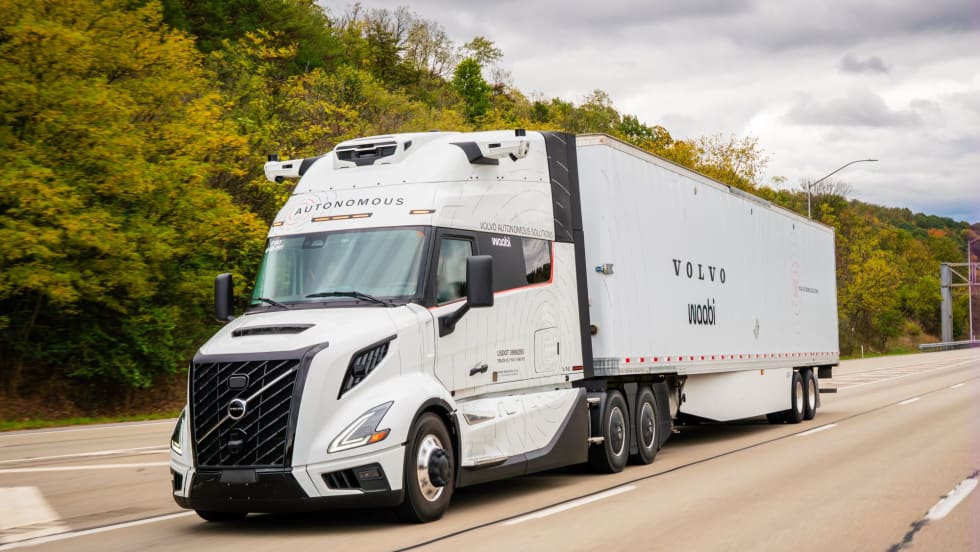
Volvo VNL Autonomous trucks, powered by the Waabi Driver, are hauling freight directly to third-party facilities for a customer in Texas.
Read More →
Agent Studio lets fleets create AI tools for hours-of-service monitoring, reporting and driver support, including agents that communicate by phone.
Read More →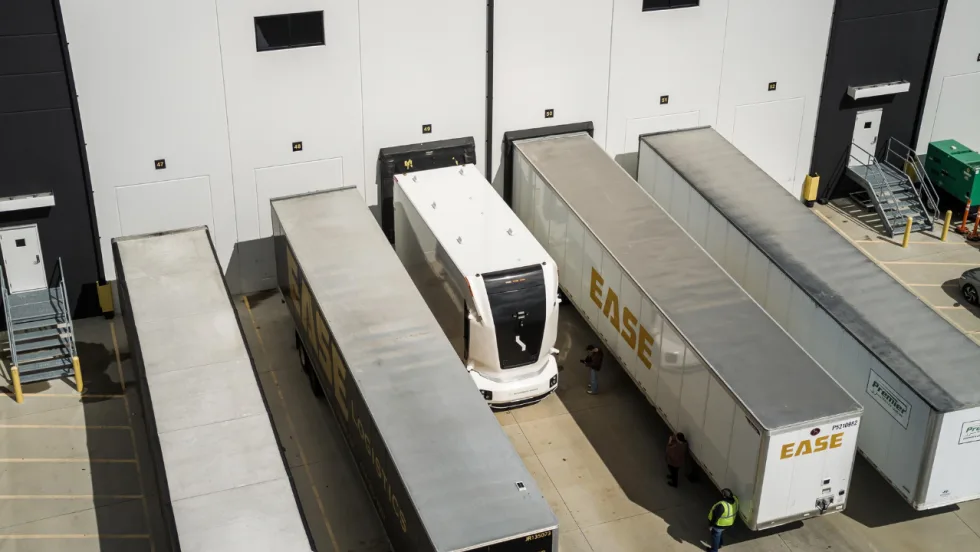
Two cabless electric trucks are hauling freight between EASE Logistics facilities in Marysville, Ohio, as part of a multi-state truck automation project.
Read More →
The new card combines fuel discounts with telematics-based purchase controls. Geotab’s analysis also points to potential savings from choosing lower-priced fuel stops.
Read More →
Multi-factor authentication adds protection when passwords are stolen. Here’s how it works and where fleets should start.
Read More →
Trucking and logistics teams have plenty of data. The problem is getting the right information in front of the right people soon enough to act. Better-connected data can help teams spot trouble earlier and make smarter decisions before small problems become big ones.
Read More →
At Insight 2026, Trimble executives argued that fleets may need to redesign workflows to get more from AI as it introduced new products and enhancements. AI’s value will depend on how fleets combine automation with their people's knowledge.
Read More →
An ELD can prove compliance, but it cannot always prove what happened on the road. Discover how uniting accurate ELD data with AI-powered dash cam video can help your fleet strengthen compliance, defend against liability, protect drivers and reduce operational costs.
Read More →
Heavy Duty Trucking is looking for accomplished trucking fleet professionals under 40 who are making an impact and helping lead the industry forward.
Read More →
Private fleets are putting their own trucks on demanding customers and high-cost lanes as companies seek greater control over service, costs, and capacity.
Read More →