




Earnings Watch: UPS, YRC, Saia, ArcBest, Universal
The week wrapped up with more fleets reporting their second-quarter earnings. Like many that have already advised, profits for three were lower, while the largest trucking company in the nation and another a few years ago that was on the brink of extinction showed improvements.


The week wrapped up with more fleets reporting their second-quarter earnings. Like many that have already advised, profits for three were lower, while the largest trucking company in the nation and another a few years ago that was on the brink of extinction showed improvements.
UPS Profit Totals $1.27 Billion
Package and trucking giant UPS Inc. (NYSE:UPS) reported it increased second-quarter income 3.2% from a year earlier to $1.27 billion while earnings per share moved higher by 5.9% to $1.43 per share. Total revenue was $14.6 billion, up 3.8% over the same quarter last year.
Supply chain and freight revenue increased by more than 13% to $2.5 billion, mainly due to the acquisition of Coyote Logistics in the third quarter of last year, according to the company. Weak market conditions in the air freight forwarding and less-than-truckload markets weighed on top-line growth.
UPS Freight LTL revenue per hundredweight increased 2.9% over the same period last year. “Total tonnage remains challenged by current market conditions,” the company said. “The business unit remains focused on disciplined revenue management and profitable trade lanes.”
UPS’ U.S. domestic package services saw total revenue increase 2.4% over the second quarter of 2015 to $9 billion. Average daily package volume increased 2.5%, with next day air up 5.6% and ground products up 2.4%. Revenue per package was flat compared to the same period last year.
“UPS produced solid second quarter results, despite the continued uncertainty in the macro economy,” said Richard Peretz, UPS chief financial officer. “The technology and productivity investments in our integrated network are delivering strong results. We reaffirm our guidance for 2016 full-year diluted earnings per share of $5.70 to $5.90.”
At a time when many in trucking are reporting not only lower earnings for the second quarter and first half of the year, that hasn’t happened to UPS. Its net income this year is up 6.4% compared to 2015, totaling $2.4 billion, as revenue has increased 3.5% to $29 billion.
YRC Worldwide Earnings Inch Higher
Also on the LTL side is the holding company for carriers YRC Freight and others, which saw a small hike in second-quarter earnings while revenue fell slightly, according to numbers it released late Thursday.
YRC Worldwide Inc. (NASDAQ:YRCW) reported net income totaled $27.1 million, or 83 cents per share, compared to $26 million, or 80 cents per share a year earlier.
Revenue moved lower to $1.21 billion from $1.26 billion but operating income increased to $57.2 million from $56.9 million.
Second-quarter 2016 tonnage per day decreased 6% at YRC Freight and 2.4% at the regional segment compared to the second quarter 2015.
At YRC Freight, excluding fuel surcharge, second-quarter 2016 revenue per shipment increased 1.4% and revenue per hundredweight increased by 2.9% when compared to the same period in 2015. Including fuel surcharge, revenue per shipment decreased 1.6% and revenue per hundredweight was essentially flat with a 0.1% decrease.
At the regional segment, excluding fuel surcharge, second-quarter 2016 revenue per shipment increased 0.5% and revenue per hundredweight increased by 1.3% compared to the first quarter 2015. Including fuel surcharge, revenue per shipment decreased 2.2% and revenue per hundredweight decreased 1.4%.
"While the uncertain industrial economy continues to impact the trucking industry, we remain focused on actions within our control," said James Welch, chief executive officer at YRC Worldwide. "The second quarter 2016 financial results did not meet our expectation, but operationally we continue to strengthen the company for the long-term.”
He noted year-over-year revenue per hundredweight, excluding fuel surcharge, has increased for nine consecutive quarters at YRC Freight and 21 consecutive quarters at the regional segment. Year-over-year tonnage per day was down during the quarter, but in June the decline was much smaller than April and May.
“Pricing discipline in the LTL sector remains steady despite the ongoing challenges from the industrial economy and lower fuel surcharge revenue. We do not intend to change our long-term strategy in reaction to near-term headwinds,” Welch said.
Compared to the first six months of last year, net income increased from $4.4 million to $15.1 million in the most recent quarter.
The news is in sharp contrast to where YRC Worldwide was just a few years ago, when it came close to filing for bankruptcy more than once. Since that time, it is has gone through massive restructuring and renegotiated labor agreements.
Saia Net Income Falls by Nearly a Third
Meantime, LTL rival Saia, Inc. (NASDAQ: SAIA) reported its net income for the second quarter slid to $13.3 million compared to $19.2 million a year earlier as earnings per share followed, falling to 52 cents from 75 cents.
Revenue for the period totaled $312 million, a decline of 3.6% from the second quarter of 2015.
The results came as LTL shipments per workday fell by 2.6% and LTL tonnage per workday declined 4.3%. LTL yield increased 2%, in spite of lower fuel surcharges.
"Despite the challenging freight environment, we continued to deliver a high level of service and quality to our customers. We achieved 98% on-time service in the quarter and a cargo claims ratio of 0.77%,” said Saia president and CEO Rick O'Dell .The perceived value in those measures, by our customers, enabled us to improve our yield in the quarter. Core operations continued to reach productivity and cost savings goals, but were negatively impacted by accident expense volatility and health care self-insurance during the quarter.”
In the first half of this year Saia had net income of 23.9 million compared to $31.9 million a year earlier as revenue declined to $601 million from $616.6 million.
ArcBest Profit Declines Almost 50 Percent
Also on the LTL side of trucking, the parent to ABF Freight saw its profit cut by nearly half in the second quarter of the year.
ArcBest Corp. (Nasdaq: ARCB) reported second-quarter 2016 net income of $10.2 million, or 39 per share, compared to second quarter 2015 net income of $20 million, or 74 cents per share.
Revenue for the most recent quarter totaled $676.6 million, down from $696.1 from the second quarter of 2015.
For the first six months of the year, ArcBest’s profit has fallen even more, coming in at $4.1 million, following a first quarter loss and compared to a first half of 2015 net income of $20.7 million as revenues are down only slightly at $1.3 billion.
“The inconsistent economic operating environment combined with a surplus of transportation capacity continues to impact available business levels and operating margins at ABF Freight and at each of ArcBest's asset-light logistics companies,” the company said in a statement.
ABF Freight had revenue of $486.7 million compared to $504.4 million in second quarter 2015, a per-day decrease of 4.3%. Year-over-year reductions in fuel surcharge associated with lower diesel fuel prices contributed to ABF Freight's lower revenue compared to last year, according to ArcBest.
ABF tonnage per day decreased 4% compared to second quarter 2015 while shipments per day Fell 0.4%. Total billed revenue per hundredweight increased slightly, by 0.1%, compared to the prior year reflecting reduced fuel surcharges.
ABF’s operating income of $17.4 million and an operating ratio of 96.4% compares to $28.1 million and an operating ratio of 94.4% in second quarter 2015.
According to ArcBest, the factors affecting ABF Freight's business levels and operating results are consistent with those seen earlier in the year.
“ABF Freight's decreasing average weight per shipment has been driven by market factors that include abundant customer inventory levels combined with excess industry capacity available to move customers' larger-sized shipments,” the company said. “Along with the effects of lower fuel surcharges, these factors have contributed to reduced second quarter revenue compared to last year. Though the current LTL pricing environment is competitive, it remains rational.”
ArcBest’s asset-light operations reported revenue of $205.2 million compared to $204.9 million in second quarter 2015, making up 30% of the company’s total revenue.
Universal Logistics Earnings Fall to $9 Million
The company formerly known as Universal Truckload Services, now Universal Logistics Holdings Inc. (NASDAQ: ULH), on Thursday reported its second-quarter net income declined to $9 million, or 32 cents per share, compared to $13.3 million, or 44 cents per share for the 2015 second quarter.
Revenue slipped to $276.8 million from $295 million as revenue from transportation services decreased $17.4 million, including a decline of $5.9 million in fuel surcharges, to $162.7 million for the quarter ended July 2 for the Michigan-based asset light company that provides an array of trucking services. This compares to $180.1 million for the same period last year.
According to the company, the reduction in transportation services also reflects a 9.9% year-over-year decrease in operating revenue per load, excluding fuel surcharges. The declines in transportation services were, however, partly offset by a 1.5% increase in the number of loads hauled. During the quarter Universal hauled 158,283 transportation services loads compared to 155,874 during the same period last year.
"We've seen some positive momentum this quarter," said Jeff Rogers, Universal's CEO. "In this challenging freight market, both our transportation and intermodal services performed well in terms of load volumes. Our value-added businesses, excluding where we support the heavy-truck market, are also delivering solid results. However, the impact on pricing from the weak freight environment continues to negatively impact overall operating revenues and income.”
Value-added services revenue, which includes warehousing, cross-docks and other offerings, was positively affected by new business awarded in the second half of 2015, according to the company. Overall, value-added services increased $3.1 million to $78.2 million in the second quarter of 2016, compared to $75.1 million in the same period last year. The increase was partially offset by a decline in value-added services supporting the heavy-truck market, where operating revenues decreased by $7.4 million.
Revenues from intermodal services declined by $3.9 million to $35.9 million in the second quarter of 2016 from $39.8 million during the same period last year. The decline in intermodal services revenue reflects a $3 million decrease in revenues recognized on intermodal drayage services, of which $2.2 million was attributable to a decrease in fuel surcharges. The average operating revenue per load, excluding fuel surcharges, decreased by 3% during the second quarter of 2016, while the number of intermodal loads hauled increased modestly by 0.5% compared to the same period last year.
In the first six months of 2016 Universal’s profit moved lower to $16.5 million from $21.5 million during the same time in 2015 while revenue has declined to $537.2 million from $558.6.
More Fleet Management
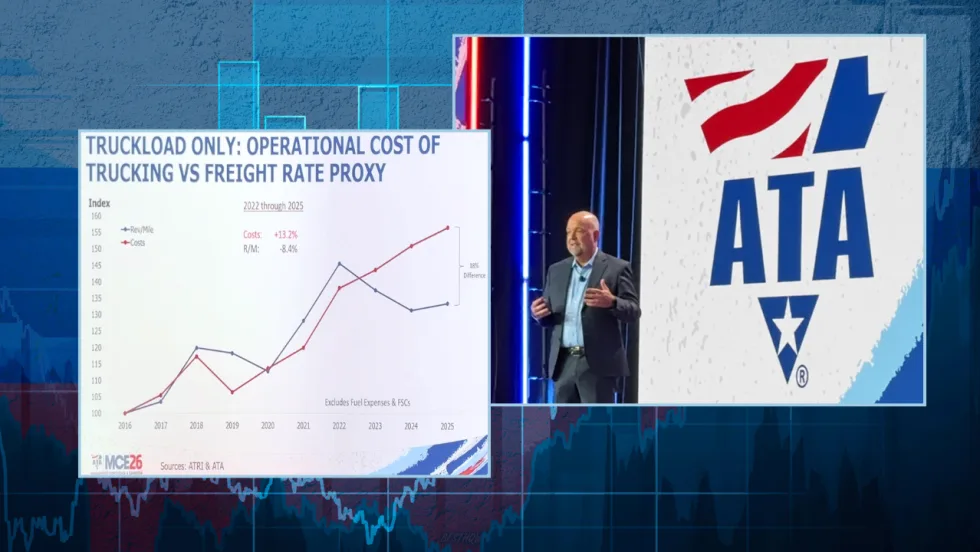
Why This Trucking Recovery Is Different
Freight demand remains sluggish, but rising costs and tougher enforcement have taken enough capacity out of the market to change the outlook for motor carriers.
Read More →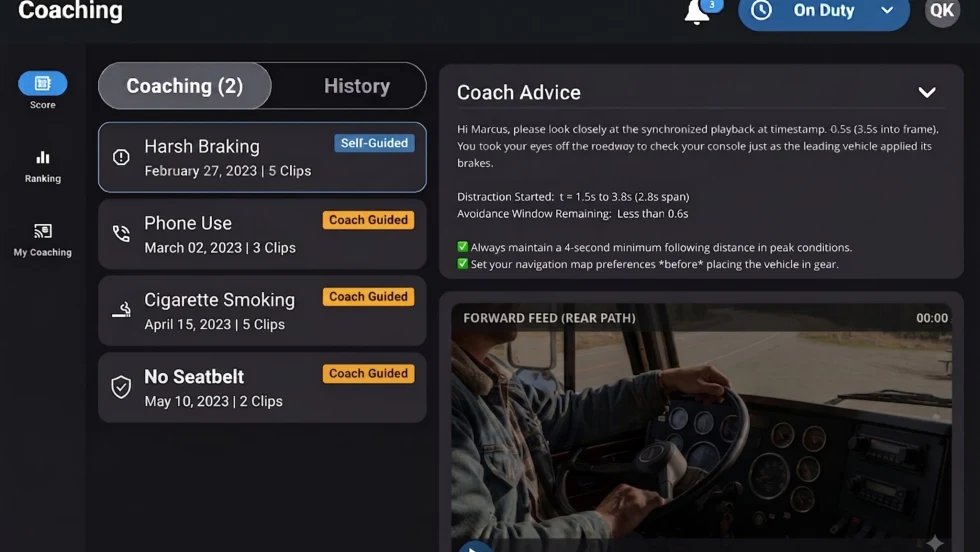
Platform Science Adds Dispatch and Safety Tools
Four additions to PS Fleet help fleets monitor loads, manage driver coaching, share truck locations and adjust video system settings.
Read More →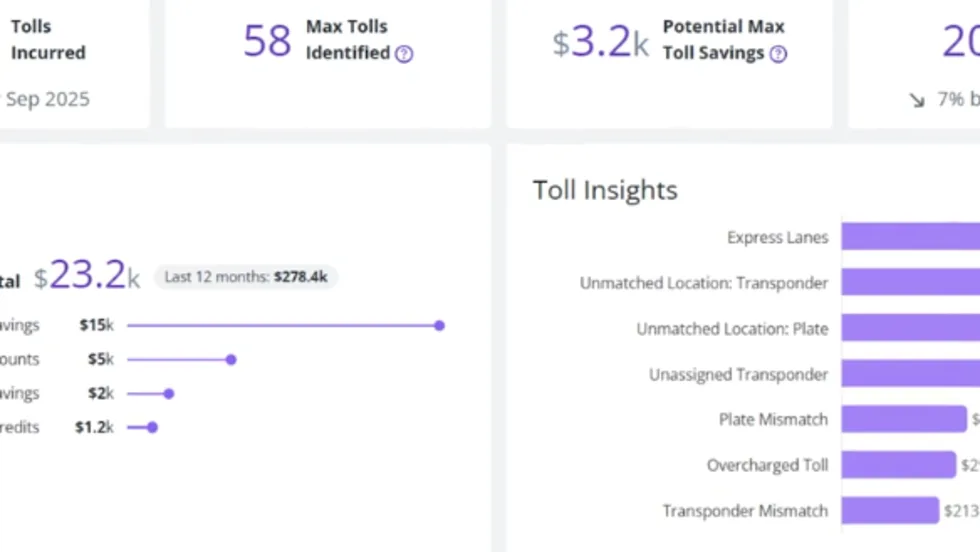
PrePass Intelligence Mines Fleet Bypass, Toll and Safety Data
PrePass Intelligence helps fleets measure bypass savings, flag potential toll overcharges, and spot suspicious transactions by combining data from separate systems.
Read More →
Motive Adds AI Agents for Fleet Operations
New tools automate follow-up on fleet data, from maintenance work orders to driver alerts, with two-way voice conversations planned for later this year.
Read More →
Can You Beat Our Trucking Trivia Challenge?
Test your truck knowledge with 19 trivia questions from Heavy Duty Trucking Exchange. Can you keep up with the fleet pros?
Read More →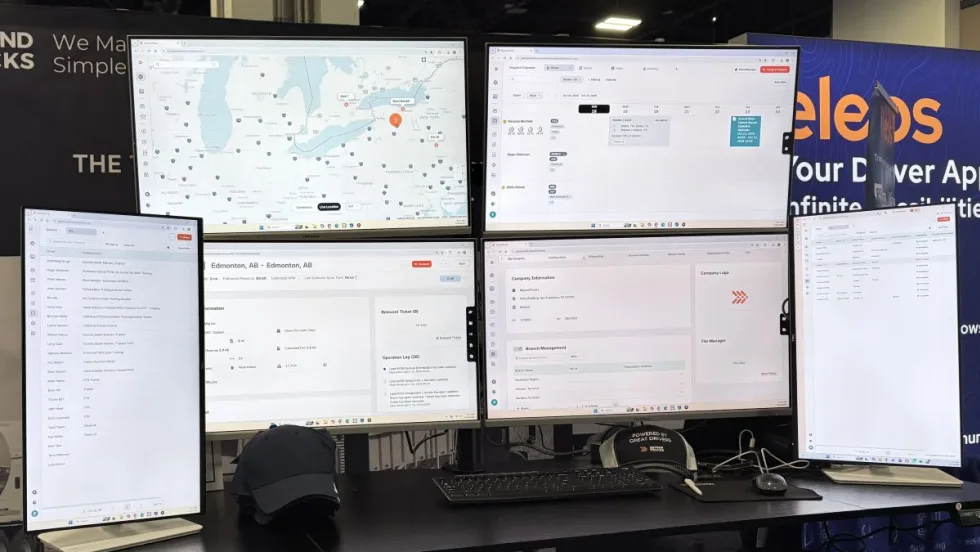
BeyondTrucks Adds Rules Checks to Dispatch
New Compatibility Engine checks driver qualifications, equipment requirements and fleet policies before loads are dispatched.
Read More →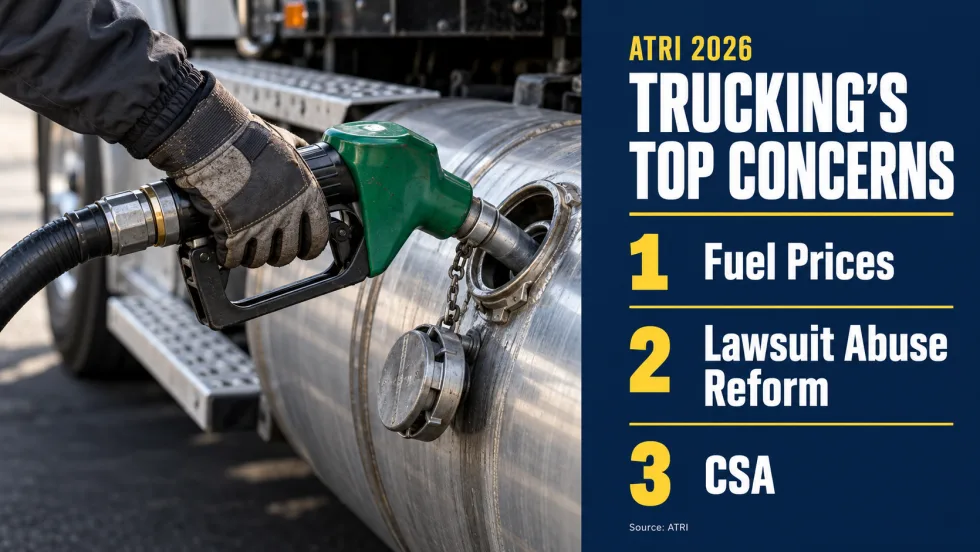
Diesel Prices Hijack Trucking’s Worry List
ATRI’s annual survey finds cautious optimism about freight, but diesel costs, litigation, and insurance continue to squeeze fleets. Drivers have different priorities on several issues.
Read More →
Nomination Deadline Extended for HDT Emerging Leaders
Just a few more days to nominate accomplished trucking fleet professionals under 40 who are making an impact and helping lead the industry forward for the HDT Emerging Leaders award. Deadline extended to October 20!
Read More →
What Will ATA’s New Leader Bring to Trucking's Table?
Incoming President and CEO Mark Colson’s record in Alabama offers clues about his priorities and approach following Chris Spear’s abrupt departure as the head of the American Trucking Associations.
Read More →
Volvo, Waabi Start Commercial Autonomous Operations in Texas
Volvo VNL Autonomous trucks, powered by the Waabi Driver, are hauling freight directly to third-party facilities for a customer in Texas.
Read More →