




Truckload Linehaul, Intermodal Rates Still Dropping
Separate gauges of truckload line haul rates and intermodal rates both fell in May, according to newly released figures, following a Monday report showing freight levels are well below those of the last several years.

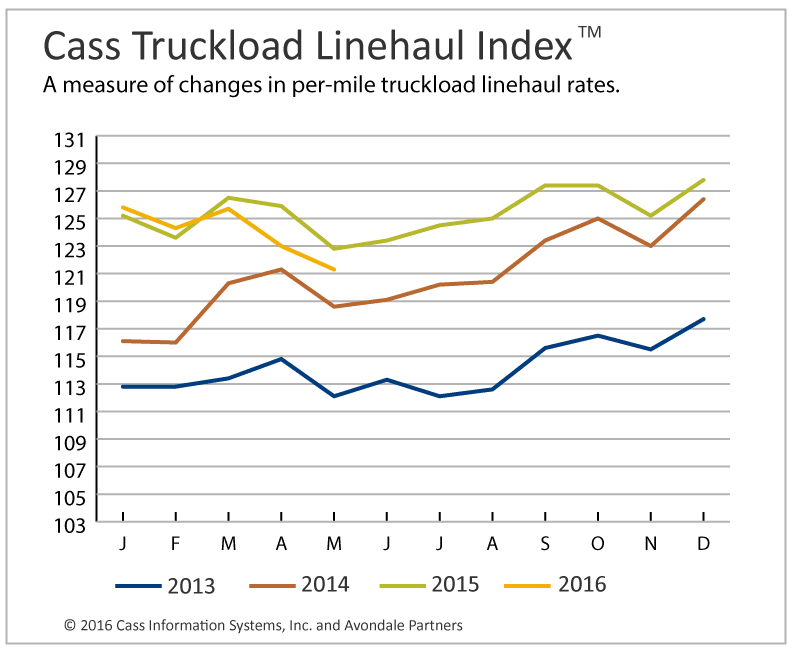
Separate gauges of truckload line haul rates and intermodal rates both fell in May, according to newly released figures, following a Monday report showing freight levels are well below those of the last several years.

The Cass Truckload Linehaul Index fell another 1.2% year over year in May after declines of 0.6% and 2.3% in March and April respectively. The latest reading of 121.3 is the lowest since August 2014. May fell 1.3% from the month before and the April reading dropped 2.2% from March.
“With three consecutive months of price declines, the domestic truckload market continues to face softer demand and excess capacity,” said the investment firm Avondale Partners, which provides analysis of the report.
It cited driver pay increases, overall fleet growth, reduction in carrier bankruptcies, and an easing of the 34-hour restart rule as some of the contributing factors.
The index is an indicator of market fluctuations in per-mile truckload pricing that isolates the linehaul component of full truckload costs from other components, such as fuel and accessorials, providing a look at trends in baseline truckload prices.
Meantime, the Cass Intermodal Price Index fell another 2% year-over-year in May, representing 17 consecutive months of year-over-year declines. The latest reading of 126.5 follows an April to May drop of 2.4% and is at its lowest level since February.
Avondale Partners reiterated in its monthly report that intermodal rates are expected to continue declining for the remainder of 2016 “as the dramatic drop in diesel prices … takes its toll on U.S. domestic demand.”
Although they predict that domestic containers may grow in the mid to low single digits through 2016, Avondale added “that is dependent upon demand in longer lengths of haul growing fast enough to offset the loss of volume in shorter lengths of haul, particularly in the East.”
The Cass Intermodal Price Index is an indicator of market fluctuations in per-mile U.S. domestic intermodal costs that includes all costs associated with the move, such as linehaul, fuel and accessorials.

Data within both measures is derived from actual freight invoices paid on behalf of clients of payment processor Cass Information Systems, which totaled $25 billion in 2015.
The reports come on the heels of the release of the Cass Freight Index for May showing that despite freight shipments that were the best since November, spending on freight shipments fell to its lowest level since January.
More Fleet Management

For Nicky Cupp, Fleet Innovation Starts With Frustration
HDT Truck Fleet Innovator Nicky Cupp turns everyday pain points at Fraley & Schilling into opportunities for better technology and smarter processes.
Read More →
Adam Buttgenbach’s Approach to Electric Trucks: Start With Where They Fit
HDT Truck Fleet Innovator Adam Buttgenbach helped PepsiCo build one of North America’s largest EV fleets by focusing on where electric trucks make operational sense.
Read More →
Deen Albert: Let Automation Do the Math, People Make the Decisions
HDT Truck Fleet Innovator Deen Albert makes sure people are still at the heart of operations at Grand Island Express, even while adopting artificial intelligence tools. AI-assisted dispatch helped boost revenue 25% with the same number of trucks.
Read More →
Trimble’s New AI Agent Takes Aim at Fleet Back-Office Busywork
Arc Agent works across Trimble TMS products to automate repetitive tasks such as freight orders, maintenance, invoices, fuel costs and more.
Read More →
How HDT’s 2026 Truck Fleet Innovators Are Rethinking Fleet Operations
Meet five trucking leaders who are challenging assumptions, solving operational problems, and putting innovative ideas to work.
Read More →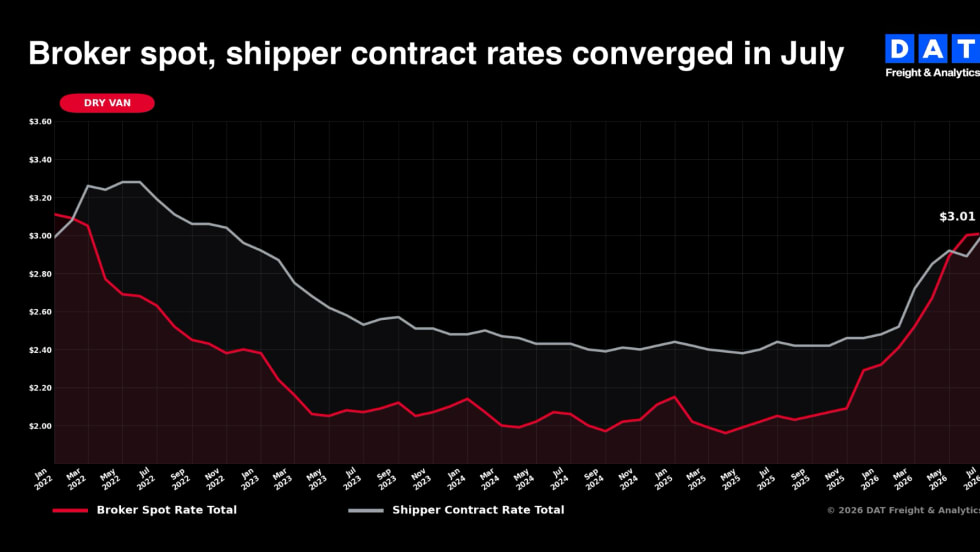
Tight Trucking Capacity Pushes Rates Higher Even as Freight Volumes Fall
“Spot rates moving ahead of contract rates have historically signaled a tightening market, but we haven’t seen a capacity-driven market quite like this one,” said DAT's Dean Croke.
Read More →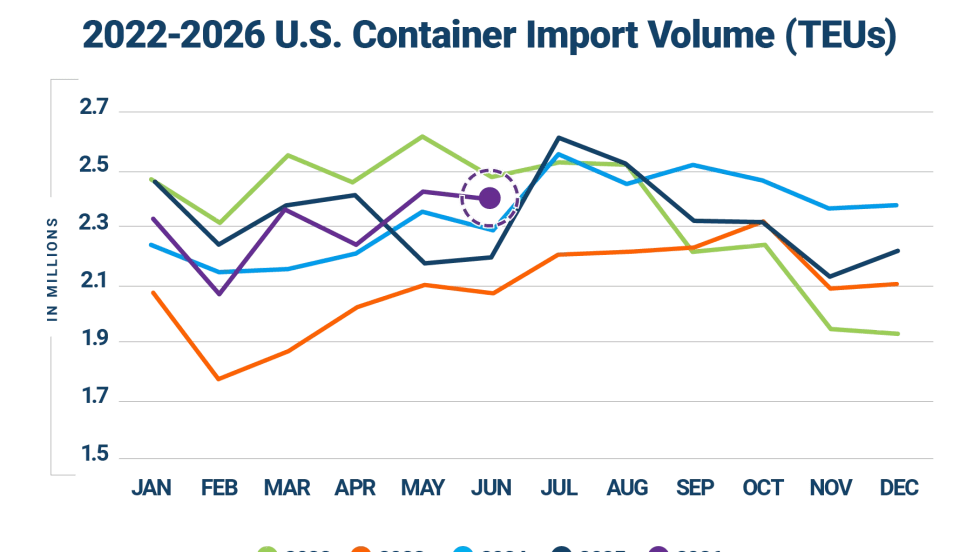
Import Cargo’s Early Peak Season is Winding Down
There was an early start to peak season this year at the nation's gateway ports, as retailers brought in merchandise ahead of tariff changes in late July and responded to other supply chain uncertainties,
Read More →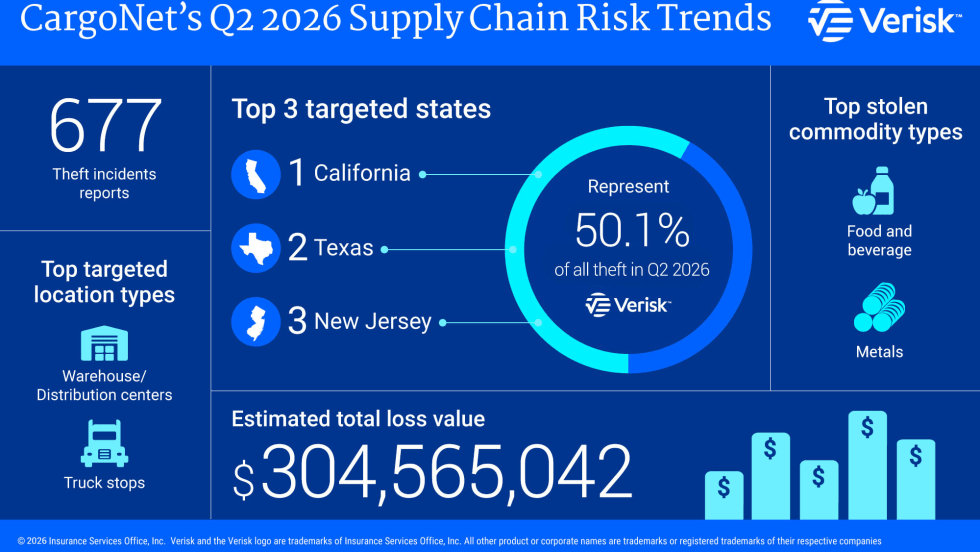
Fewer Cargo Thefts, Bigger Losses: Criminals Target Higher-Value Loads
CargoNet says organized theft rings are stealing fewer shipments but choosing more valuable freight, including metals and technology, resulting in record losses.
Read More →
How Innovative Trucking Leaders Turn Change Into an Advantage
As the pace of change accelerates in trucking, the fleets that adapt best have more than the latest technology. They have cultures that embrace improvement.
Read More →
Freight Broker Bonds Just Got Harder to Get. Here's What That Means for Your Fleet.
When it gets harder for a freight broker to prove they are financially sound, the ones who cannot clear that bar get pushed out of the market. And those are exactly the brokers who used to leave motor carriers holding the bag.
Read More →