




Prime Inc. to Pay Over $3 million to Settle EEOC Suit
To settle a suit brought by the Equal Employment Opportunity Commission, New Prime Trucking, Inc., which does business as Prime Inc., will pay over $3.1 million and make job offers to more than 60 women who were deemed negatively affected by the company’s same-sex driver trainer policy.

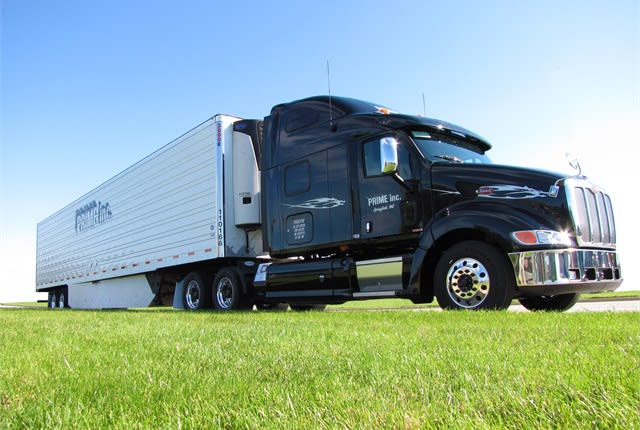
To settle a suit brought by the Equal Employment Opportunity Commission, New Prime Trucking, Inc., which does business as Prime Inc., will pay over $3.1 million and make job offers to more than 60 women who were deemed negatively affected by the company’s same-sex driver trainer policy.
According to EEOC, the agreed upon payments follow an earlier court order that found the truckload carrier had violated federal law when it required that female truck-driver applicants be trained only by female trainers.
That court order held that Prime violated Title VII of the Civil Rights Act of 1964 by denying employment opportunities to women as a result of its same-sex trainer policy.
EEOC said that Prime had adopted that policy in 2004 after it was found in a previous agency lawsuit to have violated Title VII based upon the sexual harassment of one of its female driver trainees.
The present suit was brought against Prime in September 2011 based on a discrimination charge filed by Deanna Roberts Clouse. “Because Prime had very few female trainers, its same-sex trainer policy forced female trainees to wait extended periods of time, sometimes up to 18 months, for a female trainer to become available, which resulted in most female driver trainees being denied employment,” EEOC stated in a news release. On the other hand, male applicants were “promptly assigned to male trainers.”
EEOC said that Prime ceased using its same-sex trainer policy in 2013 as a result of the agency's suit.
After the court's order on liability, Prime agreed to pay $250,000 to Clouse to resolve her claims. Last month, Prime agreed via consent decree to pay over $2.8 million in lost wages and damages for 63 other women, whom EOC said were denied job opportunities.
EEOC noted that it was “unable to determine the precise number or identities of all women affected by Prime's unlawful policy because, as the court found, Prime failed to ‘preserve the lists [of women who were put on waiting lists] and cooperate in identifying women impacted by the policy …"’
The order on liability and consent decree were entered in the U.S. District Court for the Western District of Missouri (EEOC v. New Prime Trucking, Inc. Civil Action No.6:11-CV-03367 MDH).
In addition, the court permanently enjoined Prime from discriminating against applicants or employees on the basis of sex and ordered that Prime shall not implement a same-sex trainer policy or practice that creates barriers to the entry or advancement of female driver applicants or employees.
The court also ordered Prime to give priority hiring consideration to the class members and make them immediately eligible for benefits without a waiting period.
"When women break into male-dominated fields, they are often trained by men,” said Andrea G. Baran, regional attorney of EEOC's St. Louis District. “We should not expect that these women will be sexually harassed. It is disrespectful to men everywhere to assume that they will harass women if they work together in close quarters. Rather, employers have a responsibility to adopt strict anti-harassment policies and practices and enforce them so that all employees-- regardless of sex --can work and succeed together."
Springfield, Mo.-based Prime is one of the nation’s largest truckload carriers, providing service to customers in the U.S., Canada and Mexico.
More Fleet Management

Color Match Smarter: Tools That Restore & Perform
For fleet managers and collision repair professionals keeping heavy-duty trucks on the road, getting the color right the first time isn't just about appearance — it's about efficiency, turnaround time, and bottom-line results. Discover how today's digital color tools are transforming the repair process from guesswork to precision.
Read More →
FMCSA Pauses Biennial-Update Enforcement Amid Motus Transition
Carriers whose updates were due on or after June 1 have more time, while FMCSA works to stabilize its new registration system and warns of phishing sites impersonating its new carrier registration system, Motus.
Read More →
2026 Blueprint for Countering Smarter Supply Chain Theft
Cargo theft is no longer just the cost of doing business. It's a multi-billion-dollar criminal enterprise exploiting vulnerabilities across your fleet, drivers, and supply chain.
Read More →


How Telematics Improves Visibility, Control, and Performance in Refrigerated Fleets
Explore how telematics help refrigerated fleets improve visibility, uptime, efficiency, compliance, and cargo protection across connected cold chain operations.
Read More →
What the U.S.-Canada Trade War Means for Trucking
Escalating U.S.-Canada tariffs could disrupt cross-border freight, reduce truck volumes, raise costs, and create new uncertainty for carriers on both sides of the border.
Read More →
What Are Trucking’s Top Concerns for 2026?
The American Transportation Research Institute wants to know what's worrying trucking fleet managers, drivers, and other stakeholders in its annual Industry Issues survey.
Read More →
American Trucking Associations Looks for a New Leader
ATA President and CEO Chris Spear abruptly left his job at the association on August 21, at a pivotal time for the trucking industry.
Read More →
Public Wi-Fi Cybersecurity Risks: How Truck Drivers and Fleets Can Protect Their Data
Public Wi-Fi can expose truck drivers and fleets to credential theft, malware, and other cyber threats. Here’s how to reduce the risk on the road.
Read More →
For Nicky Cupp, Fleet Innovation Starts With Frustration
HDT Truck Fleet Innovator Nicky Cupp turns everyday pain points at Fraley & Schilling into opportunities for better technology and smarter processes.
Read More →
Adam Buttgenbach’s Approach to Electric Trucks: Start With Where They Fit
HDT Truck Fleet Innovator Adam Buttgenbach helped PepsiCo build one of North America’s largest EV fleets by focusing on where electric trucks make operational sense.
Read More →