




Economic Watch: Retail Sales, Consumer Sentiment Improve; Wholesale Inflation Returns
One of the biggest drivers of the American economy is showing renewed signs of life as consumers seem to be more upbeat following a sluggish first quarter. However, an economic drag on trucking remains stubbornly high as prices at the wholesale level turned slightly higher.


One of the biggest drivers of the American economy is showing renewed signs of life as consumers seem to be more upbeat following a sluggish first quarter.
However, an economic drag on trucking remains stubbornly high as prices at the wholesale level turned slightly higher.
U.S. retail sales in April increased 1.3% from the month before, its best performance since March 2015, while March’s figure was revised upward slightly to a 0.3% decline from February.
So-called core sales, which strip out sales of auto, gasoline, food and building materials, turned in a 0.9% improvement in April. March was revised upward to a 0.2% gain.
The April figures are better than a consensus estimate from Wall Street analysts that forecasted increases of 0.8% overall and 0.3% for core sales.
Overall retail sales in April increased 3% from the same time a year ago, while total sales for February through April jumped 2.8% from a year earlier.
According to the Wall Street Journal, the sales surge was led by three categories: autos, gasoline stations and nonstore retailers, the latter being a segment that includes online shopping at sites such as Amazon.
Retail sales are important because they are estimated to account for about two-thirds of all U.S. economic activity.
The rise in sales at auto dealerships in April, 3.2%, was widely anticipated given an earlier reported increase in unit auto sales. Higher gasoline prices, rather than higher purchase volumes, were likely responsible for most of a 2.2% gain in sales at service stations, according to Nathan Janzen, senior economist at RBC Economics.
“Less expected was the strong growth outside of these components. Sales at building material stores were the only exception, declining 1.% in April; however, even that only partially retraced earlier gains to leave sales in the sector up 8.2% from a year ago,” he said. “The strengthening in retail sales bodes well for a strengthening in consumer spending growth in the second quarter, with small upward revisions to spending in each of February and March also suggesting that spending in first quarter may have been slightly stronger than initially reported."
The April performance follows retail sales in each of the first three months originally reported as being down or showing no improvement from the month before. However, since then February’s figures were revised showing a 0.3% increase.
This report also follows news in late April that gross domestic product (GDP) growth in the first quarter slowed to just a 0.5% annual increase, raising concerns about the economy for the rest of the year. Since then, the Atlanta Federal Reserve has increased its forecast for second quarter growth from 1.7% to 2.2%.
“While a welcome step in the right direction following minimal activity January to March, even at 2.2%, the U.S. economy would average only 1.4% across the first half of the year, hardly an impressive showing,” said Lindsey Piegza, chief economist at Stifel Fixed Income. “Recall, last year when activity was slow out of the gate, up 0.6% in first quarter, growth rebounded markedly in the second-quarter to a near 4% pace, averaging 2.3% in the first half, on par with the post-recession trend.”
The Bad News For Trucking: Inventories Remain High
While this latest report on retail sales adds to hope that upcoming GDP estimates for the first quarter will be revised showing a better performance, another indicator, business inventories, could also help it improve. But that could also result in problems for trucking.
According to the Commerce Department, business inventories rose more than expected in March, increasing 0.4% from the month before, the largest gain since last June, following a 0.1% drop in February. Also business sales inched up 0.3%, ending months of both falling sales and inventories.
According to Reuters, businesses accumulated record inventories in the first half of last year, which outpaced demand, and they have remained high since.
The March business inventories/sale ratio remains at 1.41, a seven-year high and the same as February. According to many analysts, this is good for calculating GDP growth, but there is also a downside.
Some analysts are concerned this inventory overhang could continue to hurt trucking companies, because when there's plenty of inventory in stock, trucks aren't needed to haul more product. In other words, the increase in business inventories looks good when it comes to government GDP calculations, but not so much for trucking.
However, this increase in inventories could be reduced when April figures are released next month, following the better-than-expected retail sales report released for April.
Producer Prices Up For First Time
Meantime, one measure of inflation, wholesale prices, increased 0.2% in April from the month before, according to a Labor Department report, makring the first hike in three months.
The hike in the Producer Price Index compares to a 0.3% jump forecasted by a panel of Wall Street analysts and follows a 0.1% drop in March.
Excluding volatile food and energy prices, the PPI moved just 0.1% higher in April while it’s up just 0.9% from a year ago, showing inflation remains tame. Also retail gauges of inflation released earlier have shown small increases over the past year, but remain below targets set earlier by the Federal Reserve as indicators it would increase interest rates. However, others view this latest reading of the PPI as a sign that “inflationary pressure are slowly building,” said FTR Transportation Intelligence in a tweet.
Contained within the April PPI report are numbers showing prices for transportation/warehousing services and for trade services decreased 0.4% and 0.1%, respectively, the former likely translating into lower rates some trucking companies report in April, including in the just released Cass Truckload Linehaul Index.
Consumer Sentiment Turns Around For The Better
The last economic indicator released Friday, the University of Michigan Survey of Consumers, showed consumer sentiment rebounded in early May to its highest level in nearly a year due to more frequent income gains, an improved jobs outlook, and the expectation of lower inflation and interest rates.
Its preliminary reading of 95.8 is up 7.6% from April’s final reading and is 5.6% higher than a year ago, the best performance since last June.
The largest gains were recorded among lower income and younger households, although the gains were recorded among all income and age subgroups as well as across all regions, according to Surveys of Consumers Chief Economist Richard Curtin.
“Nearly all of the gains were in the Expectations Index, which rose to its highest level in nearly a year. To be sure, the data still indicated the negative impact of uncertainty about future economic policies associated with the presidential election, but its overall impact was overwhelmed by favorable economic developments,” he said.
The Expectations Index posted a monthly gain of 12.8% and a year-over-year improvement of 3.9%. The measure of current economic conditions showed gains of 1.8% from the month before and 7.8% from the same time last year.
Curtin said it's too early to judge the potential impact of the election on consumers’ expectations, and one month’s rebound in consumer confidence is not enough to increase the current forecast for inflation-adjusted consumer expenditures from 2.5% during 2016.
More Fleet Management

How Innovative Trucking Leaders Turn Change Into an Advantage
As the pace of change accelerates in trucking, the fleets that adapt best have more than the latest technology. They have cultures that embrace improvement.
Read More →
Freight Broker Bonds Just Got Harder to Get. Here's What That Means for Your Fleet.
When it gets harder for a freight broker to prove they are financially sound, the ones who cannot clear that bar get pushed out of the market. And those are exactly the brokers who used to leave motor carriers holding the bag.
Read More →
Long-Awaited Canadian Border Bridge to Open in Detroit
For trucking, the bridge opening should offer immediate improvements in efficiency and reliability, with new customs facilities, expanded inspection capacity, and direct freeway-to-freeway connections.
Read More →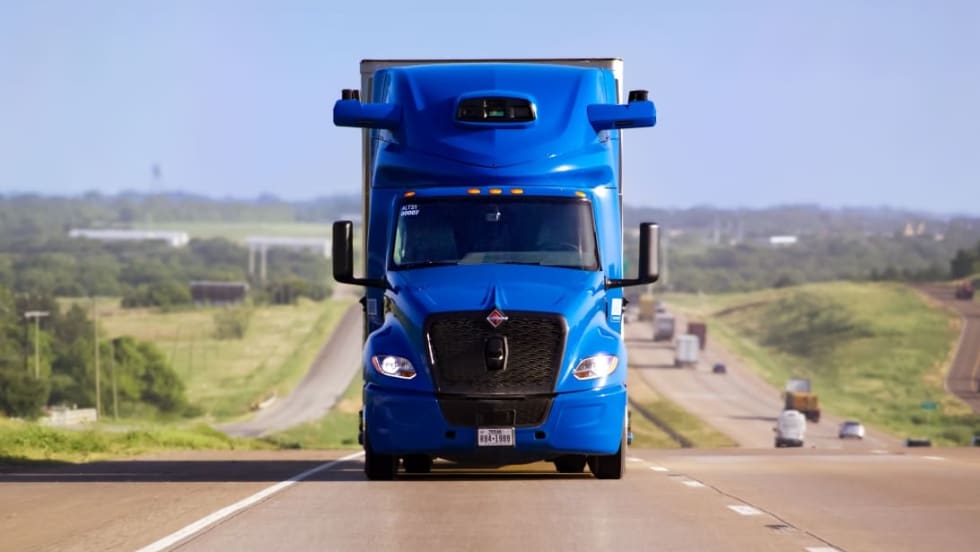
Aurora Rolls Out Next Generation of Driverless Trucks for Commercial Freight
Aurora's latest autonomous trucks it's rolling out with International feature lower-cost hardware designed for a million miles as the company expands commercial driverless freight operations across the U.S. Sun Belt.
Read More →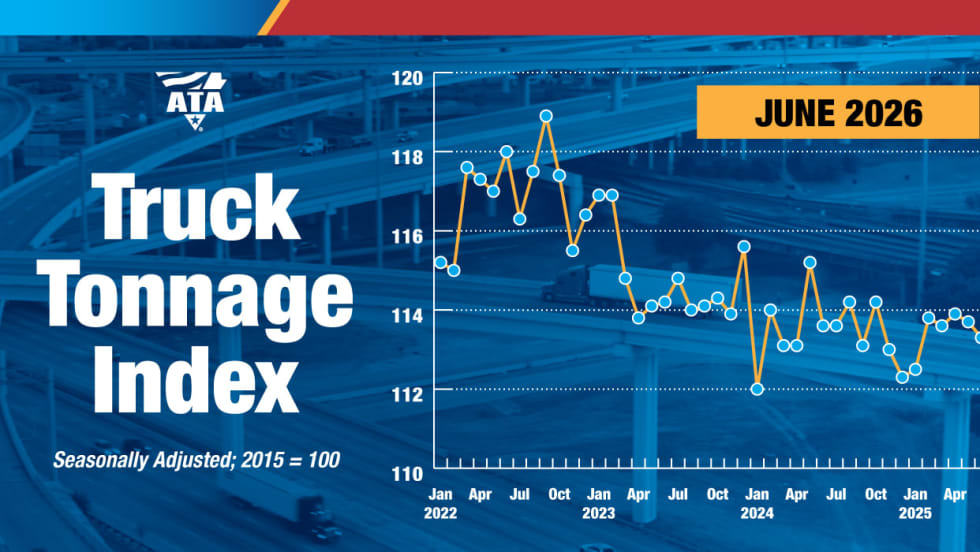
Freight Tonnage Down, Rates up, as Lower Capacity Powers Trucking Recovery
The recovery from the freight recession continues to be driven by reduction in capacity rather than by increased demand.
Read More →
Think Your Trucking Fleet Isn't Using Much AI? Think Again
Shadow AI — the use of unauthorized artificial intelligence tools at work — is becoming increasingly common, putting sensitive company data at risk. Learn how trucking fleets can protect sensitive data while embracing AI.
Read More →
ArcBest Consolidates Brands, Cuts Workforce
The company will bring three business units under the ArcBest brand, eliminate about 2% of positions, and expects the changes to generate $40 million in annual savings.
Read More →
Trucking Fleets Faced Record Operating Costs During Third Year of Freight Recession
ATRI's annual operational cost report shows carriers trimmed fleets, delayed equipment purchases, and ran older trucks as expenses continued to outpace freight rates.
Read More →
Michelin Adds AI Assistant to MyConnectedFleet Platform
Michelin’s new generative AI tool delivers instant fleet insights, helping managers analyze fuel use, tire maintenance, vehicle status, and operational performance without manually creating reports.
Read More →
LytxOne Platform Now Features AI, Compliance, and Asset Tracking Tools
New enhancements add AI-powered insights, asset tracking, compliance automation, and configurable privacy controls to Lytx's all-in-one fleet management platform.
Read More →