




Reaction Tempered to Proposed Phase 2 GHG Rule
Stakeholder reactions to the rollout of the proposed Phase 2 federal GHG emission rules run the gamut from to cautionary to laudatory.


Image: Environmental Defense Fund
Stakeholder reactions to the rollout of the proposed Phase 2 federal GHG emission rules run the gamut from to cautionary to laudatory. Issued on June 19, the joint EPA/NHTSA proposal spans 1,329 pages, so it’s reasonable to expect it may take some time for truck and engine builders along with other suppliers to sort out any and all the devils in the details.
Nonetheless, engine maker Cummins Inc. flat-out said it supported the rollout of the Phase 2 rules, noting that in 2013 it was the first to certify an engine meeting the 2014 GHG and fuel efficiency standards. The company also pointed out that “development of the proposed rule, which is expected to be finalized in early 2016, has been a collaborative process among agencies and stakeholders.”
"Cummins welcomes the proposal with its goals to improve fuel efficiency and reduce GHG emissions, creating a win-win for both customers and the environment," said Dave Crompton, Vice President and President, Engine Business, Cummins Inc. "We are pleased that the new proposal builds upon the Phase 1 framework that aligns technological advances and industry success."
Rich Freeland, Cummins Inc.’s President and COO, said the company is “looking forward to reviewing the proposal and working with the Agencies and other stakeholders to make sure both the customer and the environment benefit. Cummins has demonstrated through our past accomplishments and projects like SuperTruck that we have the technological capabilities and leadership necessary to achieve and surpass goals and expectations."
The Volvo Group, parent of Volvo Trucks and Mack Trucks, said it ”supports ambitious goals to reduce GHG emissions and fuel consumption for the complete vehicle, including engine efficiency, while providing overall value to its customers.” The company noted it will "prepare comprehensive comments to the rule within the allotted timeframe, and is committed to working with EPA and NHTSA to ensure that the Phase II program is good for both the environment and its customers.”
However, the truck and engine builder took exception ”in principle” to requiring a separate rules for engines as being ”inconsistent with the Group’s interest in minimizing the complete, real world environmental impacts of its products. A separate engine standard is at odds with the reduction of NOx, due to the natural trade-off between NOx and CO2 emissions from the engine. It also limits manufacturers’ flexibility to meet the regulated targets for each individual customer in a way that suits their specific needs, and it incentivizes optimization for engine test cell requirements versus real world efficiencies.”
”Environmental care is a core value for the Volvo Group, and we are aligned with the federal government’s goal to reduce GHG emissions from heavy-duty trucks,” commented Susan Alt, Senior Vice President– Public Affairs for Volvo Group North America. ”While we will need to spend time thoroughly reviewing the details, we appreciate EPA’s and NHTSA’s outreach to the industry.”
Word that the Phase 2 regulations for 2021 to 2027-model trucks and tractors and 2018-to-2027 MY trailers will cover entire vehicles and that there may be a distinct engine rule was also met with specific concern by the American Trucking Associations.
“Fuel is an enormous expense for our industry – and carbon emissions carry an enormous cost for our planet,” said ATA President and CEO Bill Graves. “That’s why our industry supported the Obama Administration’s historic first round of greenhouse gas and fuel efficiency standards for medium and large trucks and why we support the aims of this second round of standards.”
However, ATA Vice President and Energy and Environmental Counsel Glen Kedzie pointed out “ATA has adopted a set of 15 ‘guiding principles’ for Phase II and based on conversations with regulators and a preliminary review, this proposal appears to meet 14 of those.”
He explained that ATA is concerned the new rule “could result in the deployment of certain technologies that do not fully recognize the diversity of our industry and could prove to be unreliable. This unreliability could slow not only adoption of these technologies, but the environmental benefits they aim to create. To prevent this, truck and engine manufacturers will need adequate time to develop solutions to meet these new standards.”
Kedzie added that “the potential for real cost savings and associated environmental benefits of this rule are there – but fleets will need a wide variety of proven and durable technologies to meet these new standards throughout the various implementation stages.”
Fairly echoing ATA’s take on the proposal, the Truck and Engine Manufacturers Association (EMA) said that its members will “actively participate” in the formal Phase 2 rulemaking process “to assure that the final rule achieves realistic and cost-effective greenhouse gas reductions and fuel efficiency improvements while continuing to allow manufacturers to provide customers with the variety of commercial vehicles required to meet their needs.”
EMA President Jed Mandel remarked that the Phase 1 rules had been successfully implemented because those standards “were well aligned with EMA member efforts to meet customer demand for more fuel efficient vehicles. We look forward to reviewing the current proposal to ensure that the EPA and DOT Phase II proposal continues to align with manufacturers’ efforts and customer needs.
“We will review the proposal to ensure that it provides adequate lead time, assures regulatory compatibility with the commercial engine and vehicle marketplace, utilizes proven effective technologies, and avoids potential unintended consequences,” he added. “We look forward to working with EPA and DOT to finalize a rule that builds on the success of the Phase I program.”

Image: Environmental Defense Fund
Steve Handschuh, President & CEO of the Motor & Equipment Manufacturers Association, said that “Our heavy vehicle supplier member companies will carefully review the proposed rule and we look forward to our continuing productive relationship with the U.S. EPA and the U.S. DOT’s NHTSA. MEMA and its members understand that a consistent national program will foster long-term investment, product reliability, validation and product cost-effectiveness.”
He added that since 2011, MEMA has “worked closely with the Administration in an open and constructive manner to provide feedback and data in the development of this proposed rulemaking on fuel efficiency and greenhouse gas emissions for heavy trucks.”
Taking a clearly dim view of the impact of technologies the proposed rule might compel adoption of was the National Automobile Dealers Association (NADA) and its American Truck Dealers (ATD) division, which had this to say: "Affordable transportation is the bedrock of the American economy, and adding – by the Administration's own estimate – an average of just under $12,000 to the cost of a new truck through mandates based on potentially untested technologies is a great risk to a still-fragile economy.
“Recent history has shown that mandates with underestimated compliance costs result in substantially higher prices for commercial vehicles, and force fleet owners and operators to seek out less-expensive and less fuel-efficient alternatives in the marketplace,” their statement continued. “The costs could even drive small fleets and owner-operators out of business, costing jobs and only further impeding economic growth. While supportive of affordable fuel-economy improvements, ATD is closely reviewing the proposal and the many potential impacts it will have on truck dealerships and their customers."
Allen Schaeffer, Executive Director of the Diesel Technology Forum advocacy group, simply observed that the proposed Phase 2 rule will “challenge engine and truck manufacturers to go even further in saving fuel for customers. Manufacturers will continue to work with EPA, NHTSA and the California Air Resources Board toward a final rule that will enable continued progress in investing in new and more fuel efficient vehicles.”
“These proposed heavy-duty standards will help the nation fight climate change while driving new technology and reducing costs for truckers and fleet managers,” remarked California Air Resources Board Chairman Mary D. Nichols. “We support this effort and will be working to ensure the final regulations help California meet our goals for 2030 and beyond.”
A very green take on Phase 2 was offered by the Environmental Defense Fund. “The proposed Clean Truck standards will move us miles down the road toward a cleaner, safer future,” said EDF president Fred Krupp. “The standards will sharply reduce climate pollution from the transportation sector and will reduce America’s reliance on imported oil… Over the life of the program, the new standards will reduce climate pollution by one billion metric tons; reduce fuel consumption by 1.8 billion barrels of oil; save truckers 170 billion dollars in fuel costs; [and] provide health and other benefits to society of 230 billion dollars (benefits that will outweigh costs by a factor of 10 to 1).”
Krupp added that the tighter GHG rule “will also help the average American household save money because shipping companies can lower prices if they are paying less for fuel. The average household should save $150 per year by 2030 under the proposed standards, and more in following years.”
More Fleet Management

Your Trucks Are Busy. That Doesn’t Mean They’re Winning.
High utilization doesn’t always mean strong margins. Looking beyond the current load can help fleets make better dispatch decisions and get more value from each truck’s time.
Read More →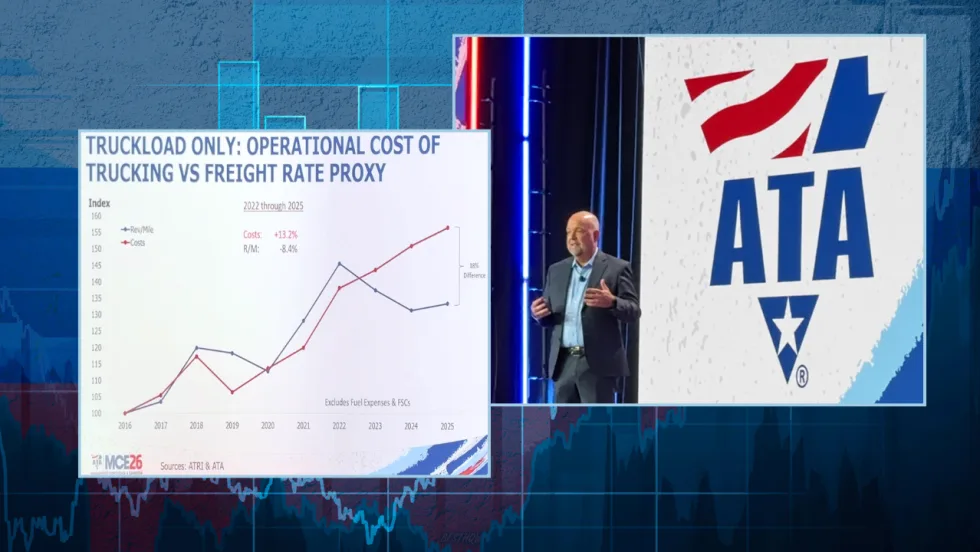
Why This Trucking Recovery Is Different
Freight demand remains sluggish, but rising costs and tougher enforcement have taken enough capacity out of the market to change the outlook for motor carriers.
Read More →
Platform Science Adds Dispatch and Safety Tools
Four additions to PS Fleet help fleets monitor loads, manage driver coaching, share truck locations and adjust video system settings.
Read More →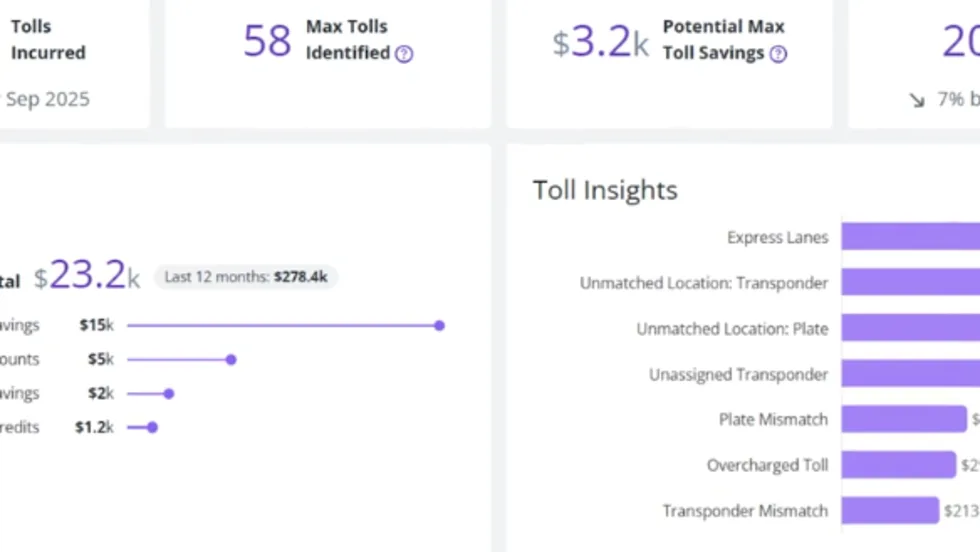
PrePass Intelligence Mines Fleet Bypass, Toll and Safety Data
PrePass Intelligence helps fleets measure bypass savings, flag potential toll overcharges, and spot suspicious transactions by combining data from separate systems.
Read More →
Motive Adds AI Agents for Fleet Operations
New tools automate follow-up on fleet data, from maintenance work orders to driver alerts, with two-way voice conversations planned for later this year.
Read More →
Can You Beat Our Trucking Trivia Challenge?
Test your truck knowledge with 19 trivia questions from Heavy Duty Trucking Exchange. Can you keep up with the fleet pros?
Read More →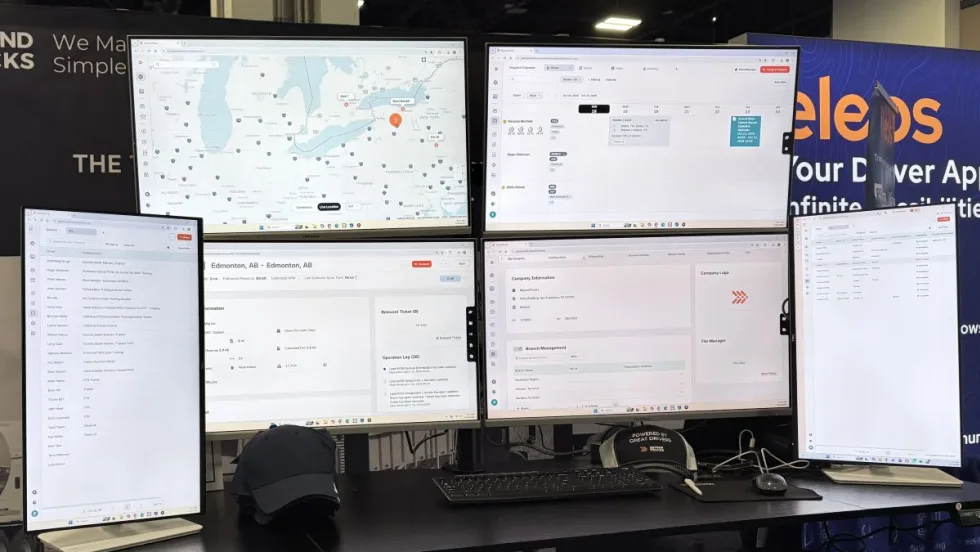
BeyondTrucks Adds Rules Checks to Dispatch
New Compatibility Engine checks driver qualifications, equipment requirements and fleet policies before loads are dispatched.
Read More →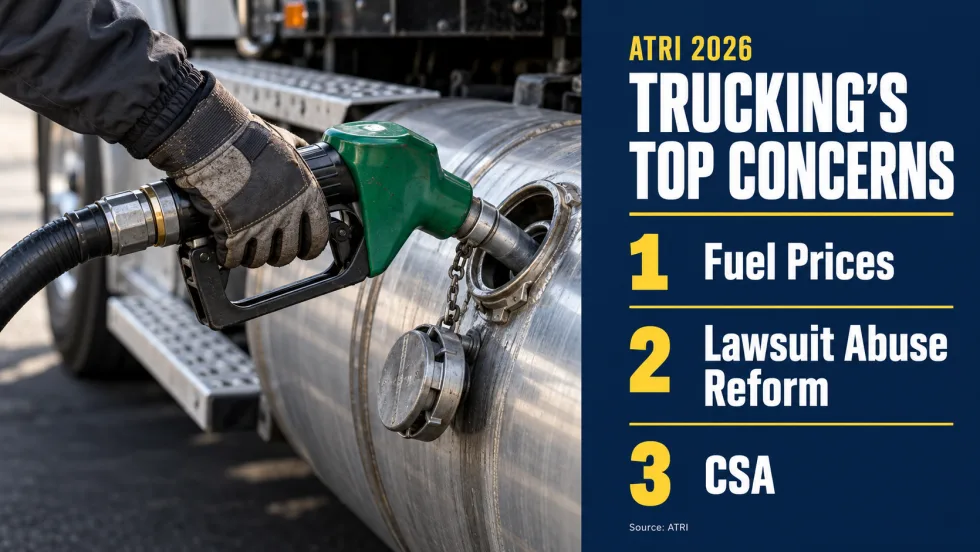
Diesel Prices Hijack Trucking’s Worry List
ATRI’s annual survey finds cautious optimism about freight, but diesel costs, litigation, and insurance continue to squeeze fleets. Drivers have different priorities on several issues.
Read More →
Nomination Deadline Extended for HDT Emerging Leaders
Just a few more days to nominate accomplished trucking fleet professionals under 40 who are making an impact and helping lead the industry forward for the HDT Emerging Leaders award. Deadline extended to October 20!
Read More →
What Will ATA’s New Leader Bring to Trucking's Table?
Incoming President and CEO Mark Colson’s record in Alabama offers clues about his priorities and approach following Chris Spear’s abrupt departure as the head of the American Trucking Associations.
Read More →