




Freight Outlook Good Despite Some Weaknesses
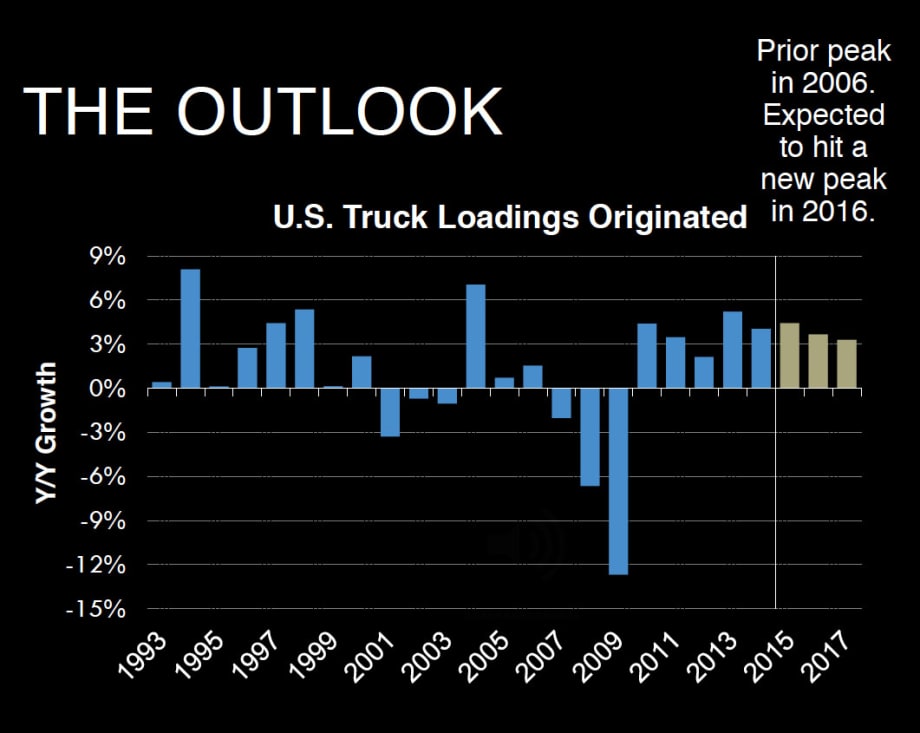
While some may complain that truck freight levels haven’t taken off like a rocket since the end of the Great Recession, the fact is they have posted solid improvements, according to Jonathan Starks of the freight forecasting firm FTR -- and could be headed for a new peak.

Graphic: FTR
Graphic: FTR
While some may complain that truck freight levels haven’t taken off like a rocket since the end of the Great Recession, the fact is they have posted solid improvements, according to Jonathan Starks of the freight forecasting firm FTR.
Starks was speaking Tuesday during the company’s “Virtual Conference” webinar, in which he discussed where freight levels have been, where they are headed, and the economic factors behind them.
“The one thing about the trucking market in this recovery is it has been relatively stable and relatively long. Typically you get a strong year or two and then some weaker growth for a few years and then you hit some downtime,” he said. “This one has been running at 3% to 5% growth for the last five years and has a good chance of getting near 7% growth in 2016.”
That means the industry may hit a new peak in freight levels next year after hitting one in 2006.
The reason for such optimism is that many of the same macroeconomic factors that helped freight recover the past few years are expected to continue – what Starks referred to as “freight-conomics.” More specifically, this means taking a look at the nation’s goods-producing sector, such as taking the U.S. gross domestic product and slicing out all of the non-goods producing areas and services. It also includes looking at industrial production, keeping in manufacturing, but removing activity at mines and utilities.
“You can see there is a very strong correlation with what occurs between those two numbers. Over the last four years, if you average it out, they have been running at a steady rate of about 4% annually,” Starks said. “Our forecast has a continuation of this going forward. Obviously there is going to be volatility in the numbers. We have the expectation that we should continue to see that level of growth going forward [at least through 2016].”
Starks explained that while manufacturing numbers typically swing from month to month, since 2010, overall such activity continues growing very steadily and has been reasonably strong throughout this economic recovery.
“Recently, it has had a few down months, but those numbers are still well within the natural range it’s been operating in. The first quarter is going to look a little bit weak, but we expect that to rebound very quickly,” he said.
GDP Strengths and Weaknesses
Starks also highlighted areas of strengths and weaknesses when looking at that macro level GDP.
While the oil and gas market has been on a tear for the last several years and is operating at a high level right now, production cuts are happening in response to lower prices, and more are expected in the future. Also, while housing investment is strong and is projected to stay that way, housing starts are expected to remain weak. FTR’s forecast calls for the chemical market to remain strong, along with imports and employment, but the metals, automotive and even government sectors are expected to be weaker.
Another item that comes into play when looking at the economy and freight is the inventory-to-sales ratio. According to Starks, from 1992 until about mid-2013 (except for the Great Recession), it has basically been flat, meaning the just-in-time inventory management system recently hit its peak. Since then, however, the number has been slowly rising, most recently posting a spike.
“That does cause a warning sign and issue you need to look at, because when this number spikes this means there is trouble in the retail portion [of the inventory to sales ratio] but not in the manufacturing portion. But manufacturing and production will have to take a quick hit to keep that in check so you don’t get the same thing that happened back in 2008 and 2009,” he said. “It is a warning sign, but nothing showing a truly bad picture yet.”
Despite this concern, Starks said the remainder of this year and into 2016 looks good for trucking. He noted numbers from FTR as well as those from the American Trucking Associations show freight growth is averaging 5% annually, showing conditions are both “good” and “stable.”
Spot Market Healthy
On the spot market things are also healthy, despite some recent downturns, based on figures from FTR partner Truckstop.com.
As Starks explains, “2014 was well above the five-year average. 2015 started off strong but has weakened some when you compare it to 2014. But if you compare it to what has gone on the last five years, it is looking much stronger, and that tells me that trucking is still a very strong market right now.
“It's not exactly showing what it was for the spot markets of 2014, but that was very much an anomaly that was driven by the tight capacity situation that escalated with the Polar Vortex.”
Also, there are opportunities for trucking to reclaim some freight lost to intermodal rail the past couple of years, thanks to lower diesel prices the past six months as well as delays in moving intermodal freight by rail. According to Starks this is because railroads are “maxed out” with the amount of service they can offer, plus average train speeds have fallen about 10% since yearly 2014, translating into about a 5% loss in rail freight capacity.
More Fleet Management
Why This Trucking Recovery Is Different
Freight demand remains sluggish, but rising costs and tougher enforcement have taken enough capacity out of the market to change the outlook for motor carriers.
Read More →
Platform Science Adds Dispatch and Safety Tools
Four additions to PS Fleet help fleets monitor loads, manage driver coaching, share truck locations and adjust video system settings.
Read More →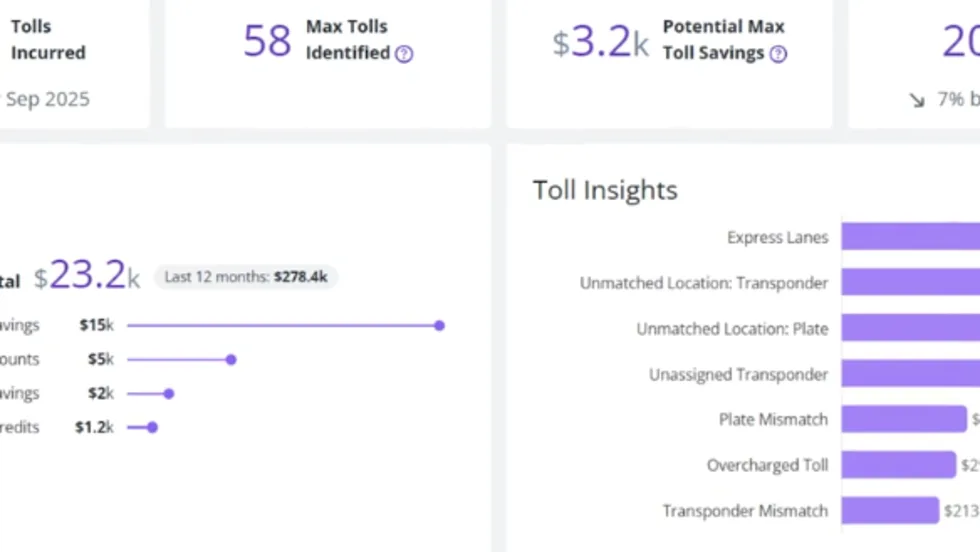
PrePass Intelligence Mines Fleet Bypass, Toll and Safety Data
PrePass Intelligence helps fleets measure bypass savings, flag potential toll overcharges, and spot suspicious transactions by combining data from separate systems.
Read More →
Motive Adds AI Agents for Fleet Operations
New tools automate follow-up on fleet data, from maintenance work orders to driver alerts, with two-way voice conversations planned for later this year.
Read More →
Can You Beat Our Trucking Trivia Challenge?
Test your truck knowledge with 19 trivia questions from Heavy Duty Trucking Exchange. Can you keep up with the fleet pros?
Read More →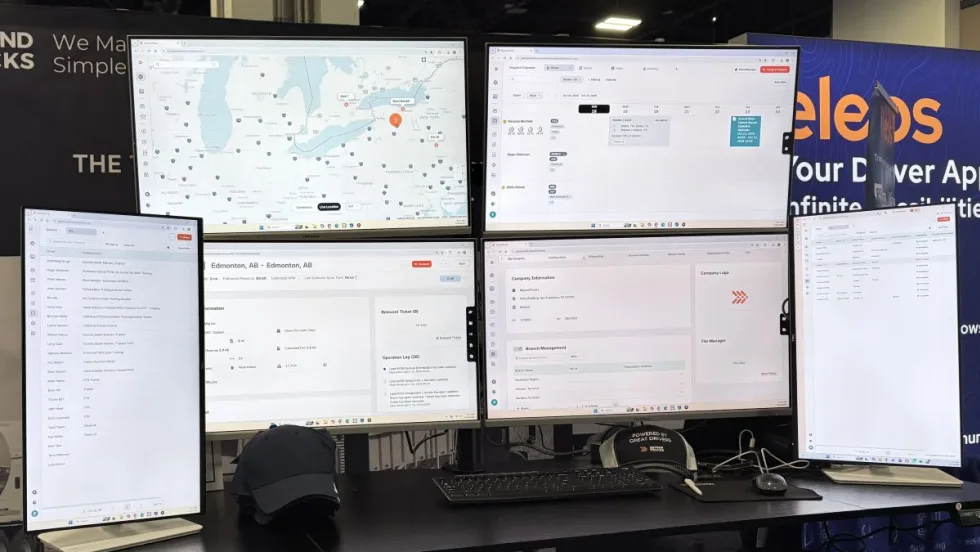
BeyondTrucks Adds Rules Checks to Dispatch
New Compatibility Engine checks driver qualifications, equipment requirements and fleet policies before loads are dispatched.
Read More →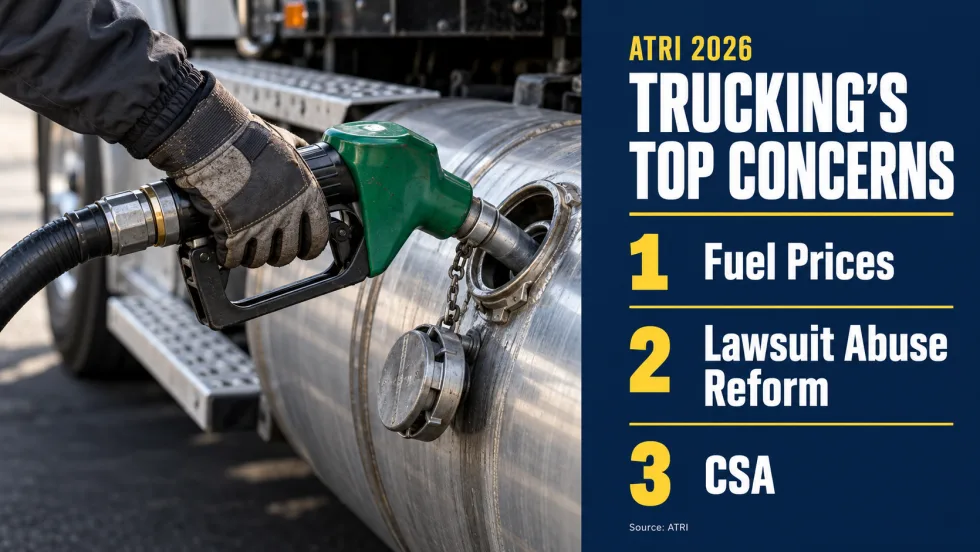
Diesel Prices Hijack Trucking’s Worry List
ATRI’s annual survey finds cautious optimism about freight, but diesel costs, litigation, and insurance continue to squeeze fleets. Drivers have different priorities on several issues.
Read More →
Nomination Deadline Extended for HDT Emerging Leaders
Just a few more days to nominate accomplished trucking fleet professionals under 40 who are making an impact and helping lead the industry forward for the HDT Emerging Leaders award. Deadline extended to October 20!
Read More →
What Will ATA’s New Leader Bring to Trucking's Table?
Incoming President and CEO Mark Colson’s record in Alabama offers clues about his priorities and approach following Chris Spear’s abrupt departure as the head of the American Trucking Associations.
Read More →
Volvo, Waabi Start Commercial Autonomous Operations in Texas
Volvo VNL Autonomous trucks, powered by the Waabi Driver, are hauling freight directly to third-party facilities for a customer in Texas.
Read More →