





Related: Volvo Expands XE Powertrain Lineup
Technology's Promise Paying Off, Says Volvo Group CEO
In his keynote address at the annual HDMA Briefing Breakfast at the Mid-America Trucking Show Friday morning, Persson sketched out the top trends in transportation regarding highway safety, environmental sustainability, and technology.
March 27, 2015

Volvo CEO Olof Persson keynoting HDMA Briefing at MATS. Photo by Paul Hartley courtesy HDMA
5 min to read
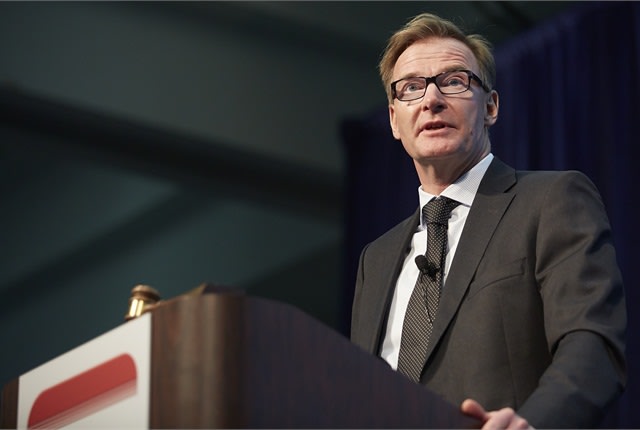
Volvo CEO Olof Persson keynoting HDMA Briefing at MATS. Photo by Paul Hartley courtesy HDMA
LOUISVILLE, Ky. — In his keynote address Friday at the annual HDMA Briefing Breakfast at the Mid-America Trucking Show, Volvo Group CEO Olaf Persson sketched out the top trends in transportation including highway safety, improved environmental sustainability, greater integration of truck systems and advancing “connected truck” platforms to “deliver uptime breakthroughs” to truck operations.
Furthering the range of technology-driven solutions already in play is the key to ensuring fleets will weather important trends now buffeting the trucking industry globally, according to Persson.
Safety Impact
Persson remarked that “the increasing societal demand for safety is certainly in evidence here in the U.S., in the wake of several terrible, well-publicized accidents last year involving trucks... “Safety has been a Volvo core value since our founding, and we are continuing to work on a variety of active safety technologies.”
As an example, he pointed to an advanced active system Volvo is developing to monitor “all of the truck’s surroundings for the driver, and suggest actions to avoid accidents, whether they involve pedestrians, cyclists, or other vehicles.” This “360-degree awareness can even predict what the moving entities it’s scanning might do next. If the driver does not respond to suggested actions, the steering or braking system can be activated autonomously.”
Noting that while Volvo still has several technical challenges to overcome, Persson said “we think it’s possible this technology could be become a reality in five to 10 years from now.”
He added that Volvo’s safety vision is “a bold one—to have no accidents involving Volvo trucks. This technology has the potential to take us another step toward that vision, and it represents the kind of advancement that society will increasingly expect from our industry.”
Green for Good
Persson said environmental sustainability will remain front and center as it is “what society demands from all of us, here and around the world.”
While conceding that low oil prices in the U.S. has of late toned down “the buzz around alternative fuels” here, he declared those days are numbered. “Forty-five dollars a barrel won’t last forever, and governments here and around the world will continue to have emissions in general – and greenhouse gas [GHG] in particular – in focus.”
He gave natural gas its due, remarking that Volvo sees the fuel as “continuing to play a role in some segments of this market – particularly in certain vocational applications and shorter, regional haul. But when it comes to other segments, particularly longer hauls, we continue to believe DME [Dimethyl Ether] shows tremendous promise.” That’s because the conversion of natural gas into DME can “address many of the distribution, storage, and fueling challenges otherwise presented by natural gas – particularly liquefied natural gas – as a heavy truck fuel. If the industry were able to get the critical mass of production volume we need, DME could really be a game-changer.”
Turning to the developing Phase GHG/MPG rule, Persson endorsed having it based solely on a complete vehicle standard. “First of all, it seems to us a separate engine standard would be redundant, since the engine would be accounted for in the complete vehicle assessment. And the last time I looked, there were no loose engines pulling freight down American highways.
“But more important than redundancy,” he continued, “an engine standard– particularly if it’s stringent – could force the use of technologies that could bring seriously negative consequences for our customers, in terms of cost, weight, space, cooling, and so on.”
Indeed, Perrson cautioned that “If reason does not prevail, the industry could be faced with a mandate for increased engine efficiency that actually reduces total vehicle efficiency in real-world conditions. That would obviously be a loss not just for truck customers, but for society and the environment.”
Integration vs. Displacement
As for the positive impact of further integrating vehicle systems, Persson called powertrain integration “the most effective and efficient way to manage the kind of complexity I’ve just talked about – whether it’s driven by environmental regulations or by customer demands for increased fuel economy and performance. Having components that were specifically designed for each other, and act seamlessly together, allows us to create more and more intelligent, higher-performing vehicles.”
He contended that “the technological march toward getting more power from smaller packages – in everything from computers, to batteries, to passenger car engines – won’t just skip over the heavy vehicle industry.
“I understand there is a saying in the U.S. that ‘There’s no replacement for displacement,’” he added. “But there is a replacement for displacement– it’s innovation. And integration is helping us drive innovation.”
Wireless Workshops
Lastly, Persson touched on what he termed the “very exciting area of ‘connected trucks,’” noting that we are rapidly approaching the point at which no trucks will ever really be ‘offline.’”
Making his case, he remarked that he “wondered how much of even, say, a year’s worth of savings from a three percent fuel economy improvement would be undercut by just one day of unplanned downtime – especially after you factor in the consequences for the trucking company’s reputation and for customer relationships.
“So ‘uptime’ is a very strong focus area for both of our truck brands in North America, and one in which we think connectivity is key.”
Noting that already more than 80,000 Volvo and Mack vehicles on North American roads are equipped with remote diagnostics systems, Persson stated that “these systems will ultimately allow us to become increasingly proactive in making changes to the vehicle wirelessly-- on-the-fly– either to correct problems or to optimize for things like terrain, temperature, or other operating conditions.
“In short, we’re working toward a ‘wireless workshop,’ where trucks are in some cases evaluating themselves, while in operation, and being repaired remotely,” he said.
“But while we’re very excited about the technology," Persson added, "it’s also clear to us that the real gains can’t be made with technology alone. People – skilled, knowledgeable personnel – are essential components.”
More Fleet Management

New Independent Contractor Rule Gives Trucking More Clarity
The Labor Department is once again changing how it determines who's an independent contractor. This time, the rule includes specific examples addressing trucking safety requirements, CDLs, and lease-purchase agreements.
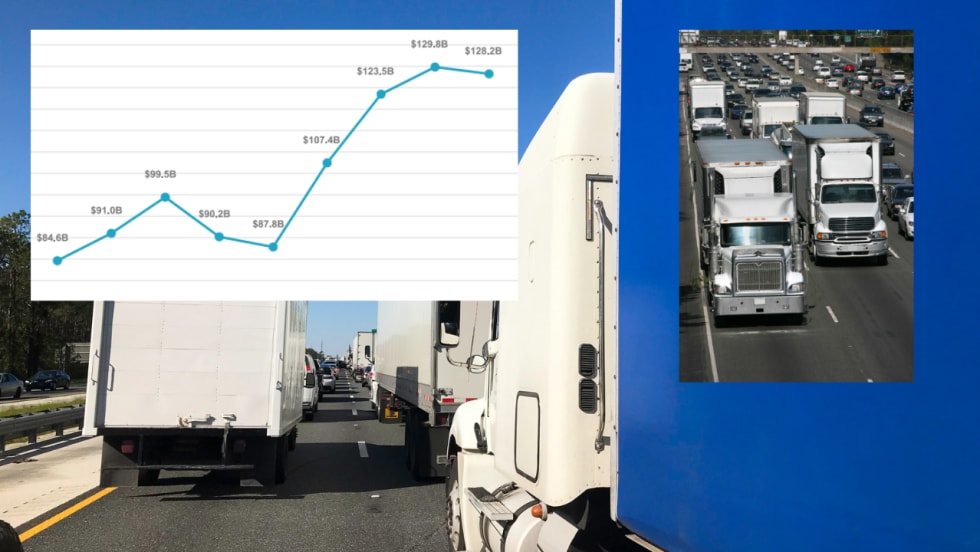
Trucking's Annual Congestion Costs Reach $128.2 Billion
That's the average cost, according to new ATRI research. And the wasted time and diesel are staggering.
How to Modernize Your TMS Without Replacing It [Podcast]
Before investing in a new transportation management system, take a closer look at what you've already got. AI, cloud technology and better integrations may offer ways to improve your trucking operations without starting over.

Could Your Truck's Connected Devices Be a Cybersecurity Risk?
ELDs, telematics systems and driver tablets help fleets operate more efficiently. But every connected device needs protection against cyberattacks.
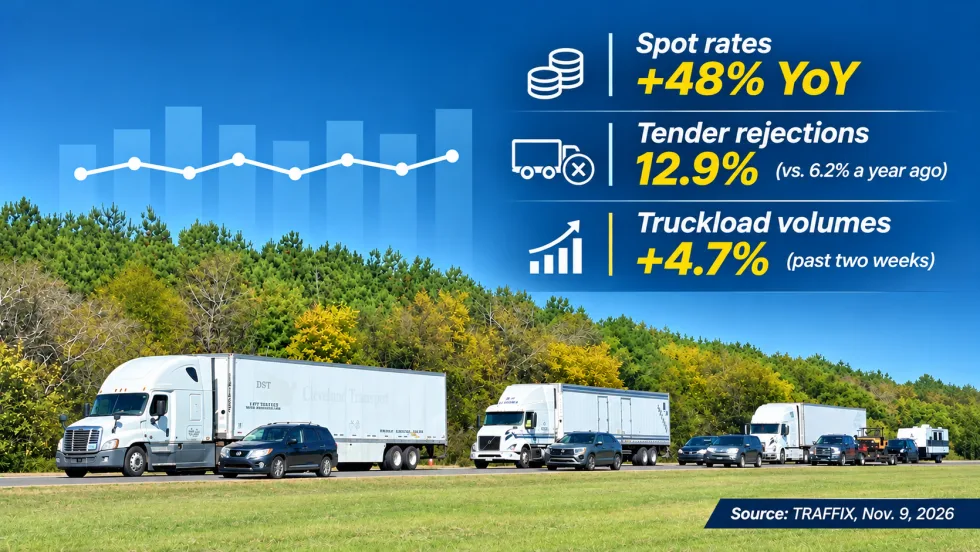
Holiday Freight Meets a Tight Trucking Market
There's no freight boom, but truckload carriers are finding themselves in a stronger position to negotiate rates. And holiday shipping demand could tighten the market further.
What Trucking Events are Happening in 2027?
Looking for trucking-related conventions, expos, and other events? Heavy Duty Trucking has developed this list of national and larger regional trucking shows and events.
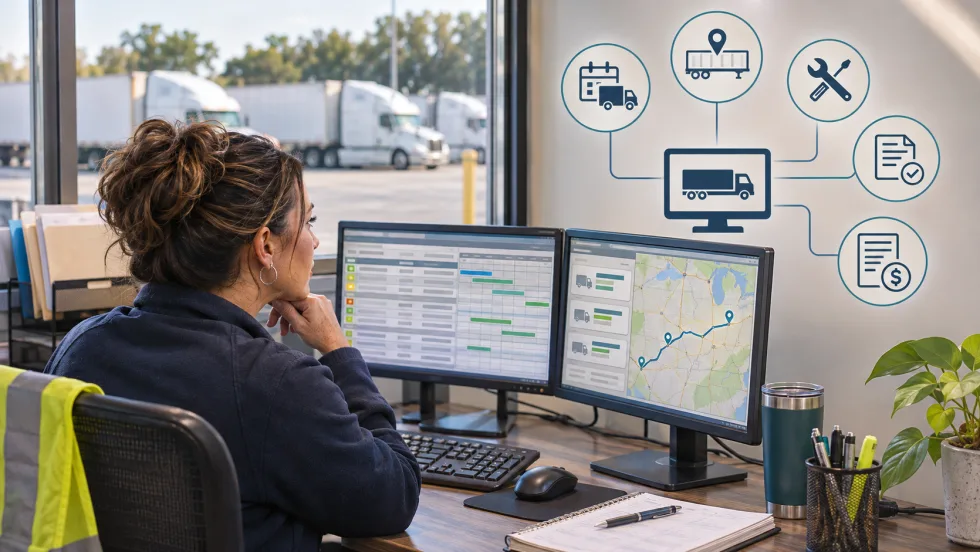
Does Your Trucking Fleet Need a New TMS?
Artificial intelligence and better integrations promise less busywork and more useful data. Can your TMS help your company solve problems? Do you need additional vendors or an upgrade? Or is it time to look for a new platform?
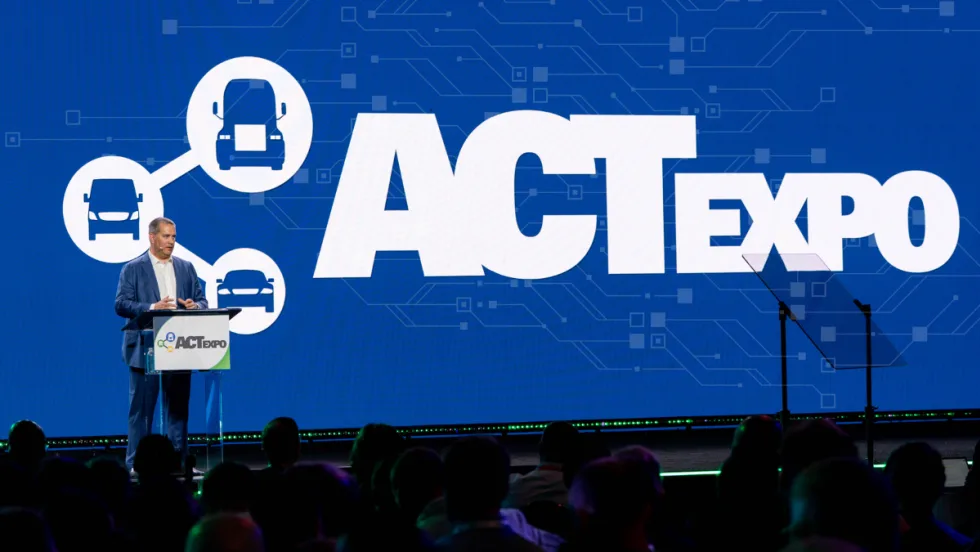
Fleet Costs Shape ACT Expo 2027 Agenda
With diesel prices high and operating expenses under pressure, ACT Expo's 2027 agenda emphasizes fuel efficiency, AI, safety and the return on fleet technology investments.
Does Your Trucking Fleet Need a New TMS? [Video]
Cloud technology, AI and new integrations are changing what transportation management systems can do. But does taking advantage of those advances mean replacing your existing TMS?

Road Ready Becomes Saegic, Launches New Trailer Telematics Gateway
Clarience Technologies is rolling out new hardware and expanding its plans for connecting trailer telematics, maintenance data, and video.