




“There has been a steady long-term trend of diversion from the West Coast to East Coast."
Intermodal Freight Market Facing Big Challenges
Intermodal freight movements are finally recovering since a tentative agreement was worked out about three weeks ago between West Coast Port workers and shipping companies, but diversions of freight from this part of the country are expected to continue.

Evan Lockridge・Former Business Contributing Editor
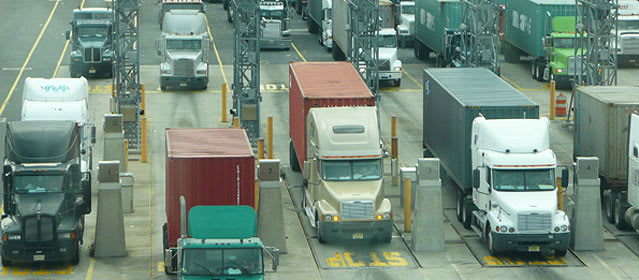
Intermodal traffic has been seeing a diversion to East Coast ports. Photo: Port of NY/NJ
5 min to read

Intermodal traffic has been seeing a diversion to East Coast ports.Photo: Port of NY/NJ
Intermodal freight movements are finally recovering since a tentative agreement was worked out about three weeks ago between West Coast Port workers and shipping companies, but diversions of freight from this part of the country are expected to continue.
That was one of the messages on Thursday coming from intermodal and rail expert and senior consultant to FTR, Larry Gross, during a webinar hosted by the freight forecasting firm.
According to Gross, it’s currently a very interesting time to be following the intermodal area because so much of what has happened in this portion of the freight transportation business, especially on the domestic side, has been driven by very tight capacity in over-the-road trucking. That, however, has started to loosen just a touch.
“We think for the balance of the year, truck capacity is going to be tight but manageable, so to that extent, intermodal is going to have to earn its way, rather than just having volume shoved at it because of the tight situation on the highway,” Gross said. “A big piece of that is what happened in Congress last year when they rolled back the [34-hour restart restrictions of the] hours of service, and that created about a 2% bump in truck capacity and turned a critically tight situation into a normally tight situation.”
Also, Gross said the intermodal sector has been irrevocably affected by labor problems at West Coast ports that started last year and continued until February, when port workers reached a new tentative labor agreement with port shipping companies. That agreement still faces a final vote by longshoremen.
“The West Coast is going to lose market share. Volume will be diverted to Canadian and Mexican alternatives as well as to the U.S. East Coast and Gulf Coast, but that is not a new phenomenon,” Gross said. “There has been a steady long-term trend of diversion from the West Coast to East Coast, with West Coast share having dropped down by a couple of points over the last four years and showing a steady decline, which I think will continue.”
So what does such a diversion entail? According to Gross, a 1% diversion of import volume from the West Coast to the East Coast would shift about 100,000 20-foot equivalent container units per year, and the lion’s share of what is shifted would have been intermodal rail. While that sounds like a lot, if you put that up against the 8.2 million international loads that the railroads handled in 2014, this isn’t a big deal from railroad perspective.
However, it's certainly of interest to trucking, because containers coming into the East Coast ports are far more likely to be hauled out of the port by truck. Gross said trucking moves about 85% of the freight out of East Coast ports, mainly due to the shorter hauls. West Coast ports, on the other hand, see containers transferred mostly to rail.
Playing catch-up
In the meantime, the West Coast ports still face the Herculean task of moving out 300,000 to 500,000 containers that backed up, according to Gross, before longshoremen and shippers finally reached their agreement last month. That backlog will still take another two months clear out.
Making things worse is that the February-to-March time period is usually one of the biggest seasonal jumps for freight during the year. Gross predicted things are going to get pretty tight off the West Coast for intermodal, with spot rates jumping for all types of transport, especially expedited truck. That's likely to persist for some time. Just how long depends on rail intermodal service, which he said has slowed since the end of 2014, after making progress between Thanksgiving and the end of last year.
“There was a tremendous jump in train speeds as the railroads worked through the holidays at full speed and tried to work down the backlog and decongest their system,” he said. “Since then there has been a pretty steady deterioration again. I was attributing that to the weather, particularly the adverse weather in the East, but it's getting to be that time the train speed numbers should be turning around -- but it hasn’t yet. I am really hopeful we are going to see this turnaround shortly or this is going to be a real issue and I am starting to get fairly concerned about it.”
Looking ahead: A dumping dispute and regulatory crunch
Business conditions for intermodal could also get even more complicated, Gross said, due to a conflict between one container manufacturer and China. Last year the company Stoughton, which also makes over-the-road truck trailers, filed an anti-dumping lawsuit against the Chinese manufacturers that Gross said are the source of all U.S. domestic containers today.
So far the U.S. Department of Commerce has tentatively agreed with them and placed a provisional anti-dumping duty of 110% on the price of domestic dry van containers from China. While this is a tentative ruling that will not be finalized until May, currently if a business buys a container from China, they have to put that 110% in escrow.
"What that has done has put all of the acquisition plans of new containers to a standstill, and nothing will happen until that filing ruling is issued,” he said.
Gross and FTR’s current forecast calls for 6.5% year-over-year growth in domestic containers, requiring at least 17,000 incremental units to be added to the fleet, assuming the current utilization rates. That doesn’t include retirements of containers.
“So if the ruling stands, there may get to be a little bit of a crunch in domestic container capacity, particularly if the railroad service doesn’t improve,” Gross said.
No matter how this drama between Stoughton and the Chinese plays out, Gross believes with railroad services woes, lower fuel prices and sufficient truck capacity, the domestic intermodal freight market is going be held back in 2015.
However, things could be even more challenging in a year or two.
“If the mother of all capacity shortages does come to pass in 2016 and 2017, as we think it might, based on the regulations that are in the pipeline on the over the road side, including speed limiters, electronic logging devices, then that capacity crunch will come back with a vengeance in late 2016 or 2017 -- and that will put enormous pressure to move freight via any means possible,” he said.
More Fleet Management

What the U.S.-Canada Trade War Means for Trucking
Escalating U.S.-Canada tariffs could disrupt cross-border freight, reduce truck volumes, raise costs, and create new uncertainty for carriers on both sides of the border.
Read More →
What Are Trucking’s Top Concerns for 2026?
The American Transportation Research Institute wants to know what's worrying trucking fleet managers, drivers, and other stakeholders in its annual Industry Issues survey.
Read More →
American Trucking Associations Looks for a New Leader
ATA President and CEO Chris Spear abruptly left his job at the association on August 21, at a pivotal time for the trucking industry.
Read More →
Public Wi-Fi Cybersecurity Risks: How Truck Drivers and Fleets Can Protect Their Data
Public Wi-Fi can expose truck drivers and fleets to credential theft, malware, and other cyber threats. Here’s how to reduce the risk on the road.
Read More →
For Nicky Cupp, Fleet Innovation Starts With Frustration
HDT Truck Fleet Innovator Nicky Cupp turns everyday pain points at Fraley & Schilling into opportunities for better technology and smarter processes.
Read More →
Adam Buttgenbach’s Approach to Electric Trucks: Start With Where They Fit
HDT Truck Fleet Innovator Adam Buttgenbach helped PepsiCo build one of North America’s largest EV fleets by focusing on where electric trucks make operational sense.
Read More →
Deen Albert: Let Automation Do the Math, People Make the Decisions
HDT Truck Fleet Innovator Deen Albert makes sure people are still at the heart of operations at Grand Island Express, even while adopting artificial intelligence tools. AI-assisted dispatch helped boost revenue 25% with the same number of trucks.
Read More →
Trimble’s New AI Agent Takes Aim at Fleet Back-Office Busywork
Arc Agent works across Trimble TMS products to automate repetitive tasks such as freight orders, maintenance, invoices, fuel costs and more.
Read More →
How HDT’s 2026 Truck Fleet Innovators Are Rethinking Fleet Operations
Meet five trucking leaders who are challenging assumptions, solving operational problems, and putting innovative ideas to work.
Read More →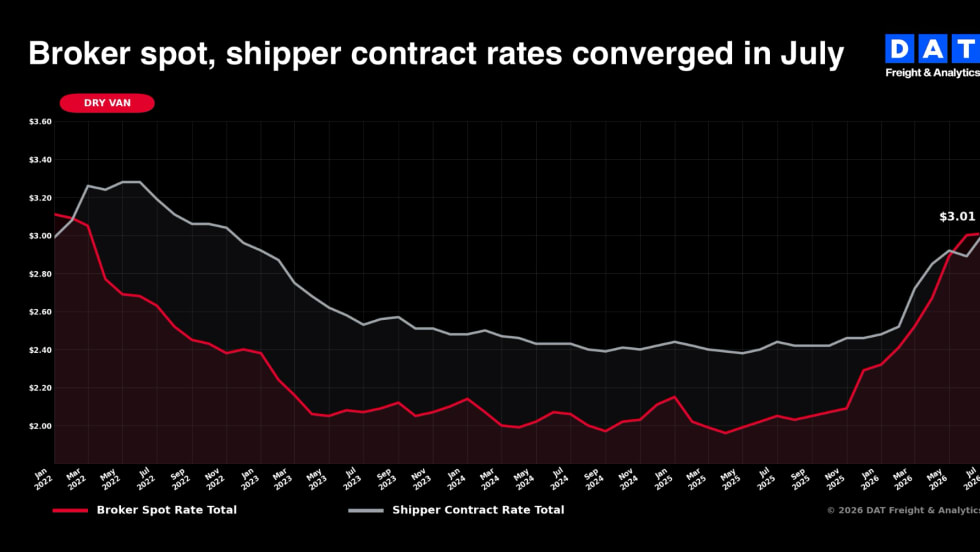
Tight Trucking Capacity Pushes Rates Higher Even as Freight Volumes Fall
“Spot rates moving ahead of contract rates have historically signaled a tightening market, but we haven’t seen a capacity-driven market quite like this one,” said DAT's Dean Croke.
Read More →