




Labor Unrest Causes West Coast Ports to See Mixed Volumes
Container volumes at the Port of Los Angeles increased 6% in 2014 over the previous year, marking the third busiest year in the port’s history, just behind 2007 and 2006 levels
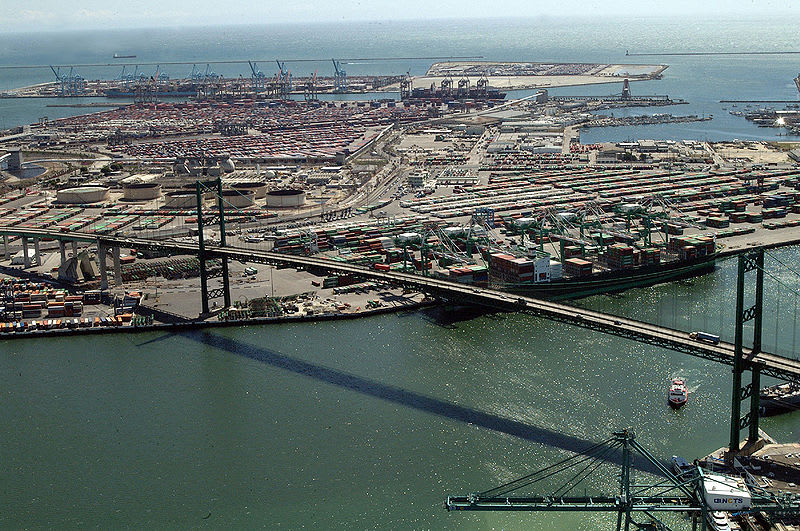
The Port of Los Angeles.
The Port of Los Angeles.
Container volumes at the Port of Los Angeles increased 6% in 2014 over the previous year, with total volumes reaching 8,340,065 twenty-foot-equivalent units. It was the third busiest year in the port’s history, just behind 8.4 million TEUs in 2007 and 8.5 million TEUs in 2006.
In December 2014, overall volumes increased 1% compared to same time a year ago. Total cargo was 658,567 TEUs compared to 653,358 TEUs in December 2013.
Container imports in December increased 4.4%, from 322,500 TEUs in December 2013 to 336,674 TEUs last month. Exports declined 12%, from 172,261 TEUs in December 2013 to 152,112 TEUs in December 2014.
U.S. exports have been declining in recent months due to weaker demand abroad and a stronger U.S. dollar, which makes U.S. goods more expensive, according to the Los Angeles port officials.
Combined, total loaded imports and exports fell 1.2%, from 494,761 TEUs in December 2013 to 488,786 TEUs in December 2014. Factoring in empties, which increased 7% year-over-year, overall December 2014 volumes edged up 1 percent compared to the same month in 2013.
Meantime, a the nearby Port of Long Beach cargo container trade climbed 1.3% in 2014, and like the Port of L.A., bringing the facility its third-busiest year ever behind the peak years of 2006 and 2007.
Last year’s overall volume rose to 6,820,806 TEUs. Imports increased 1.8% to 3,517,514 TEUs, exports declined 5.9% to 1,604,394 TEUs, while empties rose 8.2% to 1,698,898 TEUs.
For December 2014 compared to a year earlier the port moved 567,237 TEUs through the harbor, a 2.6% decrease. Imports dropped 5.1% to 276,516 TEUs. Exports fell 11.2% to 131,496 TEUs while empties rose to 159,225 TEUs, an increase of 11.5%.
Some analysts note the increases could have been stronger and lower numbers would have been better had lingering contract negotiations between West Coast longhoremen and port shipping companies been resolved back in the summer, when their most recent pact expired.
Delays in ironing a new contract, along with harsh words between the two sides, plus longshoremen protests and work slowdowns by them, have resulted in congestion at what is regarded as the nation’s busiest port complex in Southern California, with some shippers sending freight to other facilities.
Finally, way to the north, container volumes through Puget Sound’s largest container ports remained flat in 2014, according to numbers released jointly the ports of Seattle and Tacoma.
Puget Sound container volumes fell less than 1% in 2014 to 3.4 million 20-foot-equivalent units. Tacoma and Seattle’s combined volumes have hovered near 3.5 million TEUs since 2010. Last year marked the second consecutive year of decline, underscoring the competitive pressures reshaping the global shipping industry, said port officials.
Larger vessels and shipping line alliances mean fewer vessels are calling at fewer ports. Together, Seattle and Tacoma comprise the third-largest container gateway in North America, but their share of the West Coast market has been falling over the past decade.
Containerized export volumes through the two ports dipped 1.6% last year to 1.2 million TEUs, while imports fell 4.1% to 1.4 million TEUs. Meanwhile, domestic container volumes grew 6.1% to 870,733 TEUs on the strength of the Alaska trade., according to the ports
Combined, the ports of Tacoma and Seattle are the third-largest container gateway in North America.
More Fleet Management

Color Match Smarter: Tools That Restore & Perform
For fleet managers and collision repair professionals keeping heavy-duty trucks on the road, getting the color right the first time isn't just about appearance — it's about efficiency, turnaround time, and bottom-line results. Discover how today's digital color tools are transforming the repair process from guesswork to precision.
Read More →
FMCSA Pauses Biennial-Update Enforcement Amid Motus Transition
Carriers whose updates were due on or after June 1 have more time, while FMCSA works to stabilize its new registration system and warns of phishing sites impersonating its new carrier registration system, Motus.
Read More →
2026 Blueprint for Countering Smarter Supply Chain Theft
Cargo theft is no longer just the cost of doing business. It's a multi-billion-dollar criminal enterprise exploiting vulnerabilities across your fleet, drivers, and supply chain.
Read More →


How Telematics Improves Visibility, Control, and Performance in Refrigerated Fleets
Explore how telematics help refrigerated fleets improve visibility, uptime, efficiency, compliance, and cargo protection across connected cold chain operations.
Read More →
What the U.S.-Canada Trade War Means for Trucking
Escalating U.S.-Canada tariffs could disrupt cross-border freight, reduce truck volumes, raise costs, and create new uncertainty for carriers on both sides of the border.
Read More →
What Are Trucking’s Top Concerns for 2026?
The American Transportation Research Institute wants to know what's worrying trucking fleet managers, drivers, and other stakeholders in its annual Industry Issues survey.
Read More →
American Trucking Associations Looks for a New Leader
ATA President and CEO Chris Spear abruptly left his job at the association on August 21, at a pivotal time for the trucking industry.
Read More →
Public Wi-Fi Cybersecurity Risks: How Truck Drivers and Fleets Can Protect Their Data
Public Wi-Fi can expose truck drivers and fleets to credential theft, malware, and other cyber threats. Here’s how to reduce the risk on the road.
Read More →
For Nicky Cupp, Fleet Innovation Starts With Frustration
HDT Truck Fleet Innovator Nicky Cupp turns everyday pain points at Fraley & Schilling into opportunities for better technology and smarter processes.
Read More →
Adam Buttgenbach’s Approach to Electric Trucks: Start With Where They Fit
HDT Truck Fleet Innovator Adam Buttgenbach helped PepsiCo build one of North America’s largest EV fleets by focusing on where electric trucks make operational sense.
Read More →