




Swift Third-Quarter Profit Surges
With year-over-year profitability improvements in its truckload, intermodal and refrigerated segments, Swift Transportation saw its net income surge to $50.2 million in the third quarter, compared to $30 million a year ago.

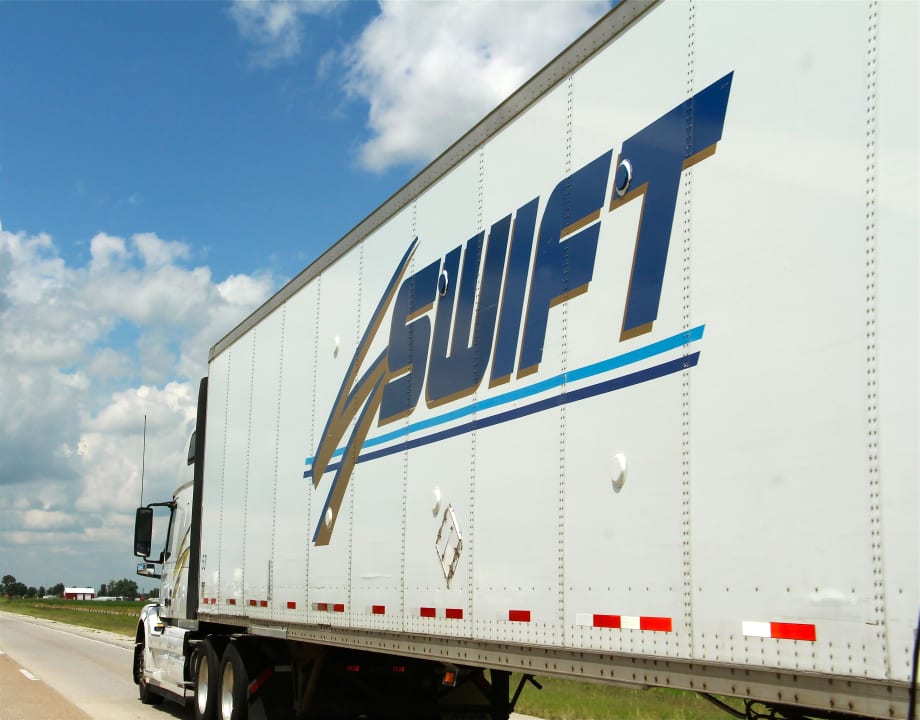
Photo: Evan Lockridge
Photo: Evan Lockridge
Swift Transportation Co. saw a big upturn in its third quarter profit, according to numbers it released late Thursday.
Net income surged from $30 million in the third quarter of last year to $50.2 million in the most recent quarter, a gain from 21 cents per diluted share to 35 cents per diluted share. Total revenue increased from $1.03 billion to $1.07 billion, a more than 4% increase.
“We were able to generate year-over-year profitability improvement in our truckload, intermodal and Central Refrigerated Service segments,” the company said in a statement.
As for the dedicated segment, Swift said it is saw sequential improvement, in-line with expectations. The fleet says it will "continue to target a return to historical profit margins by year end, as we completely absorb the significant number of contract awards this year.
"Above all, the operational trends we experienced in each segment as the third quarter developed were very positive.”
Swift said it was able to achieve these results despite the cost of recently announced driver wage increases.
During the third quarter the Arizona-based trucking services provider saw consolidated revenue, less fuel surcharge, increased 5.8% compared to the same time last year, while its average truck count increased by 500. Loaded miles per tractor, per week, increased 2.2%.
Revenue, less fuel surcharge, in the company’s truckload segment was essentially flat compared to a year ago at $460 million. Revenue grew 31.7% in the dedicated trucking segment, totaling $197.7 million. Central Refrigerated Service reported a 12.5% drop in revenue, minus fuel surcharge, totaling $80.6 million. Revenues were up 4.5% in the intermodal segment, totaling $80.1 million.
More details are on the Swift Transportation website.
More Fleet Management

Color Match Smarter: Tools That Restore & Perform
For fleet managers and collision repair professionals keeping heavy-duty trucks on the road, getting the color right the first time isn't just about appearance — it's about efficiency, turnaround time, and bottom-line results. Discover how today's digital color tools are transforming the repair process from guesswork to precision.
Read More →
FMCSA Pauses Biennial-Update Enforcement Amid Motus Transition
Carriers whose updates were due on or after June 1 have more time, while FMCSA works to stabilize its new registration system and warns of phishing sites impersonating its new carrier registration system, Motus.
Read More →
2026 Blueprint for Countering Smarter Supply Chain Theft
Cargo theft is no longer just the cost of doing business. It's a multi-billion-dollar criminal enterprise exploiting vulnerabilities across your fleet, drivers, and supply chain.
Read More →


How Telematics Improves Visibility, Control, and Performance in Refrigerated Fleets
Explore how telematics help refrigerated fleets improve visibility, uptime, efficiency, compliance, and cargo protection across connected cold chain operations.
Read More →
What the U.S.-Canada Trade War Means for Trucking
Escalating U.S.-Canada tariffs could disrupt cross-border freight, reduce truck volumes, raise costs, and create new uncertainty for carriers on both sides of the border.
Read More →
What Are Trucking’s Top Concerns for 2026?
The American Transportation Research Institute wants to know what's worrying trucking fleet managers, drivers, and other stakeholders in its annual Industry Issues survey.
Read More →
American Trucking Associations Looks for a New Leader
ATA President and CEO Chris Spear abruptly left his job at the association on August 21, at a pivotal time for the trucking industry.
Read More →
Public Wi-Fi Cybersecurity Risks: How Truck Drivers and Fleets Can Protect Their Data
Public Wi-Fi can expose truck drivers and fleets to credential theft, malware, and other cyber threats. Here’s how to reduce the risk on the road.
Read More →
For Nicky Cupp, Fleet Innovation Starts With Frustration
HDT Truck Fleet Innovator Nicky Cupp turns everyday pain points at Fraley & Schilling into opportunities for better technology and smarter processes.
Read More →
Adam Buttgenbach’s Approach to Electric Trucks: Start With Where They Fit
HDT Truck Fleet Innovator Adam Buttgenbach helped PepsiCo build one of North America’s largest EV fleets by focusing on where electric trucks make operational sense.
Read More →