




Former FMCSA Head Supports Restart Amendment, Slams Critics for 'Political Opportunism'
Former FMCSA Administrator Annette Sandberg supports the trucking industry's push for a study on the impact of the current restart provision while rolling the restart rules back to pre-July 2013. Sandberg says the trucking industry supports suspending the restart restrictions because they believe that good public policy comes from good data and a good understancfing of the facts, not from emotional appeals.


Annette M. Sandberg, principle, TransSafe Consulting.

-- TransSafe Consulting, LLC
Annette Sandberg has come out in support of changes to the 34-hour restart provision. In a June 17 letter to leaders of the Senate Committee on Appropriations, Subcommittee on Transportation, Sandberg, who served three years as Administrator of the Federal Motor Carrier Safety Administration under President George W. Bush, said the changes to the restart provision imposed by the current administration were "done without the benefit of proper scientific research, and [are] hurting highway safety - as well as the economy.
Sandberg also slammed critics of the recent amendment proposed by Sen. Susan Collins, R-Maine, for trying to link calls for a roll-back of the 34-hour restart provision to the recent New Jersey crash involving a Walmart truck and comedian Tracy Morgan.
"Current evidence ... indicates the cause of this crash had nothing to do with the provisions being addressed in Senator Collins' amendment," she said in the letter. "To imply that these changes had anything to do with crash in New Jersey is political opportunism at its worst."
In the letter, Sandberg explained to the Senators that the current restart rules could actually compromise safety rather than enhancing it by forcing more trucks onto highways during early morning hours.
The practical effect of these restrictions, an effect the current head of the FMCSA has called "unintended," is to push more truck traffic onto the highways at 5:01am - or when when America's commuters are hitting the road to go to work or when children are heading to school, the letter says.
"These early morning hours are the riskiest time of day for trucks to be on the road," notes . "A truck driving between midnight and 3am is a third less likely to be involved in a crash as one traveling between 6am and 9am.
"Suspending these changes -- while keeping the remaining hours-of-service rules intact -- in order to fully study the impact of shifting more truck traffic to daylight hours is a common sense solution to this problem."
Sandberg, a principal at TransSafe Consulting, also seems to suggest the current administration's preoccupation with fatigue might be misplaced.
"The fact is, while an important issue to address, fatigue is not the number one issue in truck safety," she wrote. "Truck driver fatigue is listed as a cause in less than 2% of truck crashes -- but due to underreporting in the wake of these tragedies, the true figure is probably between 6% and 8%. Excess speed. Distracted driving. Aggressive driving. These are all more important highway safety issues that are not being addressed fast enough by the government."
Click here to read the full text of Sandberg's letter to Senate Transportation Subcommittee leaders.
More Fleet Management

2026 Blueprint for Countering Smarter Supply Chain Theft
Cargo theft is no longer just the cost of doing business. It's a multi-billion-dollar criminal enterprise exploiting vulnerabilities across your fleet, drivers, and supply chain.
Read More →
How Telematics Improves Visibility, Control, and Performance in Refrigerated Fleets
Explore how telematics help refrigerated fleets improve visibility, uptime, efficiency, compliance, and cargo protection across connected cold chain operations.
Read More →
What the U.S.-Canada Trade War Means for Trucking
Escalating U.S.-Canada tariffs could disrupt cross-border freight, reduce truck volumes, raise costs, and create new uncertainty for carriers on both sides of the border.
Read More →

What Are Trucking’s Top Concerns for 2026?
The American Transportation Research Institute wants to know what's worrying trucking fleet managers, drivers, and other stakeholders in its annual Industry Issues survey.
Read More →
American Trucking Associations Looks for a New Leader
ATA President and CEO Chris Spear abruptly left his job at the association on August 21, at a pivotal time for the trucking industry.
Read More →
Public Wi-Fi Cybersecurity Risks: How Truck Drivers and Fleets Can Protect Their Data
Public Wi-Fi can expose truck drivers and fleets to credential theft, malware, and other cyber threats. Here’s how to reduce the risk on the road.
Read More →
For Nicky Cupp, Fleet Innovation Starts With Frustration
HDT Truck Fleet Innovator Nicky Cupp turns everyday pain points at Fraley & Schilling into opportunities for better technology and smarter processes.
Read More →
Adam Buttgenbach’s Approach to Electric Trucks: Start With Where They Fit
HDT Truck Fleet Innovator Adam Buttgenbach helped PepsiCo build one of North America’s largest EV fleets by focusing on where electric trucks make operational sense.
Read More →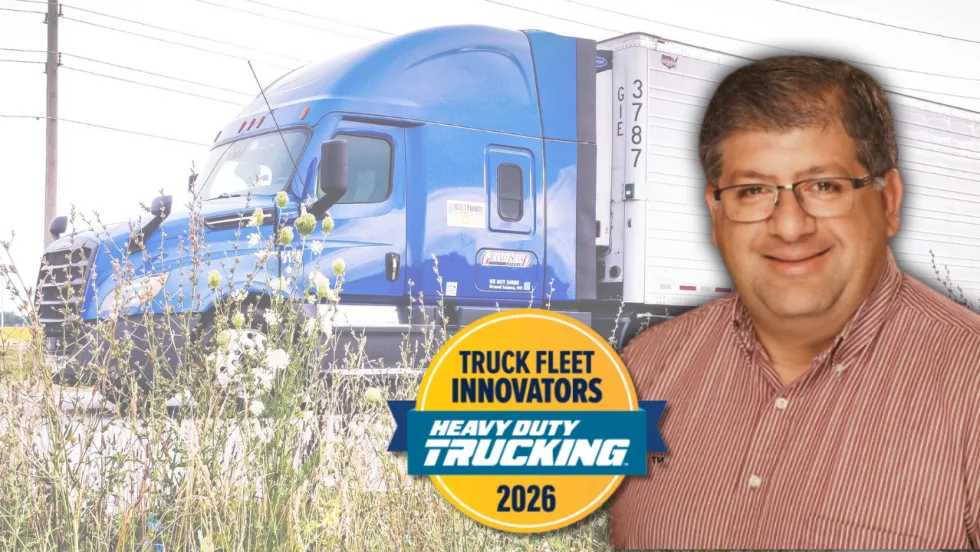
Deen Albert: Let Automation Do the Math, People Make the Decisions
HDT Truck Fleet Innovator Deen Albert makes sure people are still at the heart of operations at Grand Island Express, even while adopting artificial intelligence tools. AI-assisted dispatch helped boost revenue 25% with the same number of trucks.
Read More →
Trimble’s New AI Agent Takes Aim at Fleet Back-Office Busywork
Arc Agent works across Trimble TMS products to automate repetitive tasks such as freight orders, maintenance, invoices, fuel costs and more.
Read More →