




Byrd: Industry Must Pull Together Like a Family
TMC, NASHVILLE – Trucking. It's complex, highly technological, and essential to the nation's economy. That was the theme of Phil Byrd, chairman of American Trucking Associations and president and CEO of Bulldog Hiway Express, speaking Tuesday at ATA’s Technology & Maintenance Council’s 2014 Annual Meeting.

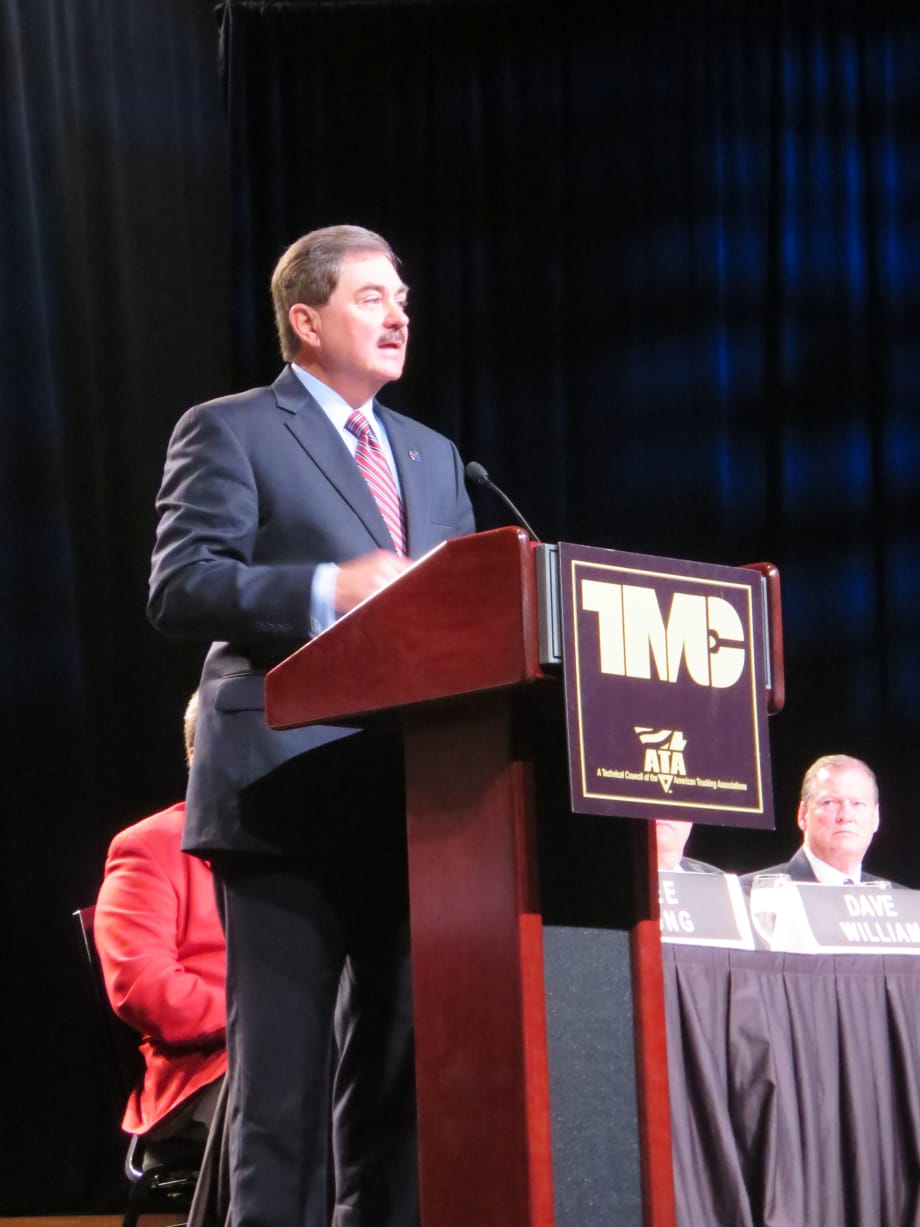
ATA Chairman Phil Byrd speaks at TMC Tuesday.
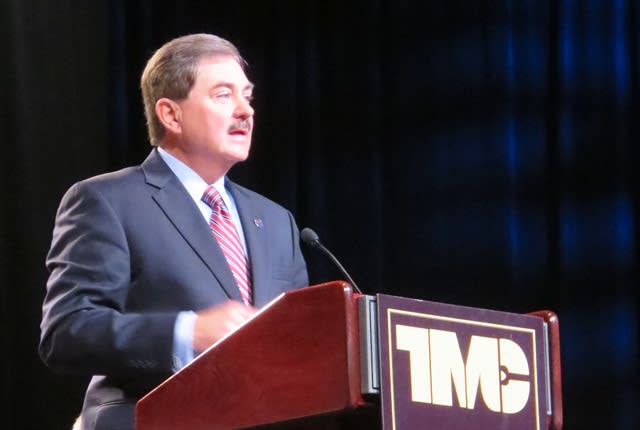
ATA Chairman Phil Byrd speaks at TMC Tuesday.
TMC, NASHVILLE – Trucking. It's complex, highly technological, and essential to the nation's economy. That was the theme of Phil Byrd, chairman of American Trucking Associations and president and CEO of Bulldog Hiway Express, speaking Tuesday at ATA’s Technology & Maintenance Council’s 2014 Annual Meeting.
Byrd said while some people may think trucking is as simple as getting a truck and some freight and taking it from one place to another, "transportation and logistics and trucking is anything but simple. It's a complicated and complex industry. I would submit to you that our businesses from a technological standpoint far exceeds those of the customers we serve."
First, he said, there is the complex process of spec'ing a truck to perform precisely in the environment in which it will be used. It has to be spec'd correctly, built correctly and maintained correctly.
Then you have to have the right driver to put behind the wheel of that truck – another complicated part of the business. "The driver has to be well trained, he has to be well licensed, and qualified in every respect as set forth by the Department of Transportation," Byrd said. "We can leave no stone unturned."
Once you have the truck and the driver, he said, you have to have cargo to move. "That's what we do every day when we wake up, we deliver America's economy."
"Then we have to hit the highways, our interstates, our toll roads, and that's not a simple task anymore," Byrd said. "That is a complex and complicated problem we all face. We're delivering America's freight with a piece of equipment that's technologically advanced with a driver who's well qualified... over a highway system that is crumbing beneath our trucks. We have to embrace a form of stabilizing the Highway Trust Fund that will allow America to rebuild its road systems."
Of course, all this is made more complex by government regulations.
And then, we have to communicate all this to lawmakers, to regulators and to the general public.
"By and large Americans don't understand what we do," Byrd said. "And whose fault is that? We have to effectively communicate the essentiality of our industry. Today in America, 68.5% of tonnage in this country moves on trucks. That's a big responsibility."
Despite what you may hear about railroads and short sea shipping taking a bigger share, he said, he most recent studies have shown that by 2024, as these other modes increase capacity, our industry will be called on to move 71% of everything manufactured or shipped in this great country of ours. And we have to communicate that. We have to tell our stories."
Byrd was referring to ATA's new image campaign, “Trucking Moves America Forward,” which will officially be launched later this month.
Citing figures from ATA Chief Economist Bob Costello, Byrd said last year the trucking industry moved more than 530 million truckload shipments. That compares to the rail industry, he said, which moved 29 million truckload equivalent shipments. In January alone, he said, the trucking industry moved more truckload shipments than the railroad industry will move all year.
Byrd said he recently was asked at a press conference why trucks couldn't operate only at night and on weekends.
"That's how uninformed most Americans are," he said. "I looked that individual in the eye and I said, 'Have you ever had a loved one in the hospital in ICU that needed specific medications, specific supplies? Have you ever seen a railroad track or a ship offloading freight at a hospital? No. But what you have seen is trucks delivering life saving medications.
"That's what we do. We save lives, we change lives, we move America's commerce."
He emphasized the importance of the industry working together on this and other issues.
To help make this happen, Byrd said, ATA has three initiatives:
A strategic planning committee that is looking at every process ATA has. "We have to be more effective, more nimble, communicate better, and move legislation in a shorter time frame," he said. "We need to be recognized in Washington as the horsepower of trucking."
A committee is looking at the funding problem, chaired by Dan England of C.R. England, with CEOs of major trucking and logistics companies, including FedEx and UPS, on that committee.
The committee working on trucking's image.
"On our company's website you'll find the word family. We are a business family and we care about each other and our business. We think it's important that people feel ownership, respect, that they're bringing value to the process. i think that's one thing that can be taken from our company and distributed through the industry. We may be competitors, but from an industry perspective we're family, we're interconnected, what affects one affects another.
"There's great strength in our unity. Yes, families argue, they don't always see things the same way. But at the end of the day we have to settle on what's best for the industry at large."
More Fleet Management

How Telematics Improves Visibility, Control, and Performance in Refrigerated Fleets
Explore how telematics help refrigerated fleets improve visibility, uptime, efficiency, compliance, and cargo protection across connected cold chain operations.
Read More →
What the U.S.-Canada Trade War Means for Trucking
Escalating U.S.-Canada tariffs could disrupt cross-border freight, reduce truck volumes, raise costs, and create new uncertainty for carriers on both sides of the border.
Read More →
What Are Trucking’s Top Concerns for 2026?
The American Transportation Research Institute wants to know what's worrying trucking fleet managers, drivers, and other stakeholders in its annual Industry Issues survey.
Read More →

American Trucking Associations Looks for a New Leader
ATA President and CEO Chris Spear abruptly left his job at the association on August 21, at a pivotal time for the trucking industry.
Read More →
Public Wi-Fi Cybersecurity Risks: How Truck Drivers and Fleets Can Protect Their Data
Public Wi-Fi can expose truck drivers and fleets to credential theft, malware, and other cyber threats. Here’s how to reduce the risk on the road.
Read More →
For Nicky Cupp, Fleet Innovation Starts With Frustration
HDT Truck Fleet Innovator Nicky Cupp turns everyday pain points at Fraley & Schilling into opportunities for better technology and smarter processes.
Read More →
Adam Buttgenbach’s Approach to Electric Trucks: Start With Where They Fit
HDT Truck Fleet Innovator Adam Buttgenbach helped PepsiCo build one of North America’s largest EV fleets by focusing on where electric trucks make operational sense.
Read More →
Deen Albert: Let Automation Do the Math, People Make the Decisions
HDT Truck Fleet Innovator Deen Albert makes sure people are still at the heart of operations at Grand Island Express, even while adopting artificial intelligence tools. AI-assisted dispatch helped boost revenue 25% with the same number of trucks.
Read More →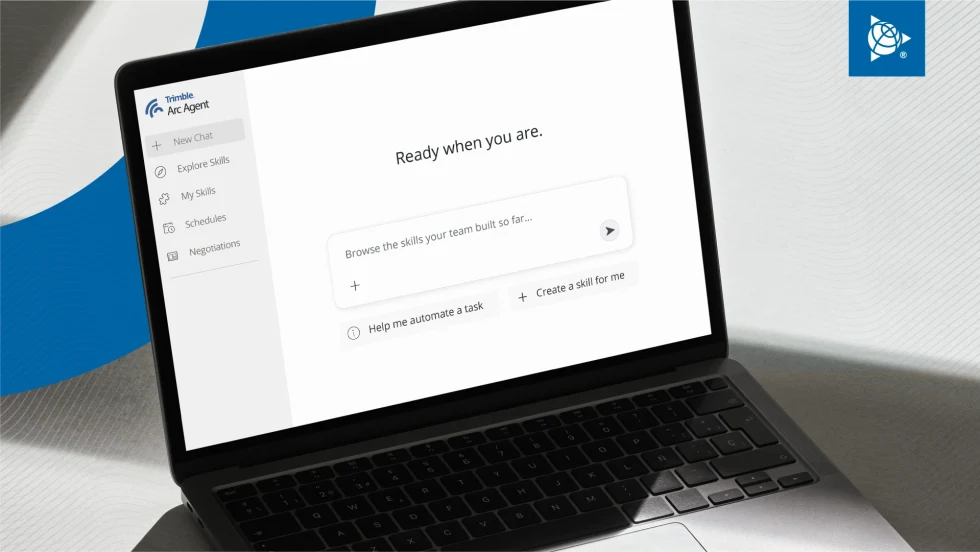
Trimble’s New AI Agent Takes Aim at Fleet Back-Office Busywork
Arc Agent works across Trimble TMS products to automate repetitive tasks such as freight orders, maintenance, invoices, fuel costs and more.
Read More →
How HDT’s 2026 Truck Fleet Innovators Are Rethinking Fleet Operations
Meet five trucking leaders who are challenging assumptions, solving operational problems, and putting innovative ideas to work.
Read More →