




Tax Reform Effort Could Include Infrastructure Funding
Two congressional leaders who have been working on tax reform for the past couple of years are getting closer to drafting proposals that could include renewed commitment to highway funding.

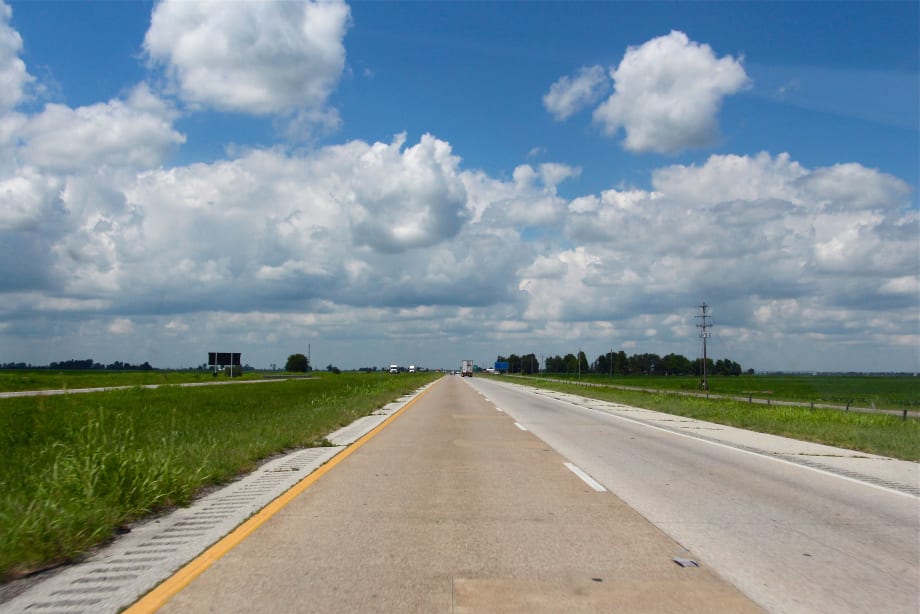
Photo: Evan Lockridge

Photo: Evan Lockridge
Two congressional leaders who have been working on tax reform for the past couple of years are getting closer to drafting proposals that could include renewed commitment to highway funding.
Sen. Max Baucus, D-Mont., chair of the Senate Finance Committee, and Rep. Dave Camp, R-Mich., chair of the House Ways and Means Committee, have held dozens of hearings on ways to improve corporate and individual taxation.
On the table is a broad range of possible changes to the ways the government collects and spends money to pay for infrastructure.
Close followers of trucking interests on Capitol Hill see the Baucus and Camp initiatives as the likeliest way for Congress to break through the inertia that has stalled infrastructure reinvestment.
“The larger tax reform effort, or an energy bill, is the key to the next highway bill, just because that’s where the revenue issues can be addressed,” said Mary Phillips, senior vice president of legislative affairs at American Trucking Associations.
While other committees handle the details of transportation policy, the Finance panel in the Senate and the Ways and Means panel in the House handle the money.
Baucus and Camp are moving their committees along separate but parallel paths toward producing reform plans this fall, a Finance Committee spokesman said.
They share the objective of producing comprehensive reform to a tax system that is out of kilter.
“It has become too complex and confusing, and the problem will not go away on its own,” they say on their joint website.
“We are dedicated to writing bills in an open and transparent fashion,” they say. “No cutting deals behind closed doors.”
Baucus and Camp say they want a bipartisan approach but acknowledge their effort faces fierce headwinds.
“People from across the spectrum are trying to turn tax reform into a political weapon, which could end up killing any chance at success.”
They say that to be successful their effort must transcend politics.
“It has to be about restoring some trust in government, improving the lives of the people we serve, about boosting the economy.”
Trust surely is in short supply on Capitol Hill these days, and it will be difficult to separate politics from this effort.
As Phillips pointed out, members of Congress will need protection, or at least a shared sense of risk, in order to vote to raise revenue.
“If (transportation issues) are going to be addressed by raising the fuel tax or something meaningful in terms of the revenue stream, it’s probably going to probably need to be part of a larger package,” she said.
“It’s too hard a vote for members to take as part of a standalone bill.”
The reform ideas summarized on the Baucus-Camp website reflects the full spectrum of perspectives on highway funding, from essentially doing nothing to fundamentally changing the current system.
The do-nothing approach is to simply limit infrastructure spending to whatever is available in the trust fund account, as suggested by Sen. Rand Paul, R-Ky., and prohibit any more borrowing from general revenues.
The second is to pass all revenues from federal taxes and fees back to the states, and let the states use them as they see fit, as proposed by Sen. Tom Coburn, R-Okla.
A third possibility is to keep the existing fuel tax and fee system, and increase or index the taxes.
This is the key recommendation of the national commissions Congress chartered to study the issue, and it was proposed as an amendment during drafting of last year’s highway bill by Sen. Mike Enzi, R-Wyoming.
It is the approach supported by ATA and many other highway users who say the fuel tax is the most direct, cost-effective way to raise revenues over the near term.
One subset of this approach includes raising the other fees that feed the Highway Trust Fund, such as equipment sales taxes and the heavy vehicle use fee.
A related alternative would be to convert the fuel tax to a sales tax that is percentage of the fuel price.
One variation on this theme, put forward by Sen. Barbara Boxer, D-Calif., would be to replace not just the fuel tax but all other user fees with the sales tax.
This idea intrigues Phillips because it removes the burden of all those extra levies and it introduces an indexing mechanism. But indexing the tax to fuel prices makes it vulnerable to the periodic price swings that hit the market. A better trigger would be the Consumer Price Index, which is more predictable, Phillips said.
The fourth idea contemplates a range of moves to replace or supplement the current system.
One suggestion is to move to a hybrid structure that would lower the tax when fuel prices rise, and increase it when they fall.
This approach would combine the variable fuel tax with a per-barrel fee on domestic and imported oil.
Another, more familiar, suggestion is to institute a vehicle-mile tax, as Oregon and other states are testing now.
This approach is widely considered to be an alternative to the fuel tax in the long term because it addresses the funding shortfall that will grow over time as vehicles become more fuel-efficient.
Other ideas to supplement the Fund are surcharges on driver’s licenses and vehicle registration, as well as new fees on hybrids and other more efficient vehicles. Also on the list: slap an excise tax on bicycles, creating what would in effect be a use tax.
And here’s an idea that would have to thread a tiny political needle: repeal the taxes and fees that feed the Fund and replace them with a carbon tax on transportation fuel.
Another idea is a repeat of a suggestion that came up during the debate over last year’s highway bill, but went nowhere: increase leases for oil and gas production and dedicate the money to the Fund.
The last group of suggestions is aimed at financing alternatives, rather than revenues to the Fund.
Included: authorize additional private activities bonds, provide direct subsidy or tax credit bonds, and establish a national infrastructure bank.
Into this category would go the suggestion by Rep. John Delaney, D-Md., to provide $50 billion in loans and loan guarantees, financed by the sale of infrastructure bonds.
Delaney is proposing to give corporations an incentive to buy the bonds by letting them repatriate some of their overseas earnings tax-free.
He is working with Senators to draft a companion bill similar to the one already introduced in the House, said spokesman Will McDonald in response to an email query.
“Down the road,” he said, “the bill could become part of the tax reform discussion.”
These are the choices the Finance and Ways and Means Committees are considering but their decisions will not be known until their drafts emerge.
The strong preference of the business community, as expressed by ATA and the U.S. Chamber of Commerce, is for a bump in fuel taxes coupled with an indexing mechanism.
All eyes in Washington are on the budget negotiations due to be completed by December 13, but Phillips downplayed speculation that tax reform could be part of those discussions.
“Tax reform is so complicated,” she said. “It’s possible that it could be part of a larger fiscal cliff solution but I don’t see how it figures into the deadline for a Continuing Resolution.”
More Drivers

Truck Drivers Need More Than Another Alert
Fleets have more visibility into truck health, safety events, and driver activity than ever. The next challenge is turning all that information into useful guidance for the person who has to decide what to do next.
Read More →
FMCSA Removes 110 Truck Driver Training Schools from Certified ELDT List
Federal regulators also are targeting more than 160 additional training providers and launching a nationwide audit of third-party CDL skills testers as part of a broader crackdown on trucking fraud.
Read More →
Hours of Service Pilot Programs: FMCSA Readies for 2027 Rollout
Two pilot programs could eventually reshape hours-of-service rules, giving truck drivers options to pause their 14-hour clock or use longer split sleeper rest periods.
Read More →
Medical Cards, English Proficiency Reshape Roadcheck Violations
Medical-card violations jumped to the top of the driver out-of-service list during CVSA’s 2026 International Roadcheck, while English-language proficiency violations appeared among the leading violations for the first time.
Read More →
Driver Trust Can Make or Break the Success of Fleet Safety Technology
New Teletrac Navman research suggests that onboarding, transparency about driver data, and positive feedback can play a significant role in how commercial drivers respond to safety and coaching technology.
Read More →
EEOC Sues KLLM Over Alleged Sex Discrimination in Driver Training
KLLM is facing a federal sex-discrimination lawsuit over policies the EEOC alleges put female truck driver trainees at a disadvantage.
Read More →
FMCSA Moves to Codify English Language Requirements for Commercial Drivers
By changing regulations on English-language proficiency requirements for commercial drivers, rather than relying on a guidance memo, the FMCSA said future administrations won't be able to walk back the Trump administration's stricter enforcement with just a memo.
Read More →
Drivers Put Western Star Trucks to the Test at Star Nation Experience
Watch to get an inside look at the Western Star trucks, technology, and community behind the Star Nation Experience 2026!
Read More →
Trump Administration Looks to Put More Veterans Behind the Wheel
The Freedom Haulers program pulls together existing and expanded programs at several federal agencies to recruit veterans to drive commercial heavy-duty trucks and cut the red tape for them to get a CDL, training, and employment.
Read More →
Putting Mack’s Command Steer to the Test
A test drive of Mack’s Command Steer active steering system evaluates how it can make truck driving easier and less tiring.
Read More →