




FMCSA Getting Closer to Decision on Crash Accountability
The Federal Motor Carrier Safety Administration has finished its analysis of crash accountability and is now reviewing the work in preparation for public release.


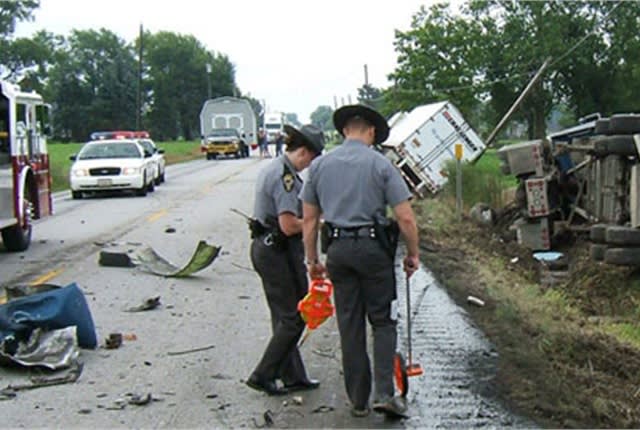
The Federal Motor Carrier Safety Administration has finished its analysis of crash accountability and is now reviewing the work in preparation for public release.
An agency spokesperson, Marissa Padilla, could not say how long the review will take but it is apparent that after more than a year’s effort the agency is approaching a decision about this lightning-rod issue.
Transportation interests have been at odds over crash accountability ever since the agency began to deploy its CSA safety enforcement system in 2010.
The agency’s approach was to aggregate crash data in the CSA Safety Measurement System without reference to fault as it tracks a carrier’s safety performance.
It explained that its ability to distinguish fault was limited, and, overall, there is a statistical probability that some of the crashes will be the carrier’s fault.
This gave rise to the contention by both the agency and the safety advocacy community that past crashes are a predictor of future crashes no matter who is at fault.
But for trucking interests, it is intuitively and logically incorrect to include non-fault crashes in a system that measures safety performance.
“It’s simply outrageous to motor carriers that crashes that are not their fault are used to prioritize enforcement against them,” said Rob Abbott, vice president of safety policy at American Trucking Associations.
The agency acknowledged carriers’ concerns and at one point in early 2012 was close to making changes but then pulled back, saying it needed to answer some questions that had been raised by safety advocates.
This led to the analysis that now is under review at the agency.
The analysis looks at three questions. Are police accident reports reliable enough to determine accountability? Will a system that includes accountability be a better predictor of future safety than one that does not? And how should the agency manage the process, giving the public a chance to participate?
As part of its analysis, the agency asked its civilian advisory board, the Motor Carrier Safety Advisory Committee to weigh in on the issue.
A key area of agreement is that the agency should extend its efforts on determining fault in crashes.
Specifically, the draft says the agency should look past police accident reports to other investigations that might apply, such as criminal reports, civil lawsuits or accident reconstruction reports.
Also, that the agency also should look at the research that’s been done on the accuracy of police reports, and should consider alternatives – and the cost of those alternatives – for determining fault in a crash.
The draft also highlights the same differences that have divided the transportation community from the beginning.
A majority of those who prepared the draft said that when the carrier clearly is not at fault the crash should not be counted in the carrier’s Crash Indicator score.
But a smaller group, representing the safety advocacy community, said that all crash reports, regardless of fault, should go into the score.
Their fear is that in the process of assigning fault the police report will be misinterpreted, and that the cost of determining fault will be greater than the benefit.
Trucking interests agree that it will not be possible to determine fault in all crashes, but argue that when a crash is clearly not the carrier’s fault it should not be included.
These are the key questions the agency will have to resolve with its decision. It may be that the research will provide convincing enough evidence to settle these differences, but it’s just as likely that the outcome will be continued dissatisfaction with this aspect of the CSA program.
More Drivers

From One Generation to the Next: How Mentorship Builds Safer Truck Drivers
After three decades in trucking, Harold Perry shares what he's learned about driver safety, mentorship, and helping the next generation build confidence behind the wheel.
Read More →
Truck Drivers Need More Than Another Alert
Fleets have more visibility into truck health, safety events, and driver activity than ever. The next challenge is turning all that information into useful guidance for the person who has to decide what to do next.
Read More →
FMCSA Removes 110 Truck Driver Training Schools from Certified ELDT List
Federal regulators also are targeting more than 160 additional training providers and launching a nationwide audit of third-party CDL skills testers as part of a broader crackdown on trucking fraud.
Read More →
Hours of Service Pilot Programs: FMCSA Readies for 2027 Rollout
Two pilot programs could eventually reshape hours-of-service rules, giving truck drivers options to pause their 14-hour clock or use longer split sleeper rest periods.
Read More →
Medical Cards, English Proficiency Reshape Roadcheck Violations
Medical-card violations jumped to the top of the driver out-of-service list during CVSA’s 2026 International Roadcheck, while English-language proficiency violations appeared among the leading violations for the first time.
Read More →
Driver Trust Can Make or Break the Success of Fleet Safety Technology
New Teletrac Navman research suggests that onboarding, transparency about driver data, and positive feedback can play a significant role in how commercial drivers respond to safety and coaching technology.
Read More →
EEOC Sues KLLM Over Alleged Sex Discrimination in Driver Training
KLLM is facing a federal sex-discrimination lawsuit over policies the EEOC alleges put female truck driver trainees at a disadvantage.
Read More →
FMCSA Moves to Codify English Language Requirements for Commercial Drivers
By changing regulations on English-language proficiency requirements for commercial drivers, rather than relying on a guidance memo, the FMCSA said future administrations won't be able to walk back the Trump administration's stricter enforcement with just a memo.
Read More →
Drivers Put Western Star Trucks to the Test at Star Nation Experience
Watch to get an inside look at the Western Star trucks, technology, and community behind the Star Nation Experience 2026!
Read More →
Trump Administration Looks to Put More Veterans Behind the Wheel
The Freedom Haulers program pulls together existing and expanded programs at several federal agencies to recruit veterans to drive commercial heavy-duty trucks and cut the red tape for them to get a CDL, training, and employment.
Read More →