




ATA Economist: Industry Faces Capacity Crunch
ANAHEIM -- The trucking industry is looking at a severe capacity crunch in coming years with a variety of factors contributing to the situation, according to Bob Costello, chief economist of the American Trucking Associations.


ATA Chief Economist Bob Costello speaking at TMW Transforum this week.
ANAHEIM -- The trucking industry is looking at a severe capacity crunch in coming years with a variety of factors contributing to the situation, according to Bob Costello, chief economist of the American Trucking Associations.
Speaking at TMW Systems’ Transforum 2013 user conference in Anaheim Tuesday Costello said, “‘we are headed for a capacity problem. The industry is not adding much capacity today.”
That makes sense, considering the recent downturn and slow growth. Looking at for-hire trucking, Costello said that about the same number of trucking firms added tractors as decreased tractors (39% to 37%) while 24% of fleets reported no change in their fleets. Some of the companies reporting no change have moved trucks to different work, from dry van to tank for example, but on the whole, the industry has added few trucks the last two years.
Further reducing the number of trucks is an increase in used Class 8 truck exports. Costello forecasts up to 22,000 units exported for sale this year, with half of those going to Mexico. Earlier in the decade, most of the used trucks exported went to Nigeria and Russia during those country’s energy booms.
Costello also pointed out that overall, the number of independent contractors (owner-operators) has stayed somewhat flat since 2012, while the number of company drivers had increased. For small truckload carriers, there has been an 8.6% increase in company drivers while independent contractors have dropped 7%. He theorized that could be caused by owner-operators moving to larger carriers who have programs in place to help owner-operators get newer trucks.
While the industry is not replacing trucks, other factors are also contributing to future capacity problems, among them reduction in productivity due to electronic logging devices, fewer qualified drivers and increased demand for trucks and less supply.
The driver situation could become a big problem, Costello said.
“Turnover is a good reflection of the driver market and it is getting close to hitting 100% in large truckload fleets. The turnover rate in LTL is currently 15% while it’s at 82% for small truckload carriers. There are a lot of costs associated with that amount of turnover.”

ATA Chief Economist Bob Costello speaking at TMW Transforum this week.
Trucking faces increased competition for drivers as the industry improves, particularly from construction. From June 2012 to March 2013, construction employment increased by 184,000 workers and in February, it saw the largest increase in seven years, up 48,000 jobs.
On the demand side, the economy is improving and so is demand for trucks. Looking at tonnage, truckload loads and LTL shipments, Costello said that while tonnage was up 4.7% from January to July of this year over the same period last year, truckload loads are down 1% and LTL loads are up just 1.3%. That reflects the loads being hauled. “Tonnage is growing faster than loads because it just so happens that the parts of the economy growing the fastest generate the heaviest freight, such as construction, automobile sales and energy production.”
In the truckload segment, dry van is down 0.6%, flatbed up 1.7%, temperature-controlled loads up 2.5%, tank up 5.1% and spot loads up 0.8%. While temperature-controlled loads are the most volatile, with seasonal variations, they were also the sector that fared the best during the downturn.
Increased demand for trucking and fewer drivers means companies will have a harder time meeting that demand in the near term. However, Costello said he predicts the “market will work,” and that the equilibrium between supply and demand in trucking will return.
More Drivers

Hours of Service Pilot Programs: FMCSA Readies for 2027 Rollout
Two pilot programs could eventually reshape hours-of-service rules, giving truck drivers options to pause their 14-hour clock or use longer split sleeper rest periods.
Read More →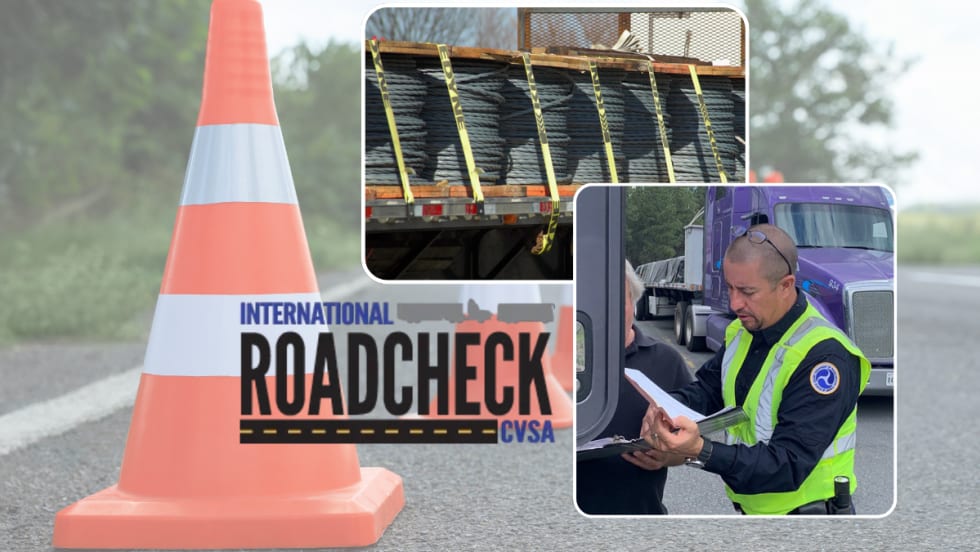
Medical Cards, English Proficiency Reshape Roadcheck Violations
Medical-card violations jumped to the top of the driver out-of-service list during CVSA’s 2026 International Roadcheck, while English-language proficiency violations appeared among the leading violations for the first time.
Read More →
Driver Trust Can Make or Break the Success of Fleet Safety Technology
New Teletrac Navman research suggests that onboarding, transparency about driver data, and positive feedback can play a significant role in how commercial drivers respond to safety and coaching technology.
Read More →
EEOC Sues KLLM Over Alleged Sex Discrimination in Driver Training
KLLM is facing a federal sex-discrimination lawsuit over policies the EEOC alleges put female truck driver trainees at a disadvantage.
Read More →
FMCSA Moves to Codify English Language Requirements for Commercial Drivers
By changing regulations on English-language proficiency requirements for commercial drivers, rather than relying on a guidance memo, the FMCSA said future administrations won't be able to walk back the Trump administration's stricter enforcement with just a memo.
Read More →
Drivers Put Western Star Trucks to the Test at Star Nation Experience
Watch to get an inside look at the Western Star trucks, technology, and community behind the Star Nation Experience 2026!
Read More →
Trump Administration Looks to Put More Veterans Behind the Wheel
The Freedom Haulers program pulls together existing and expanded programs at several federal agencies to recruit veterans to drive commercial heavy-duty trucks and cut the red tape for them to get a CDL, training, and employment.
Read More →
Putting Mack’s Command Steer to the Test
A test drive of Mack’s Command Steer active steering system evaluates how it can make truck driving easier and less tiring.
Read More →
Competition Heating Up for Truck Drivers
New report reveals rising driver hiring costs, the return of sign-on bonuses, growing AI advantages, and the operational factors shaping driver retention.
Read More →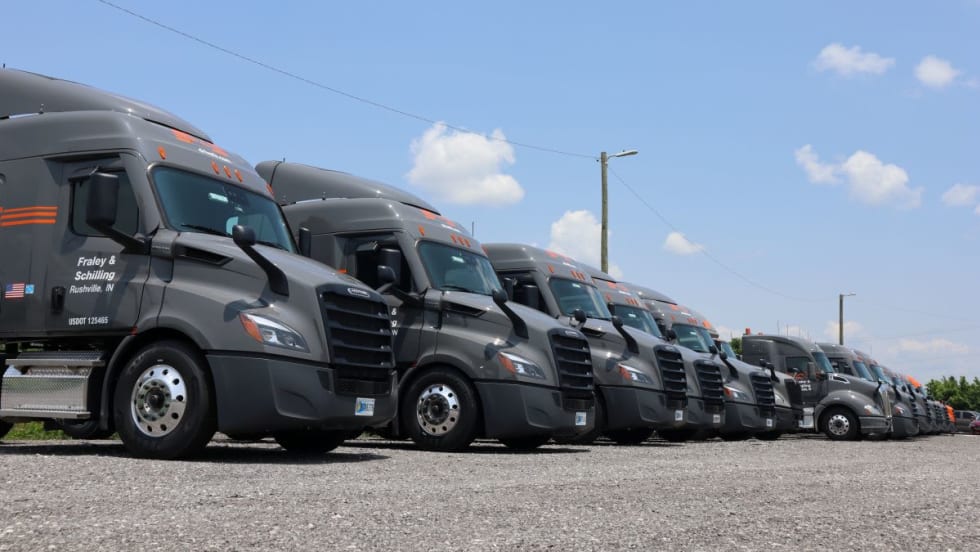
How Fraley & Schilling Improved Logbook Compliance by Over 50%
Fraley & Schilling needed a way to close a compliance workflow gap in its ELD system without adding more work from driver training, reminders, and back-office follow-ups. It found the answer in a custom driver app.
Read More →