




After the Hours-of-Service Ruling: Research on 34-Hour Restart, Action on Capitol Hill
Even as a federal court was recently upholding most of the hours of service rules, the Federal Motor Carrier Safety Administration has been working on a field study of the 34-hour restart.
Even as a federal court was recently upholding most of the hours of service rules, the Federal Motor Carrier Safety Administration has been working on a field study of the 34-hour restart that could influence that provision in the future, and there's a move on Capitol Hill to force the agency to return to the old rules.
Congress ordered the study in last year’s highway bill, at the insistence of the American Trucking Associations, which said the agency should confirm in the field the finding from a laboratory study that daytime sleep is not as restorative as nighttime sleep.
That finding is the scientific basis for the requirement that a driver take two periods off between 1 a.m. and 5 a.m. during his 34-hour restart, and it figured prominently in the court’s decision to uphold the provision.
It remains to be seen if the data from the field study will be persuasive enough for the agency to reconsider its approach to the restart.
Data collection for the study was finished in July and the final report is expected later this year, said agency spokesperson Marissa Padilla.
Meanwhile, there is a move in the House of Representatives to cut off funding for implementation or enforcement of the new hours and return to the old rule.
An attempt by Rep. Richard Hanna, R-N.Y., and several others to attach the amendment to transportation funding legislation failed when House leaders withdrew the bill.
But Hanna will pursue the amendment, said Renee Gamela, his communications director.
“He’s been discussing the amendment with colleagues and we’re confident it would have strong, bipartisan support when it comes up,” Gamela said.
The amendment is supported by 16 trucking and shipping interests, including ATA, OOIDA and UPS, as well as the Transportation Intermediaries Association, the National Retail Federation and the National Grocers Association.
Hanna, joined by Reps. Tom Rice, R-S.C., Trey Radel, R-Fla., and Todd Rokita, R-Ind., said in a Dear Colleague letter that the new rule decreases driver flexibility and raises costs – complaints that have been aired by all of the industry interests.
More Fleet Management
Where Electric Trucks Can Charge Now
New depots and truck-stop chargers gave electric trucks more places to plug in in 2026. Here’s where fleets can charge today, how megawatt charging works, and which freight routes to watch in 2027.
 Discuss with peers

Truck Tonnage Slips, Carrier Outlook Improves
For-hire truck tonnage fell 1.8% in October but was higher than a year earlier, and FTR raised its outlook for carriers for at least the next three quarters.

New Independent Contractor Rule Gives Trucking More Clarity
The Labor Department is once again changing how it determines who's an independent contractor. This time, the rule includes specific examples addressing trucking safety requirements, CDLs, and lease-purchase agreements.
Trucking's Annual Congestion Costs Reach $128.2 Billion
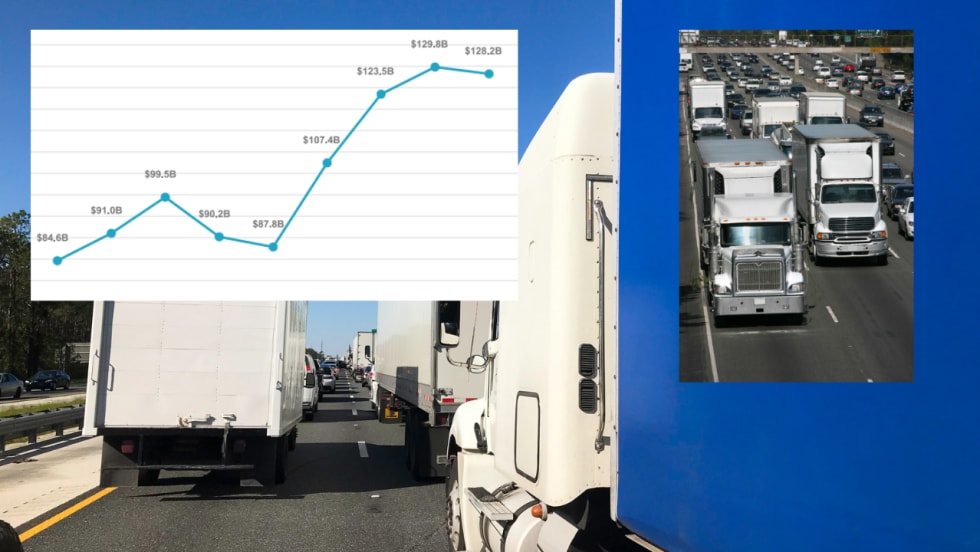
That's the average cost, according to new ATRI research. And the wasted time and diesel are staggering.
How to Modernize Your TMS Without Replacing It [Podcast]
Before investing in a new transportation management system, take a closer look at what you've already got. AI, cloud technology and better integrations may offer ways to improve your trucking operations without starting over.

Could Your Truck's Connected Devices Be a Cybersecurity Risk?
ELDs, telematics systems and driver tablets help fleets operate more efficiently. But every connected device needs protection against cyberattacks.
Holiday Freight Meets a Tight Trucking Market
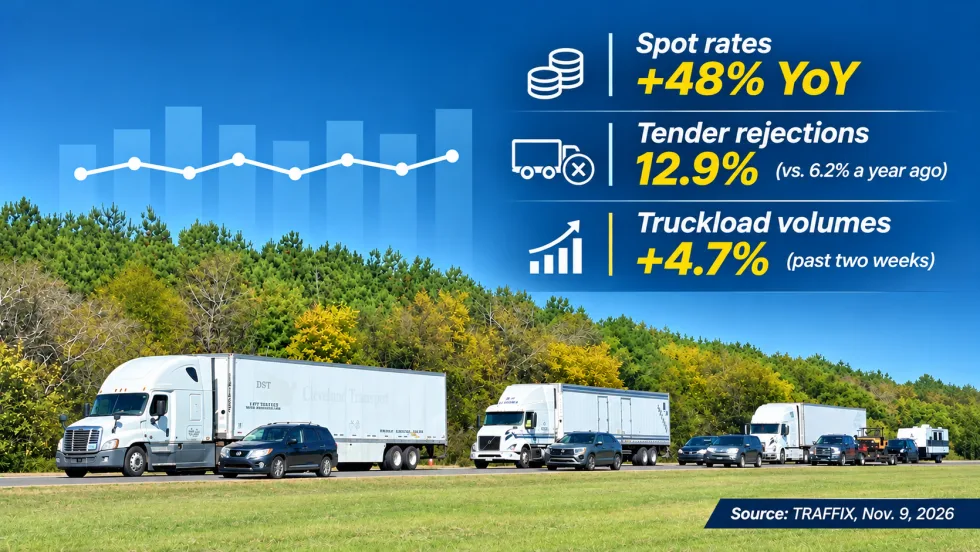
There's no freight boom, but truckload carriers are finding themselves in a stronger position to negotiate rates. And holiday shipping demand could tighten the market further.
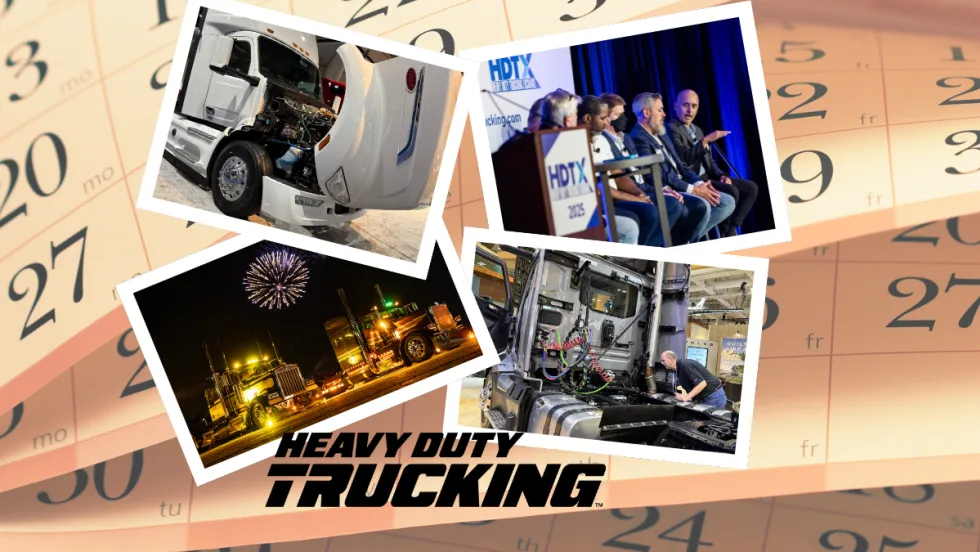
What Trucking Events are Happening in 2027?
Looking for trucking-related conventions, expos, and other events? Heavy Duty Trucking has developed this list of national and larger regional trucking shows and events.
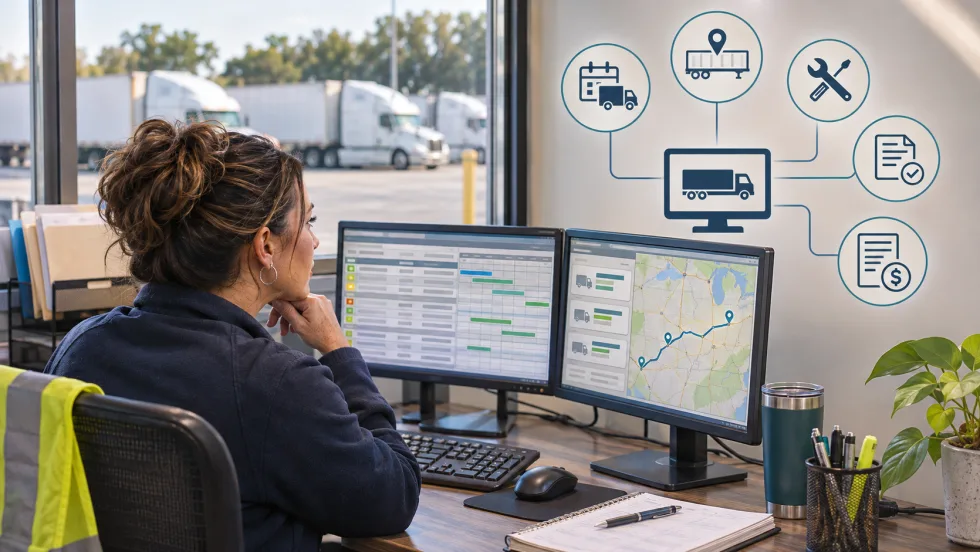
Does Your Trucking Fleet Need a New TMS?
Artificial intelligence and better integrations promise less busywork and more useful data. Can your TMS help your company solve problems? Do you need additional vendors or an upgrade? Or is it time to look for a new platform?
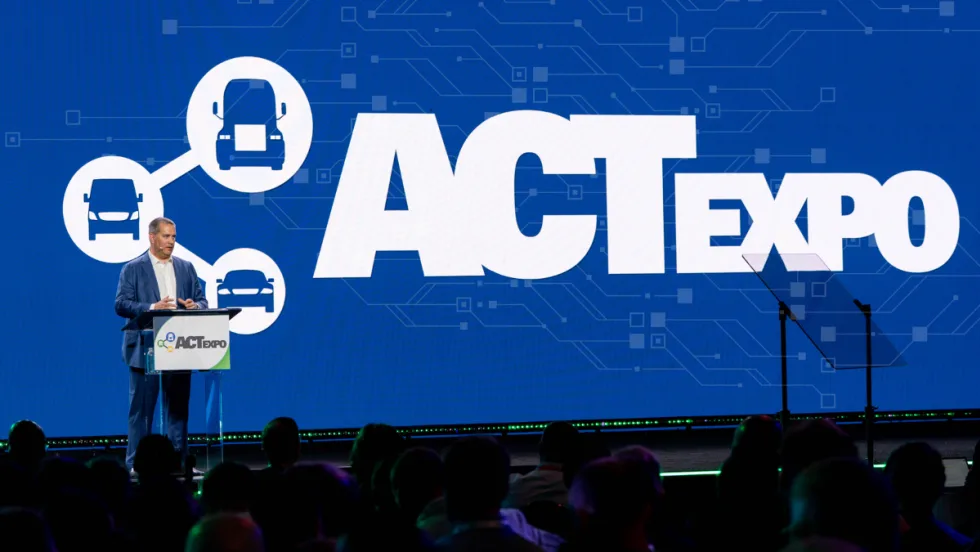
Fleet Costs Shape ACT Expo 2027 Agenda
With diesel prices high and operating expenses under pressure, ACT Expo's 2027 agenda emphasizes fuel efficiency, AI, safety and the return on fleet technology investments.