




Court Upholds Mexico Pilot Program
UPDATED- A federal appeals court upheld the Obama administration’s pilot program for long-distance trucking across the U.S.-Mexico border. The U.S. Court of Appeals for the District of Columbia Circuit denied petitions by the Owner-Operator Independent Drivers Association and the Teamsters union to declare the program illegal.


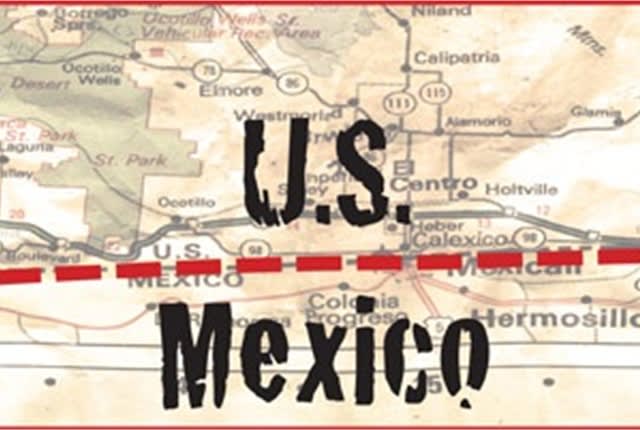
UPDATED- A federal appeals court upheld the Obama administration’s pilot program for long-distance trucking across the U.S.-Mexico border.
The U.S. Court of Appeals for the District of Columbia Circuit denied petitions by the Owner-Operator Independent Drivers Association and the Teamsters union to declare the program illegal.
Judge Brett Kavanaugh, writing for the three-judge panel, said the court rejected all of OOIDA’s seven arguments plus an additional six posed by the Teamsters.
Both groups have been fighting the border opening since it was included in the North American Free Trade Agreement signed by the U.S. and Mexico in 1994.
The current pilot program permits Mexican carriers that have met safety standards set by the Federal Motor Carrier Safety Administration to provide long-distance service to and from the U.S. It is designed to prove that the agency’s standards will ensure safe operation by Mexican carriers.
The owner-operator group’s challenge revolved around three central points.
It contended that program should not allow Mexican drivers to use Mexican commercial licenses because that violates the requirement that drivers in the U.S. have a license issued by a state.
The court found that Congress decided that the Mexican commercial license would be the equivalent of a state CDL.
OOIDA also said the program does not require Mexican drivers to meet U.S. medical standards, but the court said the Mexican CDL system, which requires a medical exam every two years, provides proof that the driver is medically fit.
And the group said the program violates drug testing requirements by allowing specimens to be collected in Mexico. The court said the rule allows the specimens to be collected anywhere as long as they are processed at a certified lab.
The Teamsters added other arguments, which also failed.
The union said that the program does not require Mexican trucks to display a decal showing that they comply with U.S. safety standards.
The court replied that the law applies only for trucks that are imported into the U.S. or introduced into U.S. interstate commerce, and that the agency has ruled that these trucks do not fit into that description.
The union also said that vision tests given to Mexican drivers require them to recognize only red, while U.S. drivers must recognize red, yellow and green.
The court found that Mexican medical standards don’t have to be the same as U.S. standards. Some Mexican standards are more stringent, and provide a level of safety that’s at least equivalent to the U.S. level, the court said.
And the Teamsters said the program does not include enough Mexican carriers to yield a statistically valid finding about safety, but the court rejected this argument because the agency has not limited the number of Mexican carriers that can participate.
In a separate ruling, another panel of judges on the court rejected an argument by OOIDA that the safety agency could not exempt Mexican or Canadian carriers from U.S. medical requirements.
It upheld the agency’s contention that applying U.S. requirements to the foreign carriers would violate executive agreements among the countries.
One judge, David Sentelle, dissented from this finding, arguing that the Supremacy Clause of the Constitution says the U.S. requirements should stand.
There are 12 Mexican carriers now running a total of 44 trucks in the cross-border pilot program.
More Drivers

From One Generation to the Next: How Mentorship Builds Safer Truck Drivers
After three decades in trucking, Harold Perry shares what he's learned about driver safety, mentorship, and helping the next generation build confidence behind the wheel.
Read More →
Truck Drivers Need More Than Another Alert
Fleets have more visibility into truck health, safety events, and driver activity than ever. The next challenge is turning all that information into useful guidance for the person who has to decide what to do next.
Read More →
FMCSA Removes 110 Truck Driver Training Schools from Certified ELDT List
Federal regulators also are targeting more than 160 additional training providers and launching a nationwide audit of third-party CDL skills testers as part of a broader crackdown on trucking fraud.
Read More →
Hours of Service Pilot Programs: FMCSA Readies for 2027 Rollout
Two pilot programs could eventually reshape hours-of-service rules, giving truck drivers options to pause their 14-hour clock or use longer split sleeper rest periods.
Read More →
Medical Cards, English Proficiency Reshape Roadcheck Violations
Medical-card violations jumped to the top of the driver out-of-service list during CVSA’s 2026 International Roadcheck, while English-language proficiency violations appeared among the leading violations for the first time.
Read More →
Driver Trust Can Make or Break the Success of Fleet Safety Technology
New Teletrac Navman research suggests that onboarding, transparency about driver data, and positive feedback can play a significant role in how commercial drivers respond to safety and coaching technology.
Read More →
EEOC Sues KLLM Over Alleged Sex Discrimination in Driver Training
KLLM is facing a federal sex-discrimination lawsuit over policies the EEOC alleges put female truck driver trainees at a disadvantage.
Read More →
FMCSA Moves to Codify English Language Requirements for Commercial Drivers
By changing regulations on English-language proficiency requirements for commercial drivers, rather than relying on a guidance memo, the FMCSA said future administrations won't be able to walk back the Trump administration's stricter enforcement with just a memo.
Read More →
Drivers Put Western Star Trucks to the Test at Star Nation Experience
Watch to get an inside look at the Western Star trucks, technology, and community behind the Star Nation Experience 2026!
Read More →
Trump Administration Looks to Put More Veterans Behind the Wheel
The Freedom Haulers program pulls together existing and expanded programs at several federal agencies to recruit veterans to drive commercial heavy-duty trucks and cut the red tape for them to get a CDL, training, and employment.
Read More →