




TCA Fleet Panel Sees Drop in Driver Applications, But Positive Signs on Economy, Freight, Rates
The driver shortage is already intensifying, with the number of both new and experienced driver applicants down over the last couple of months, as economic signs lead to improved optimism about increases in freight and rates this year, according to a panel discussion of three major truckload executives Tuesday at the Truckload Carriers Conference annual convention in Las Vegas.


Lana Batts, Max Fuller, Derek Leathers and Dan England during TCA's Tuesday General Session.

The driver shortage is already intensifying, with the number of both new and experienced driver applicants down over the last couple of months, as economic signs lead to improved optimism about increases in freight and rates this year, according to a panel discussion of three major truckload executives Tuesday at the Truckload Carriers Conference annual convention in Las Vegas.
The session, titled "Repaving Truckload's Road to Success," was hosted by Lana Batts, co-president of Driver iQ and a former head of TCA, featured:
Dan England, chairman of C.R. England Inc.
Max Fuller, chairman and CEO of U.S. Xpress Enterprises Inc.
Derek Leathers, president and chief operating officer, Werner Enterprises.
Driver Applications Dropping
The driver shortage situation "is going to be probably the worst situation we've seen," Fuller said. "If you look at the last year it's continued to tighten. In the last four weeks, we've seen number of applicants drop by 20% to 25%." Calls to other carriers confirmed similar trends, he said. "We think with housing improving, a number of drivers have left the industry to go into construction."
Leathers said while Werner hasn't seen that much of a drop, its applicant count has been down on both new and experienced drivers, at double digit levels, and it started at the end of last year.
As always when discussing the issue of the driver shortage, the issue of pay came up.
"We've been a TCA member 35 years," England pointed out, "And the first convention I went to we had a panel discussion on driver turnover. It has worsened, no question about it, but we have talked for so many years about trying to get more money for our drivers and I think we've largely failed."
Leathers said in conversations with shippers about the need to get rates up to pay drivers more, "I'd like to say we see a sense of urgency in their eyes," but that's not often the case. "You often hear that other carrier aren't telling them about need to raise driver wages. But when you ask them what they pay drivers in their own private fleets, it's almost universally 20% to 30% higher. We have those very uncomfortable dialogues and we push them on that perspective."
England says compared to what we were paying drivers in 1980, if you adjust for inflation, drivers aren't even making as much money as they were then, yet drivers today are faced with far more regulations and responsibilities.
"We've failed on that front and haven't succeeded in pushing through enough increases to pass on increased compensation to drivers, so we're trying to find ways to make the jobs we have better, more compatible with home life, get them home more often," he said.
Leathers, similarly, said Werner works to develop better pay packages that are more specific to the type of work drivers are doing, and to get them home more often.
Fuller and Leathers both said they are seeing longtime, experienced drivers throw up their hands and leave the business because they are fed up with the increasing number of regulations.
Hours of Service Uncertainty
One of those regulatory frustrations, of course, is the uncertainty over the new hours of service regulations scheduled to go into effect July 1, if a court challenge being heard between now and then doesn't affect the start date.
"We're planning on the impression that it may very well be implemented July 1," Leathers said. Werner has been running a portion of its fleet under the new rules and trying to determine what the impact will be. He is expecting a productivity hit in the high single digits or worse.
The good news, Leathers said, it that HOS "will be the last nail in the capacity coffin" and will give carriers more leverage to raise rates.
Looking ahead, the three were fairly optimistic.
"I think the next couple of years are going to be pretty exciting," Fuller said. "When you look at the truckload industry, we're really subject to the stocking, restocking, consumption that our country has. We've gone through the destocking cycle, and if you look at inventory to sales ratio, it's pretty low. You look at housing improving, unemployment improving, that's probably going to help the consumption side. I think in 2013 and 2014 we're all going to be a lot more excited about our industry and freight volumes."
England said there are some mixed signals out there. "If you look at year over year new truck sales, we've had 13 consecutive months of sales being down, and that obviously causes some alarm," he said. "However, if you look at new home sales, retail sales, consumer confidence, we're optimistic, and we're seeing some improvement in demand. It hasn't reflected itself in strong rate increase yet, but we're very optimistic."
"I think the market is tightening as we speak," Leathers added. "We're seeing more and more of that in conversations with customers."
Rates need to go up, Leathers said, because costs have gone up. "Even without a tonnage increase, this is a conversation we have to be having with our customers. When you look at new truck prices, we estimate on average you're purchasing those trucks at a 40% higher price. To not be out talking to customers about rates would be a difficult position to put your company in."
Fuller agreed. "I think you have to see rate increases. We've seen costs go up about 6% per year while rates have gone up about 3% per year the last couple of years. With capacity tightening the way we anticipate the rest of the year, we are going to see the ability to increase rates more so than at any point in the last three years."
More Fleet Management
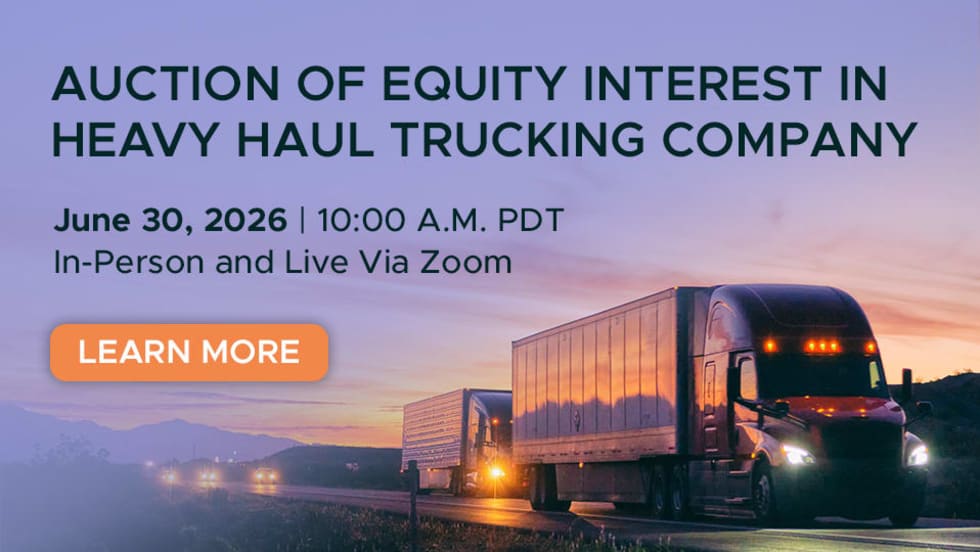
AUCTION OF EQUITY INTEREST IN HEAVY HAUL TRUCKING COMPANY!!
Mark your calendar: June 30, 2026 (10:00 a.m. PDT). MagnaTrans, LLC, a California limited liability company doing business as Magna Transportation Group is going to auction! Bid on a 37.5% ownership interest in this Rancho Cucamonga-based heavy haul and over-dimensional trucking company operating across California, Oregon, and Arizona. The equity interest will be sold to the highest bidder or bidders under Article 9 of the Uniform Commercial Code at 10:00 a.m. PDT.
Read More →
Volvo Trucks Adds Unattended Over-the-Air Software Update Capabilities
The latest evolution of Volvo’s over-the-air update technology allows software updates to run while trucks are parked, helping fleets keep vehicles current without disrupting operations.
Read More →
How Waste Connections is Using Data, Telematics, and AI
How do you manage and maintain more than 18,000 connected trucks? Data. Lots of it.
Read More →
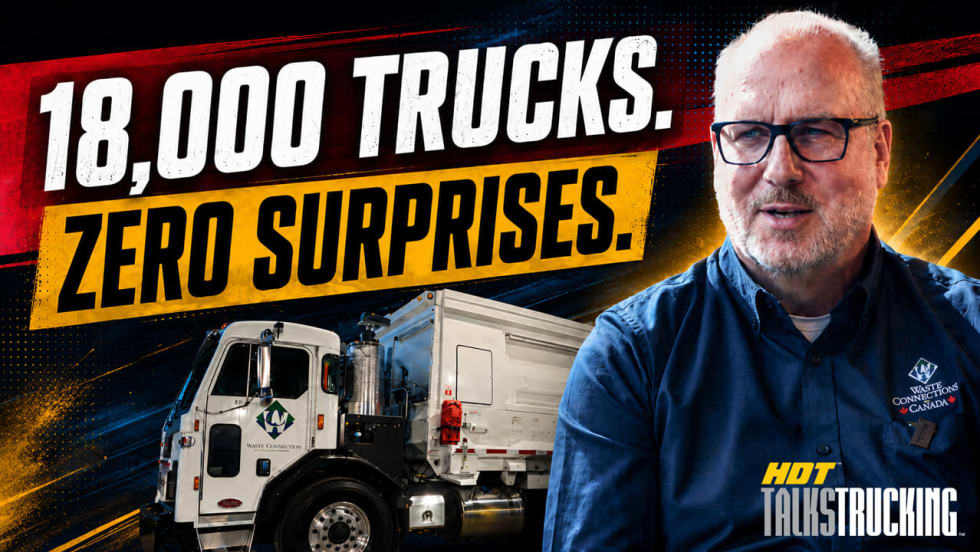
Why Fleet Data Matters More Than Ever at Waste Connections [Watch]
Waste Connections' Chuck Palmer explains how telematics, predictive maintenance, safety analytics, and AI help keep vehicles on the road and drivers safe in this episode of HDT Talks Trucking.
Read More →
NMFTA Launches Free, Anonymous Cybersecurity Threat Report Portal
Organizations are encouraged to anonymously report freight fraud, cargo crime, and cyber threats while gaining visibility into incidents reported across the transportation sector.
Read More →
AI Can Optimize a Fleet. Can It Replace Human Judgment?
Fleets fear falling behind if they don’t adopt AI quickly enough. They also fear what happens if the technology makes the wrong decision.
Read More →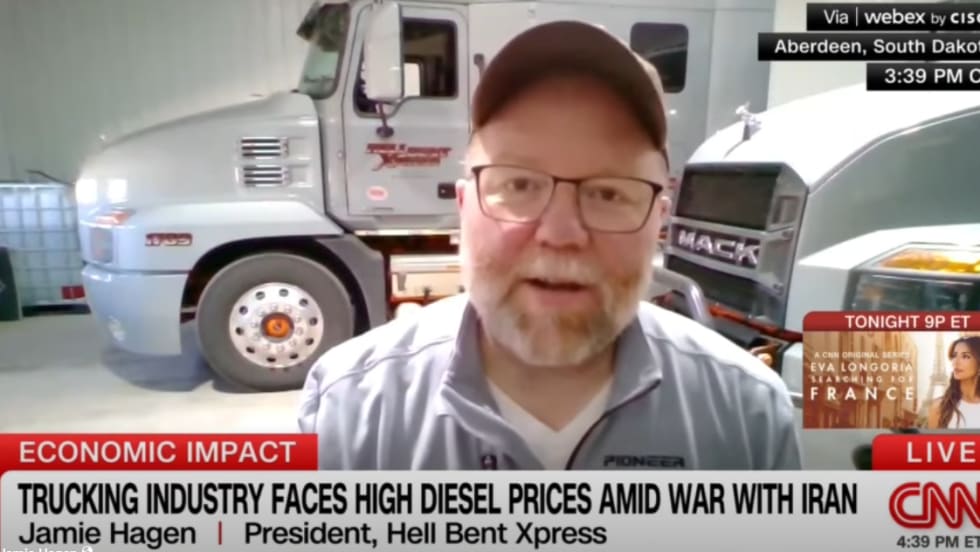
Jamie Hagen Gets Real About Running a Small Fleet in an Uncertain Economy
Small fleet owner Jamie Hagen says new legal risks, volatile fuel prices, and a changing freight market are forcing small carriers to rethink how they operate — and what they can afford.
Read More →
Jamie Hagen Gets Real About Freight, Fuel Prices, Safety, and Small-Fleet Survival
Running a small trucking fleet right now isn’t easy, especially right now. And Jamie Hagen doesn’t sugarcoat it.
Read More →
Jamie Hagen Gets Real About Freight, Fuel Prices, Safety, and Small-Fleet Survival
Running a small trucking fleet right now isn’t easy, especially right now. And Jamie Hagen doesn’t sugarcoat it.
Read More →
Data Lock‑In or Integration Lock‑Out?
Data fragmentation is costing dealerships, OEMs, fleets, and upfitters millions. Here’s why interoperability may be the fix the trucking industry needs.
Read More →