




Skirmish Continues Over HOS Start Date
Lawyers at the Federal Motor Carrier Safety Administration and American Trucking Associations are sniping at each other over the start date of the new hours-of-service rule.



Lawyers at the Federal Motor Carrier Safety Administration and American Trucking Associations are sniping at each other over the start date of the new hours-of-service rule.
This week T.F. Scott Darling III, the chief counsel at FMCSA, rejected a request by ATA President and CEO Bill Graves to push back the July 1 date until three months after a federal appeals court weighs in on a challenge to the rule.
Graves’s contention was that the delay would make it easier to manage any changes that the court may require, and to complete personnel training.
Darling said ATA was really seeking a stay of the rule, in addition to the delay, and that the agency will not “sacrifice what may be several months of public safety benefits from the timely implementation of the rule.”
Yesterday Prasad Sharma, senior vice president and general counsel of ATA, said in a letter to Darling that the agency’s reasoning is contrived.
“Rather than logically treating ATA’s letter as a request to amend the final rule by changing the compliance date, you elected to treat it as a Motion to Stay before a court of law – which, of course (FMCSA) is not,” Sharma wrote.
He said ATA can only conclude that the agency sees no possibility that the U.S. Court of Appeals for the District of Columbia Circuit will rule against the agency in the hours of service matter – even though it has in the past.
“As a result, FMCSA is willing to risk wasting significant training resources,” Sharma wrote.
“ATA and its members will not recklessly gamble on the anticipated outcome of litigation to be decided in the near future. As a result, the industry will prepare to comply with a rule that has a very reasonable chance of being different come July 1.”
At issue is a revised hours-of-service rule that is being challenged, on different grounds, by ATA and the victims advocacy group Public Citizen.
The court has scheduled oral arguments for March 15. It typically takes the court two to three months to rule following arguments, which means the decision could come as late as a month before the July 1 start date.
ATA says that much of the training for the new rule already is under way, but the industry and the enforcement community still will need three months to finish the job once they know what the final rule says.
In a press release yesterday the association said the trucking industry will spend $320 million between now and July 1 to prepare for the rule.
The enforcement community supports ATA’s position. The Commercial Vehicle Safety Alliance also asked for a deadline extension, and its request was rejected along with ATA’s.
More Drivers

EEOC Sues KLLM Over Alleged Sex Discrimination in Driver Training
KLLM is facing a federal sex-discrimination lawsuit over policies the EEOC alleges put female truck driver trainees at a disadvantage.
Read More →
FMCSA Moves to Codify English Language Requirements for Commercial Drivers
By changing regulations on English-language proficiency requirements for commercial drivers, rather than relying on a guidance memo, the FMCSA said future administrations won't be able to walk back the Trump administration's stricter enforcement with just a memo.
Read More →
Drivers Put Western Star Trucks to the Test at Star Nation Experience
Watch to get an inside look at the Western Star trucks, technology, and community behind the Star Nation Experience 2026!
Read More →
Trump Administration Looks to Put More Veterans Behind the Wheel
The Freedom Haulers program pulls together existing and expanded programs at several federal agencies to recruit veterans to drive commercial heavy-duty trucks and cut the red tape for them to get a CDL, training, and employment.
Read More →
Putting Mack’s Command Steer to the Test
A test drive of Mack’s Command Steer active steering system evaluates how it can make truck driving easier and less tiring.
Read More →
Competition Heating Up for Truck Drivers
New report reveals rising driver hiring costs, the return of sign-on bonuses, growing AI advantages, and the operational factors shaping driver retention.
Read More →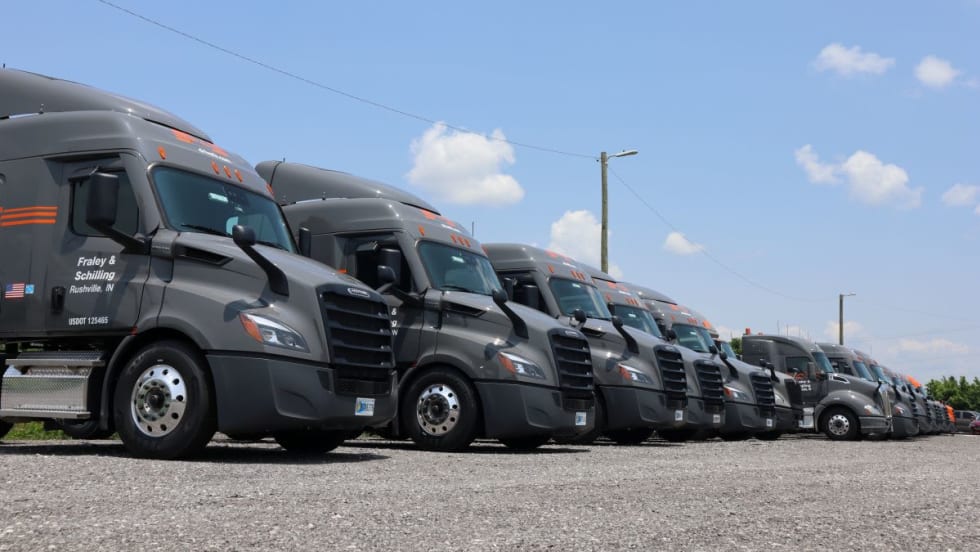
How Fraley & Schilling Improved Logbook Compliance by Over 50%
Fraley & Schilling needed a way to close a compliance workflow gap in its ELD system without adding more work from driver training, reminders, and back-office follow-ups. It found the answer in a custom driver app.
Read More →
Volvo Goes Gaming
Volvo has roared into American Truck Simulator with two new flagship trucks.
Read More →
What the Best Fleets to Drive For Teach About Driver Retention
Survey fatigue, AI-powered routing, owner-operator expectations, and the decline of social media all emerged as themes from this year's Best Fleets to Drive For program.
Read More →
Driver Retention Lessons From the Best Fleets to Drive For
What separates trucking's best workplaces from the rest? Jane Jazrawy shares the biggest lessons from this year's Best Fleets to Drive For program on driver retention, communication, AI, and workforce trends on the HDT Talks Trucking podcast.
Read More →