




Freight Shipments Fell 0.6% in August from July
The amount of freight carried by the for-hire transportation industry fell 0.6% in August from July, declining after a one-month rise. This information is according to the U.S. Department of Transportation's Bureau of Transportation Statistics' Freight Transportation Services Index
The amount of freight carried by the for-hire transportation industry fell 0.6% in August from July, declining after a one-month rise.
This information is according to the U.S. Department of Transportation's Bureau of Transportation Statistics' Freight Transportation Services Index.
The August 2012 index level (109.0) was 15.6% above the April 2009 low during the recession.
BTS, a part of the Research and Innovative Technology Administration, reported that the level of freight shipments in August measured by the Freight TSI (109.0) was at the lowest level since November 2011 (108.9) and was 4.4% below the all-time high level of 114.0 in December 2011. BTS' TSI records began in 1990.
The Freight TSI measures the month-to-month changes in freight shipments by mode of transportation in tons and ton-miles, which are combined into one index. The index measures the output of the for-hire freight transportation industry and consists of data from for-hire trucking, rail, inland waterways, pipelines and airfreight.
Analysis
The Freight TSI in August 2012 continued a pattern of little change since January. This appears to reflect the rate of growth in the general economy.
Gross Domestic Product growth slowed to a revised 1.7% in the second quarter and a revised 2% in first quarter of 2012 from 3% in fourth quarter of 2011, according to the Bureau of Economic Analysis.
Waterborne freight, which had declined significantly in June, has remained stable at the lower level since then, apparently due to the impact of continued low water conditions on the Mississippi River system.
Trend
Since peaking in December 2011 (114.0) at the highest level in the 22-year history of the Freight TSI series, the index has remained in a narrow band during the eight months of 2012. It reached a high of 110.6 in February and a low of 109.0 in August.
After dipping to 94.3 in April 2009 during the recession, freight shipments increased in 25 of the last 40 months, rising 15.6% during that period.
Index highs and lows
Freight shipments in August 2012 (109.0) were 15.6% higher than the recent low in April 2009 during the recession (94.3). In April 2009, freight shipments were at their lowest level since June 1997 (92.3).
The August 2012 level is down 4.4% from the historic freight shipment peak reached in December 2011 (114.0).
More Fleet Management
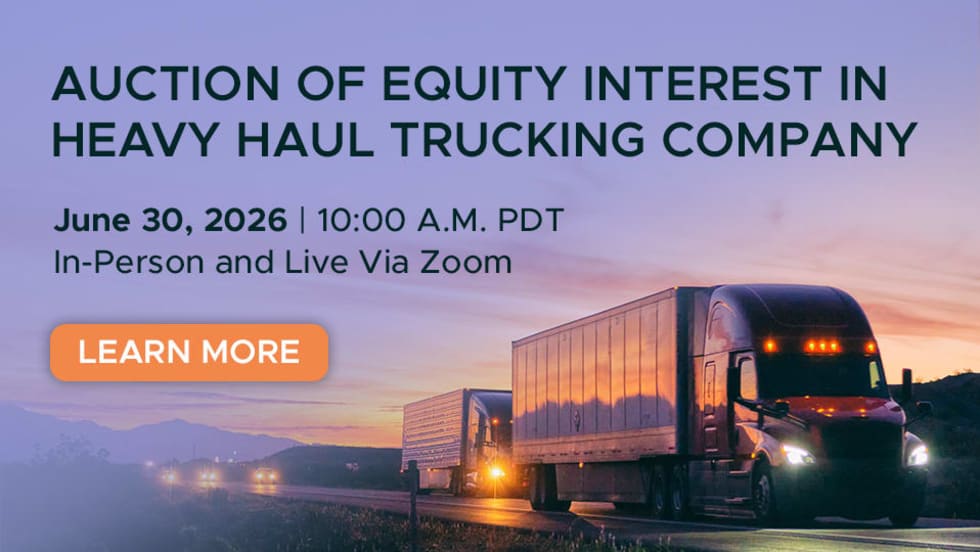
AUCTION OF EQUITY INTEREST IN HEAVY HAUL TRUCKING COMPANY!!
Mark your calendar: June 30, 2026 (10:00 a.m. PDT). MagnaTrans, LLC, a California limited liability company doing business as Magna Transportation Group is going to auction! Bid on a 37.5% ownership interest in this Rancho Cucamonga-based heavy haul and over-dimensional trucking company operating across California, Oregon, and Arizona. The equity interest will be sold to the highest bidder or bidders under Article 9 of the Uniform Commercial Code at 10:00 a.m. PDT.
Read More →
Volvo Trucks Adds Unattended Over-the-Air Software Update Capabilities
The latest evolution of Volvo’s over-the-air update technology allows software updates to run while trucks are parked, helping fleets keep vehicles current without disrupting operations.
Read More →
How Waste Connections is Using Data, Telematics, and AI
How do you manage and maintain more than 18,000 connected trucks? Data. Lots of it.
Read More →

Why Fleet Data Matters More Than Ever at Waste Connections [Watch]
Waste Connections' Chuck Palmer explains how telematics, predictive maintenance, safety analytics, and AI help keep vehicles on the road and drivers safe in this episode of HDT Talks Trucking.
Read More →
NMFTA Launches Free, Anonymous Cybersecurity Threat Report Portal
Organizations are encouraged to anonymously report freight fraud, cargo crime, and cyber threats while gaining visibility into incidents reported across the transportation sector.
Read More →
AI Can Optimize a Fleet. Can It Replace Human Judgment?
Fleets fear falling behind if they don’t adopt AI quickly enough. They also fear what happens if the technology makes the wrong decision.
Read More →
Jamie Hagen Gets Real About Running a Small Fleet in an Uncertain Economy
Small fleet owner Jamie Hagen says new legal risks, volatile fuel prices, and a changing freight market are forcing small carriers to rethink how they operate — and what they can afford.
Read More →
Jamie Hagen Gets Real About Freight, Fuel Prices, Safety, and Small-Fleet Survival
Running a small trucking fleet right now isn’t easy, especially right now. And Jamie Hagen doesn’t sugarcoat it.
Read More →
Jamie Hagen Gets Real About Freight, Fuel Prices, Safety, and Small-Fleet Survival
Running a small trucking fleet right now isn’t easy, especially right now. And Jamie Hagen doesn’t sugarcoat it.
Read More →
Data Lock‑In or Integration Lock‑Out?
Data fragmentation is costing dealerships, OEMs, fleets, and upfitters millions. Here’s why interoperability may be the fix the trucking industry needs.
Read More →