




Survey looks at fleet technology preferences
Fleets are increasingly looking at advanced technologies to save on fuel and improve safety and efficiency, and a recent survey of 100 top fleet managers offers some insight into their potential choices
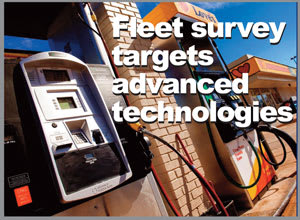
Interest in natural gas has spiked in the past two years.
Fleets are increasingly looking at advanced technologies to save on fuel and improve safety and efficiency, and a recent survey of 100 top fleet managers offers some insight into their potential choices.
Frost & Sullivan's latest Voice of the Fleet Manager survey reflects the answers of 100 fleet managers from both private and for-hire segments, conducted December 2011 through February 2012. The sample was made up of 56% fleet managers and 27% maintenance/service managers.
Sandeep Kar, global director- commercial vehicle research at the business research and consulting firm, presented the results the day before the Mid-America Trucking Show in Louisville, Ky., at the MATS Fleet Forum, put on jointly in conjunction with show management by Fleet Owner and Heavy Duty Trucking magazines.
"Powertrain technology is a top of mind issue for most fleet managers," Kar said.
When asked about the importance of advanced powertrain technologies, 27% called advanced engine oil lubes "very important," compared to 32% for auxiliary power units and 30% for selective catalytic reduction. If you combine the "very important" and "somewhat important" answers, oil still comes out on top, but SCR wins out over APUs. Other options included navigation-based fuel consumption optimization, cooled exhaust gas recirculation, compressed natural gas, biodiesel and hybrid trucks.
Even more important, Kar said, very few said they had no interest in advanced lubes, SCR or EGR.
When asked about purchase intentions, 89% said they would consider SCR, 87% said they would consider advanced engine lubes, and 82% would consider automated/automatic transmissions.
Why the interest in advanced engine oils? "Synthetics and semi synthetics help fleets keep trucks a longer period of time, reduce operating costs, extend drain interval and reduce downtime," Kar said.
The interest in automated/automatic transmissions, he said, "shows the North American market will look more like the European market, where these transmission dominate."
Diesel alternatives
Kar noted the big swing in the difference in interest in natural gas and biodiesel compared to the last study Frost & Sullivan did on the topic. In 2010, 78% ranked biodiesel highly, compared to 44% this year. Only 22% were interested in natural gas in 2010, up to 56% today.
The problem with hybrids comes down to affordability and payback. Fleet managers of Class 6-8 trucks are willing to pay higher initial costs for the chance to save on future costs within the next three to four years. Class 8 line haul truck fleets are demanding at least 10% higher fuel efficiency. More than 40% of respondents said they would consider buying hybrids if they could pay for the extra cost within three years, and about half said they would be willing to pay 1-% to 14% more than a conventional diesel. Interestingly, 40% said they would be willing to pay 15-19% more.
At the same time, about a quarter of respondents thought these diesel alternatives were "not at all important," with 31% saying CNG was not at all important to them, 27% for hybrids and 22% for biodiesel. Similarly, when asked about purchase intentions, nearly a third would not consider natural gas or hybrids at all.
Looking at the benefits of various powertrain technologies as factors in buying decisions, reliability and fuel efficiency topped the list. Nearly half, 48%, ranked reliability as No. 1 or 2, and fuel efficiency was the same. However, 31% ranked reliability as no. 1, followed by 25% for fuel efficiency. An attractive lifecycle cost and a longer lifespan saw around 20% of respondents rank them as No. 1 or No. 2.
Telematics and safety
The survey also asked about telematics, and found that the importance of telematics in enhancing mobile resource productivity is nearly split for many technologies. Geofencing was seen as the most important feature, with 30% saying it was "very likely," followed by back office automation/dispatching. When you looked at people who said it was "somewhat likely" OR "very likely," Critical event/safety system intervention alert came out on top with 77%, nearly tied with remote diagnostics and prognostics at 76%.
The key benefits of telematics were seen as cutting operating costs, with 55% ranking that one or two, followed by improving safety at 29%.
"Fleet managers are saying, 'we are ready to invest in the technology that helps reduce downtime and increase uptime,'" Karr said.
When asked about advanced safety technologies, respondents were most interested in disc brakes and larger drum brakes (45% ranked it very important), followed by trailer tire inflation systems at 39% and tractor-based roll stability control at 35%.
Kar predicted we will see more solutions that integrate a number of these technologies into a single driver interface.
The biggest reasons seen to adopt these advanced technologies were safe driving practices, followed by tangible ROI and by help with CSA compliance.
More Drivers
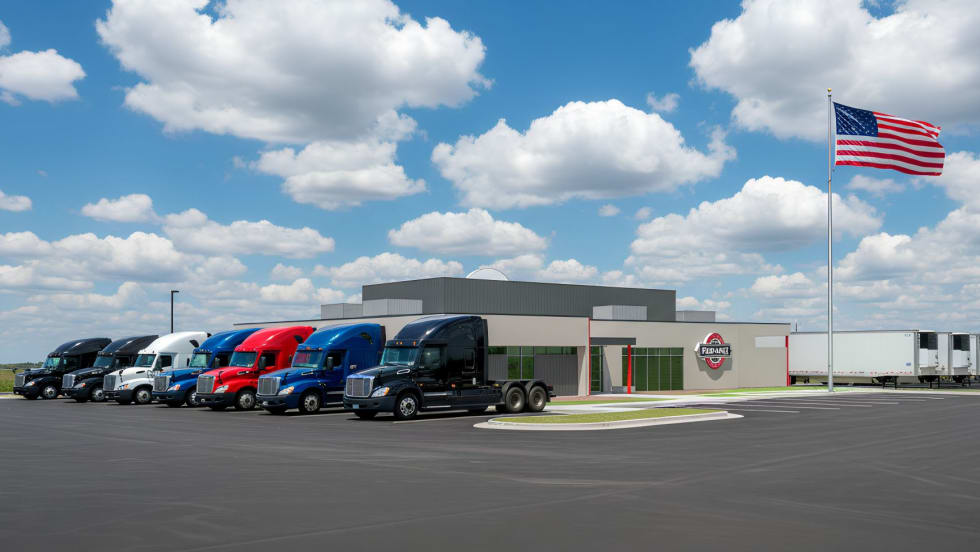
Prime Inc. to Open $7.9M Flagship Used-Truck Dealership
A new driver-focused facility to sell Prime Inc's used trucks and trailers will be the first purpose-built location in the company's history.
Read More →
Short Takes: Inside K&B’s Truck Safety Tech
Listen to learn how K&B Transportation uses cellphone-blocking technology, speed management systems, weather geofencing, bridge avoidance tools, and more to improve driver safety.
Read More →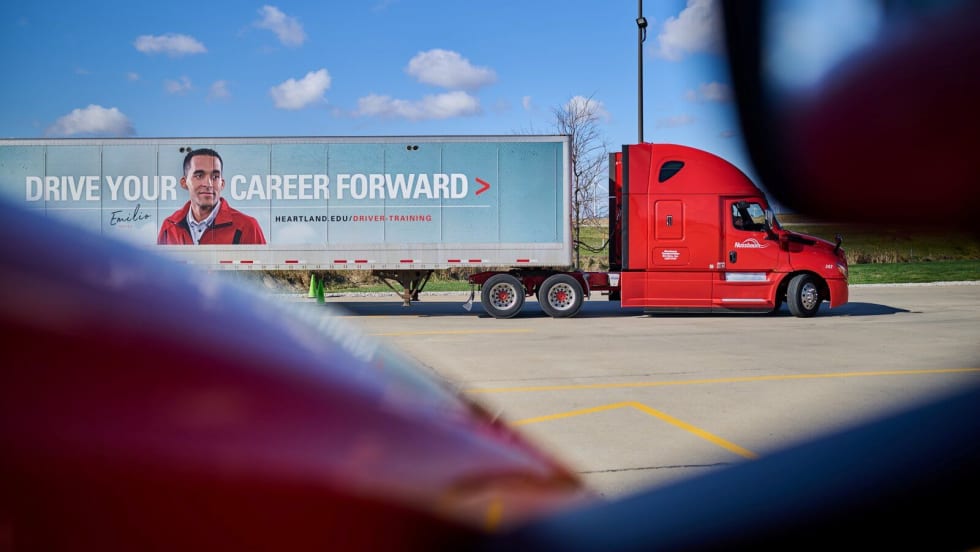
Nussbaum Expands Driver Compensation with Pay Raises, Profit Sharing
Nussbaum Transportation said its latest compensation package could push first-year driver earnings above $90,000 in key hiring markets.
Read More →
Listen: Inside Modern Fleet Safety: AI, Cameras & Speed Control at K&B Transportation
Fleet safety is evolving fast—and technology is at the center of it. Learn how a former commercial vehicle enforcement officer turned director of safety at K&B Transportation is embracing real-world safety technology.
Read More →
Maverick Announces 2026 Driver Pay Raises
New raises for Maverick Transportation drivers will take effect on May 31, 2026.
Read More →
Illinois Trucker Indicted for Nearly $22,000 in Ohio Turnpike Toll Evasion
Authorities say an Illinois trucker avoided paying tolls for two years, and now faces felony charges, possible prison time, and forfeiture of his Freightliner tractor.
Read More →
New Trojan Driver Cargo Theft Scam Bypasses Carrier Vetting Systems
Cargo theft rings plant operatives as drivers inside legitimate, fully vetted carriers, then execute coordinated thefts that look like a traditional straight theft from the outside.
Read More →
WIM, Trucker Path Name Top 3 Women-Friendly Truck Stops
ATA’s Women In Motion Council and Trucker Path highlight three truck stops that meet all seven safety-focused criteria and rank highest among female drivers.
Read More →
FMCSA Extends Paper Medical Card Exemption … Again
Five states still aren't ready to accept commercial driver medical exam information directly from the medical examiner's registry.
Read More →
Mack Launches Digital Driver Guide for Chassis-Specific Truck Info
Mack’s new, virtual owner’s manual delivers VIN-based, on-demand guidance for vehicle systems via web, app, and soon in-cab displays.
Read More →