





Related: Making Data Work for You
Commentary: Don’t Let Fear of Change Mire You in Mediocrity
Some fleets may feel overwhelmed by all the new technology coming at them because they don’t have the expertise. Let’s face it, at the rate new technology is rolling in, no one really has the expertise yet, says Editor in Chief Deborah Lockridge in her April editorial.
April 6, 2018
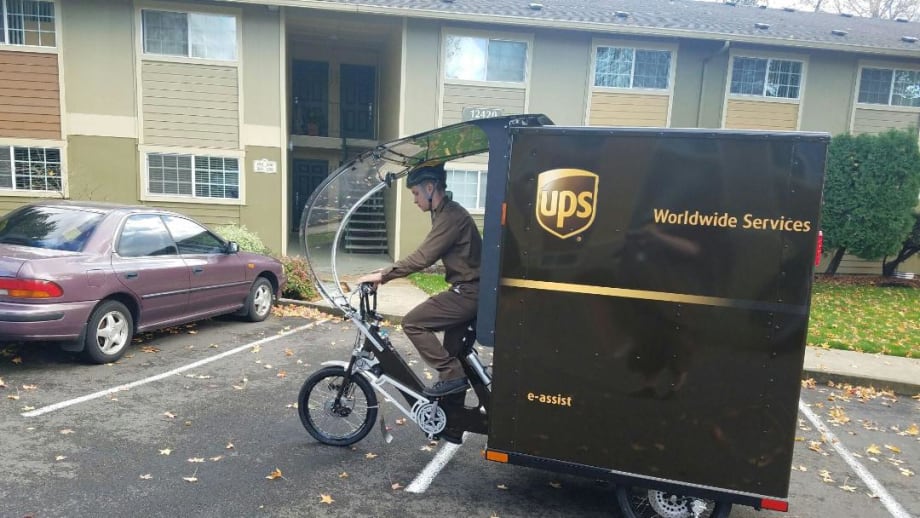
What happens when your shop has to maintain electric bikes like this UPS one in Portland, Oregon? It's just one example of how things are changing. Photo: UPS
3 min to read

What happens when your shop has to maintain electric bikes like this UPS one in Portland, Oregon? It's just one example of how things are changing.Photo: UPS
Electric vehicles. Driverless trucks. Platooning. Drones. Bicycles. You may think, to paraphrase the show Sesame Street, that one of these things is not like the others. Yet for parcel and logistics giant UPS, using regular and electric bicycles for delivery in some congested urban areas is just as much a part of its innovative thinking as its order of Tesla Semi heavy-duty electric tractors.
Last month’s annual meeting of the American Trucking Associations’ Technology & Maintenance Council was themed “Driving Excellence Through Expertise.” Yet some fleets may feel overwhelmed by all the new technology coming at them because they don’t have the expertise. Let’s face it, at the rate new technology is rolling in, no one really has the expertise yet. We’re all making it up as we go along.
But sitting still and worrying about it is not an option, said Carlton Rose, UPS president, global fleet maintenance and engineering, speaking during the kickoff breakfast. “You cannot be a linear thinker in an exponential world,” said Rose, who worked his way up through the UPS ranks after serving as a driver and technician.
Excellence, he noted, evolves, pointing to some of the earliest mobile phones as an example. “Today’s excellence is tomorrow’s mediocrity,” he said.
The first step to seeing what the excellence of tomorrow looks like, he said, is to grasp what mediocrity looks like today, citing polluted air and vehicle crashes as examples. “Today’s mediocrity is standing still, watching and worrying, as technology moves ahead faster than ever before.
“It’s understandable to be afraid of all this change,” Rose said. “In fact, it’s smart. But fear of the unknown discourages investment.”
When you know it’s the right thing to do, but you’re waiting around for the technology to be better proven, don’t sacrifice the good for the perfect. Sometimes, we need to take a cue from Nike’s slogan “Just Do It.”

Deborah Lockridge
So how do we break though that fear? “It’s as simple as ABC: Adaptability, bravery, and commitment,” Rose said.
That adaptability was definitely seen in another session, where UPS’ Duane Lippincott spoke on a panel on last-mile delivery. Lippincott, who oversees training for UPS’ maintenance personnel at more than 1,400 shops in the U.S., spoke about how the company’s adoption of everything from bicycles to natural gas and electric trucks has changed things on the maintenance side, from stocking bicycle tire tubes to figuring out charging and training strategies.
It may even mean thinking about different ways of training techs and running shops. Maybe you’d want to outsource the maintenance work on bicycles or drones, for instance.
“It’s going to be very difficult to hire enough technicians and have highly technical people” in all your tech positions, he said. Perhaps we’ll need a hierarchy, with an entry-level tech handling basic jobs like oil changes and tires on one end, and a highly skilled, trained, and technical expert on the other end of the scale.
“Maybe we would develop a call-in number where less-skilled techs call in and the highly skilled ones help diagnose the problem by phone,” he suggested. “We don’t need virtual reality glasses for that; we can do that today, every one of us, with an iPhone, just using Facetime, so you can show him the problem you’ve got.”
UPS, for one, is practicing what it preaches. “We must be willing to change as technology changes,” Rose said. “Far too often we’re mentally enslaved to the familiar. Freeing ourselves may allow us to take the first step.” And who knows where all those first steps may lead.
Subscribe to Our Newsletter
More Fleet Management

Sponsored•September 16, 2026
Color Match Smarter: Tools That Restore & Perform
For fleet managers and collision repair professionals keeping heavy-duty trucks on the road, getting the color right the first time isn't just about appearance — it's about efficiency, turnaround time, and bottom-line results. Discover how today's digital color tools are transforming the repair process from guesswork to precision.
Read More →
FMCSA Pauses Biennial-Update Enforcement Amid Motus Transition
Carriers whose updates were due on or after June 1 have more time, while FMCSA works to stabilize its new registration system and warns of phishing sites impersonating its new carrier registration system, Motus.
Read More →
Sponsored•September 14, 2026
2026 Blueprint for Countering Smarter Supply Chain Theft
Cargo theft is no longer just the cost of doing business. It's a multi-billion-dollar criminal enterprise exploiting vulnerabilities across your fleet, drivers, and supply chain.
Read More →


Sponsored•September 1, 2026
How Telematics Improves Visibility, Control, and Performance in Refrigerated Fleets
Explore how telematics help refrigerated fleets improve visibility, uptime, efficiency, compliance, and cargo protection across connected cold chain operations.
Read More →
What the U.S.-Canada Trade War Means for Trucking
Escalating U.S.-Canada tariffs could disrupt cross-border freight, reduce truck volumes, raise costs, and create new uncertainty for carriers on both sides of the border.
Read More →
What Are Trucking’s Top Concerns for 2026?
The American Transportation Research Institute wants to know what's worrying trucking fleet managers, drivers, and other stakeholders in its annual Industry Issues survey.
Read More →
American Trucking Associations Looks for a New Leader
ATA President and CEO Chris Spear abruptly left his job at the association on August 21, at a pivotal time for the trucking industry.
Read More →
Public Wi-Fi Cybersecurity Risks: How Truck Drivers and Fleets Can Protect Their Data
Public Wi-Fi can expose truck drivers and fleets to credential theft, malware, and other cyber threats. Here’s how to reduce the risk on the road.
Read More →
For Nicky Cupp, Fleet Innovation Starts With Frustration
HDT Truck Fleet Innovator Nicky Cupp turns everyday pain points at Fraley & Schilling into opportunities for better technology and smarter processes.
Read More →
Adam Buttgenbach’s Approach to Electric Trucks: Start With Where They Fit
HDT Truck Fleet Innovator Adam Buttgenbach helped PepsiCo build one of North America’s largest EV fleets by focusing on where electric trucks make operational sense.
Read More →