




Related: Digging into Fleet Data Unlocks Greater Efficiency and Profitability
How Trucking Has Evolved and Where It Could be Going
The transportation and supply chain industry has evolved immensely throughout the past year. In 2018, with new technologies in our cabs and the ELD mandate in effect, more eyes will be on our industry.
by Lauren Domnick
January 22, 2018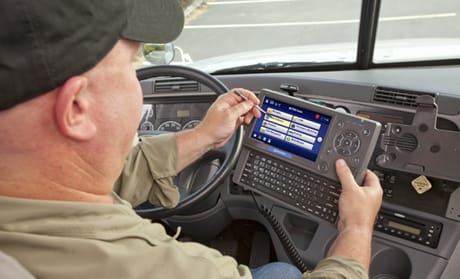
With the ELD mandate now in place, the next step is to educate fleet owners, managers and drivers on how to best use the data and high-level information they can now access. Photo: Omnitracs
4 min to read
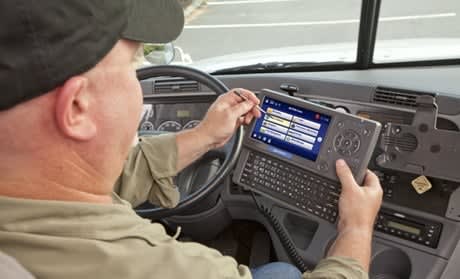
With the ELD mandate now in place, the next step is to educate fleet owners, managers and drivers on how to best use the data and high-level information they can now access.Photo: Omnitracs
The transportation and supply chain industry has evolved immensely throughout the past year. From the testing of autonomous vehicles to the launch of completely-electric trucks, there’s been a great deal of buzz around innovation in the industry. In 2018, with new technologies in our cabs and the ELD mandate in effect, more eyes will be on our industry.
Transportation and logistics companies employ some of the most industrious workers in the nation, and yet these everyday heroes are rarely recognized for providing the nation with 70% of domestic freight transportation or operating 365 days a year. We recently looked at the data, crunched the numbers and determined that 2017 was a successful year for trucking overall, yet some changes will need to be made if we want to see the upward trajectory continue.
Data Talks: 2016 to 2017
When comparing the 2017 to 2016, we see shifting driver habits - yet this is more than just an earlier morning or a longer lunch break. Outside factors like detention time, traffic, and parking are becoming major concerns when fleets are working to accomplish their daily operations.
On average, drivers logged more hours last year than in 2016. This could be due to a number of reasons, including more loads needing to be transported, drivers looking to increase their overall income or simply the industry’s need for more people in the driver’s seat. And although the overall on-duty time is higher, so is the number of on-duty hours spent not driving. We’ve all heard about long wait times at terminals and ports as a more prominent industry concern, and this increase in hours further highlights the need for a better system.
The data also shows that drivers were starting and ending their days earlier than in 2016. This could be due to traffic patterns in various cities, as drivers’ average number of miles remained about the same compared to 2016. The Texas Transportation Institute found the average commuter spends roughly 42 hours sitting in traffic each year, and a study by TomTom showed an average traffic congestion increase of 3% in some U.S. cities.
Another viable reason why drivers are starting and ending their days earlier could be the lack of truck-friendly parking. They need to claim an available spot earlier in the day to decrease the risk of not finding a spot at all. This is not just about having to drive to the next truck stop. If a driver is stopped by a regulation officer while trying to find a parking spot, the driver could be put out of service for up to 10 hours or fined due to an hours-of-service violation. Lack of parking should not be a reason to get a mark on a dedicated driver’s record.
So What’s Next? A Look at 2018 and Beyond
As we move into the 2018, it’s important to keep this data in mind and determine ways to combat its implications. With the implementation of ELDs, companies will be able to track which of their customers are holding drivers the longest. If necessary, fleets will be able to analyze this data and adjust their route plan as necessary to ensure drivers are respected and the company is meeting its overall business objectives. With the ELD mandate now in place, the next step is to educate fleet owners, managers and drivers on how to best use the data and high-level information they can now access.
With traffic congestion, the transition to autonomous vehicles - including cars and trucks - could help address this challenge. Distracted drivers not only cause accidents, but also slow-downs with hard braking and fluctuating speeds. Although autonomous vehicles may not become mainstream for years, it’s a viable option for long-term change.
A more short-term solution is rethinking parking. Smart Cities are already using parking technology to ease traffic congestion and increase transit efficiencies by connecting public parking spots to users with Internet of Things applications - similar to the technology used by bike sharing programs such as Citi Bike. By using a simple mobile app, you can find a place to dock your bike or park your car before you arrive at the location. This technology can be directly replicated for the trucking community, which we anticipate will be a major initiative this upcoming year.
For 2018, the industry should recognize its great strides and achievements from 2017, while continuing to focus on ways to utilize new technologies to not only enhance fleet operations, but also increase driver satisfaction.
*Omnitracs proprietary data is based on a 50,000 driver average monthly sample size.
Lauren Domnick is the senior director of analytics and modeling at Omnitracs, a fleet managment software solutions provider serving the transportation industry. This article was authored under the guidance and editorial standards of HDT’s editors to provide useful information to our readers.
Subscribe to Our Newsletter
More Fleet Management

Sponsored•September 16, 2026
Color Match Smarter: Tools That Restore & Perform
For fleet managers and collision repair professionals keeping heavy-duty trucks on the road, getting the color right the first time isn't just about appearance — it's about efficiency, turnaround time, and bottom-line results. Discover how today's digital color tools are transforming the repair process from guesswork to precision.
Read More →
FMCSA Pauses Biennial-Update Enforcement Amid Motus Transition
Carriers whose updates were due on or after June 1 have more time, while FMCSA works to stabilize its new registration system and warns of phishing sites impersonating its new carrier registration system, Motus.
Read More →
Sponsored•September 14, 2026
2026 Blueprint for Countering Smarter Supply Chain Theft
Cargo theft is no longer just the cost of doing business. It's a multi-billion-dollar criminal enterprise exploiting vulnerabilities across your fleet, drivers, and supply chain.
Read More →


Sponsored•September 1, 2026
How Telematics Improves Visibility, Control, and Performance in Refrigerated Fleets
Explore how telematics help refrigerated fleets improve visibility, uptime, efficiency, compliance, and cargo protection across connected cold chain operations.
Read More →
What the U.S.-Canada Trade War Means for Trucking
Escalating U.S.-Canada tariffs could disrupt cross-border freight, reduce truck volumes, raise costs, and create new uncertainty for carriers on both sides of the border.
Read More →
What Are Trucking’s Top Concerns for 2026?
The American Transportation Research Institute wants to know what's worrying trucking fleet managers, drivers, and other stakeholders in its annual Industry Issues survey.
Read More →
American Trucking Associations Looks for a New Leader
ATA President and CEO Chris Spear abruptly left his job at the association on August 21, at a pivotal time for the trucking industry.
Read More →
Public Wi-Fi Cybersecurity Risks: How Truck Drivers and Fleets Can Protect Their Data
Public Wi-Fi can expose truck drivers and fleets to credential theft, malware, and other cyber threats. Here’s how to reduce the risk on the road.
Read More →
For Nicky Cupp, Fleet Innovation Starts With Frustration
HDT Truck Fleet Innovator Nicky Cupp turns everyday pain points at Fraley & Schilling into opportunities for better technology and smarter processes.
Read More →
Adam Buttgenbach’s Approach to Electric Trucks: Start With Where They Fit
HDT Truck Fleet Innovator Adam Buttgenbach helped PepsiCo build one of North America’s largest EV fleets by focusing on where electric trucks make operational sense.
Read More →