




Related: America’s 'Check Engine Light' is On, Says New Film About Failing Infrastructure
The Future of Tolling in America
Regardless of what happens to improve infrastructure at the federal level, state and local governments are increasingly taking steps to improve roads and bridges through tolling.
by Andrew Johnson, PrePass
April 24, 2017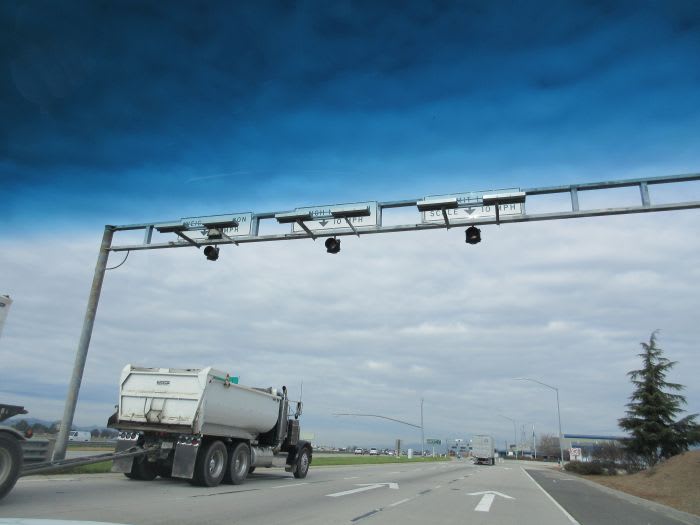
Photos: PrePass
5 min to read
Photos: PrePass
It’s hard to listen to the news these days without hearing about the current state of the U.S. infrastructure. Nearly everyone agrees that the highways, roads, and bridges are in dire need of immediate attention.
According to the American Society of Civil Engineers (ASCE)’s 2017 Infrastructure Report Card, “America’s roads are crowded, frequently in poor condition, chronically underfunded, and becoming more dangerous. More than two out of every five miles of America’s urban interstates are congested and traffic delays cost the country $160 billion in wasted time and fuel in 2014. One out of every five miles of highway pavement is in poor condition and our roads have a significant and increasing backlog of rehabilitation needs.”
In fact, U.S. roads rank #16 in terms of quality compared to roads in other nations. Conditions are so bad that the ASCE gave America’s infrastructure a grade of D+.
According to the U.S. Department of Transportation’s Beyond Traffic 2014: Trends and Choices, America’s population will grow by 70 million by 2045. Over this same period, the U.S. economy is forecast to grow by 115% to $36.7 trillion, with freight volume growing by 29 billion tons – an increase of 45%.
While this growth is good news for the transportation industry, the not so good news is that by 2040 approximately 30,000 miles of the busiest highways in the country will be congested on a daily basis. What does this mean for our current highways, roads, and bridges, and how do we keep pace with this growth?
Recently, President Donald Trump maintained his pledge for $1 trillion in new infrastructure, although details of this plan have not yet been formulated. Trump indicated that private-sector investment will help minimize public costs, very likely resulting in a mix of funding types, both private and public, to pay for much-needed repairs and upgrades.
Commerce secretary Wilbur Ross and head of the National Trade Council, Peter Navarro, have recommended $137 billion in tax credits for infrastructure private investment. While no specific plan is proposed, investors will demand that any private investment will require a return potentially greater than the recommended tax break.
One potential solution is through road and bridge tolling.
The Growth of Tolls to Pay for Roads and Bridges
“Not only can tolling be used to generate revenues to fund the construction of new highway capacity and to maintain existing capacity,” says Beyond Traffic, “it can also be used to manage congestion on a [road].”
There are more than 100 operational toll facilities in the U.S. and, while each state separately evaluates potential toll programs, most toll authorities are independent, non-elected bodies that have the right to set their own rules and systems for collecting tolls and rates.
An International Bridge, Tunnel and Turnpike Association (IBTTA) report points to several factors that are driving the growth of tolling:
Regional population growth and road congestion
The inability of federal and state funding to keep up with infrastructure development
Counties and cities are finding their own ways to solve the infrastructure problem
Operational demands are increasing on existing highways
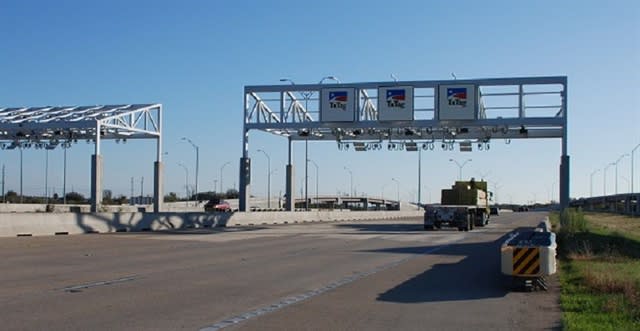
Currently, federal law prohibits tolling on existing interstate highways built with federal monies. Exceptions to the law were made in the Intermodal Surface Transportation Efficiency Act (ISTEA) and other federal surface transportation regulations. “Tolling can be used on new facilities, roads and on bridges and tunnels that are reconstructed or replaced,” Beyond Traffic explains. The report further states that, since 1992, tolls as a portion of state and local highway revenues have increased from six percent to nine percent.”
Opponents of tolling argue that it is more costly to collect tolls than it is to collect revenue from gas tax. “However, with the advent of electronic toll collection and mobile payment technologies, tolling has become more cost-effective and convenient,” the report adds.
Regardless of what happens to improve infrastructure at the federal level, state and local governments are increasingly taking steps to improve roads and bridges through tolling.
During its 2014 Global Summit, IBTTA indicated that many states are fertile ground for tolling initiatives on roads, bridges or express lanes. Using 2014 as a base, IBTTA sees growth in traditional toll roads, express lanes and even interstate conversions from 5,000 miles in 2014 to 25,000 miles by 2030.
The Long-Term Effects of Tolling
While tolls could help fund projects and compensate investors, the real, long-term effects on our transportation system and the movement of goods are unknown. Transportation operations should prepare and continue to consider costs of routes as the tolling trend continues. Part of this strategy may also include tolling service providers that can help streamline payment and reduce toll fees through volume discounts.
Tolling service providers can often negotiate lower costs with toll authorities and provide one, consolidated invoice to carriers. This will become increasingly important as the number of toll roads increase.
As Matt Cole, president of Cubic Transportation Systems and Corporate Senior Vice President at Cubic Corp., wrote in his blog Five Trends in Road Pricing to Come, “The tolling industry has enjoyed growth — steady in some regions and significant in others — and tolling forms an important part of many country’s transportation infrastructure. A more user-pays orientation to road usage, both tomorrow and further into 2030, is going to look four to five times bigger than it is today.”
Andrew Johnson is chief marketing officer at HELP Inc., a non-profit organization providing PrePass weigh station bypass and PrePass Plus toll payment services. Over a half million commercial vehicles use PrePass to bypass inspection facilities at highway speeds. Learn more at www.prepass.com. This article was authored under the guidance and editorial standards of HDT's editors to provide useful information to our readers.
Subscribe to Our Newsletter
More Fleet Management

Why Private Fleets Are Taking More Freight
Private fleets are putting their own trucks on demanding customers and high-cost lanes as companies seek greater control over service, costs, and capacity.
Read More →
Sponsored•September 16, 2026
Color Match Smarter: Tools That Restore & Perform
For fleet managers and collision repair professionals keeping heavy-duty trucks on the road, getting the color right the first time isn't just about appearance — it's about efficiency, turnaround time, and bottom-line results. Discover how today's digital color tools are transforming the repair process from guesswork to precision.
Read More →
FMCSA Pauses Biennial-Update Enforcement Amid Motus Transition
Carriers whose updates were due on or after June 1 have more time, while FMCSA works to stabilize its new registration system and warns of phishing sites impersonating its new carrier registration system, Motus.
Read More →


Sponsored•September 14, 2026
2026 Blueprint for Countering Smarter Supply Chain Theft
Cargo theft is no longer just the cost of doing business. It's a multi-billion-dollar criminal enterprise exploiting vulnerabilities across your fleet, drivers, and supply chain.
Read More →
Sponsored•September 1, 2026
How Telematics Improves Visibility, Control, and Performance in Refrigerated Fleets
Explore how telematics help refrigerated fleets improve visibility, uptime, efficiency, compliance, and cargo protection across connected cold chain operations.
Read More →
What the U.S.-Canada Trade War Means for Trucking
Escalating U.S.-Canada tariffs could disrupt cross-border freight, reduce truck volumes, raise costs, and create new uncertainty for carriers on both sides of the border.
Read More →
What Are Trucking’s Top Concerns for 2026?
The American Transportation Research Institute wants to know what's worrying trucking fleet managers, drivers, and other stakeholders in its annual Industry Issues survey.
Read More →
American Trucking Associations Looks for a New Leader
ATA President and CEO Chris Spear abruptly left his job at the association on August 21, at a pivotal time for the trucking industry.
Read More →
Public Wi-Fi Cybersecurity Risks: How Truck Drivers and Fleets Can Protect Their Data
Public Wi-Fi can expose truck drivers and fleets to credential theft, malware, and other cyber threats. Here’s how to reduce the risk on the road.
Read More →
For Nicky Cupp, Fleet Innovation Starts With Frustration
HDT Truck Fleet Innovator Nicky Cupp turns everyday pain points at Fraley & Schilling into opportunities for better technology and smarter processes.
Read More →