In 2014, UPS established a center of excellence for U.S.-Mexico trade. A team of experts evaluated and improved offerings, focusing on shippers’ needs. Then early last year, UPS announced it had strengthened those cross-border services.
UPS has operated in Mexico for 25 years.Photo: UPS
3 min to read
UPS has operated in Mexico for 25 years.Photo: UPS
Every day, some $1.4 billion is exchanged in commercial trade between the U.S. and Mexico, according to UPS. In fact, the U.S. is Mexico’s largest trading partner, and Mexico is the United States second-largest export market (after Canada) and its third-largest trading partner.
Ad Loading...
Growth in manufacturing and the middle class in Mexico, increases in e-commerce shipments, and the rise in intermodal cross-border shipments between the U.S. and Mexico drove UPS’s renewed focus on the trade lane.
In 2014, UPS established a center of excellence for U.S.-Mexico trade. A team of experts evaluated and improved offerings, focusing on shippers’ needs. Then early last year, UPS announced it had strengthened those cross-border services.
Ad Loading...
“UPS has seen nearly a 20% increase in customer requests for U.S.-Mexico cross-border movements,” says Carlos Cubias, vice president of the UPS center of excellence. “We reengineered and aligned our capabilities for more flexibility, reliability, visibility and simplicity. Shippers now have the same service options – express, expedited or standard – for all shipments regardless of size. In addition, UPS is the only carrier with delivery guarantees for LTL and package shipments when we are the customs broker.”
Automotive, manufacturing, aerospace and high-tech are the priority industries UPS serves out of Mexico. U.S.-to-Mexico trade includes the same industries, and growth of the Mexican middle class means in the future more volume will go from the U.S. to Mexico from the healthcare and retail industries.
Familiar with that automotive freight is Darryl Barber, automotive segment marketing manager for UPS. He points out that the automotive industry has been expanding beyond the typical Detroit and rust belt states, both to southern states such as Alabama and Kentucky, as well as across the southern border to Mexico.
“You’ll see the same parts kind of crisscrossing the border multiple times,” he explains. A component may be made in Mexico, comes north where it goes into a larger assembly, then that assembly may cross the border again for final assembly in Mexico before the product heads back north of the border for sale.
“We look at how we expedite the clearing process to get products from Mexico to America to go into an assembly plant or vice versa,” Barber says.
Ad Loading...
In order to do that, UPS looks at its cross-border business as a single entity, rather than what normally would be four or five separate business units.
This “center of excellence” team is cross-functional, he explains, combining freight, small package, forwarding for air and ocean, brokerage, etc. “We have a team that looks at that as one geographic unit rather than five business units,” Barber explains. “It allows us to look at the needs of the customers around that particular area. It more comprehensively looks at our broad portfolio of services, and how can we meet those needs and complications that arise from doing cross-border.”
Fleet Snapshot
Who: UPS
Where: Atlanta
Operations: UPS serves more than 220 countries and territories worldwide
Fun Fact: Automotive-related cargo makes up about 6% of UPS business
Challenge: Moving freight and packages more efficiently and reliably between the U.S. and Mexico
ATRI’s annual survey finds cautious optimism about freight, but diesel costs, litigation, and insurance continue to squeeze fleets. Drivers have different priorities on several issues.
Just a few more days to nominate accomplished trucking fleet professionals under 40 who are making an impact and helping lead the industry forward for the HDT Emerging Leaders award. Deadline extended to October 20!
Incoming President and CEO Mark Colson’s record in Alabama offers clues about his priorities and approach following Chris Spear’s abrupt departure as the head of the American Trucking Associations.
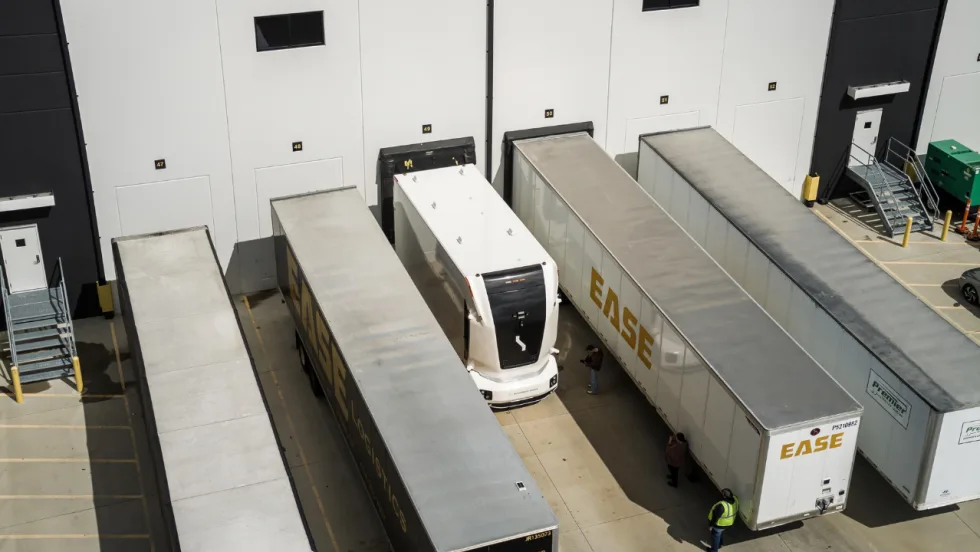
Two cabless electric trucks are hauling freight between EASE Logistics facilities in Marysville, Ohio, as part of a multi-state truck automation project.
The new card combines fuel discounts with telematics-based purchase controls. Geotab’s analysis also points to potential savings from choosing lower-priced fuel stops.
Trucking and logistics teams have plenty of data. The problem is getting the right information in front of the right people soon enough to act. Better-connected data can help teams spot trouble earlier and make smarter decisions before small problems become big ones.