




Q&A: Don Daseke on Going Public
On Feb, 28, the day the firm he founded began trading as a public company, Don Daseke, chairman and CEO of Daseke Inc., spoke with HDT Executive Editor David Cullen about the process the flatbed fleet operator followed to go public-- and why going public had been a long-held goal of his.

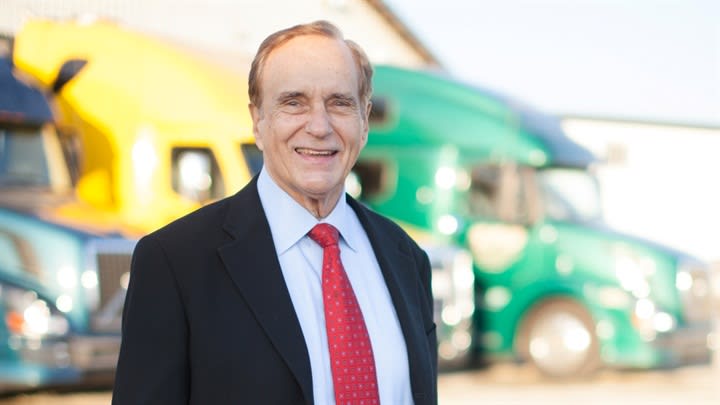
Don Daseke

Don Daseke
HDT: Congratulations on converting Daseke Inc. into a public company. Since you have not offered a typical initial public offering of stock, can you tell us about the process you followed to secure a Nasdaq listing?
Daseke: Thank you. What we did is somewhat unique; most people are not familiar with how we did it. Effectively, we merged with what used to be a special-purpose acquisition company [Hennessy Capital Acquisition Corp. II], which is a firm that just has cash to invest. Once we merged, the new company took the Daseke name and, as a public company, we received our stock symbols [on Feb 28]. It’s a very fast transition to going public compared to issuing an IPO and the company remains controlled by the board [which includes two directors who were the top executives of HCAC]. HCAC has gone away and now Daseke Inc. has the capital to go out and add more open-deck specialized carriers to our family of companies, which now numbers nine.
HDT: Daseke is the first trucking company to go public since 2010. I understand that taking the company public had been a goal of yours, perhaps even since launching Daseke in 2009. Why was that?
Daseke: [Along with raising capital] going public will allow for employee ownership of the company. We have always intended to offer that to all our employees, especially our drivers. We’ve found that people think differently and feel differently if they are the owner. [Employee ownership] is a way to show respect, especially to our drivers. Driving is a tough job and it’s even more so for our drivers, who must tarp all sorts of heavy, unusual things. It’s a highly skilled job and we want to show drivers respect for the difficult job they do and show we appreciate them for what they do as individuals. The specifics on this will be rolled out in the next 30 days.
HDT: Daseke has made its name as a highly successful operator of separate fleets that specialize in open-deck hauling. But will the influx of capital from going public affect your choice of acquisitions?
Daseke: We’ll stay in our niche. We’re already the biggest operator of open deck equipment. It’s a $133-billion freight market in North America, but at this point we have less than 1% of that niche. [Going public is] an exciting opportunity for us become the premier open deck operator. This is a segment characterized by companies that are family-owned, many for several generations. Usually, running these companies is a well-established team at all levels that understands the customers and their requirements. That’s why when we acquire a carrier, we keep the teams. We do not eliminate a single job. Really, Daseke operates as a team of teams.
HDT: It seems that Daseke has its own spin on mergers and acquisitions. Can you detail your approach a bit more?
Daseke: What we do is very different than the typical number-focused Wall Street approach [to M&A]. We focus on companies that are not for sale. Because those that are for sale, usually have an issue. We want truly successful companies with top safety ratings and with a great management team of people who care about their employees and customers. This kind of company usually says they are not for sale, so when we find them, we will keep talking to them for a period, even for years. In much the same way, HCAC approached us with opportunity to do a “fast IPO.” That made perfect sense to me and we were ready to act.
More Fleet Management

Nomination Deadline Extended for HDT Emerging Leaders
Just a few more days to nominate accomplished trucking fleet professionals under 40 who are making an impact and helping lead the industry forward for the HDT Emerging Leaders award. Deadline extended to October 20!
Read More →
What Will ATA’s New Leader Bring to Trucking's Table?
Incoming President and CEO Mark Colson’s record in Alabama offers clues about his priorities and approach following Chris Spear’s abrupt departure as the head of the American Trucking Associations.
Read More →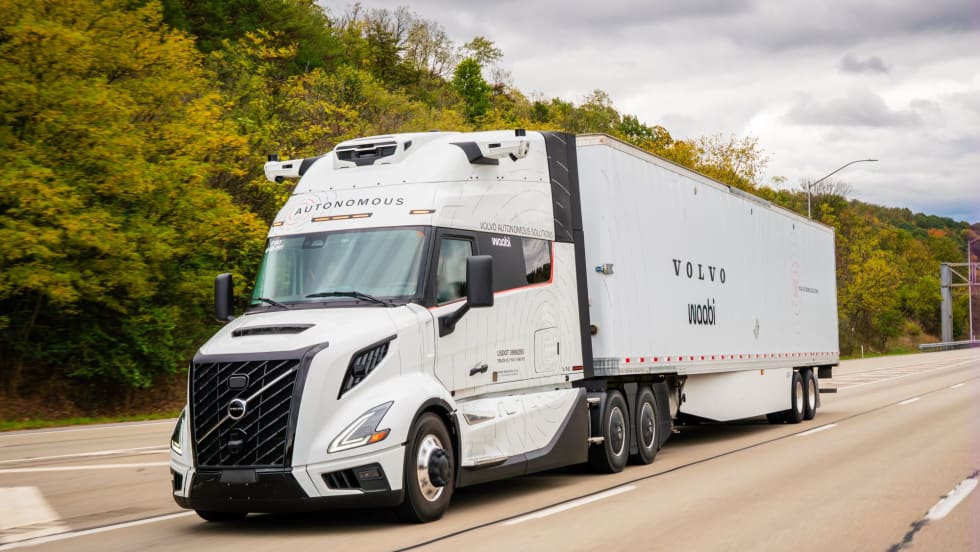
Volvo, Waabi Start Commercial Autonomous Operations in Texas
Volvo VNL Autonomous trucks, powered by the Waabi Driver, are hauling freight directly to third-party facilities for a customer in Texas.
Read More →
Samsara Launches Custom AI Agent Builder
Agent Studio lets fleets create AI tools for hours-of-service monitoring, reporting and driver support, including agents that communicate by phone.
Read More →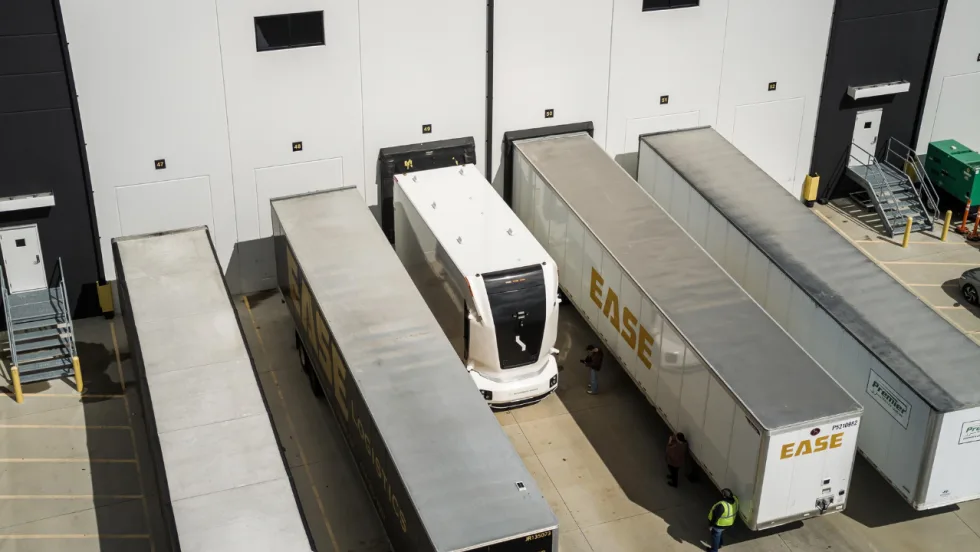
Einride Driverless Electric Trucks Begin Daily Freight Operations in Ohio
Two cabless electric trucks are hauling freight between EASE Logistics facilities in Marysville, Ohio, as part of a multi-state truck automation project.
Read More →
Geotab Links Fleet Card to Vehicle Data
The new card combines fuel discounts with telematics-based purchase controls. Geotab’s analysis also points to potential savings from choosing lower-priced fuel stops.
Read More →
How MFA Helps Protect Trucking Fleets
Multi-factor authentication adds protection when passwords are stolen. Here’s how it works and where fleets should start.
Read More →
How Better Freight Data Helps Trucking Teams Get Ahead of Disruption
Trucking and logistics teams have plenty of data. The problem is getting the right information in front of the right people soon enough to act. Better-connected data can help teams spot trouble earlier and make smarter decisions before small problems become big ones.
Read More →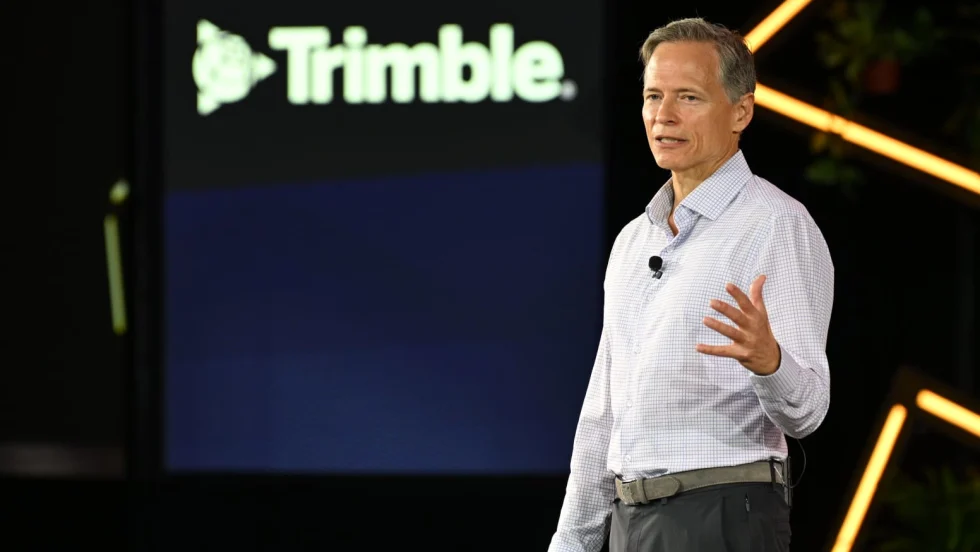
Trimble: Taking Artificial Intelligence in Trucking Beyond Faster Tasks
At Insight 2026, Trimble executives argued that fleets may need to redesign workflows to get more from AI as it introduced new products and enhancements. AI’s value will depend on how fleets combine automation with their people's knowledge.
Read More →
Build a bulletproof fleet: Uniting ELDs and dash cams for total compliance
An ELD can prove compliance, but it cannot always prove what happened on the road. Discover how uniting accurate ELD data with AI-powered dash cam video can help your fleet strengthen compliance, defend against liability, protect drivers and reduce operational costs.
Read More →