




Related:Driver Pay Analyst: No Silver Bullet to Solve Driver Shortage
What the Labor Department's New Overtime Rules Mean for Trucking
In May the United States Department of Labor published new regulations that will affect who may be paid a salary and who must be paid by the hour. The changes, which take effect December 1, 2016, dramatically change the landscape for employers.
by Alexander L. Maultsby
July 6, 2016
5 min to read
In May, after years of build-up, the United States Department of Labor published new regulations that will affect who may be paid a salary and who must be paid by the hour. The changes, which take effect December 1, 2016, dramatically change the landscape for employers.
But first, what has not changed? While many employers do not realize it, the law has always required that employees do certain types of work before the employer is allowed to pay them a flat salary without paying extra for overtime. Generally, those duties fall under the headings of administrative, executive, or professional work.
Without going into a detailed analysis of what kinds of jobs fall under those categories, broadly speaking these employees are supervisors of two or more employees, managers of operations who use their own judgment and discretion to make important decisions, or employees whose jobs require some advanced educational degree. Being an office worker or carrying a Manager title, for example, does not necessarily mean one may be paid a salary.
If an employee has the right duties—say, a Safety Manager who researches, designs, and implements an overall driver safety program—then the employer may pay him or her a salary, as opposed to an hourly rate of pay that fluctuates based on hours worked. This is where the new regulations come into play. Until December 1, that salary may be as low as $455 per week, or $23,660 per year. On December 1, that amount will jump all the way to $913 per week, or $47,476 per year.
So, unless a person is paid a salary at the rate of at least $47,476 per year, he must be paid by the hour and must be paid 1.5 times his hourly rate when he works over 40 hours in a workweek.
There is only one slight twist: employers may use bonuses and incentive payments (including commissions) to satisfy up to 10 percent of that $47,476, if these extra payments are paid at least quarterly. Stated otherwise, if an employer pays a bonus or commission at least quarterly, and the bonus or commission payments add up to at least $4,747 over the course of a year, then the employer need only pay a salary of $42,729. Note that this rule is not satisfied if the employee merely has the opportunity to earn that $4,474, but only if the employee is actually paid the $4,474.
As a reminder, the new regulations did not do away with the requirement that employees perform what has always been considered exempt work. Therefore, to be exempt from overtime, the employee must do the administrative, executive, or professional work that has always been required AND must receive the new enhanced salary—either (1) at least $47,476, or (2) at least $42,729 plus an annual total in bonuses or commission, paid quarterly or more often, to reach the new level.
The upshot of the new law is that employers need to look at every salaried individual paid less than $47,476 per year and ask whether he or she should receive a raise to that new level or should become paid on an hourly basis. As simple as the new threshold is to understand, the decisions it requires of employers are not easy.
For example, consider a dispatcher whose pay is $45,000 because he is a ten-year employee and a newly hired dispatcher whose pay is $37,000. Raising the pay of the senior employee who is only $3000 away from $47,476 and converting to hourly pay the employee who is nearly $11,000 away seems financially sensible. However, that approach would mean two employees with the same job, doing the same work, would be paid under different schemes. The newer dispatcher would need to keep time records while the other would not—disadvantage for him. However, the senior employee might be asked to work all of the overtime, for no more pay—disadvantage for him. Obviously, what might look like an easy fix can carry complications for employee relations.
Moving an employee to hourly status, of course, means his or her pay will fluctuate as he or she works more hours one week and fewer hours the next. If overtime is well-defined and predictable, an employer can calculate an hourly rate that will yield the same overall pay the employee now receives. However, the more that overtime changes from week to week, the more difficult it will be to make the conversion to hourly pay without affecting overall compensation. And, of course, controlling the hours of employees who work remotely requires careful management.
There is some good news for employers: examining the impact of the new salary threshold can create an opportunity for employers to address what might be existing problems. In looking at whose pay needs to change, employers might find that employees are presently misclassified. That is, some current employees might be receiving a salary without doing exempt work. Where those mistakes exist, they can now be corrected—with an explanation that the change is triggered by the new regulations' enhanced salary threshold.
Overall, these DOL-mandated changes will require good communication with employees to explain the reasons for the changes and, for some workers, the impact of moving from salaried to hourly status. In the end, employers and employees both will need to accept some degree of uncertainty and be flexible as a new pay scheme takes root.
Reposted with permission from the law firm Smith Moore Leatherwood. Alexander Maultsby is with Smith Moore Leatherwood, specializing in transportation issues.
Subscribe to Our Newsletter
More Fleet Management

Long-Awaited Canadian Border Bridge to Open in Detroit
For trucking, the bridge opening should offer immediate improvements in efficiency and reliability, with new customs facilities, expanded inspection capacity, and direct freeway-to-freeway connections.
Read More →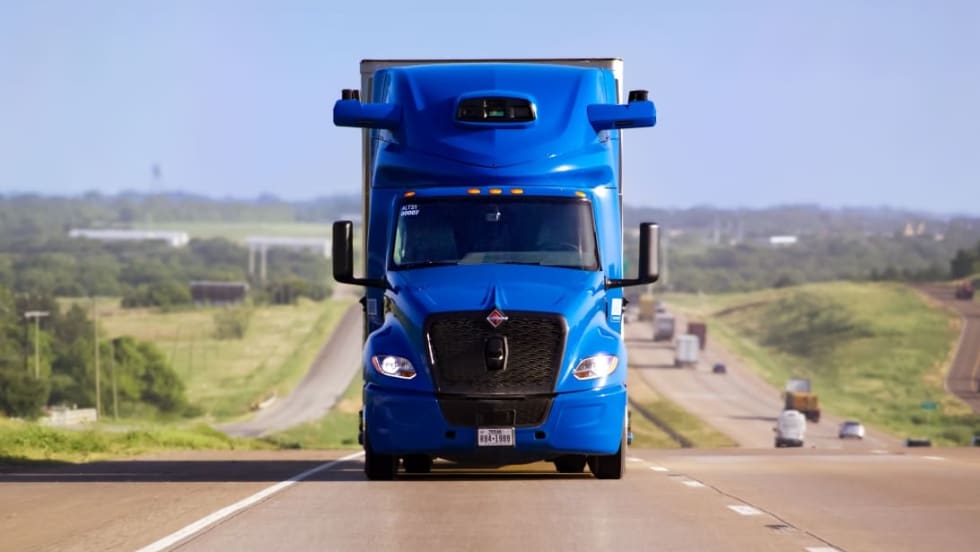
Aurora Rolls Out Next Generation of Driverless Trucks for Commercial Freight
Aurora's latest autonomous trucks it's rolling out with International feature lower-cost hardware designed for a million miles as the company expands commercial driverless freight operations across the U.S. Sun Belt.
Read More →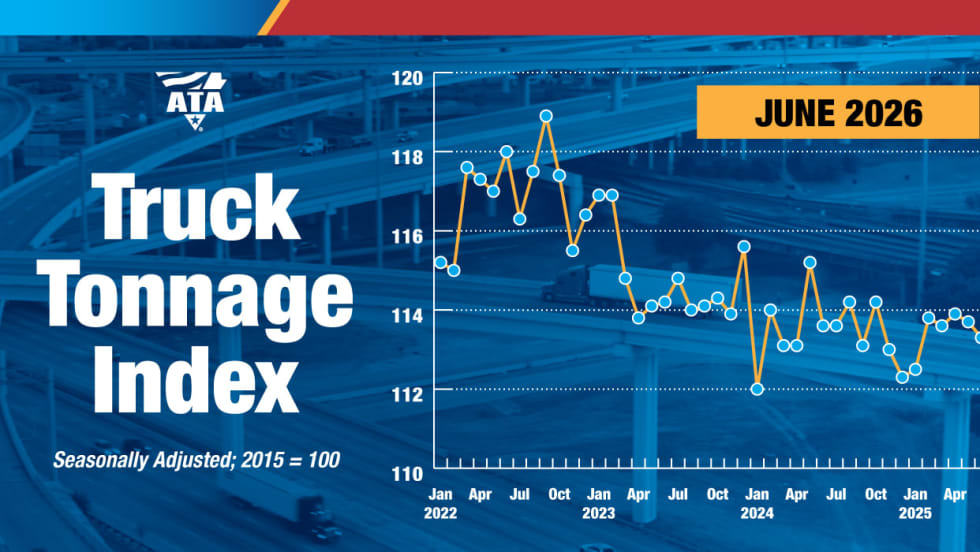
Freight Tonnage Down, Rates up, as Lower Capacity Powers Trucking Recovery
The recovery from the freight recession continues to be driven by reduction in capacity rather than by increased demand.
Read More →

Think Your Trucking Fleet Isn't Using Much AI? Think Again
Shadow AI — the use of unauthorized artificial intelligence tools at work — is becoming increasingly common, putting sensitive company data at risk. Learn how trucking fleets can protect sensitive data while embracing AI.
Read More →
ArcBest Consolidates Brands, Cuts Workforce
The company will bring three business units under the ArcBest brand, eliminate about 2% of positions, and expects the changes to generate $40 million in annual savings.
Read More →
Trucking Fleets Faced Record Operating Costs During Third Year of Freight Recession
ATRI's annual operational cost report shows carriers trimmed fleets, delayed equipment purchases, and ran older trucks as expenses continued to outpace freight rates.
Read More →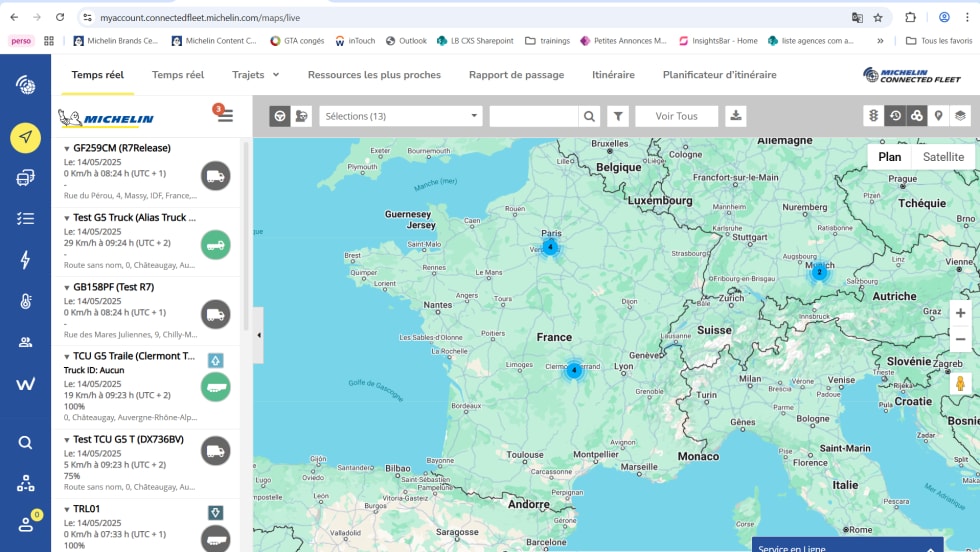
Michelin Adds AI Assistant to MyConnectedFleet Platform
Michelin’s new generative AI tool delivers instant fleet insights, helping managers analyze fuel use, tire maintenance, vehicle status, and operational performance without manually creating reports.
Read More →
LytxOne Platform Now Features AI, Compliance, and Asset Tracking Tools
New enhancements add AI-powered insights, asset tracking, compliance automation, and configurable privacy controls to Lytx's all-in-one fleet management platform.
Read More →
July Imports Poised to Set Container Record
The National Retail Federation projects July container imports will surpass the pandemic-era record as shippers frontload freight ahead of expected August tariff increases.
Read More →
HDT Announces 2026 Truck Fleet Innovator Finalists
From AI and fleet electrification to safety, operations, and leadership, these HDT Truck Fleet Innovator finalists are changing how trucking gets done.
Read More →