





Related from the Archives: Explaining the Internet of [Trucking] Things (2014)
Q&A: Omnitracs' Brad Taylor Talks About Big Data and the Internet of Things
Why does Omnitracs need a vice president of Internet of Things Solutions? We talked to Brad Taylor to find out in this Q&A to learn more about the role of connectivity and big data in trucking and in everyday life.
May 13, 2016

Brad Taylor
8 min to read

Brad Taylor
Early this year, Omnitracs announced it had appointed Brad Taylor to a role as vice president of data and Internet of Things (IoT) Solutions. The company said he would oversee all Omnitracs’ data offerings and operations, including Omnitracs Analytics, new data products and services and the overall big data strategy.
Most recently, Taylor led product management at Jasper Technology, spearheading its prescriptive and predictive data automation offerings and helping the company to grow over 15 million devices under management of its IoT platform. He also directed Jasper's eUICC commercialization initiatives, which focused on OEMs like Tesla, GM, and Scania.
We talked to Taylor about his first few months on the job and the importance of data and the Internet of Things to the trucking industry. This interview has been lightly edited for length and clarity.
HDT: I don’t think I’ve ever seen a title quite like yours. Why does Omnitracs need an Internet of Things VP?
Taylor: I think that’s a good question. I think what’s unappreciated by those outside the industry is the origins of what we think of as the Internet of Things really started 30 years ago when Qualcomm actually started connecting trucks with company offices using satellite. In many ways that’s the precursor of the Internet of Things, so that’s why we have someone with the I of T in their title.
HDT: Can you explain to our readers what exactly the Internet of Things is? How does it affect their daily lives? How does it affect their trucking business?
Taylor: You can find different definitions, but I tend to describe it as the connecting of assets, using Internet-like technologies – it can encompass Bluetooth as well – using the intelligence in those devices and the rich and powerful capabilities in the cloud to better manage processes and businesses, with feedback that includes environmental input as well as the status and capability of the device.
HDT: What would be an example of environmental input?
Taylor: If we’re trying to make a decision on how to do dynamic routing for a truck, say, we’re going to look at the characteristics of the truck itself. We’re going to look at what route can be taken safety by that vehicle. Is that route the fastest route? If not, should we suggest another route that’e equally safe but faster? We may add in processes like what the weather is like, whether the driver be driving into sunrise or sunset depending on the time of day. and even the status of the driver from an hours of service perspective — is he likely to be tired, so do we need to make a recommendation that he should stop for the day? And that’s the “Big Data” part of the Internet of Things – not only using information from the devices themselves, but also the human factors and environmental conditions all together.
HDT: What are some examples of the Internet of Things in everyday life?
Taylor: One of the more popular devices would be … a learning thermostat that looks at when you’re home, looks at what the weather’s like outside, and then it will adjust the temperature to an environment you like …[based] on your habits.”
HDT: Before joining Omnitracs, you were at Jasper Technology. Tell us a little bit about what you did there, and how that will help you provide better products to trucking fleets.
Taylor: At Jasper we would look at 500 million pieces of data a day and at almost real time. We would analyze that data and then execute 10 million plus business rules a day. It could be something related to efficiency. For example we provided the capability for Uber to turn on and off the Uber-issued phones so they could turn them off when not in use and save on their communications bill.
HDT: What do you want to accomplish in your new position?
Taylor: We have a rich amount of data and we already have within Omnitracs 10 years of experience in doing predictive analytics and a solid team in place. My goal is to add additional people that allow us to provide more products that deliver real-time feedback to not only the managers but also to the drivers themselves.
To that end we hired Sathish Gaddipati, the chief architect of The Weather Channel’s platform that provided data and analytics to major companies all over the world. He [has been] working on our new efforts to build out an advanced Big Data architecture.
What we want to build is something similar to how a Twitter or The Weather Channel would have to serve thousands of customers with readily available information tailored to their needs.
HDT: How will this differ from the predictive analytics you already offer?
Taylor: To give you an example, we use predictive analytics to help with the human factor, like driver retention and to identify ways we can improve safety. This will allow us to identify and deliver potential remediation more quickly. If you think about how quickly you get the Twitter feed you’re interested in or how quickly you can now check the weather, what we’ll be doing is using the combination of technologies to improve the feedback we can give you and the speed with which we can provide it.
HDT: So what are other things have you been working on these first few months on the job?
Taylor: We’ve specifically been looking at trends around the driver and routing process. For example, we just finished a review for a customer where we identified hot spots for both accidents and speeding. It was interesting to see that there were certain spots where a significant number of drivers might be speeding. What we do with predictive analytics is trying to understand if that is a human factor or does it have something to do with the roads and geography of that particular area? For instance, one of the hot spots for speeding was close to the terminal where a lot of the drivers are stationed. So we’re wondering if this is a human variation of the horse speeding up as it returns to the barn. That kind of analysis is at the core of predictive analytics with Big Data.
HDT: What have you learned about trucking in the last few months?
Taylor: I think one of the most interesting things that I’ve seen is that the Federal Motor Carrier Safety Administration is moving to have a bigger influence on the technology part of trucking than they have in the past.
For example, if you read the specification around electronic logging devices, it uses words like Bluetooth. I think that’s an interesting change from a regulatory perspective where the guiding body is moving beyond just talking about rules but talking about the implementation of the rules with the technology.
HDT: Is that good or bad?
Taylor: I think the intent is very positive, because the FMCSA is attempting to remedy a potential issue around HOS and logging that could ideally reduce the number of accidents by reducing the number of violations. I think we’ll have to see with the implementation of the regulations if the outcomes are what we expect they’ll be.
HDT: Do you think we could see technology changing faster than the regulations can keep up?
Taylor: I think the bigger risk is that the technology innovation can happen without the safety considerations, and that can have sometimes negative consequences.
HDT: So … like technology for the sake of technology, or what?
Taylor: One of the possible outcomes of ELDs is that you might see new apps appearing in the Android or iPhone app store that for obvious reasons might be adopted by, say, independent owner-operators to address the mandate … but they might potentially be a distraction in the cab.
HDT: So you might have something that technically meets the rules but could have other safety drawbacks?
Taylor: That’s correct. Sometimes the rules have nuances, they’re better represented by a more sophisticated offering rather than a simple offering that doesn’t take into account all the other aspects, the needs of the driver or the fleet.
HDT: You’re also VP of Data. What do you think are the biggest opportunities they are missing out on when it comes to using data?
Taylor: We’re looking at that right now. I think the whole idea behind models and predictive analytics is still very early in overall penetration for the fleets. So a lot of my current work is less about building new things — though we’re certainly doing that — and more about making sure the delivery mechanism of the current capabilities is easy enough to use on a regular basis for fleet customers. The best models int he world aren’t very useful if the fleet can’t make the best use of those models easily.
HDT: So you think that’s one of the stumbling blocks, the need for an easier to use interface?
Taylor: It’s not just the interface. Often different people in different companies consume information in different ways, and right now we tend to only have one or two ways, but we probably need five or six choices for the individuals to get the information and make effective use of it.
HDT: Where do you see the Internet of Things going in the future?
Taylor: I think you’ll continue to see substantial expansion of communication into areas like infrastructure, and you’ll see obviously increased autonomy of cars and I think eventually trucks as well. They’re already trialling this kind of concept. So I think the concept of the smart device, the smart connected device, working with other devices and helping people manage their lives will only become more prominent both in our industry and life in general.
Subscribe to Our Newsletter
More Fleet Management
For Nicky Cupp, Fleet Innovation Starts With Frustration
HDT Truck Fleet Innovator Nicky Cupp turns everyday pain points at Fraley & Schilling into opportunities for better technology and smarter processes.
Read More →
Adam Buttgenbach’s Approach to Electric Trucks: Start With Where They Fit
HDT Truck Fleet Innovator Adam Buttgenbach helped PepsiCo build one of North America’s largest EV fleets by focusing on where electric trucks make operational sense.
Read More →
Deen Albert: Let Automation Do the Math, People Make the Decisions
HDT Truck Fleet Innovator Deen Albert makes sure people are still at the heart of operations at Grand Island Express, even while adopting artificial intelligence tools. AI-assisted dispatch helped boost revenue 25% with the same number of trucks.
Read More →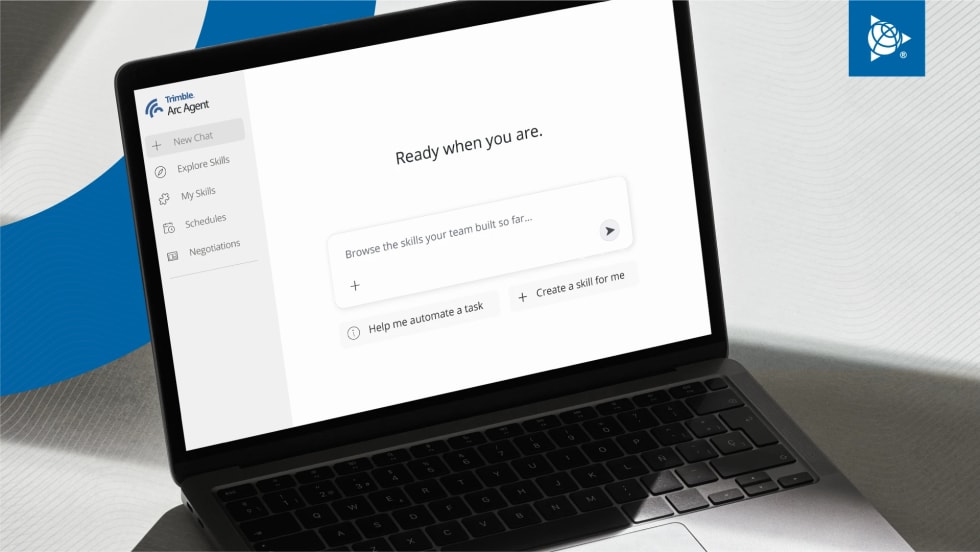
Trimble’s New AI Agent Takes Aim at Fleet Back-Office Busywork
Arc Agent works across Trimble TMS products to automate repetitive tasks such as freight orders, maintenance, invoices, fuel costs and more.
Read More →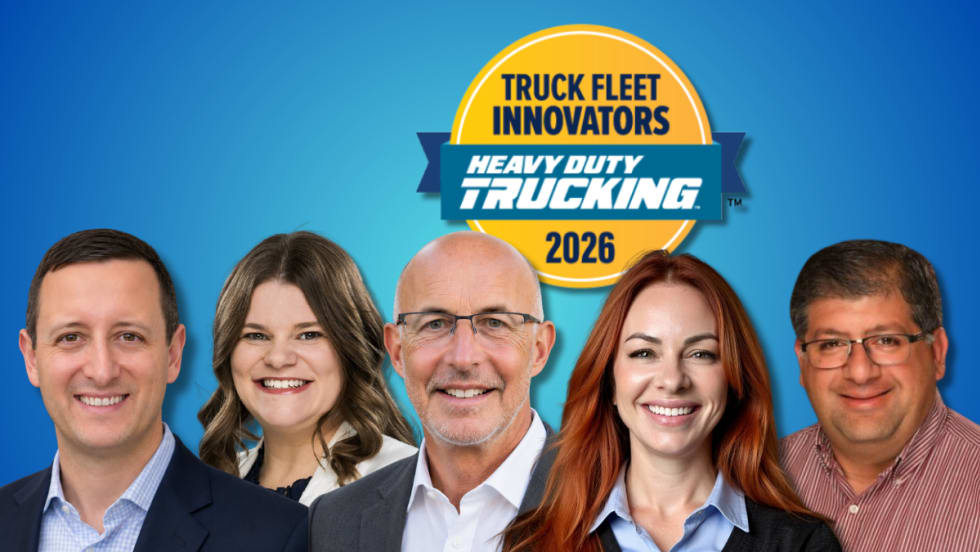
How HDT’s 2026 Truck Fleet Innovators Are Rethinking Fleet Operations
Meet five trucking leaders who are challenging assumptions, solving operational problems, and putting innovative ideas to work.
Read More →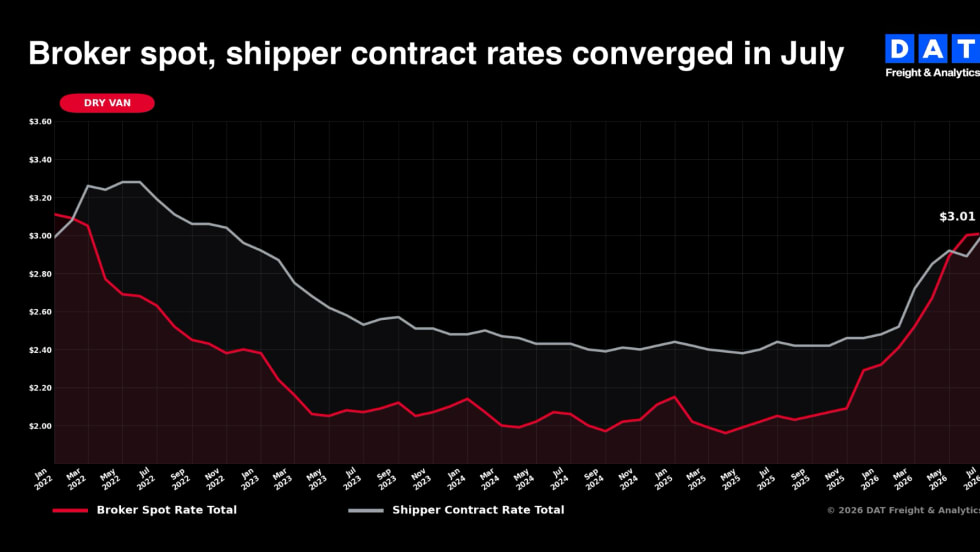
Tight Trucking Capacity Pushes Rates Higher Even as Freight Volumes Fall
“Spot rates moving ahead of contract rates have historically signaled a tightening market, but we haven’t seen a capacity-driven market quite like this one,” said DAT's Dean Croke.
Read More →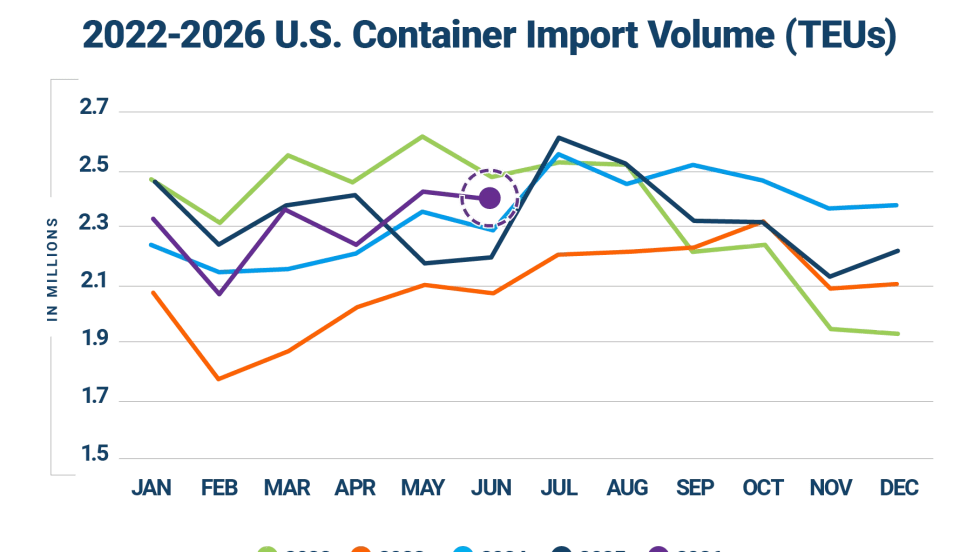
Import Cargo’s Early Peak Season is Winding Down
There was an early start to peak season this year at the nation's gateway ports, as retailers brought in merchandise ahead of tariff changes in late July and responded to other supply chain uncertainties,
Read More →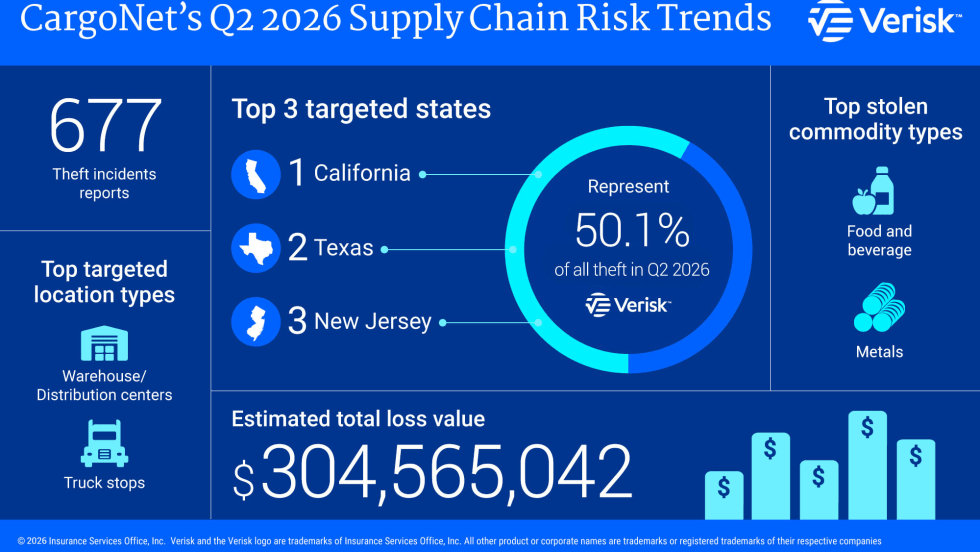
Fewer Cargo Thefts, Bigger Losses: Criminals Target Higher-Value Loads
CargoNet says organized theft rings are stealing fewer shipments but choosing more valuable freight, including metals and technology, resulting in record losses.
Read More →
How Innovative Trucking Leaders Turn Change Into an Advantage
As the pace of change accelerates in trucking, the fleets that adapt best have more than the latest technology. They have cultures that embrace improvement.
Read More →
Freight Broker Bonds Just Got Harder to Get. Here's What That Means for Your Fleet.
When it gets harder for a freight broker to prove they are financially sound, the ones who cannot clear that bar get pushed out of the market. And those are exactly the brokers who used to leave motor carriers holding the bag.
Read More →