




Q&A: Old Dominion's David Bates on the Keys to the LTL's Success
Old Dominion Freight Line, founded by Earl and Lillian Congdon as a one-truck operation in Richmond, Va., in 1934, today is one of the largest less-than-truckload carriers, and one of the largest trucking companies overall, in the United States. We talked to David Bates, senior vice president of operations, about the company’s success.

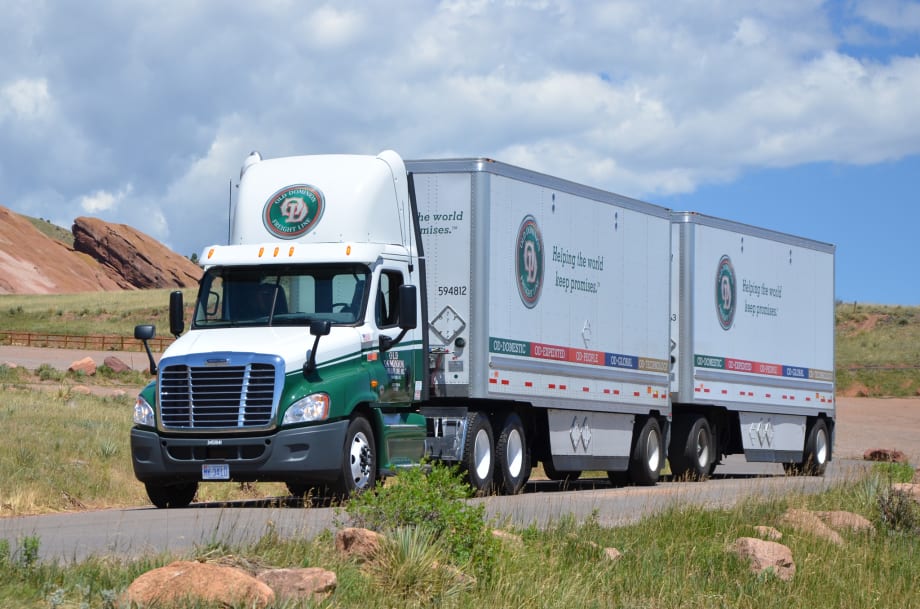
Photo courtesy ODFL
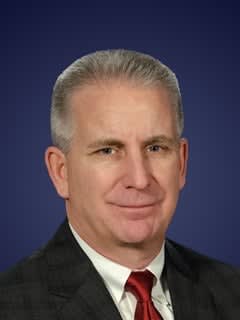
David Bates.Photo courtesy ODFL.
Old Dominion Freight Line, founded by Earl and Lillian Congdon as a one-truck operation in Richmond, Va., in 1934, today is one of the largest less-than-truckload carriers, and one of the largest trucking companies overall, in the United States.
Headquartered in Thomasville, N.C., the company not only survived the changes wrought by deregulation in 1980, but thrived. It passed the $2 billion yearly revenue mark in 2012, with 2015 revenues approaching $3 billion and fourth-quarter operating ratio of about 85%. In 2013, Fortune magazine named the company to its list of 100 Fastest-Growing Companies.
We talked to David Bates, senior vice president of operations, about the company’s success. (This interview has been lightly edited for clarity and length.)
HDT: Let’s start by talking a little about yourself. How would you describe what you do at Old Dominion Freight Line?
Bates: My responsibilities include all of the operations at our field service centers and all of our linehaul operations. Anything that’s happening in the local service centers, the local customer service, the pickup and delivery operations and of course the line haul that goes in and out. We have a 225 service center network … with nine geographic regions.
HDT: So I see announcements about new and expanded service centers pretty frequently….
Bates: We’ve been very fortunate to experience market share growth, and what happens then is our service centers get close to capacity, so we typically spin off and open another one. Most recently in the St. Louis market, we had one terminal, but due to increased volumes we opened another one we call St. Louis East. But it’s not East St. Louis; it’s just west of the city, south of I-70.
HDT: All that growth must keep you busy.
Bates: Fortunately I have very strong regional vice presidents that are out in the field. They’re primarily responsible for the operations within their region. When we have a situation like we’ve seen in St. Louis, because we’re moving some of the business into another service center in the same region, a lot of folks will transfer over and we use them as a core a base to build on.
HDT: Before coming to work for ODFL in 1995, you worked for two other big names in LTL, Roadway and Carolina Freight, in the ‘80s and early ‘90s. How did you get into the trucking business?
Bates: My first job out of college I went to work for Roadway Express in their management training program, in May of 1987. I got recruited by Old Dominion when I was working at ABF, which had just purchased Carolina Freight. I’ve just had my 20th year with Old Dominion.
HDT: The less-than-truckload model was the primary trucking model until deregulation in the 1980s. After deregulation, many large LTLs went out of business, and others continue to struggle even today. How did ODFL survive and in fact thrive?
Photo courtesy ODFL
Bates: One thing that we’ve done is we stuck to our guns. We put together a pricing model, a pricing philosophy, and stuck to that in good times and in bad. During the recession of ’08, ’09, we put together a value proposition to ur customers where we operate great service, therefore we expect to be compensated for it. I think that really sticks in my mind as one of the key things that got us to where we are today. Especially the way we came out of that recession. Carriers dropped their prices to try to maintain market share. We held our ground, we didn’t drop prices, we weathered through it – and when it was over our prices were where they needed to be. We continued to offer that great service through the recession.
HDT: What are some of the keys to providing that great service?
Bates: I say this a lot when we meet with our employees: The key to our success is our people, the Old Dominion family culture. We ask our employees to work hard; in turn we give them a great place to work, a very nice compensation package, and treat them with respect. They tend to be part of the team, they tend to buy in to wanting to work hard…. We try to make this a good place to work for everyone, and I think we’ve been extremely successful doing that. A number of employees I talk to who come to work for us after working for a competitor [tell me] that it’s the best place they’ve ever worked.
HDT: So it’s a combination of tangible and intangible things?
Bates: Right. Tangible meaning compensation, that our drivers have very good equipment to drive, our infrastructure of building service centers. We build our service centers and keep them looking good and running like a new service center even if it’s 10 years old. Intangibles include things like job security. Our balance sheet is very strong. We expect to be around another 80 years. People make a career out of it and retire from Old Dominion.
HDT: At the recent rededication of ODFL’s Thomasville, N.C., headquarters, CEO David Congdon said ODFL currently has 6 or 7% of U.S. LTL market share, “and there’s no reason why we can’t double our market share within our OD domestic network.” What are some of the ways the company plans to do that?
Bates: Our sales force is extremely dedicated … with the strength of our balance sheet we know we can go into specific markets and not … be afraid of adding more density. We can spin off service centers relatively quickly.
Growing market share is a couple factors. First of all you have to offer the service. If you can’t offer great service, claim free, great driver service, there’s no reason a customer will go with you. We do all those thing extremely well. [We’re gaining business] from our existing customers but we’re also gaining market share from new customers. If a customer is only giving us 20% of his business, we go in and say, ‘We can do these things for you,’ and get additional lanes. New customers perhaps have been experiencing some issues with other carriers and we show them what we can do.
HDT: In general, market share often grows at the expense of profit. Yet ODFL has increased profitability while adding market share at the same time. I know you’re not going to give away company secrets, but can you give us a hint as to how your company manages that?
Bates: It all comes down to our pricing discipline. We’ve got a pretty detailed cost model that tells us what we have to charge customers to move their freight in specific lanes. Typically customers will make a decision to do business with us in those lanes at that price, or they won’t. If they choose not to, more often than not they come back because they're not getting the service they need.
HDT: Sounds simple enough, but obviously not as easy as it sounds. How do you do it? Roomfuls of accountants? Roomfuls of IT people and data crunching?
Bates: I would say it’s a little bit of all those things. We started gathering shipment data years ago and put it into a database and apply it to what our costs are and are able to determine what specific lanes we have and what we need to charge in those lane. It’s a little more complicated than that, obviously, but that’s what we’ve done and needless to say it’s been effective for us.
I think all carriers have some kind of cost model they use; the question is how accurate is the data you’re feeding it and how disciplined are you for your price. Give a customer a discount for his business and all of a sudden he says ‘I've got someone else who wants to give it to me cheaper.’ Do you give the customer another five discount points not to lose the business? A lot of carriers will do that not to lose their market share and will give out higher discounts and cheaper prices and that erodes your profitability.
HDT: Speaking of technology, I read that the renovated HQ had some major technology improvements. What can you tell us about those?
Bates: We are in the midst of a five-year modernization program right now where we are transferring off our current IBM AS 400 onto an Oracle-based model. It’s quite an undertaking. We’ve got to rewrite every program we have. We’re about two years into it, but once we get there it will make it a lot easier for our employees to do their work and get us back up to where we need to be from a technology standpoint.
We recently rebuilt our website. We’ve got a lot of positive response form our customers. It’s user friendly, they’re able to track their shipments, get reports, it’s very business friendly. They can go to the website and get the information instead of having to take the time to call the company or service center for information.
HDT: What opportunities and challenges is the rise of e-commerce presenting?
Bates: I’m not sure I would call it a challenge per se; obviously it’s opportunity. We do business with Amazon, not a great deal of business, but we do see that piece of our business growing. You can build an LTL shipment a lot quicker than you can build a truckload shipment, so e-commerce is going to benefit the LTLs because you can move shipments out a lot faster.
What we are seeing in the LTL environment is some of our e-commerce customers and other customers are becoming very demanding with delivery and pickup times. There’s not a whole lot of inventory being carried anymore, the customer needs the stuff now. A lot of these customers are using the transportation window as part of their warehousing, and so they can project they’re going to run out in three days so they put in the order today. They’ve got to have it on that day at that time, you can’t be late. That’s just becoming more and more difficult to manage from a local pickup and delivery standpoint. You’ve got to schedule all those, and it’s a juggling act sometimes for our dispatchers to pull all that together.
HDT: How much are you able to use technology to help with that?
Bates: Very much so. When we enter a shipment into our system, that bill of lading is going to have that delivery window. So the service center, when they are planning those delivery routes for the next day, they all come into that system and are able to manage all those routes. Without the technology being able to look at all your shipments coming in, you would have no idea what you’re up against. We’re completely paperless. We run all our dock operations and over the road operations without bill of ladings, without delivery receipts. It saves us a lot of money and from a sustainability standpoint, but it also saves us time not having to hand move paper with each shipment that we have.
HDT: Looking ahead, what trends do you see affecting the LTL marketplace and ODFL?
Bates: One of the things is e-commerce, that’s going to continue to develop. The opening of the [newly enlarged] Panama Canal, that could change the way imports come in. Less coming in from West Coast could change the balance of how LTL moves across networks. Obviously the government plays a big role in what we can do and how we operate, as they pass down regulations. The cost is approximately $5,000 more to buy a tractor today than it did last year mostly because of government regulations.
All of those things come in to play. Some of it drives up costs, while some of it we look at as opportunity, such as the container business moving to the East Coast. Ultimately we’ll deal with all of them as we have before. Have a strategy, come up with a plan, and sometimes you have to make a few adjustments.
More Fleet Management

Color Match Smarter: Tools That Restore & Perform
For fleet managers and collision repair professionals keeping heavy-duty trucks on the road, getting the color right the first time isn't just about appearance — it's about efficiency, turnaround time, and bottom-line results. Discover how today's digital color tools are transforming the repair process from guesswork to precision.
Read More →
FMCSA Pauses Biennial-Update Enforcement Amid Motus Transition
Carriers whose updates were due on or after June 1 have more time, while FMCSA works to stabilize its new registration system and warns of phishing sites impersonating its new carrier registration system, Motus.
Read More →
2026 Blueprint for Countering Smarter Supply Chain Theft
Cargo theft is no longer just the cost of doing business. It's a multi-billion-dollar criminal enterprise exploiting vulnerabilities across your fleet, drivers, and supply chain.
Read More →


How Telematics Improves Visibility, Control, and Performance in Refrigerated Fleets
Explore how telematics help refrigerated fleets improve visibility, uptime, efficiency, compliance, and cargo protection across connected cold chain operations.
Read More →
What the U.S.-Canada Trade War Means for Trucking
Escalating U.S.-Canada tariffs could disrupt cross-border freight, reduce truck volumes, raise costs, and create new uncertainty for carriers on both sides of the border.
Read More →
What Are Trucking’s Top Concerns for 2026?
The American Transportation Research Institute wants to know what's worrying trucking fleet managers, drivers, and other stakeholders in its annual Industry Issues survey.
Read More →
American Trucking Associations Looks for a New Leader
ATA President and CEO Chris Spear abruptly left his job at the association on August 21, at a pivotal time for the trucking industry.
Read More →
Public Wi-Fi Cybersecurity Risks: How Truck Drivers and Fleets Can Protect Their Data
Public Wi-Fi can expose truck drivers and fleets to credential theft, malware, and other cyber threats. Here’s how to reduce the risk on the road.
Read More →
For Nicky Cupp, Fleet Innovation Starts With Frustration
HDT Truck Fleet Innovator Nicky Cupp turns everyday pain points at Fraley & Schilling into opportunities for better technology and smarter processes.
Read More →
Adam Buttgenbach’s Approach to Electric Trucks: Start With Where They Fit
HDT Truck Fleet Innovator Adam Buttgenbach helped PepsiCo build one of North America’s largest EV fleets by focusing on where electric trucks make operational sense.
Read More →