





Related: Technology Drives Down CSA Scores
What It's Like To Eliminate Paper Logs
Tank carrier Langer Transport tossed aside paper driver logs for good this January, opting to switch over to an automated hours-of-service application from Omnitracs LLC.
March 24, 2015
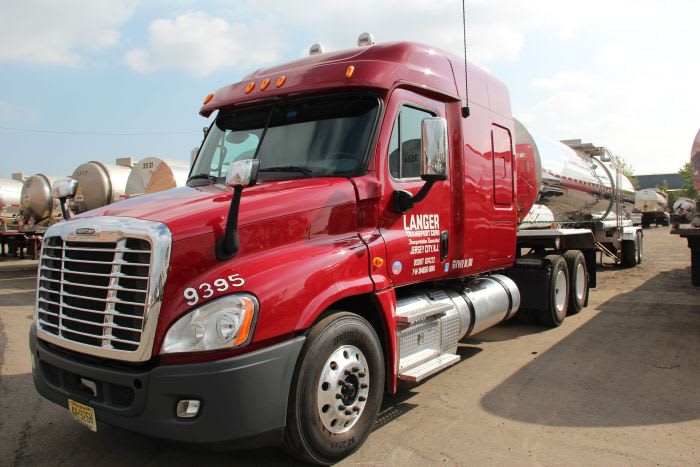
Langer Transport, headquartered in Jersey City, N.J., recently deployed Omnitracs’ MPC50 in-cab devices which include an electronic log applications, navigation and critical event reporting.
2 min to read
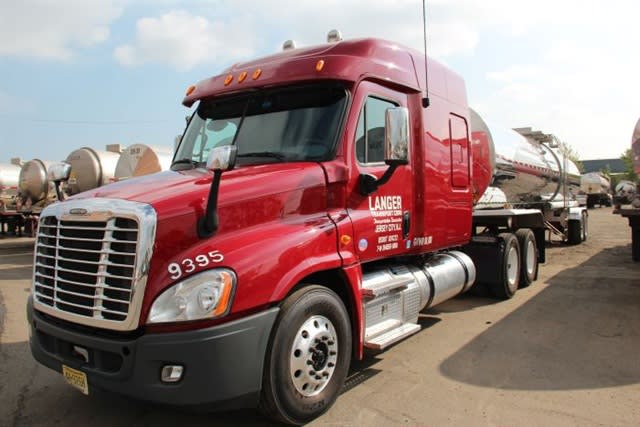
Langer Transport, headquartered in Jersey City, N.J., recently deployed Omnitracs’ MPC50 in-cab devices which include an electronic log applications, navigation and critical event reporting.
Timing is everything. Especially when it’s time to move ahead. That’s why tank carrier Langer Transport tossed aside paper driver logs for good this January, opting to switch over to an automated hours-of-service application from Omnitracs LLC.
“This was a major change for our company,” says Bill Pobedinsky, director of safety and personnel. “We were 100% paper logs. We looked at it for years and made the decision that the timing was right. Our customers are excited about it, the drivers are excited — they are welcoming it.”
Langer, based in Jersey City, N.J., is family-owned and has been in business for 80 years. Its tank-truck fleet serves customers in the chemical, oil, food-grade and pharmaceutical industries throughout the U.S. and Canada.
A key reason the company thought the time was right to go paperless: “We know the mandate is eventually coming,” Pobedinsky points out.
“We’re just in the beginning phases,” he explains, noting that the rollout has been smooth so far.
The company opted for Omnitracs’ MPC50 in-cab devices. In addition to the hours-of-service piece, it will implement such other applications as a critical-event reporting application that alerts fleet managers to critical events including hard braking and speeding.
And in a move that will eliminate even more paper, the company has deployed an electronic vehicle inspection report application, which helps drivers easily perform their daily pre-trip inspections. Langer is also deploying in-cab navigation.
The Omnitracs applications integrate with Langer’s TMW enterprise system and gives company’s dispatchers full visibility of how long drivers have been driving and how many available hours they have. “That is critical to us,” says Pobedinsky.
As for adopting other applications, he says the company was looking at the features that are important to them and what kind of features they may add in the future. “It’s a matter of what makes sense, what’s critical for use and we’ll go from there.”
A key part of the new system is in-cab navigation. Pobedinsky noted they were using a system they had built piece by piece. And while the company has been servicing many of the same customers for years and drivers know how to get in and out of those locations, Pobedinsky says “the navigation is terrific, it’s something we’ll be using.”
Since the company hauls some restricted materials, they have to be careful where they send their trucks and the navigation system has a hazardous material setting.
Subscribe to Our Newsletter
More Fleet Management

Sponsored•September 16, 2026
Color Match Smarter: Tools That Restore & Perform
For fleet managers and collision repair professionals keeping heavy-duty trucks on the road, getting the color right the first time isn't just about appearance — it's about efficiency, turnaround time, and bottom-line results. Discover how today's digital color tools are transforming the repair process from guesswork to precision.
Read More →
FMCSA Pauses Biennial-Update Enforcement Amid Motus Transition
Carriers whose updates were due on or after June 1 have more time, while FMCSA works to stabilize its new registration system and warns of phishing sites impersonating its new carrier registration system, Motus.
Read More →
Sponsored•September 14, 2026
2026 Blueprint for Countering Smarter Supply Chain Theft
Cargo theft is no longer just the cost of doing business. It's a multi-billion-dollar criminal enterprise exploiting vulnerabilities across your fleet, drivers, and supply chain.
Read More →


Sponsored•September 1, 2026
How Telematics Improves Visibility, Control, and Performance in Refrigerated Fleets
Explore how telematics help refrigerated fleets improve visibility, uptime, efficiency, compliance, and cargo protection across connected cold chain operations.
Read More →
What the U.S.-Canada Trade War Means for Trucking
Escalating U.S.-Canada tariffs could disrupt cross-border freight, reduce truck volumes, raise costs, and create new uncertainty for carriers on both sides of the border.
Read More →
What Are Trucking’s Top Concerns for 2026?
The American Transportation Research Institute wants to know what's worrying trucking fleet managers, drivers, and other stakeholders in its annual Industry Issues survey.
Read More →
American Trucking Associations Looks for a New Leader
ATA President and CEO Chris Spear abruptly left his job at the association on August 21, at a pivotal time for the trucking industry.
Read More →
Public Wi-Fi Cybersecurity Risks: How Truck Drivers and Fleets Can Protect Their Data
Public Wi-Fi can expose truck drivers and fleets to credential theft, malware, and other cyber threats. Here’s how to reduce the risk on the road.
Read More →
For Nicky Cupp, Fleet Innovation Starts With Frustration
HDT Truck Fleet Innovator Nicky Cupp turns everyday pain points at Fraley & Schilling into opportunities for better technology and smarter processes.
Read More →
Adam Buttgenbach’s Approach to Electric Trucks: Start With Where They Fit
HDT Truck Fleet Innovator Adam Buttgenbach helped PepsiCo build one of North America’s largest EV fleets by focusing on where electric trucks make operational sense.
Read More →