




Making Safety a Priority
In 2012, Verst Group Logistics had zero Department of Transportation recordable accidents. In 2013, to prove the previous year wasn’t just a fluke, Verst only had one DOT-recordable accident. How did this Kentucky-based logistics provider, with a fleet of 90 power units and 250 trailers, attain such a low number of accidents?

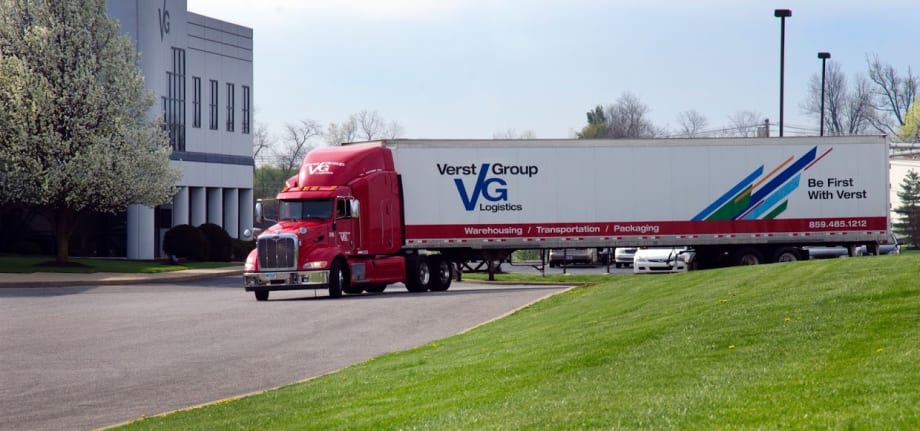
Verst Group Logistics has a strong commitment to safety and has invested in safety technology for its fleet.
In 2012, Verst Group Logistics had zero Department of Transportation recordable accidents. In 2013, to prove the previous year wasn’t just a fluke, Verst only had one DOT-recordable accident.

Verst Group Logistics has a strong commitment to safety and has invested in safety technology for its fleet.
How did this Kentucky-based logistics provider, with a fleet of 90 power units and 250 trailers, attain such a low number of accidents?
The answer is simple – the company has a strong commitment to safety and it invested in safety technology for its fleet.
For Chris Cusick, vice president of transportation, making safety a top goal at the company is a no-brainer.
“We want our people to go home the same way they arrive – that’s a promise and a commitment from the company to keep our drivers and employees safe,” says Cusick, whose father was a truck driver.
But making a commitment to getting drivers home safely isn’t just about a promise to your drivers. More accidents also impact operating costs for a carrier, raise insurance and equipment costs, and could detract potential driver candidates from joining your company, Cusick says.
With the advent of Federal Motor Carrier Safety Administration’s Compliance, Safety, Accountability enforcement program, a new level of importance has been placed on safety, but for Cusick safety is much more than talk.
“Our commitment to safety starts in the qualification process to hire a driver,” he says. “We have a driver trainer that will road test the candidate, and they have a check off sheet on various skills that are being evaluated.”
If the driver is hired, he or she must go through an orientation process that includes a ride-along with a driver trainer and orientation videos and tests.
Training doesn’t end there. According to Cusick, Verst also has drivers meet twice a year to go through specific issues and review the core training program.
The company also does driver ride-alongs where the driver trainer will randomly go along with company drivers to observe.
“Each week we feature safety observation cards that ask drivers a safety question, so over time drivers review their safety training on a regular basis,” Cusick says.
Drivers also participate quarterly in a safety committee meeting to discuss specific topics and ideas for improving safety with managers.
One idea that came out of these meetings was providing drivers with spike traction cleats that slip over shoes in the winter to lessen the chances of drivers taking a fall on the slick ice.
Spec’ing for safety
Verst’s commitment to safety extends to its spec’ing procedures as well. Some of the specifications at Verst Group aimed at improving safety include back-up alarms, hood-mounted convex mirrors and additional lights to assist during loading and unloading.
Another idea from a driver is a device called the semi tandem axle-release assist tool (STA-RAT), which is designed to make sliding trailer tandems easier and safer. And a Holland fifth wheel air release system uses an in-cab fifth wheel lock release that opens the locking mechanism when the vehicle’s parking brakes are engaged.
In the spring of 2011, Verst implemented a trial of the SmartDrive safety system with 25 units. The system worked so well that by the fall they installed it on the entire fleet.
SmartDrive is a video-based driver performance improvement program that can help decrease the occurrence of unsafe driving behavior. When an incident occurs the cameras kick on so management and the driver can see what was occurring at the time of the incident.
Cusick says it was the technology component that allowed the company to get to the next level of safety.
“Without the technology, we did not know if certain drivers were changing their behaviors after training. The system has allowed us to make sure those changes are taking place, and provide further training if needed,” Cusick says.
Verst has also installed cameras on their units that are activated only during an event. “It’s a reactive system. We can’t actively monitor the drivers,” he says.
Although the drivers were skeptical in the beginning, Cusick notes after about 18 months, they began to like the system.
“The system has actually exonerated drivers after incidents. We have had a total of 16 exonerations since the system was implemented. That type of thing goes a long way towards making drivers more accepting,” Cusick says.
Safe driving can also pay for Verst drivers. A quarterly bonus is paid for meeting safety objectives, and if that trend continues for the entire year, the driver is given an extra bonus. After two years of successfully meeting objectives, the bonus is doubled.
Cusick says most of the credit for the company’s safety success is due to its drivers.
“I can’t stress enough that the drivers have adapted and adopted these safety measures. It’s really their work, performing every day. The results we are seeing are the efforts of the drivers.”
More Fleet Management

What the U.S.-Canada Trade War Means for Trucking
Escalating U.S.-Canada tariffs could disrupt cross-border freight, reduce truck volumes, raise costs, and create new uncertainty for carriers on both sides of the border.
Read More →
What Are Trucking’s Top Concerns for 2026?
The American Transportation Research Institute wants to know what's worrying trucking fleet managers, drivers, and other stakeholders in its annual Industry Issues survey.
Read More →
American Trucking Associations Looks for a New Leader
ATA President and CEO Chris Spear abruptly left his job at the association on August 21, at a pivotal time for the trucking industry.
Read More →
Public Wi-Fi Cybersecurity Risks: How Truck Drivers and Fleets Can Protect Their Data
Public Wi-Fi can expose truck drivers and fleets to credential theft, malware, and other cyber threats. Here’s how to reduce the risk on the road.
Read More →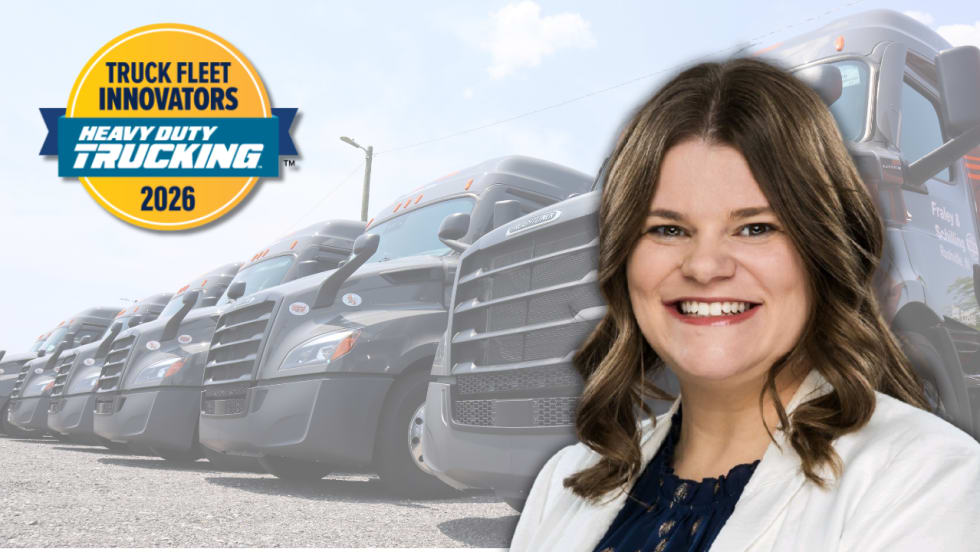
For Nicky Cupp, Fleet Innovation Starts With Frustration
HDT Truck Fleet Innovator Nicky Cupp turns everyday pain points at Fraley & Schilling into opportunities for better technology and smarter processes.
Read More →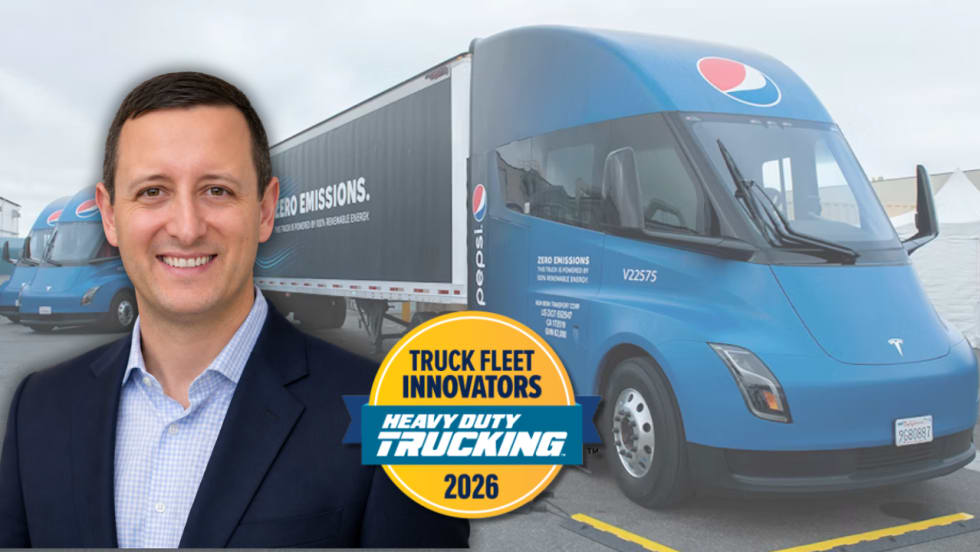
Adam Buttgenbach’s Approach to Electric Trucks: Start With Where They Fit
HDT Truck Fleet Innovator Adam Buttgenbach helped PepsiCo build one of North America’s largest EV fleets by focusing on where electric trucks make operational sense.
Read More →
Deen Albert: Let Automation Do the Math, People Make the Decisions
HDT Truck Fleet Innovator Deen Albert makes sure people are still at the heart of operations at Grand Island Express, even while adopting artificial intelligence tools. AI-assisted dispatch helped boost revenue 25% with the same number of trucks.
Read More →
Trimble’s New AI Agent Takes Aim at Fleet Back-Office Busywork
Arc Agent works across Trimble TMS products to automate repetitive tasks such as freight orders, maintenance, invoices, fuel costs and more.
Read More →
How HDT’s 2026 Truck Fleet Innovators Are Rethinking Fleet Operations
Meet five trucking leaders who are challenging assumptions, solving operational problems, and putting innovative ideas to work.
Read More →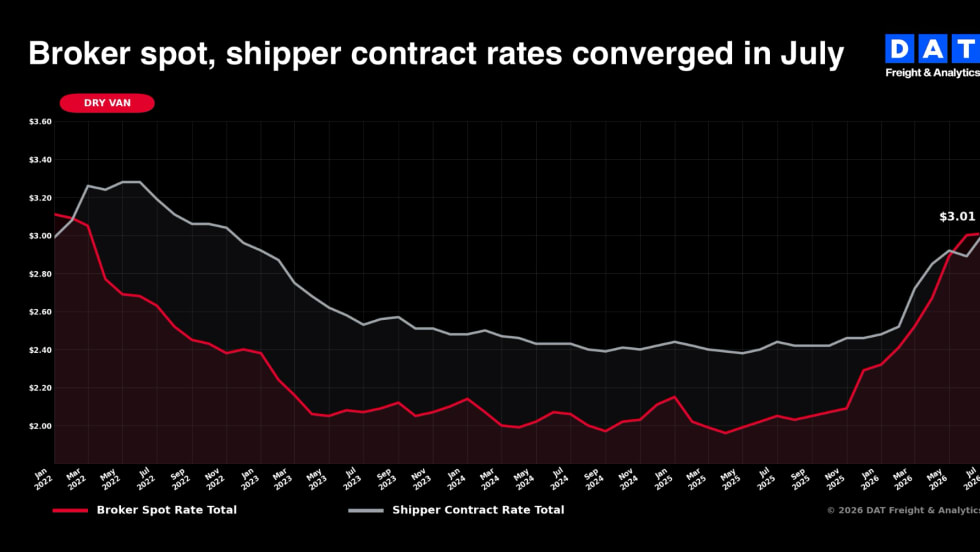
Tight Trucking Capacity Pushes Rates Higher Even as Freight Volumes Fall
“Spot rates moving ahead of contract rates have historically signaled a tightening market, but we haven’t seen a capacity-driven market quite like this one,” said DAT's Dean Croke.
Read More →