




How Swift Transportation Got Back on Track
SAN DIEGO -- "It doesn't matter if you are big or small, the principles are the same," said Richard Stocking, president and COO of Swift Transportation, in discussing how his company got back on track following the recession

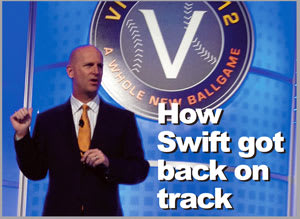
SAN DIEGO -- "It doesn't matter if you are big or small, the principles are the same," said Richard Stocking, president and COO of Swift Transportation, in discussing how his company got back on track following the recession.
Speaking at Qualcomm's Vision 2012 Management Conference this week, Stocking referred to a quote by George Wood Bacon, who had said, "fortunes aren't made in the boom times ... fortunes are made in depression or lean times."
The recent recession forced Swift to reevaluate how it did business.
"We'd Lost Our Way"
"We'd lost our way at Swift," he said, and were "close to disaster," but the company instituted changes that turned things around. Before the downturn, he said, "We were growing for growth's sake. The recession was the best thing that happened. It made us look more closely at our company."
Borrowing on concepts from the Michael George book, "Lean Six Sigma," which combined managerial concepts found in the Six Sigma and Lean Production manufacturing initiatives, Stocking said his company established guiding principles, a mission statement and a vision of what the company wants to be.
"We don't want to be just a trucking company," he said. "We want to be a provider of best-in-class transportation solutions for our customers."
Whole Person Paradigm
He advised the audience to tap into the "whole person paradigm," of body, heart, mind and spirit when leading employees to get the most out of people. "You want to make sure you treat people right," and not look at employees as simply an expense. You need leadership that inspires trust, clarifies purpose, aligns systems and unleashes talent, he said.
You get there by developing a strategic plan that looks at "where are we going," in one year, five years and 20 years down the road.
Such plans require discipline, Stocking said, and his team has learned to distinguish between "wigs and "pigs" - wildly important goals and pretty important goals. "If you focus on only the pretty important goals, you can't be great," he said.
Stop Doing
Part of the strategic planning at Swift was developing what he called stop-doing lists -- anything that isn't furthering your goals, stop doing. But he cautioned against trying to accomplish too many goals; three or four is the max.
Keeping score is important, he noted, because a company can't measure their progress without a scorecard of some kind. The scorecard should be easy to understand, he said, using a scoreboard at a basketball game as an example. "You need to know within 3 seconds if you are winning or losing." And there has to be accountability.
As an example of how the company has evolved, Stocking said that by using elements from Lean Six Sigma, improved processes in their shops helped them avoid buying 300 trucks -- a huge savings due to developing better processes. They were able to grow the fleet by increasing utilization instead of adding equipment.
Goals From Within
Strategic focus groups within the company work on developing future goals.
"You don't want a leader who comes down from the mountain," and delivers directions he said, just as you don't want a leader who can't make a decision. Rather you want a leader who can "get people involved from all levels. It's all about momentum."
A great leader is one who, when he leaves, the company continues on without missing a beat because the vision and processes are already in place. In the end, it's about the power of belief, Stocking said. Your people need to buy into the vision. Then, the right combination of leadership, execution and results equals a winning culture which perpetuates itself, regardless of who sits in the top chair.
More Fleet Management
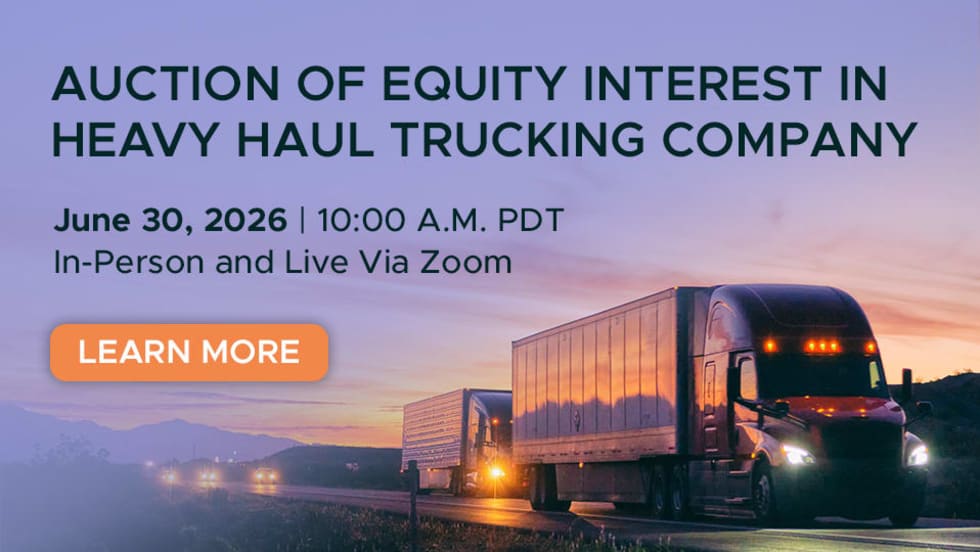
AUCTION OF EQUITY INTEREST IN HEAVY HAUL TRUCKING COMPANY!!
Mark your calendar: June 30, 2026 (10:00 a.m. PDT). MagnaTrans, LLC, a California limited liability company doing business as Magna Transportation Group is going to auction! Bid on a 37.5% ownership interest in this Rancho Cucamonga-based heavy haul and over-dimensional trucking company operating across California, Oregon, and Arizona. The equity interest will be sold to the highest bidder or bidders under Article 9 of the Uniform Commercial Code at 10:00 a.m. PDT.
Read More →
Volvo Trucks Adds Unattended Over-the-Air Software Update Capabilities
The latest evolution of Volvo’s over-the-air update technology allows software updates to run while trucks are parked, helping fleets keep vehicles current without disrupting operations.
Read More →
How Waste Connections is Using Data, Telematics, and AI
How do you manage and maintain more than 18,000 connected trucks? Data. Lots of it.
Read More →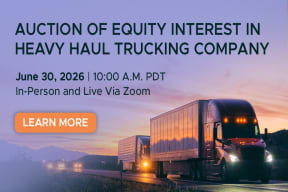
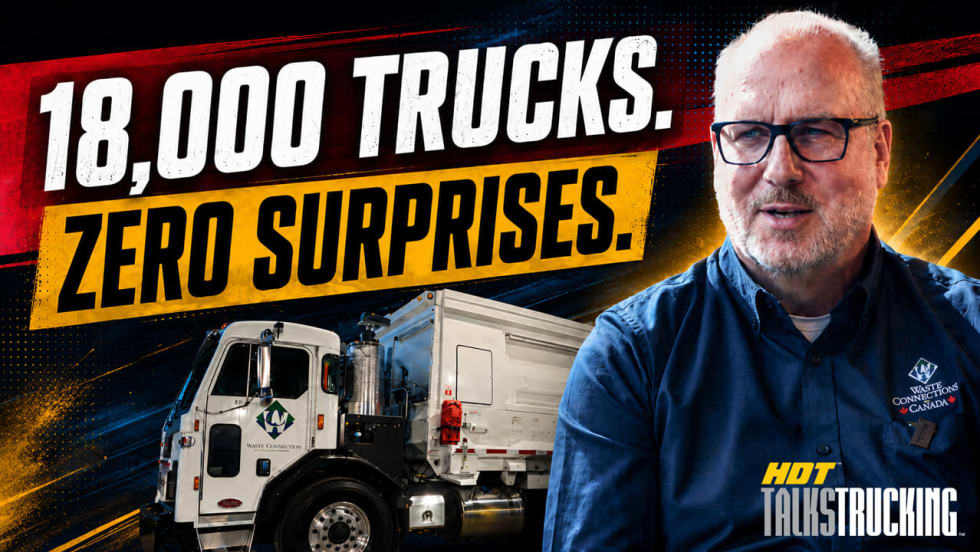
Why Fleet Data Matters More Than Ever at Waste Connections [Watch]
Waste Connections' Chuck Palmer explains how telematics, predictive maintenance, safety analytics, and AI help keep vehicles on the road and drivers safe in this episode of HDT Talks Trucking.
Read More →
NMFTA Launches Free, Anonymous Cybersecurity Threat Report Portal
Organizations are encouraged to anonymously report freight fraud, cargo crime, and cyber threats while gaining visibility into incidents reported across the transportation sector.
Read More →
AI Can Optimize a Fleet. Can It Replace Human Judgment?
Fleets fear falling behind if they don’t adopt AI quickly enough. They also fear what happens if the technology makes the wrong decision.
Read More →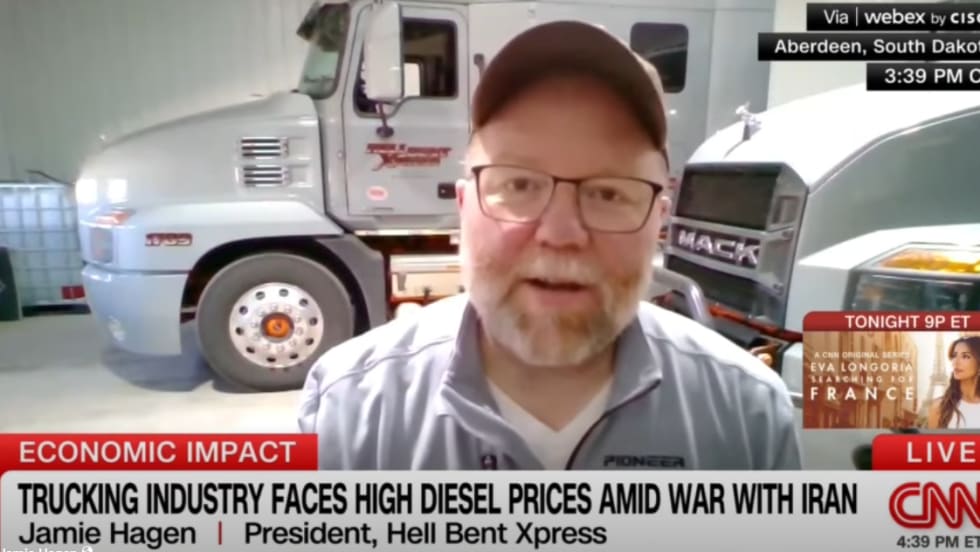
Jamie Hagen Gets Real About Running a Small Fleet in an Uncertain Economy
Small fleet owner Jamie Hagen says new legal risks, volatile fuel prices, and a changing freight market are forcing small carriers to rethink how they operate — and what they can afford.
Read More →
Jamie Hagen Gets Real About Freight, Fuel Prices, Safety, and Small-Fleet Survival
Running a small trucking fleet right now isn’t easy, especially right now. And Jamie Hagen doesn’t sugarcoat it.
Read More →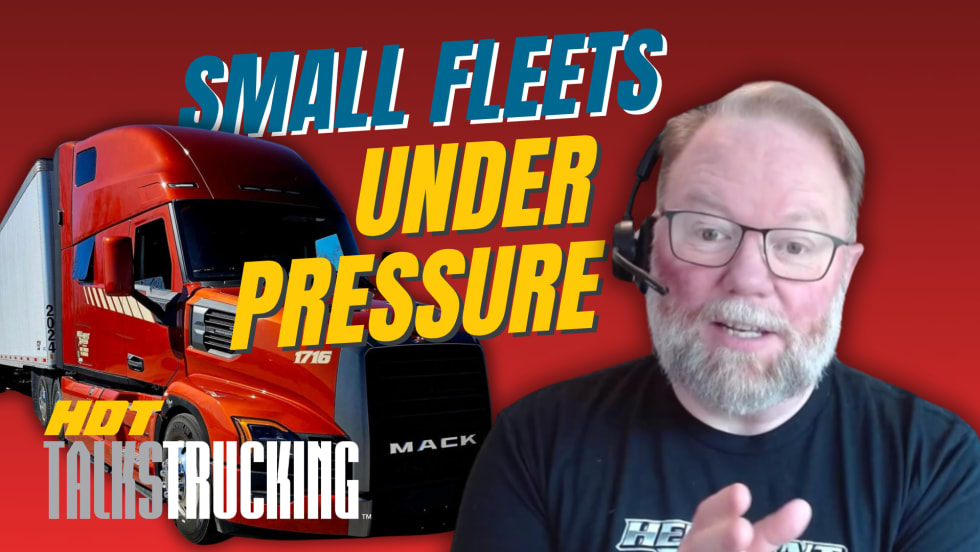
Jamie Hagen Gets Real About Freight, Fuel Prices, Safety, and Small-Fleet Survival
Running a small trucking fleet right now isn’t easy, especially right now. And Jamie Hagen doesn’t sugarcoat it.
Read More →
Data Lock‑In or Integration Lock‑Out?
Data fragmentation is costing dealerships, OEMs, fleets, and upfitters millions. Here’s why interoperability may be the fix the trucking industry needs.
Read More →