




Driver Recruiting and Retention: It's All About Respect
It was clear at last week's Recruitment & Retention Conference, put on by the Truckload Carriers Association and ACS Advertising, that forward-thinking carriers are realizing that recruiting and retention in the new environment means treating drivers are more than steering-wheel holders


It was clear at last week's Recruitment & Retention Conference, put on by the Truckload Carriers Association and ACS Advertising, that forward-thinking carriers are realizing that recruiting and retention in the new environment means treating drivers are more than steering-wheel holders.
The audience of more than 200 truck driver recruiting and retention professionals at the event in Nashville, Tenn., enjoyed sessions on topics such as recruiting in an electronic age, innovation in recruiting and retention, and in-depth workshops on topics such as recruiting and retaining owner-operators, how to recruit ex-military, and driver development and retention strategies for the first 90 days and beyond.
Throughout many of the sessions there was a message of "drivers are people, too."
Yes, compensation is one of the first things people ask about when looking for a job. Mark Murrell is president of CarriersEdge, which does the Best Fleets to Drive For program for TCA. He reported that company drivers working for carriers in the Best Fleets program averaged $53,673 annually, on an average of 111,851 miles, while owner-operators averaged revenue of $162,985 a year on 116,021 miles.
Interestingly, Murrell said, year-over-year those numbers are essentially flat. Part of that, he said, appears to be drivers jumping from company to company. Yet "Even though the income isn't going up dramatically, a higher level of satisfaction is happening at these fleets," he said - in other words, even if your pay is average but you've got a supportive company, people are sticking around.
In a session aimed at owner-operator fleets, David Pike, director, recruiting and contractor relations, Universal Truckload Services, presented the results of an informal driver survey of about 200 drivers. When asked what attributes they consider the most when selecting a company to drive for, 43% said compensation, and 18% said fair treatment and respect. But when asked about what influences them most to leave a company, lack of fair treatment edged out compensation issues, 44% to 43%.
In many cases it boils down to very simple things. Are drivers a name or a number? Are problems with paychecks addressed promptly and other questions answered, or do questions get a "not my job" attitude?
"These drivers have a name," said Pike. "Is the first thing out of a dispatcher's mouth, 'what's your truck number?' Guess what, that's a human being. Have your dispatchers address them as such. They have a name."
Respect starts with recruiters being honest about what to expect. "If you train your recruiters to be honest, drivers stay," Pike said. "Record and listen to your recruiters' phone calls. You'd be amazed at some of the things you will hear from your recruiters and from the drivers on the other end of the phone."
Terry Chappell, safety and recruiting coordinator for Fikes Truck Line, was one of many who stressed the importance of communication - not only the what, but also the how.
"Retention starts with the very first call the recruiter gets from a driver," Chappell said, "but it's everybody's responsibility, right down to the operator who answers the telephone. Every conversation can make a difference."
Jeff Holsinger, director of recruiting at Fleetwood Transportation Services, Diebold, Texas, said there's one thing people say on the phone that makes his skin crawl: "It's not my job."
"It may not be their job, but their job is to get them to the right people," Holsinger said. "Outlaw that in your company. Anyone you hear saying that, discipline that. Because their job depends on having that driver or owner-operator."
Kevin Burch, president of Jet Express in Dayton, Ohio, related a recent tale of a driver, working for an owner-operator contracted to the company, who was complaining about a seat in the truck that was just killing him.
"The dispatcher said 'Listen, it's not your truck, you're just the driver.'" Burch quickly set that dispatcher straight. "I told the dispatcher, what if you had a chair that didn't fit your body, and you had to sit in it for 10 hours? You want that driver to be uncomfortable on the road? Think about it."
Holsinger asked the audience to think about whether everyone in their company is treating the owner-operator with respect, like the businessperson he is. "When drivers call you with a question, it's one more opportunity for you to shine, for you to be better than the last place they worked."
Communication goes both ways, too. Burch also related a recent conversation with a new recruit, who came to Jet Express from a very large, well-known carrier.
"I told him how we communicate and if you've got anything on your run that can be improved, let us know. And he said, 'Mr. Burch, that's why I'm here. I was there for almost a year and I had a couple of suggestions and I was told twice that it was none of my business they had people that it was their job to make those kind of decisions.'" Burch is looking forward to his suggestions.
Communication is especially important during the first one to three months.
Fikes' Chappell makes a point to call each new recruit the Friday after their first full week on the road. "I want to make sure they haven't had any problems, and also make sure they've done things they need to do like turning in their logs. That's always a good time to have that conversation about anything, their family. This is the time to catch up and let them know how much they're wanted and we're glad that they're with us."
Chappell also emphasized that "if they have problems, it's not always going to be something you can take care of, but make sure they get to the right person and make sure it's taken care of one way or the other."
The issue resolution process is important, said Rim Yurkis, president and CEO for employment consulting firm Strategic Programs Inc. "So they know up front if they can walk into the president's office if they have a problem," Yurkis said. "What do they do if they don't like the answer they got from their fleet manager? What do they do if they're not happy with the condition of their tractor? Being dead-ended - if someone has an issue and they feel they're not being treated fairly, if someone says no and there's nowhere to go - that's a fast track for disengagement."
Trent Dye with Paramount Freight Systems, a multiple Best Fleet to Drive For honoree, says his company created a buddy program. Seasoned, veteran owner-operators for the company are paid extra to take a handful of new drivers under their wing for their first 60 days. This not only gives newbies a place to go with questions they might feel intimidated to ask their boss, but also gives them another point of contact with the company besides the dispatcher. There's a waiting list to be a buddy, and Dye said that's not just because of the extra pay, but also because it makes the veteran drivers feel their advanced skills and experience are valued. "It gives both the new driver and mentor a sense of belonging."
It's important for driver managers, dispatchers, whatever the fleet calls them, to have a one-on-one relationship with their drivers. "Every driver has a handicap, and we don't mean that in a bad way," says Jim Subler, president of Ohio-based Classic Carriers Inc., which has about 130 trucks and low turnover. "It's something that's very very important to him or her, and if you work with him on that he'll do a good job. It could be kids, it could be home time by a certain time every week, it could be certain geographic areas he wants to run (or doesn't want to), it could be religious commitments or the personal needs of family. Does your operations department know and understand these needs? Do they comply with them?"
As Chappell said, "The last thing you want to find out from a driver if they've had a pro
More Fleet Management
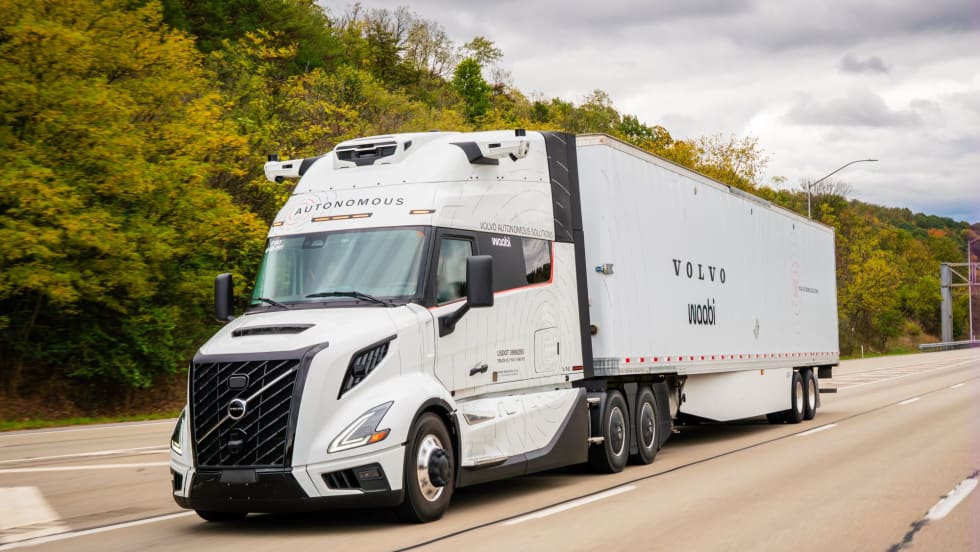
Volvo, Waabi Start Commercial Autonomous Operations in Texas
Volvo VNL Autonomous trucks, powered by the Waabi Driver, are hauling freight directly to third-party facilities for a customer in Texas.
Read More →
Samsara Launches Custom AI Agent Builder
Agent Studio lets fleets create AI tools for hours-of-service monitoring, reporting and driver support, including agents that communicate by phone.
Read More →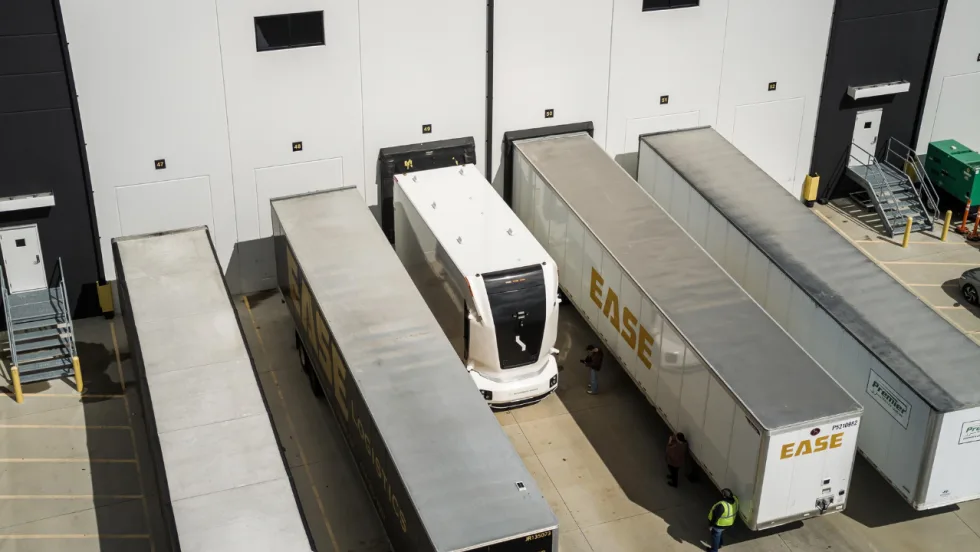
Einride Driverless Electric Trucks Begin Daily Freight Operations in Ohio
Two cabless electric trucks are hauling freight between EASE Logistics facilities in Marysville, Ohio, as part of a multi-state truck automation project.
Read More →
Geotab Links Fleet Card to Vehicle Data
The new card combines fuel discounts with telematics-based purchase controls. Geotab’s analysis also points to potential savings from choosing lower-priced fuel stops.
Read More →
How MFA Helps Protect Trucking Fleets
Multi-factor authentication adds protection when passwords are stolen. Here’s how it works and where fleets should start.
Read More →
How Better Freight Data Helps Trucking Teams Get Ahead of Disruption
Trucking and logistics teams have plenty of data. The problem is getting the right information in front of the right people soon enough to act. Better-connected data can help teams spot trouble earlier and make smarter decisions before small problems become big ones.
Read More →
Trimble: Taking Artificial Intelligence in Trucking Beyond Faster Tasks
At Insight 2026, Trimble executives argued that fleets may need to redesign workflows to get more from AI as it introduced new products and enhancements. AI’s value will depend on how fleets combine automation with their people's knowledge.
Read More →
Build a bulletproof fleet: Uniting ELDs and dash cams for total compliance
An ELD can prove compliance, but it cannot always prove what happened on the road. Discover how uniting accurate ELD data with AI-powered dash cam video can help your fleet strengthen compliance, defend against liability, protect drivers and reduce operational costs.
Read More →
Nominations Open for HDT Emerging Leaders
Heavy Duty Trucking is looking for accomplished trucking fleet professionals under 40 who are making an impact and helping lead the industry forward.
Read More →
Why Private Fleets Are Taking More Freight
Private fleets are putting their own trucks on demanding customers and high-cost lanes as companies seek greater control over service, costs, and capacity.
Read More →