




Get Ready For Onslaught of New Rules From OSHA
The Occupational Safety and Health Administration has made it clear that it's back in the rulemaking business, with a sling of new labor rules in the pipeline for 2010 that trucking companies ought to be aware of
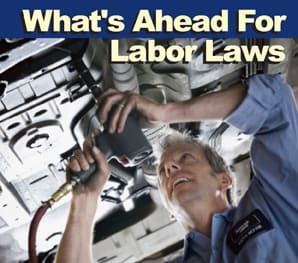
Photo courtesy of MTS Driver Recruiters
The Occupational Safety and Health Administration has made it clear that it's back in the rulemaking business, with a sling of new labor rules in the pipeline for 2010 that trucking companies ought to be aware of.
That's the message that was presented during the American Trucking Associations' recent webinar "OSHA Outlook: What to Expect from OSHA in the Current Political Climate," lead by Larry Halprin, a partner at Keller and Heckman, a law firm focusing on regulatory law, litigation, and business transactions.
Changes at OSHA
Since Obama's election, OSHA and the Department of Labor have been shaking things up, with new staff and a new regulatory agenda, which is published every six months. According to Halprin, Secretary of Labor Hilda Solis is the new sheriff in town. She has a strong pro-labor background, and runs the DOL as if she's still on the campaign trail, Halprin says. Other fresh blood include Jordan Barab, deputy assistant secretary at OSHA; Deborah Berkowitz, chief of staff at OSHA; and Dr. David Michaels, the new administrator of OSHA.
On the Agenda
This month, OSHA is scheduled to hold a stakeholders meeting regarding a regulation in the pre-rule stage that would adopt a combustible dust standard. According to OSHA, if dust from any combustible material is suspended in the air in the right concentration, it can become explosive, leading to employee deaths, injuries and destruction of entire buildings.
Materials that may form combustible dust include metals (such as aluminum and magnesium), wood, coal, plastics, biosolids, sugar, paper, soap, and certain textiles. Trucking companies that haul these goods are subject to this standard, especially when the driver is involved in taking the materials out of the truck, hooking up hoses, etc. Halprin says it's likely that OSHA will pass the standard.
Another standard in the pre-rule stage involves crystalline silica, which can cause Silicosis, a disabling, nonreversible and sometimes fatal lung disease. It can be found in brick, rock, concrete, and other building materials, Halprin says. If a carrier has a facility built out of these materials or is hauling these materials, the trucking company would be subject to the standard.
OSHA has a proposed rule on the table to protect employees from hazardous working conditions in the shipyard, including the control of hazardous energy, safe operation and maintenance of vehicles, accident prevention signs and tags and servicing of multi-piece and single piece rim wheels. OSHA is proposing to define "motor vehicle" as "any motor-driven vehicle operated by an employee that is used to transport employees, materials, or property."
The rule is meant to extend federal, state and local laws on public roads to the shipyard. This includes regulations governing seat belt use and vehicle inspection.
Final Rule Stage
OSHA is working on a final rule for the handling and investigation of retaliation complaints. The rule would provide retaliation protection to employees working for commercial motor carriers who report potential violations or engage in certain activities related to safety and security.
The standard, which would go into effect in March, includes a "kick-out" provision allowing the employee to file the complaint in District Court if the secretary of labor has not issued a final decision within 210 days of the filing.
"The Paw Act"
Another law to become familiar with is called the Protecting America's Workers Act, or "The Paw Act," a major OSHA reform bill on Capitol Hill. If passed, the law would extend OSHA's coverage to federal, state and local government employees, Halprin says. This aspect of the law would level the playing field, since government workers would be subject to OSHA rules, Halprin adds.
The law would also extend to activities presently covered by other federal agencies' safety and health regulations, such as those of the Department of Transportation and the Environmental Protection Agency.
The legislation would expand whistleblower provisions, including extending the filing deadline from 30 to 180 days. It would also prohibit employers from discouraging injury/illness reporting and prohibiting retaliation for reporting, Halprin says. In addition, employers would be required to pay for employee participation in OSHA inspections. The rule would also codify and expand "victims rights," as well as increase both criminal and civil penalties for violations.
All of these laws and proposals are important to the trucking industry, and will likely affect your business in one way or another. Getting educated on these rules and being able to prioritize can help fleets prepare for the onslaught of new regulations on the way.
To see the DOL's most recent regulatory agenda, visit www.reginfo.gov/public/do/eAgendaMain.
More Fleet Management
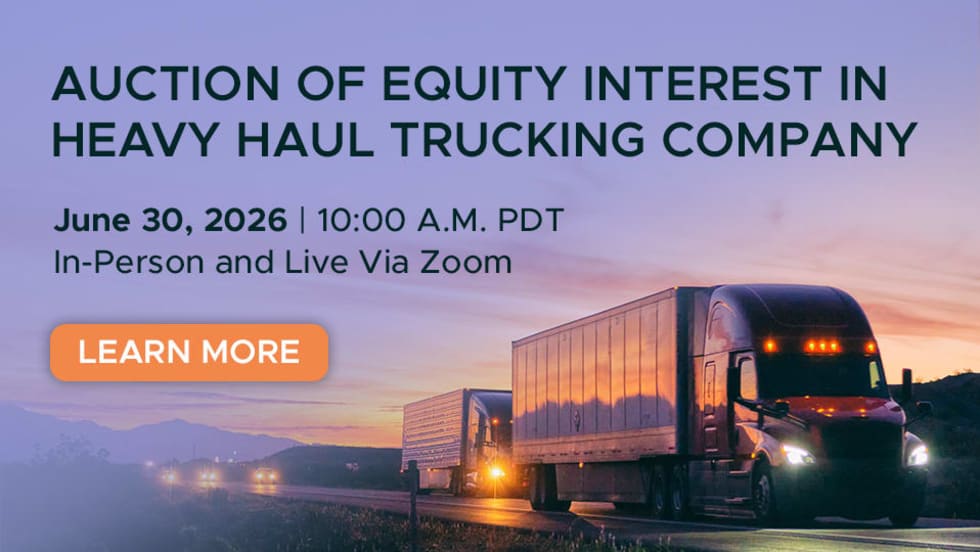
AUCTION OF EQUITY INTEREST IN HEAVY HAUL TRUCKING COMPANY!!
Mark your calendar: June 30, 2026 (10:00 a.m. PDT). MagnaTrans, LLC, a California limited liability company doing business as Magna Transportation Group is going to auction! Bid on a 37.5% ownership interest in this Rancho Cucamonga-based heavy haul and over-dimensional trucking company operating across California, Oregon, and Arizona. The equity interest will be sold to the highest bidder or bidders under Article 9 of the Uniform Commercial Code at 10:00 a.m. PDT.
Read More →
Volvo Trucks Adds Unattended Over-the-Air Software Update Capabilities
The latest evolution of Volvo’s over-the-air update technology allows software updates to run while trucks are parked, helping fleets keep vehicles current without disrupting operations.
Read More →
How Waste Connections is Using Data, Telematics, and AI
How do you manage and maintain more than 18,000 connected trucks? Data. Lots of it.
Read More →
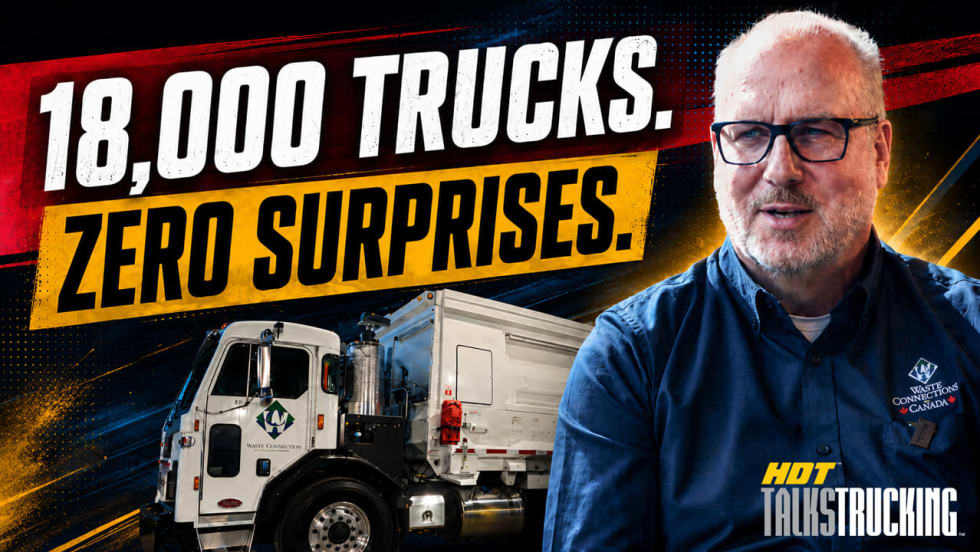
Why Fleet Data Matters More Than Ever at Waste Connections [Watch]
Waste Connections' Chuck Palmer explains how telematics, predictive maintenance, safety analytics, and AI help keep vehicles on the road and drivers safe in this episode of HDT Talks Trucking.
Read More →
NMFTA Launches Free, Anonymous Cybersecurity Threat Report Portal
Organizations are encouraged to anonymously report freight fraud, cargo crime, and cyber threats while gaining visibility into incidents reported across the transportation sector.
Read More →
AI Can Optimize a Fleet. Can It Replace Human Judgment?
Fleets fear falling behind if they don’t adopt AI quickly enough. They also fear what happens if the technology makes the wrong decision.
Read More →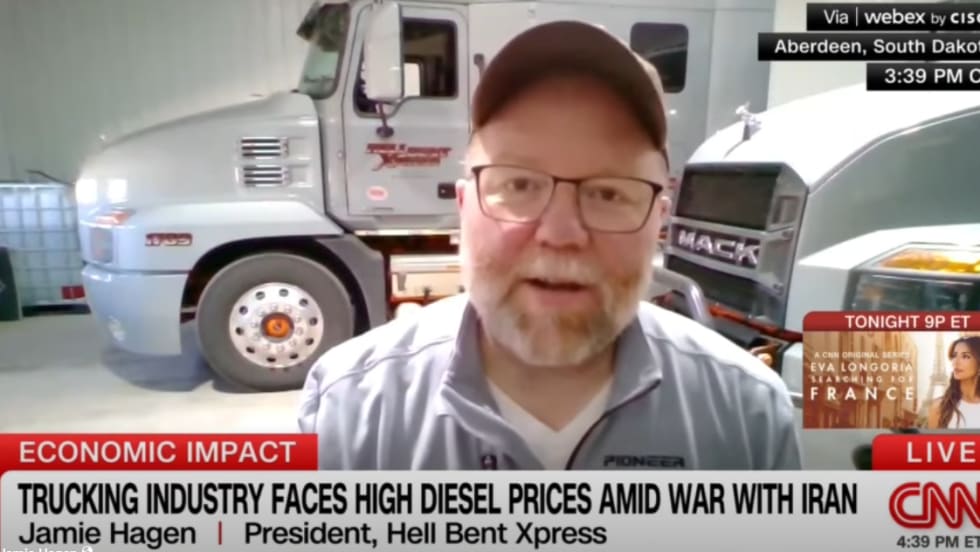
Jamie Hagen Gets Real About Running a Small Fleet in an Uncertain Economy
Small fleet owner Jamie Hagen says new legal risks, volatile fuel prices, and a changing freight market are forcing small carriers to rethink how they operate — and what they can afford.
Read More →
Jamie Hagen Gets Real About Freight, Fuel Prices, Safety, and Small-Fleet Survival
Running a small trucking fleet right now isn’t easy, especially right now. And Jamie Hagen doesn’t sugarcoat it.
Read More →
Jamie Hagen Gets Real About Freight, Fuel Prices, Safety, and Small-Fleet Survival
Running a small trucking fleet right now isn’t easy, especially right now. And Jamie Hagen doesn’t sugarcoat it.
Read More →
Data Lock‑In or Integration Lock‑Out?
Data fragmentation is costing dealerships, OEMs, fleets, and upfitters millions. Here’s why interoperability may be the fix the trucking industry needs.
Read More →