





Related: Alignment and Balancing: Hassle, or Worth the Hustle?
Are Your Tires up to the Job?
Tires look alike, but the wrong tire doing the wrong job can be a productivity killer for fleets. Tracking tires and matching them for the task at hand takes constant patience and vigilance.
October 26, 2017
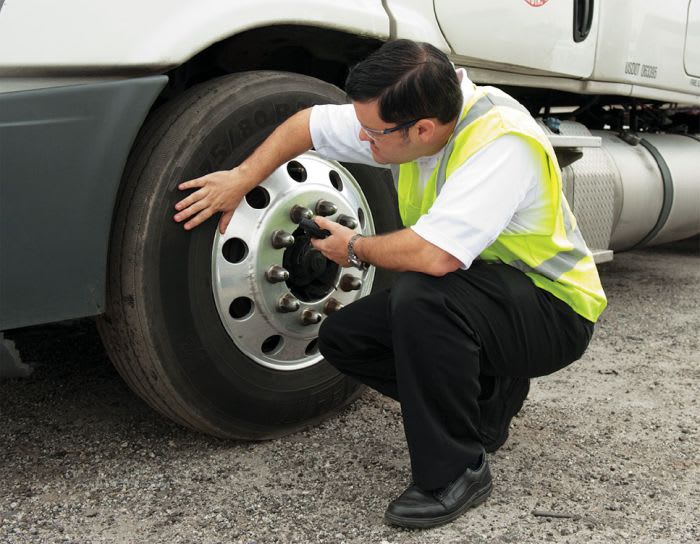
To determine if your tires are up to the job you’re asking them to do, you’ll next to establish a consistent program to track their performance – and then follow through with it. Photo: Michelin
7 min to read
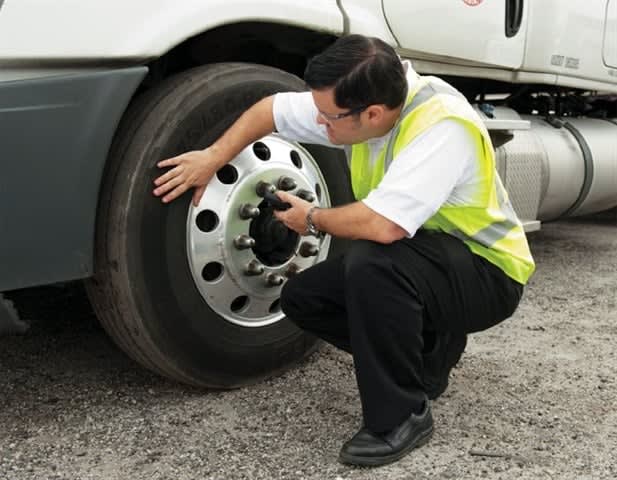
To determine if your tires are up to the job you’re asking them to do, you’ll next to establish a consistent program to track their performance – and then follow through with it. Photo: Michelin
Nothing matters more than proper air pressure when it comes to getting optimal service life out of your tires. But all the air pressure checks in the world aren’t going to do any good if you’re running the wrong tire for the type of work your fleet does.
To the untrained eye, tires all pretty much look the same. But engineers design tires to meet a wide variety of very different operational demands. Those subtle differences can come back to haunt a fleet down the road if the tire and the job it’s being asked to do don’t go hand-in-hand.
“I categorize fleets in two classes when it comes to tires,” says fleet consultant Bruce Stockton, a longtime fleet maintenance and equipment manager who’s now president of Stockton Solutions. “I typically see serious, long-term buyers that truly practice a total cost of ownership model, and what I call ‘Savers,’ fleets that are more concerned with their monthly or quarterly results and focused on current expense vs. long-term costs.”
Stockton says jokingly that Savers are basically commodity buyers that view tires as black and round. But when he considers the money fleets spend on tires today, the joke stops being funny. “Personally, I’m still amazed that more fleets don’t practice best practices when it comes to their tires,” he says. And you’ll see this problem in both large and small fleets.
“Most sophisticated fleets today have really dialed these operational factors in,” says Ron Greenleaf, regional manager, GCR Tire Sales and Service. “They tend to have a lot of time and money invested in choosing the correct tires for their applications, and pay attention to their performance as a result.”
Greenleaf notes, however, that given the upfront costs of new tires, the temptation to cut corners can be too much for some fleets. “It’s very easy to get blinded by initial costs,” he explains. “Overall lifetime value is what fleets really need to be looking at. But that can be a nonstarter for a fleet manager with budget issues.”
Another common problem is that tires, like any other vehicle component, undergo a constant process of evaluation and evolution as designers seek to improve their performance in the field or meet regulatory or technological challenges. This can be a problem for a fleet that settled on the correct tire for its application several years ago and hasn’t thought much about it since.
“Fleets should revisit their tire application choices when a truck’s performance or service requirements change, or whenever they believe re-evaluation is necessary,” says Evan Perrow, senior product marketing manager, Goodyear. “Government regulations also could create a need to re-evaluate tire choices. For instance, Greenhouse Gas (GHG) Phase 2 rolling resistance requirements, which are scheduled to kick in several years from now, will drive increased demand for what we call ‘super-fuel tires,’ which go beyond SmartWay certification, although fleets will continue to need truck tires that are SmartWay-verified.”
An industry that is suddenly going through unprecedented market shifts can have an impact as well, says Sharon Cowart, director of product marketing, Michelin Truck Tires. She notes that not only do products and service offerings change, but that fleet operational factors also can change. “For instance, a fleet that may have been operating in a long haul scenario may now be moving toward a regional or even urban practice where start/stop, braking, or curbing may be an issue,” she explains. “A fleet that was operating in the northern territory and experiencing winter conditions may now be operating in off-road environments where the tread siping for traction is now chunking and experiencing stone drilling. Fleets that operate from Canada down to the southern U.S. know all too well the trade-offs between mileage and flexibility.”
In addition to the variability in usages that fleets see, different fleets may value different performance characteristics in the tires they select, depending on the goals of their operations, Cowart adds. “Some fleets value fuel efficiency and count on low-rolling-resistance tires to minimize the total cost of ownership of their tires. Others may value tire longevity and count on tires with maximum wear potential to minimize initial tire purchase costs and maximize uptime. Another reason fleets should re-visit their tire application choices would be to ensure they meet any regulatory requirements that may be in place for their area of operation.”
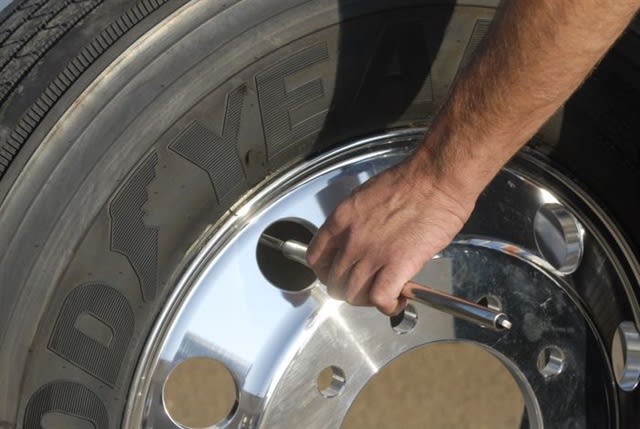
Establishing a daily inspection and pressure check program is an excellent way to spot problems before they get out of hand. Photo: Goodyear
Take nothing for granted
Tires can be tricky to track. They can roll along just fine for thousands of miles without any problem – and when problems do arise, they can be extremely subtle and hard to spot. Which is why Robert Palmer, director of market sales engineering for Bridgestone Americas, says the best first step in matching tires to applications is to simply start paying attention to their performance in the field. “Beyond that,” he says, “you need to sit down and examine your business and what changes have affected it since your last considered your tire purchases.”
These questions are mostly straightforward, he says, and include basic criteria such as the type of carrier your fleet is, how many miles a year your trucks typically run, and your preferred vehicle configuration and load range. “But you also need to consider harder-to-quantify factors such as your retread program (or lack of one), the speed ratings of the tires you’re running versus the speeds your drivers typically run, as well as patterns of irregular wear or premature loss that your technicians are seeing.”
Tire dealers are also a good source of knowledge and experience, says Goodyear’s Perrow. “Optimal tire performance starts with accurate tire selection. And making that decision means first defining what tires will be ‘asked’ to do. Working with an authorized commercial tire dealer can go a long way toward helping you to select the most appropriate tires for the job at hand. The tire professionals at these facilities have the experience and expertise to evaluate truck performance needs and make the most appropriate recommendations.”
Palmer says he often talks to fleets who aren’t tracking mileage or the cost of their tires who are frustrated by the poor mileage they’re getting. “But if you have no idea when the tires went on or came off, or tracked how they did while they were in service, you have no way of knowing what you are getting out of those tires or what you should be getting out of those tires,” he argues.
When Stockton is working with a fleet client on tire performance, he advises them to focus on performance metrics such as the average cost of the tire per each loss of 1/32 of tread depth, average scrap-out rate, and the tires’ average fuel economy performance. “These are all key performance indicators that should be monitored on a regular basis,” he says. “And any significant change in these performance indicators is a first sign that they may be running the wrong tire or that the application and duty cycle may have changed.”
Another move Stockton encourages is to get technicians involved in the effort to monitor tire performance and collect data. “Well-trained tire technicians will see and should call out irregular and abnormal wear, followed by solid data to support their beliefs that a certain tire may be improper for the application,” he says.
If you’re running the incorrect tire for the task at hand, the signs can often be obvious, Cowart says, such as uneven or irregular wear, premature tire failure, cutting, chunking, stone drilling, debris penetration, deep cracks, rubber tearing, or other major problems in the tread or shoulder of the tire.
“Uneven or irregular wear are early signs of a tire that is not performing well,” she says. “Premature tire failure is also another indicator of problem. It must then be determined if this is being caused by the conditions, vehicle alignment or maintenance issues, improper inflation pressure or even operator misuse. If none of those apply, the issue could be coming from the incorrect choice for the application.”
Even if your tires are performing well in your fleet application, Cowart says it is still very much worth the time and trouble to re-evaluate your tire choices regularly. “A tire may be performing fine, but another choice may be able to deliver additional performance and value factors such as mileage, wear and durability,” she says. “But you won’t know that unless you look.”
Similarly, if you change tires, Stockton says, don’t get carried away if they appear initially to be wearing perfectly fine or better than your previous tires. “Even if all the early signs are fantastic, it’s still important to run those tires to a normal pull point and track the performance,” he says. “It’s not uncommon, based on tire compounds and tread pattern changes, to see improved performance in the early life of a tire, followed by a rapid deterioration of performance while a fleet is lulled into a false sense of improved projected performance.”
In those cases, Stockton advises his clients to run the tire out, check and validate all key indicators previously mentioned, and proceed with caution before making wholesale changes to a program that may already be providing the best overall results.
Subscribe to Our Newsletter
More Equipment

How Volvo Updated Its D13 for EPA 2027 [Watch]
Volvo’s updated D13 promises lower emissions without sacrificing performance or fuel economy. Take a closer look at what changed inside the engine in this HDT Spotlight video.
Read More →
Michelin Tire Improves Efficiency and Durability for Regional Fleets
The Michelin X Multi Energy D2 is a regional haul drive tire engineered to help fleets improve fuel efficiency, durability and traction in demanding stop-and-go operations.
Read More →
ZF Expands Commercial Vehicle Push in North America
ZF is expanding its North American commercial-vehicle presence with new transmission applications, electrification, trailer technology and autonomous-driving systems.
Read More →
Tesla Wants a Self-Driving Semi. Are Cameras Enough?
Could Tesla’s camera-only autonomous driving technology work on an 80,000-pound Semi? In this commentary, HDT's Deborah Lockridge takes a look at Tesla, Cybercab, and how autonomous trucks see the road.
Read More →
Kodiak: Driverless Long-Haul Truck Launch on Track for 2026
Kodiak AI says its driverless long-haul safety case is 93% complete and it remains on track to begin commercial operations by year-end 2026.
Read More →
What DOT’s Automated Vehicle Strategy Means for Trucking
The U.S. Department of Transportation issued a new automated-vehicle strategy that outlines plans for driverless-truck regulations, cross-state freight corridors, and federal safety standards.
Read More →
East Coast Port Launches $45M Electric Truck Push
The Port Authority of New York and New Jersey announced millions in incentives for zero-emission drayage trucks, yard tractors, and new charging hubs near the port.
Read More →
PlusAI Going Public to Fund Autonomous Truck Launch
A SPAC deal could provide PlusAI with up to $300 million as it works toward a 2027 commercial launch of factory-built autonomous trucks.
Read More →
NHTSA Moves to Rewrite Truck Fuel-Economy Rules
The National Highway Traffic Safety Administration says it lacks authority to regulate medium- and heavy-duty truck engines separately from complete vehicles, but the existing standards have not yet been eliminated.
Read More →
Detroit Opens Orders for EPA 2027 Engines
Detroit isn’t starting from scratch to meet EPA 2027 diesel emissions standards. Its Gen 6 DD13 and DD15 engines keep much of today’s platform while updating the fuel and aftertreatment systems.
Read More →