




Tire Makers Look for Alternatives to Natural Rubber
Although we're in no danger of running short of our primary source of natural rubber, prices have risen dramatically over the past 10 years, contributing to rising prices for tires. Several tire makers are researching other sources of rubber.

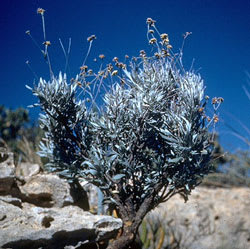
Guayule is a rubber-producing plant that could offer a domestic, and thus more stable, supply.
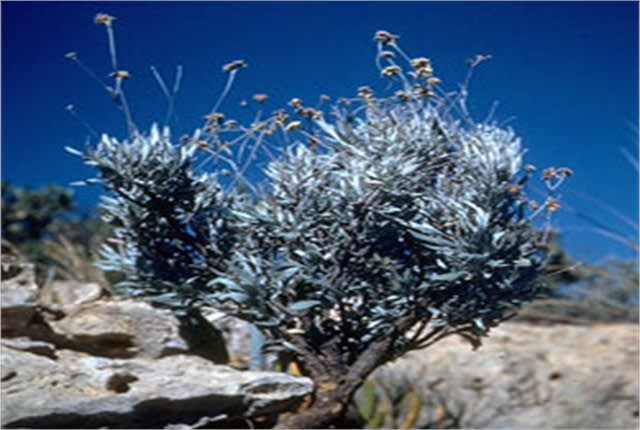
Guayule is a rubber-producing plant that could offer a domestic, and thus more stable, supply.
Although we're in no danger of running short of our primary source of natural rubber, prices have risen dramatically over the past 10 years, contributing to rising prices for tires.
The primary producers of natural rubber are in South and Southeast Asia in countries such as Malaya and Thailand, with some production in tropical West Africa. All those are places subject to damaging seasonal monsoons and other extreme weather conditions, like the one that struck Thailand in 2011. That makes supply a little unpredictable.
Rubber has also recently become a traded commodity, leading to speculative investment, which has driven up prices.
"It's not unlike petroleum markets," says Bill Niaura, Bridgestone Americas' director of new business development. "There are price points where it begins to make economic sense to explore and drill for oil in non-traditional areas. We're now at the point in the rubber industry where it makes sense to look for alternatives."
Enter guayule
There are about 2,000 plant species producing natural rubber, but the Hevea tree is the most productive. In the history of the rubber business, only one other species, guayule, has been used in actual rubber production.
In the 1920s, the Intercontinental Rubber Co. in California produced 1,400 tons of guayule rubber after leaf blight decimated the Brazilian rubber industry.
Guayule also become a replacement for Hevea tree-produced latex rubber during World War II when Japan cut off America's Malaysian latex supplies, says Dennis T. Ray of the School of Plant Sciences, University of Arizona at Tucson. "The war ended before large-scale farming of the guayule plant began, and the project was scrapped."
Unlike the hevea tree, which grows in tropical climates, guayule grows in the arid climates of the U.S. southwest – Arizona being particularly well-suited to the plant.
Hevea is essentially the sole source of natural rubber today, but active research and development programs are underway to domesticate and commercialize guayule – two are led by tire manufacturers Bridgestone and Cooper Tire & Rubber Co.
A consortium consisting of Cooper Tire & Rubber Co., Yulex Corp., Arizona State University and the Agricultural Research Service of the U.S. Department of Agriculture are working under a $6.9 million Biomass Research and Development Initiative grant from the USDA and the U.S. Department of Energy.
The BRDI is a joint effort between the USDA and the DOE to develop feedstocks for bio-fuels and bio-based products, including rubber from guayule.
The consortium members aim to harness biopolymers extracted from guayule as a replacement for petroleum-based synthetics and tropical-based natural rubber used in the manufacture of tires.
Meanwhile, Bridgestone has its own plans for a guayule research farm near Eloy, Ariz., and a research center in nearby Mesa, Ariz.
A 281-acre agricultural site in Eloy will serve as the base of its agricultural research operation, and will supply guayule for the company's process research center in nearby Mesa.
"Material-wise, guayule is the same polymer as hevea rubber, but it diversifies our supply," Niaura says. "In terms of plant biology and regionality, it's domestic to the Americas, but there are still challenges ahead. Guayule is not a commercial crop, so we have to develop the agricultural aspect as well as the process aspect."
The facility is expected to be fully operational in 2014, with trial rubber production starting in 2015.
More rubber alternatives
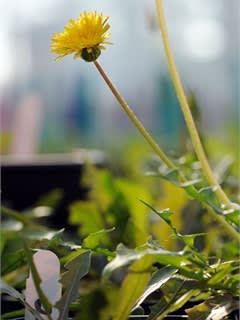
The Russian Dandelion produces more rubber than its common cousin.
Scientists from the Fraunhofer Society in Germany have discovered that the milky sap of the dandelion contains raw rubber of the same quality as that found in rubber trees.
While the commercial production of dandelion rubber is still only a vision for the future, Continental AG intends to pursue this alternative source of natural rubber for tire and technical rubber applications.
Continental has been pursuing the research into dandelion rubber since 2007, and is currently working in a research consortium to explore the capabilities of the Russian dandelion species, which provides a higher yield of natural rubber than the common dandelion.
Yokohama currently uses oil from orange peels in one model of passenger car tire, says Rick Phillips, director of commercial sales at Yokohama Tire Corp. "It's an oil substitute that improves traction. It displaces some oil in just those tires at the moment, but we're looking at ways to use it in commercial tires."
Goodyear is looking at soybean oil as a way to help reduce the amount of petroleum-based oil used in tires.
"Goodyear researchers have learned via testing that using soybean oil in tires can potentially boost tread life by 10%," says Mike Manges, Goodyear's Communications manager for commercial tires. "As well, Goodyear and DuPont Industrial Biosciences are working together to develop BioIsoprene, a revolutionary bio-based alternative for petroleum-derived isoprene (synthetic rubber)."
More Equipment

How Volvo Updated Its D13 for EPA 2027 [Watch]
Volvo’s updated D13 promises lower emissions without sacrificing performance or fuel economy. Take a closer look at what changed inside the engine in this HDT Spotlight video.
Read More →
Michelin Tire Improves Efficiency and Durability for Regional Fleets
The Michelin X Multi Energy D2 is a regional haul drive tire engineered to help fleets improve fuel efficiency, durability and traction in demanding stop-and-go operations.
Read More →
ZF Expands Commercial Vehicle Push in North America
ZF is expanding its North American commercial-vehicle presence with new transmission applications, electrification, trailer technology and autonomous-driving systems.
Read More →
Tesla Wants a Self-Driving Semi. Are Cameras Enough?
Could Tesla’s camera-only autonomous driving technology work on an 80,000-pound Semi? In this commentary, HDT's Deborah Lockridge takes a look at Tesla, Cybercab, and how autonomous trucks see the road.
Read More →
Kodiak: Driverless Long-Haul Truck Launch on Track for 2026
Kodiak AI says its driverless long-haul safety case is 93% complete and it remains on track to begin commercial operations by year-end 2026.
Read More →
What DOT’s Automated Vehicle Strategy Means for Trucking
The U.S. Department of Transportation issued a new automated-vehicle strategy that outlines plans for driverless-truck regulations, cross-state freight corridors, and federal safety standards.
Read More →
East Coast Port Launches $45M Electric Truck Push
The Port Authority of New York and New Jersey announced millions in incentives for zero-emission drayage trucks, yard tractors, and new charging hubs near the port.
Read More →
PlusAI Going Public to Fund Autonomous Truck Launch
A SPAC deal could provide PlusAI with up to $300 million as it works toward a 2027 commercial launch of factory-built autonomous trucks.
Read More →
NHTSA Moves to Rewrite Truck Fuel-Economy Rules
The National Highway Traffic Safety Administration says it lacks authority to regulate medium- and heavy-duty truck engines separately from complete vehicles, but the existing standards have not yet been eliminated.
Read More →
Detroit Opens Orders for EPA 2027 Engines
Detroit isn’t starting from scratch to meet EPA 2027 diesel emissions standards. Its Gen 6 DD13 and DD15 engines keep much of today’s platform while updating the fuel and aftertreatment systems.
Read More →