




Wide-Base Tires Gaining Popularity: Are You Ready to Make the Switch?
So maybe you're thinking something like this: "The market is improving, getting credit is easier, business is looking up. Maybe it's time to retire a few older rigs and get some new iron into the fleet. Maybe we should go to wide-base single tires while we're at it

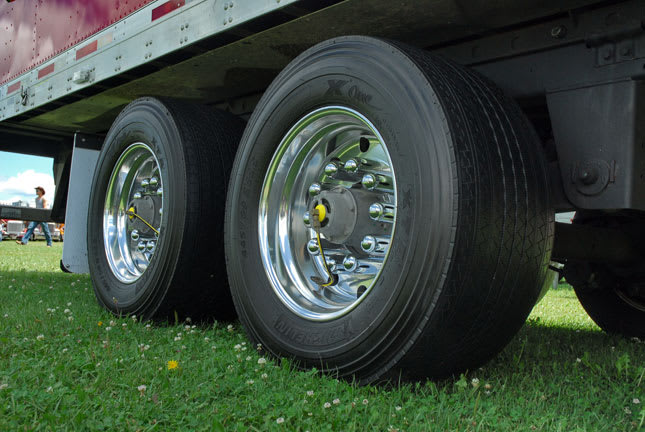
So maybe you're thinking something like this: "The market is improving, getting credit is easier, business is looking up. Maybe it's time to retire a few older rigs and get some new iron into the fleet. Maybe we should go to wide-base single tires while we're at it.
Save some weight, save a little fuel. But we'd better spec them for resale with standard-track axles. Otherwise, I've heard, we'll take a beating at trade-in."
It's July 2011. Wide-single tires have been around for more than a decade, and their market penetration continues to increase year after year. Who's to say in five or 10 years' time, acceptance won't have improved to the point where they'd be considered assets at trade-in time?
The standard 77.5-inch axle width allows for the use of both dual tires and wide-single tires, and facilitates a conversion from singles to duals if required. But are you giving up some performance benefit by hedging on a full commitment to wide-singles and sticking with the standard axle?
According to Craig Bennett, senior vice president of sales and marketing at Utility Trailer Manufacturing, the difference in dynamic performance of trailers equipped with wide-track axles and wide-single tires is dramatic.
"The axle is 6 inches longer and the spring centers are 6 inches wider, so handling is improved remarkably," Bennett says. "Roll stability is improved dramatically, especially in a panic maneuver where a driver has to swerve to avoid something. The trailer tracks much better and has much, much less inclination to roll. Those trailers have remarkably better sway control."
The benefits and drawbacks to wide-base singles are well documented. Weight savings of about 100 pounds per wheel end is the easiest to quantify. The fuel savings benefits are not in dispute, but reported savings vary.
"It's now possible to do as well with the right dual tires as with wide singles," says Goodyear's Larry Tucker. "Even a small reduction in fuel consumption is beneficial, but recent advances in fuel-efficient standard tires have narrowed the gap somewhat."
Perceptions of reduced traction linger, despite testing that shows tread pattern for tread pattern, there's little difference between wide-singles and duals.
Concerns of irregular wear and poor tread life continue to plague the tires. Like standard tires, some wide-base singles are performing very well, others not so well. Some tractor or trailer configurations and some applications seem to favor wide-base singles, while others just chew them up.
And then there's the issue of a roadside failure. If a tire goes down, the truck is down; and there's a distinct possibility of rim damage from running flat. Tire manufacturers have increased the availability of replacement tires, and are continuing to improve service call turn around time, but perceptions linger.
With all those concerns, reluctance to go whole-hog into a full wide-single spec is understandable. When you step over to 83.5-inch axles with a 102-inch track width, there's no turning back. Duals will not fit on a wide-track axle.
Brian Buckham, senior marketing manager at Hendrickson's trailer division, says the wide-track axle eliminates the compromise associated with 77.5-inch axles used with 2-inch-outset wheels.
"With the wide axles, the center of the tire load is centered between the bearings for optimum bearing loading," he says. "That gives best bearing life, tapered spindles are acceptable without the need to derate them for the outset, and because the spring centers can be wider and the sidewall of the wide-single is stiffer than a dual, you'll improve stability."
On the cost and weight side, Buckham notes that the wider axle will cost slightly more and weigh a little more because of the extra metal involved. The slider box would be wider too, which again adds weight and cost.
"The weight gain is marginal, and more than offset by the weight savings offered by the tires," he says. "Costs are a little harder to quantify, but they would be minimal. The reduced bearing wear associated with a centered tire load and the increased choice of hubs and spindles has to be considered."
Bennett says about 75% of the fleets that run wide-single tires still opt for the standard width axles for the flexibility to convert to dual tires at trade-in/resale.
"Those tires have been around a long time now, and I thought the uptake would have been faster, given all the benefits, especially the weight savings," says Bennett. "Many of our customers say they are still worried about breakdowns and replacement availability."
"What we hear from our customers is that they really want to reduce complexity in their fleets," says Steve Slesinski, director product planning, Dana's commercial vehicle division. "The 2-inch-outset wheel has become the intermediary between standard axle widths and the track width requirements for wide singles. If fleets have lots of these types of wheel, they will want to use them at trailer and drive positions. They do not want to limit the application of the wheels by restricting certain wheels to certain positions."
Slesinski points out that the outside to outside measurement on a wide-track axle can go up to 102 inches.
"A dozen or so states still restrict this measurement to 98 inches on state highways," he says. "In some cases local regulations could have some influence on the vehicle spec."
Dana's DS 405 axles support both dual and wide-base configurations and different track widths, but Slesinski cautions that changing wheel-end geometry and application criteria could spawn maintenance issues on the rest of the vehicle.
Last year, Meritor introduced the 14X DualTrac axle that will accommodate both wide-base and dual wheels with minimal compromise.
"The DualTrac configuration allows both dual tires and wide base single tires (zero to a maximum 0.56-inch outset) with optimized performance of the wheel-end system allowing conversion between duals and singles," says Bob Ostrander, chief engineer, drivelines and customer support at Meritor. "Its track keeps dual tires within the maximum 102-inch overall track width for federal highways."
The 14X DualTrac keeps the track line similar to a standard-width axle housing without the negative issues associated with outset wheels. At trade-in/resale time the DualTrac axle can be fitted with standard dual wheels and still be within the outside to outside dimensional limitation.
"In other words, the original fleet can enjoy the benefits of wide-base single tires and at trade-in time switching to dual wheels will be a non-issue," Ostrander says.
So, in July 2011, do you spec wide-single tires for weight savings, fuel economy and stability improvements, or settle for two out of the three while risking potential maintenance consequences arising from inappropriate bearing loads using offset wheels?
Bill Hicks, director of product planning and market development at SAF Holland, believes acceptance of wide-single tires is going to be greater, but he doesn't seem them taking over the market.
"This is a business where old habits die hard," he says. "I think there will be a strong inclination to spec for conversion in the near future, but that will become less of a concern as the tires gain acceptance, and they gain favor in the used equipment markets."
If Bill Hicks were spec'ing a general-purpose, on-highway trailer, would he go with a wider axle for the wide-base single tires?
"I probably would go with the wide-base singles because I do believe that's where the marketplace is going, and I consider myself an early adopter in that respect," says Hicks. "Of course I'm not a fleet owner, and I know they have very good reasons for maintaining the status quo, but somebody has
More Equipment
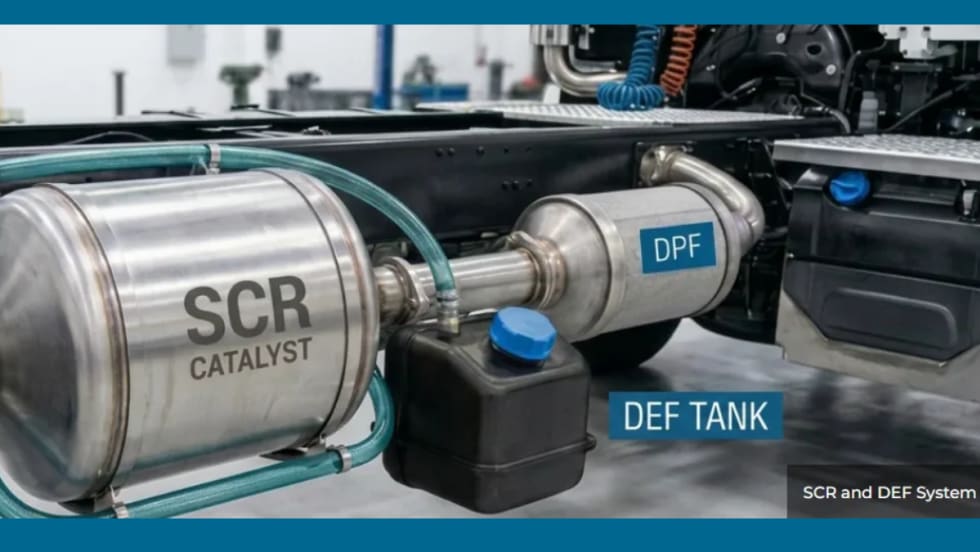
Engine Technology Forum Launches SCR, DEF Resource Center Amid Emissions Debate
The Engine Technology Forum’s new online hub aims to provide fleets, policymakers, and equipment owners with fact-based information about selective catalytic reduction technology, diesel exhaust fluid and emissions compliance.
Read More →
Prime Inc. to Open $7.9M Flagship Used-Truck Dealership
A new driver-focused facility to sell Prime Inc's used trucks and trailers will be the first purpose-built location in the company's history.
Read More →
Lessons Learned About Alternative Fuels: Start Small, Stay Flexible
Practical advice on adopting alternative fuels and ZEVs from HDT's 2026 Top Green Fleets, from renewable diesel and natural gas to electric trucks.
Read More →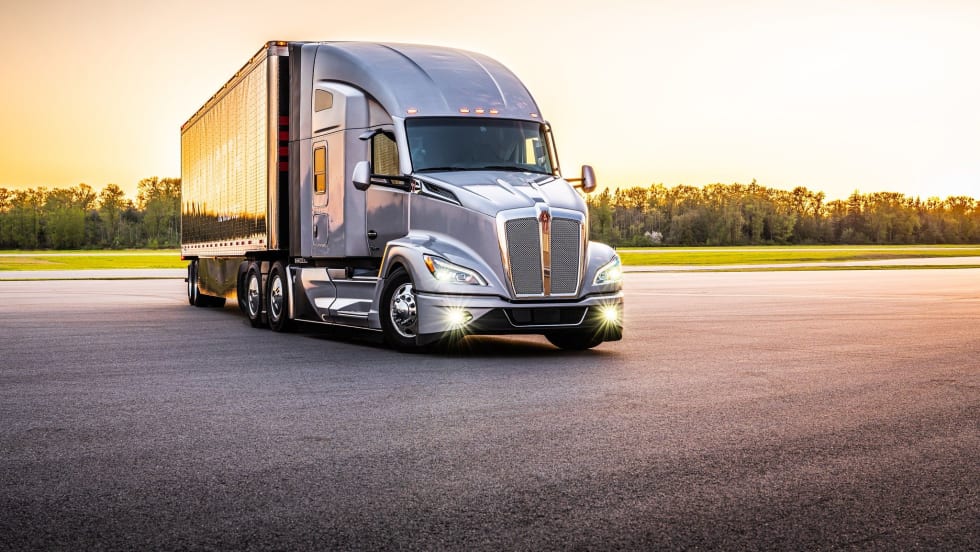
Kenworth Names Peter Ahrens General Manager
Leadership changes at Kenworth take effect July 1 as the OEM promotes two longtime Paccar executives to key management roles.
Read More →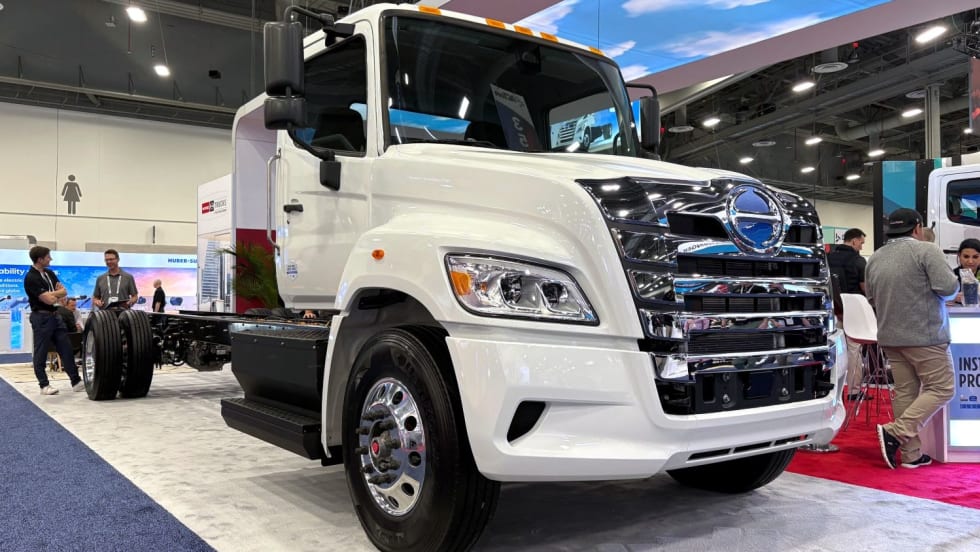
Hino Adds Electric Class 6/7 Truck
Hino says the Le Series is an important step in the company's efforts to reduce environmental impact and support its customers’ sustainability goals.
Read More →
ACT Expo 2026: Highlights in Photos
The 2026 Advanced Clean Transportation Expo featured a broad range of commercial vehicle technologies, from EVs to autonomous trucks to the latest diesel and alternative-fuel engines.
Read More →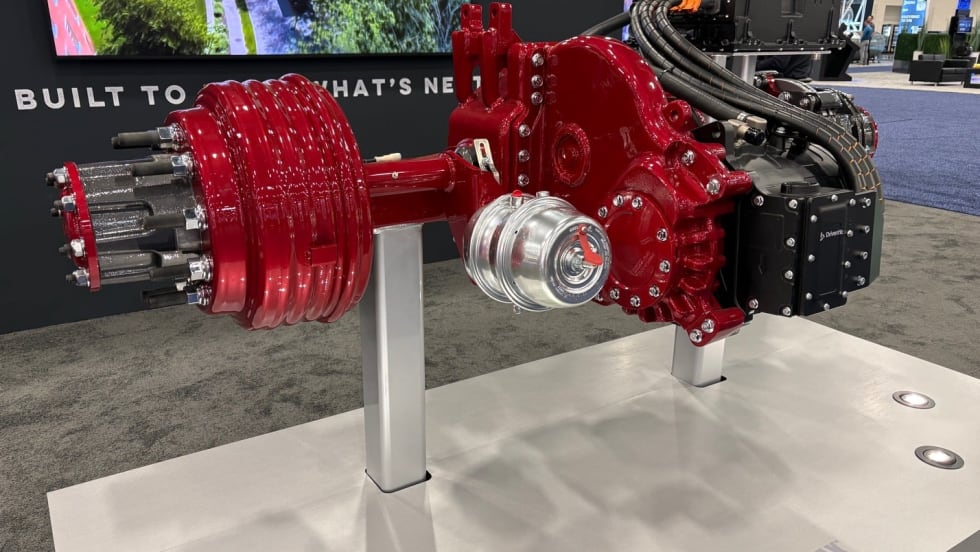
Hendrickson Debuts Electraax E-Axle for Medium-Duty Trucks
Developed with Driventic, Hendrickson's new integrated e-axle is designed to improve efficiency, reduce weight, and extend range in Class 6-7 EV applications.
Read More →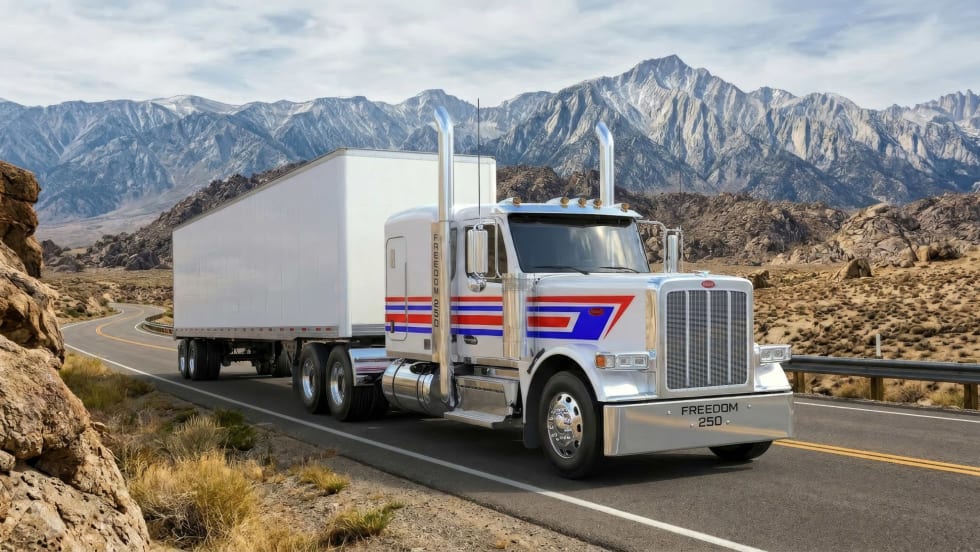
Peterbilt Unveils Freedom 250 Special Edition Model 589
Peterbilt’s just-announced limited-run patriotic Model 579 tractor celebrates America’s 250th birthday with custom styling and premium features.
Read More →
Mack Unveils EPA 2027-Compliant MP13 Engine With More Power, Better Fuel Economy
Along with unveiling its EPA 2027-compliant MP13 engine, Mack outlined powertrain changes across its Class 6-8 lineup, including new Cummins-based X10 engines.
Read More →
Kodiak and Roehl Transport Launch Autonomous Route Between Dallas and Houston
Kodiak AI and Roehl Transport have begun autonomous freight operations on a regular Dallas-Houston route, marking another step toward Kodiak’s planned driverless launch by the end of 2026.
Read More →