




Truck Body Wiring: Thou Shalt Not Cut
If there were an 11th Commandment, it would read: "Thou shalt not cut into thine wiring." Cutting and splicing and probing with pointed circuit testers can and do cause electrical grief

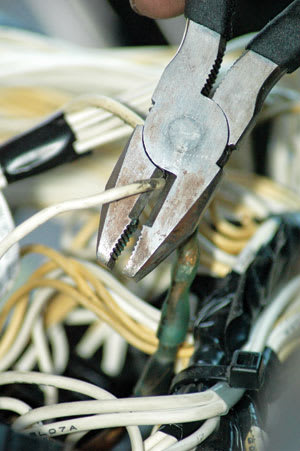
If there were an 11th Commandment, it would read: "Thou shalt not cut into thine wiring." Cutting and splicing and probing with pointed circuit testers can and do cause electrical grief.
A modern chassis has many thousands of intertwined circuits, so tapping into one can affect the operation of one or more functions elsewhere, sometimes in strange ways. Splicing a wire into a brake-light circuit might make the automatic transmission stumble during shifting, and inadvertent chafing of a road-speed sensor can create shorts that send dashboard gauges into fits of needle wobbling.
Mounting a work-truck body or even a simple van onto one of today's truck chassis of course requires obtaining power to operate marker and tail lights or run sometimes complex tools and systems. However, "Vehicles today are almost literally rolling computers, so the days of cutting into wires just to get power are gone, or should be," says Chris Borczon, senior chassis engineer at Chrysler's Ram Truck commercial vehicle team. Instead, installers should plug into connectors placed around the chassis by manufacturers.
Yet cutting is still done, observes Steve Strine, technical services manager at the National Truck Equipment Association. "Some continue to cut in because that's what they've done in the past, because they think it's easier" than reading instructions, he says. And "rather than buying a mating connector to match the one on the chassis, they just cut it off and put their own connectors on them."
"Back in the old days we probably did a lot more cutting and splicing," says Peter Taskovic, project manager at Auto Truck Group, a major upfitter based in Bensenville, Ill., near Chicago, with four other locations in Colorado, Indiana and Kentucky. "But that was before a lot of the sophisticated electronics went into truck chassis, especially in the last three or four years. If you cut into the wrong wire, you can create a fault code" which then has to be traced down and corrected.
"I can't say we don't do it anymore, but it's the exception rather than the rule," he continues. "If we do, we have to make sure the amp load on the circuit is not compromised, and it's only a switching function." This is done with a relay, so the load on the manufacturer's circuit would be 1 milliamp but 30 amps on the body side. Doing this is sometimes necessary if a customer bought the chassis from dealer stock, which means it has no special wiring provisions. A better idea is for the customer to order the truck with a harness for his application. Many manufacturers offer these, and they make body mounting and other upfitting tasks much easier.
Some of the bodies Auto Truck Group installs - and it does about 6,000 a year - have their own complex circuits. These are kept separate from chassis wiring except to connect them to a main fuse box or power distribution center. And if there's a question about where that connection should be made, on-board engineers get involved, and truck manufacturers' specialists, like the Ram team that Borczon is part of, are consulted.
He and three colleagues field questions from technicians and upfitters who want to make sure they're doing things correctly, and team members have access to other Ram and Chrysler engineers and technicians. Other original equipment manufacturers have similar people ready to answer calls made to toll-free numbers.
OEMs publish body builders manuals, with chassis wiring diagrams and instructions on what should go where. They used to print these manuals each year, but now most are posted on line and are accessible to everybody, says Steve Strine at NTEA. Its website, www.ntea.com, has a Technical Resources section, and in it is a list of 17 OEMs with sales and technical contacts. The tech contacts are available to NTEA members, but non-members can find the OEMs' body builders manuals by asking a dealer or doing a web search.
For example, typing in "Ram body builders manual" quickly found a listing with a toll-free phone number (866-205-4102) plus the web address, www.dodge.com/bodybuilder (until recently, Ram trucks were sold with the Dodge nameplate). So a customer or upfitter can call for advice, and though he'll usually have to leave a voice message, someone from the commercial vehicle team will soon call back.
Or one can go to the website, click on the appropriate model year and continue into the area of interest. The detail is extensive and it's current because it can be updated easily and as often as necessary, says Borczon.
"When we find something that we need to upgrade or change, we mark up the site and it can be updated the same day," he says. "The changes are all small improvements and I don't think we've ever had to cancel one." An example was a set of instructions on setting up a remote engine start-stop system. "Somebody in the field didn't fully understand the application, so we made a change in the verbiage."
Some wiring improvements are introduced with a new model year. For 2011 Rams, changes made the PTO set-up easier. And an aftermarket "upfitter module" became available to help body companies more easily hook up to truck chassis. The module is made by DGE, a supplier to Chrysler that has access to the OEM's codes, so it works well with a Ram chassis.
For 2012, LED lights on truck bodies can be easily enabled by grounding two wires adjacent to a fuse box under the hood. Ram representatives announced these changes at NTEA Product Meetings, held each autumn in Dearborn, Mich. Several other manufacturers have made similar announcements at the meetings, because they continually improve wiring based on customer comments.
Although scores of upfitter representatives attend the annual NTEA meeting and "measurement sessions" sponsored by OEMs, hundreds of body people do not. And they might not know how to how to get in touch with the OEMs and take advantage of the resources available. So their customers should beware, because these establishments are the most likely to wield the knife and violate the 11th Commandment.
From the June 2011 issue of Heavy Duty Trucking
More Equipment
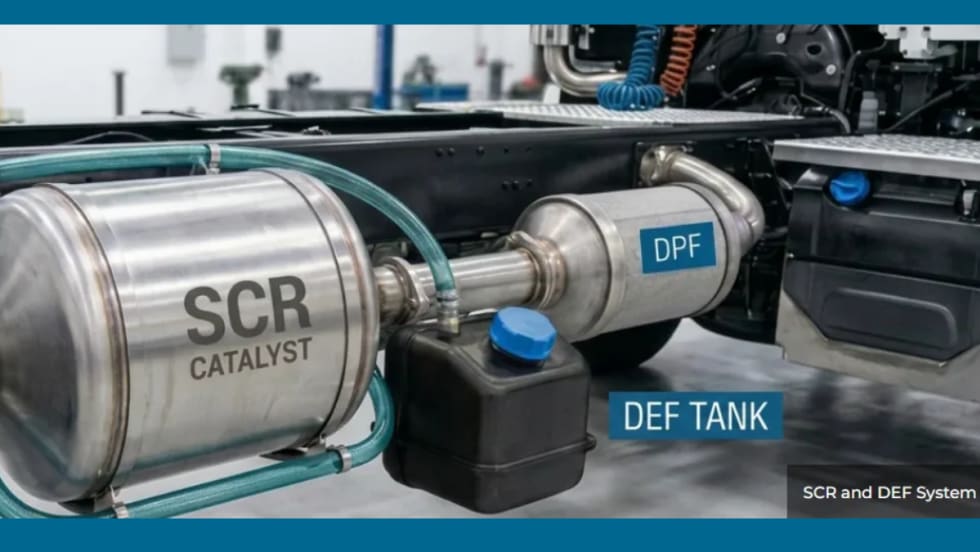
Engine Technology Forum Launches SCR, DEF Resource Center Amid Emissions Debate
The Engine Technology Forum’s new online hub aims to provide fleets, policymakers, and equipment owners with fact-based information about selective catalytic reduction technology, diesel exhaust fluid and emissions compliance.
Read More →
Prime Inc. to Open $7.9M Flagship Used-Truck Dealership
A new driver-focused facility to sell Prime Inc's used trucks and trailers will be the first purpose-built location in the company's history.
Read More →
Lessons Learned About Alternative Fuels: Start Small, Stay Flexible
Practical advice on adopting alternative fuels and ZEVs from HDT's 2026 Top Green Fleets, from renewable diesel and natural gas to electric trucks.
Read More →
Kenworth Names Peter Ahrens General Manager
Leadership changes at Kenworth take effect July 1 as the OEM promotes two longtime Paccar executives to key management roles.
Read More →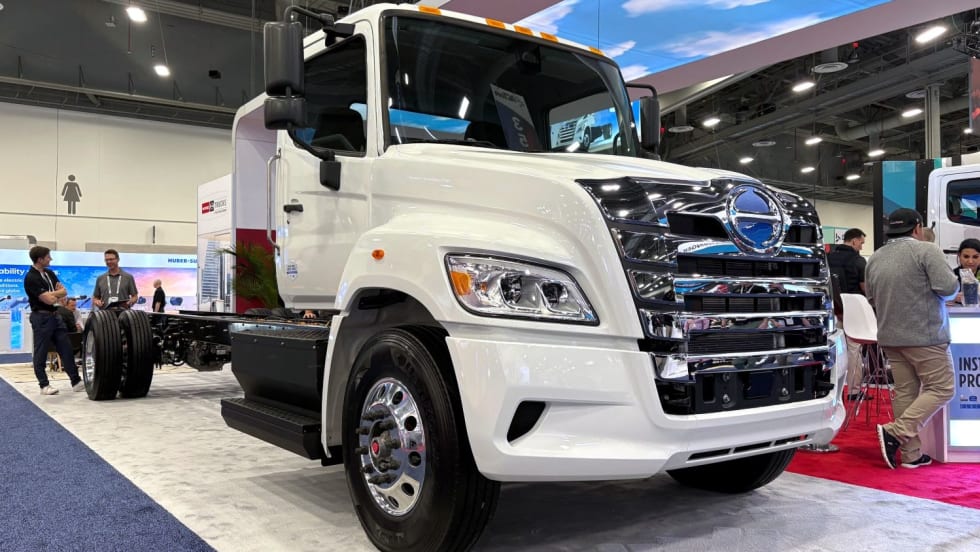
Hino Adds Electric Class 6/7 Truck
Hino says the Le Series is an important step in the company's efforts to reduce environmental impact and support its customers’ sustainability goals.
Read More →
ACT Expo 2026: Highlights in Photos
The 2026 Advanced Clean Transportation Expo featured a broad range of commercial vehicle technologies, from EVs to autonomous trucks to the latest diesel and alternative-fuel engines.
Read More →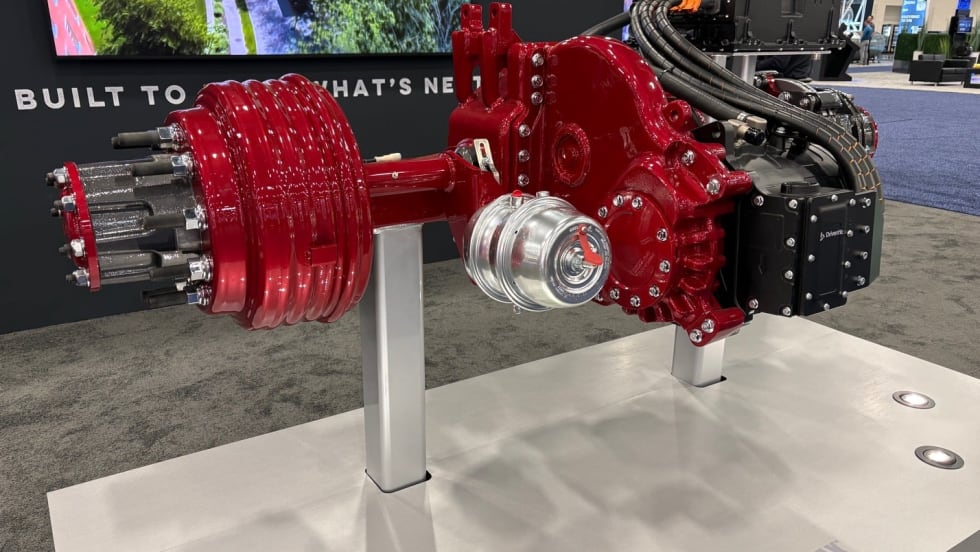
Hendrickson Debuts Electraax E-Axle for Medium-Duty Trucks
Developed with Driventic, Hendrickson's new integrated e-axle is designed to improve efficiency, reduce weight, and extend range in Class 6-7 EV applications.
Read More →
Peterbilt Unveils Freedom 250 Special Edition Model 589
Peterbilt’s just-announced limited-run patriotic Model 579 tractor celebrates America’s 250th birthday with custom styling and premium features.
Read More →
Mack Unveils EPA 2027-Compliant MP13 Engine With More Power, Better Fuel Economy
Along with unveiling its EPA 2027-compliant MP13 engine, Mack outlined powertrain changes across its Class 6-8 lineup, including new Cummins-based X10 engines.
Read More →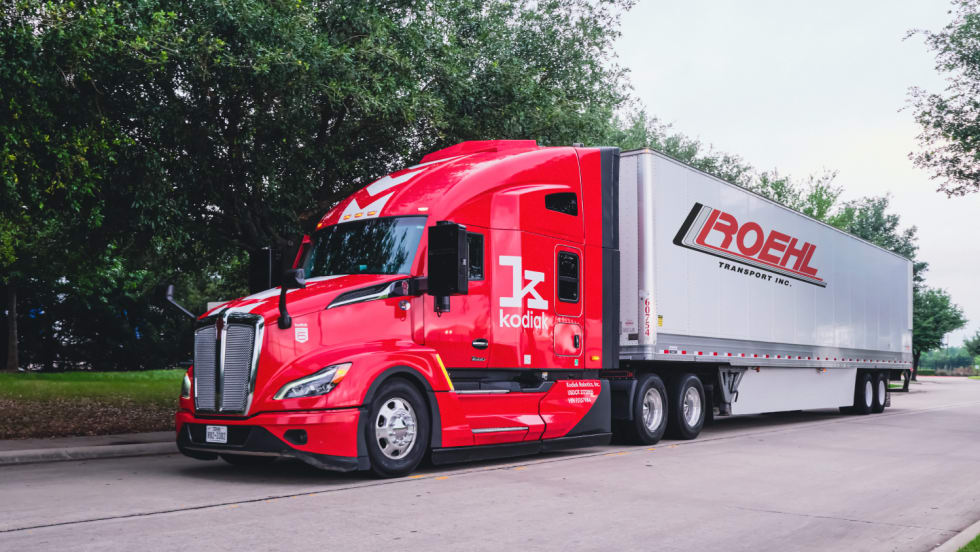
Kodiak and Roehl Transport Launch Autonomous Route Between Dallas and Houston
Kodiak AI and Roehl Transport have begun autonomous freight operations on a regular Dallas-Houston route, marking another step toward Kodiak’s planned driverless launch by the end of 2026.
Read More →