




Baby It's Cold Inside: Spec'ing Reefer Trailers
Transport refrigeration units - TRUs - are the main thing separating temperature-controlled trailers from dry freight vans. But insulation is just as important.

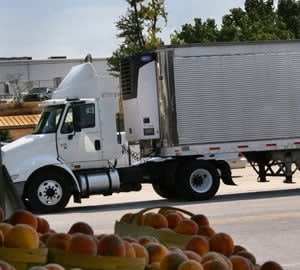
Transport refrigeration units - TRUs - are the main thing separating temperature-controlled trailers from dry freight vans. But insulation is just as important.
Without it, reefer units would huff and puff and accomplish very little. Foam-type insulation is what retains the cooled or heated air inside and maintains perishable cargoes at proper temperatures.
The exact type of foam varies among trailer and body builders, and some claim superiority over others. Generally speaking, though, more means greater capability, and more relates to wall thickness, according to Mike McCluskey, national account director for VT Hackney Inc., which makes Hackney beverage and Kidron reefer trailers.
Chatting inside a Kidron multi-temp trailer displayed last month at the Technology and Maintenance Council's equipment expo in Tampa, Fla., McCluskey said a wall can range from as little as 1.5 inches in thickness for produce haulers that also transport dry freight to 6 inches for ice cream carriers. Obviously, required commodity temperatures determine how much insulation is needed.
The new Kidron trailer on display was built for local and regional food-service deliveries, and had 2.5 inches of wall insulation. It will operate with two cold compartments and a third non-cooled compartment for dry groceries. The three will be separated by movable insulated bulkheads. There was no air chute. Instead, the Thermo King TRU will work through a pair of evaporators in the ceiling, blowing cool or freezing air into the two refrigerated compartments.
The rearmost compartment will usually be the "dry" one. Would it make sense to not insulate the walls back there? No. It would actually cost more to alter the manufacturing process, McCluskey explained. Walls are made in long sections, and making the rear third or so of the trailer with dry walls would take extra time and money. An all-insulated trailer also adds flexibility for when varying amounts of commodities require longer cooled compartments.
Food-service trailers are usually built more stoutly than long-haul reefers, he explained. That's because customers want strength and durability in every component so they can run them 10 to 20 years. Long-haulers want light weight to carry higher payloads, so they specify things like aluminum structural members and thinner walls. Such trailers wear out faster, but planned life cycles are correspondingly short.
Such considerations are what experts in trailer specifications deal with. As with any spec'ing task, they look at what commodities will be hauled, where they need to go, and how they will be loaded and unloaded. These factors help match the trailer to the reefer unit. They also consider the trailer's intended life span and how much resale value the buyer wants.
David Kiefer, director of marketing and product management for Carrier Transicold in Athens, Ga., thought through the spec'ing process and came up with some recommendations for us. His business is TRUs, but he's also concerned with the trailer it'll go on. The object, he says, is optimizing the balance between refrigeration demands and fuel efficiency.
Size always matters, but it's not the only thing. The amount of insulation determines the amount of refrigeration required, and airflow is impacted more by the length of the trailer. Airflow around the product is important, and the use of air chutes is generally recommended, especially in longer trailers and in circumstances where constant temperature is wanted throughout the load.
Insulation thickness and type. Insulation must be adequate on walls, top, floors and doors. The "Ua" value is a measure of the trailer's thermal efficiency, and the higher the Ua number, the more refrigeration will be required. Over time, insulation degrades - crumbles, absorbs moisture, etc. - and heat and cold will move more easily from outside and inside the trailer. So it's wise to specify additional reserve capacity in the TRU when spec'ing a new trailer.
Trailer body color. This affects "solar gain" - the darker the truck body, the more of the sun's heat will be absorbed and the more cooling capacity will be required from the TRU.
Number, type and use of doors. Swing doors generally seal more completely than roll-up doors. Side doors add delivery convenience, but introduce more openings through which cooled air will be lost.
Floor type. The best floors have channels that promote airflow underneath the cargo, as opposed to a flat or "diamond plate" type floor. In addition, palletized loads provide additional room for air circulation and warm air return to the TRU. Pallets are a must on flat floors in order to ensure proper air circulation and temperature control.
Contents, setpoint and temperature. What kind of products will be carried and how large are the loads? What temperature set points will be required, and is the product loaded at the correct temperature or must it be "pulled down"?
Cargoes such as fresh produce "respire," generating heat and moisture that sometimes must be removed from the trailer. That's why small ventilation doors are built into the nose and one of the rear doors. Cargo respiration also demands more from the TRU. If the trailer will be used to transport more than one type of product, it may require a reefer with a wider range of cooling capacity and airflow capabilities.
Where. In what geographic area and weather conditions will the unit be operated? Is it long haul or local distribution? Equipment used in the desert Southwest will require greater cooling capacity than one being used exclusively in New England or Canada.
Deliveries. How many of those doors will be opened for deliveries and for how long? What are the average time intervals between delivery stops? Long-haul trips will have few door openings, but a local distribution trailer has many, requiring a reefer capable of quickly recovering from the intermittent heat gain.
Electric standby. This is a must-have if distribution points provide access to plug-in electric power, and state or local regulations require using it to reduce noise and diesel fumes. Some TRU models have this built in. With others it's optional. Standby electrical power can also be cheaper than diesel fuel. With the proper guidelines and documentation, it can also be an approved compliance strategy in California.
Low-fuel alert. One of the most costly TRU maintenance problems is running out of fuel on the road. A low-fuel alert warns drivers when the engine might be shut down and reduces the chance of the diesel losing its prime, requiring technical intervention before restarting.
Programmable temperature profiles. Programmable set points for a variety of products simplifies TRU set-up and helps prevent driver mistakes. A control may have parameters for lettuce, ice cream, apples, strawberries, etc., each selectable by the push of a button.
Sound suppression. Although today's TRUs are much quieter than those of just a few years ago, sometimes an application calls for extra noise abatement - loading areas that are near neighborhoods, or fleets want to help assure long-haul operators aren't bothered by TRU engine noise. So optional sound-suppressing packages are available. Units using standby electric power tends to be quieter than mechanical refrigeration systems because they eliminate many of the traditional sources of noise.
Door-open switch. In the past, door switches could only shut off the TRU when the door was opened to avoid wasting fuel. Today's microprocessor controls can use the door switch to order the unit to run at low speed, or shut it off only during a pre-configured ambient temperature range that is programmed by the user. Additionally, the controls record door-opening events in the on-board da
More Equipment
Engine Technology Forum Launches SCR, DEF Resource Center Amid Emissions Debate
The Engine Technology Forum’s new online hub aims to provide fleets, policymakers, and equipment owners with fact-based information about selective catalytic reduction technology, diesel exhaust fluid and emissions compliance.
Read More →
Prime Inc. to Open $7.9M Flagship Used-Truck Dealership
A new driver-focused facility to sell Prime Inc's used trucks and trailers will be the first purpose-built location in the company's history.
Read More →
Lessons Learned About Alternative Fuels: Start Small, Stay Flexible
Practical advice on adopting alternative fuels and ZEVs from HDT's 2026 Top Green Fleets, from renewable diesel and natural gas to electric trucks.
Read More →
Kenworth Names Peter Ahrens General Manager
Leadership changes at Kenworth take effect July 1 as the OEM promotes two longtime Paccar executives to key management roles.
Read More →
Hino Adds Electric Class 6/7 Truck
Hino says the Le Series is an important step in the company's efforts to reduce environmental impact and support its customers’ sustainability goals.
Read More →
ACT Expo 2026: Highlights in Photos
The 2026 Advanced Clean Transportation Expo featured a broad range of commercial vehicle technologies, from EVs to autonomous trucks to the latest diesel and alternative-fuel engines.
Read More →
Hendrickson Debuts Electraax E-Axle for Medium-Duty Trucks
Developed with Driventic, Hendrickson's new integrated e-axle is designed to improve efficiency, reduce weight, and extend range in Class 6-7 EV applications.
Read More →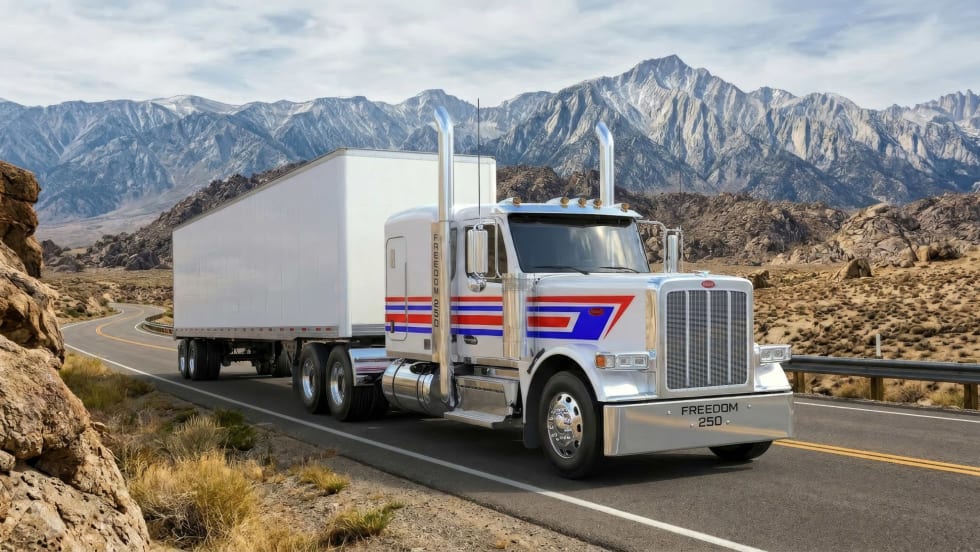
Peterbilt Unveils Freedom 250 Special Edition Model 589
Peterbilt’s just-announced limited-run patriotic Model 579 tractor celebrates America’s 250th birthday with custom styling and premium features.
Read More →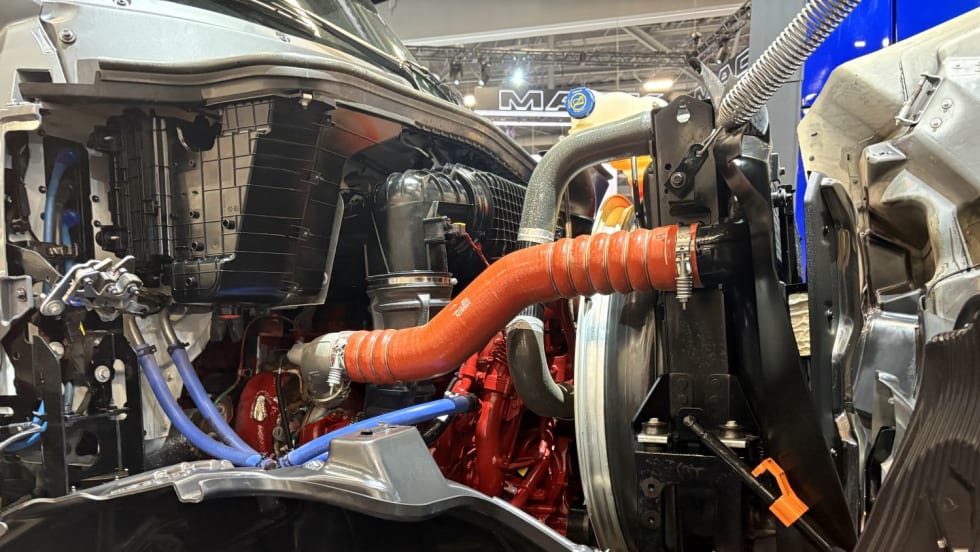
Mack Unveils EPA 2027-Compliant MP13 Engine With More Power, Better Fuel Economy
Along with unveiling its EPA 2027-compliant MP13 engine, Mack outlined powertrain changes across its Class 6-8 lineup, including new Cummins-based X10 engines.
Read More →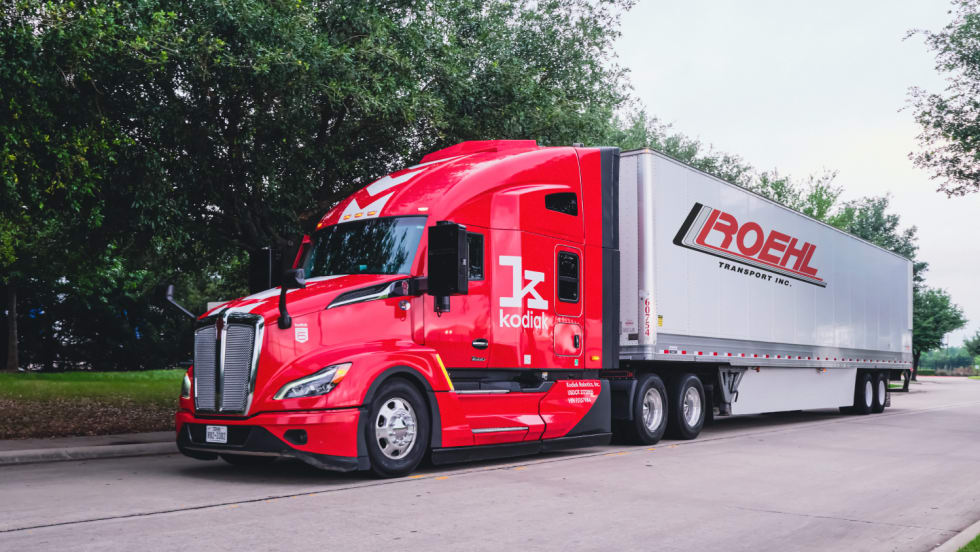
Kodiak and Roehl Transport Launch Autonomous Route Between Dallas and Houston
Kodiak AI and Roehl Transport have begun autonomous freight operations on a regular Dallas-Houston route, marking another step toward Kodiak’s planned driverless launch by the end of 2026.
Read More →