




Kenworth Offers Advice on Specs for Dump Trucks
Anyone who knows anything about dump trucks understands that specifications are very regionalized.
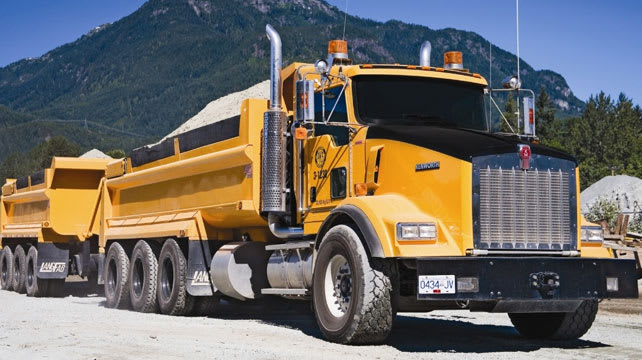
Anyone who knows anything about dump trucks understands that specifications are very regionalized.
What works in one state or area of the country will probably not work in another. Each state has peculiar weight laws that in effect define a truck's design, and most trucks operating there will closely resemble one another, at least in frame length and axle configuration.
Operators know the length and weight regulations in their home states, and try to take maximum advantage of the weight laws to maximize payload. Some states, mostly in the West, require compliance with the federal Bridge Formula, or something like it; others don't. This will have a big influence on how the axles are set up and spaced.
"A Bridge Formula truck will tend to be longer to spread the weight," says Samantha Parlier, vocational marketing manager for Kenworth. "You may need to have lift axles, but there are different rules on how much load you can add with lift axles. And some states don't allow lift axles." Dealer salespeople know the laws and regulations, she adds.
In non Bridge Formula states - also called axle-weight states - trucks are shorter and with higher axle ratings, making them more maneuverable on jobsites. That's a desirable attribute, but a state's laws, not the operator, dictates whether or not it's usable.
LOAD & HAULING QUESTIONS
The type of loads also affect truck design. Bulk loads like asphalt, sand or gravel require one type of chassis and body, while demolition debris requires another. "Demo" rubble and heavy rock require a beefed-up body and chassis to handle the pounding it will take from the large masses slamming into the dump body. Body suppliers will have input on this.
The hauling question also relates to the environment or roads encountered. Will a truck spend a lot of time on very rough jobsites or will most of the hauling be long distances on smooth gravel and sealed roads?
"If you will be going off-road a lot into rough terrain, you'll need a suspension that is heavier duty and has more articulation," Parlier advises. "But if you're hauling longer distances, you'll need to consider the trade-off between the ease of dumping and the ability to haul more load per trip. For example, a western transfer dump will allow you to haul more with one driver, but it will take longer to unload. Double bottom-trailers carry a lot of payload, too, but with those you're limited on where you can drop the load - it's a lot harder to dump gravel into a hole for a swimming pool, for instance, with bottom dumps."
THE DRIVETRAIN
Many people spec engines with too much power, says Parlier. "You should get just enough horsepower to do the job. Generally, 350 to 400 hp is plenty for most applications. Extra horsepower just uses more fuel, puts more strain on the rest of the drivetrain, and adds cost up front.
"If you go with a smaller 13-liter block, you save around 700 pounds over a 15-liter block."
The transmission installed with the engine needs a lot of ratio range. A truck needs a low enough gear to get out of a hilly jobsite and high enough top gear to attain decent highway speeds. The Eaton Fuller 8LL transmission is a common truck spec, but she suggested an 18-speed transmission for larger and heavier trucks.
"The 8LL gives you two low gears for startability off-road and enough top-end range for the highway," says Parlier. "But if you are hauling over 90,000 pounds, you should consider an 18-speed because you get much closer splits from bottom to top."
The typical dump truck uses rear tandem axles rated at 46,000 pounds. This covers most trucks, from 14/16-yard solo dumps through combinations up to 110,000 GCW.
Another thing to remember for operating off-road is air filtration. Lots of drivers love the look of dual polished external air cleaners, and these provide excellent filtration with low air restriction. But they are quite expensive compared with under-hood air cleaners.
A little money spent up front on a better air cleaner is cheap compared to a dusted engine. And better filtration will usually mean longer life for the filter elements. For example, dual 15-inch air cleaners will last over 7 times as long as a single 11-inch underhood air cleaner before needing replacement.
WEIGHT WATCHING
The more loads hauled per day, the greater the profit potential in cutting vehicle weight. As we saw, a smaller engine saves hundreds of pounds but still gets the job done. Other components - such as wheels, air tanks and clutch housings - can be spec'd in aluminum rather than steel.
And, "use the smallest fuel tank you can get away with," Parlier adds. "Some operators can get away with a 56-gallon tank, but most will need at least 75 to 90 gallons to get through a day."
You can also save valuable pounds by choosing the right suspension. "The difference can be as high as 400 pounds," Parlier says of the different suspension options.
To avoid hauling around extra steel in the vehicle frame, have the dealer work with a Kenworth application engineer so that you only get enough frame where you need it. A strong crossmember at the back of the cab to strengthen the hoist mounting area, and at the rear, where the body hinges are. Adding lift axles later requires that the frame can be prepared for them, so the dealer must add that information to the order.
But remember that many of these weight savers will cost more up front. Balance that extra cost against the revenue gains possible by hauling more payload.
2010 ENGINES - SCR OR EGR
It's also important to understand how the 2010 federal engine emissions standards may require some changes when spec'ing for new truck purchases compared to a current dump truck spec.
"The extent of these changes depends upon each dump truck operator's choice between two available engine technologies, which may also affect truck performance and operating costs over its lifetime," Parlier says.
Most truck builders, including Kenworth, have chosen an engine aftertreatment approach that utilizes selective catalytic reduction (SCR) in combination with exhaust gas recirculation (EGR). Exhaust gas introduced into combustion chambers displaces some oxygen-laden air and lowers combustion temperatures, reducing the amount of nitrogen oxides, or Nox. Special aftertreatment equipment injects a fluid into the exhaust stream to nuetralize the Nox not handled in the combustion chambers by EGR.
A lone competitor, Navistar International, uses an "in-cylinder" approach it calls Advanced EGR. Higher doses of exhaust gas in the combustion chambers further reduces Nox so no aftertreatment is needed. This method eliminates aftertreatment equipment, reducing weight and bulk. That can be an advantage on a truck where tare weight and frame space is important.
But, say Kenworth and others, more EGR results in more engine heat that must be rejected into the cooling system. Thus larger, heavier cooling modules must be fitted to the chassis. Both SCR and A-EGR continue to use a diesel particulate filter (DPF) to remove particulate matter from the exhaust. DPFs were introduced on new diesels in early 2007. Increased EGR also requires more fuel to be injected into the DPF for active regenerations.
"SCR doesn't rely on engine heat to treat emissions, so SCR-based engines offer the advantage of higher fuel economy," Parlier says. "Since SCR doesn't narrow the engine's maximum speed range for optimum efficiency, or its 'sweet spot,' to attain emission reductions, fleets also can still maintain fuel economy at lower or higher engine speeds."
According to Parlier, it is important for operators choosing SCR to consider DEF tank capacity and placement. "To support SCR system integration, Kenworth has a range of exhaust
More Equipment
Engine Technology Forum Launches SCR, DEF Resource Center Amid Emissions Debate
The Engine Technology Forum’s new online hub aims to provide fleets, policymakers, and equipment owners with fact-based information about selective catalytic reduction technology, diesel exhaust fluid and emissions compliance.
Read More →
Prime Inc. to Open $7.9M Flagship Used-Truck Dealership
A new driver-focused facility to sell Prime Inc's used trucks and trailers will be the first purpose-built location in the company's history.
Read More →
Lessons Learned About Alternative Fuels: Start Small, Stay Flexible
Practical advice on adopting alternative fuels and ZEVs from HDT's 2026 Top Green Fleets, from renewable diesel and natural gas to electric trucks.
Read More →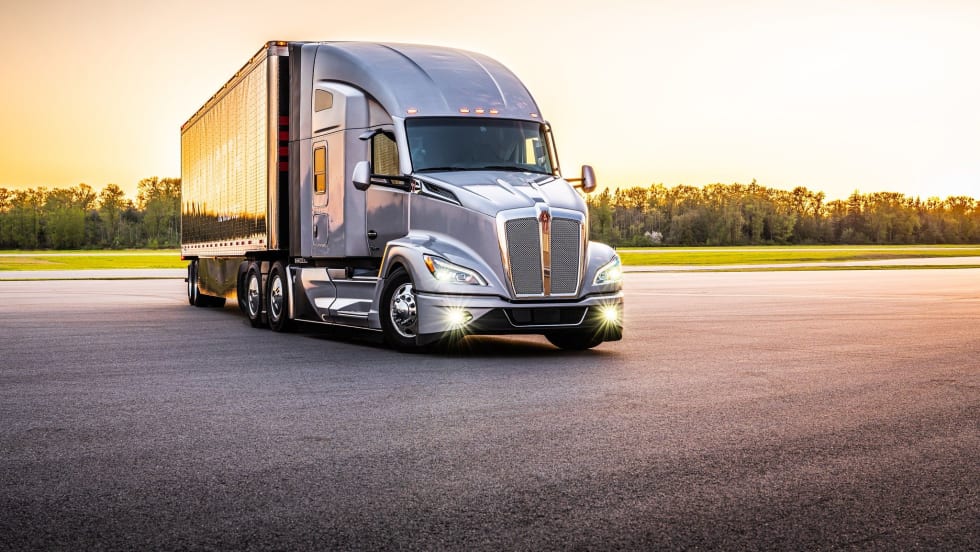
Kenworth Names Peter Ahrens General Manager
Leadership changes at Kenworth take effect July 1 as the OEM promotes two longtime Paccar executives to key management roles.
Read More →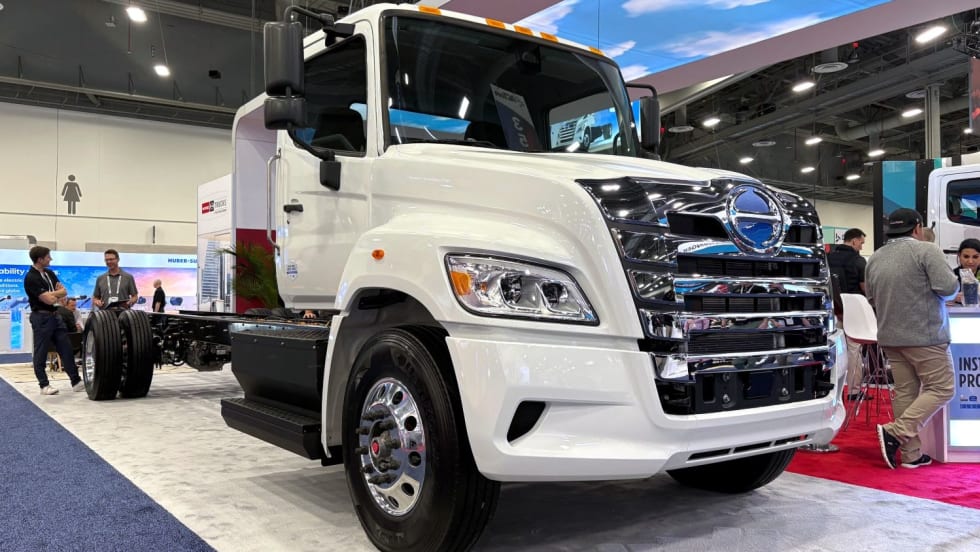
Hino Adds Electric Class 6/7 Truck
Hino says the Le Series is an important step in the company's efforts to reduce environmental impact and support its customers’ sustainability goals.
Read More →
ACT Expo 2026: Highlights in Photos
The 2026 Advanced Clean Transportation Expo featured a broad range of commercial vehicle technologies, from EVs to autonomous trucks to the latest diesel and alternative-fuel engines.
Read More →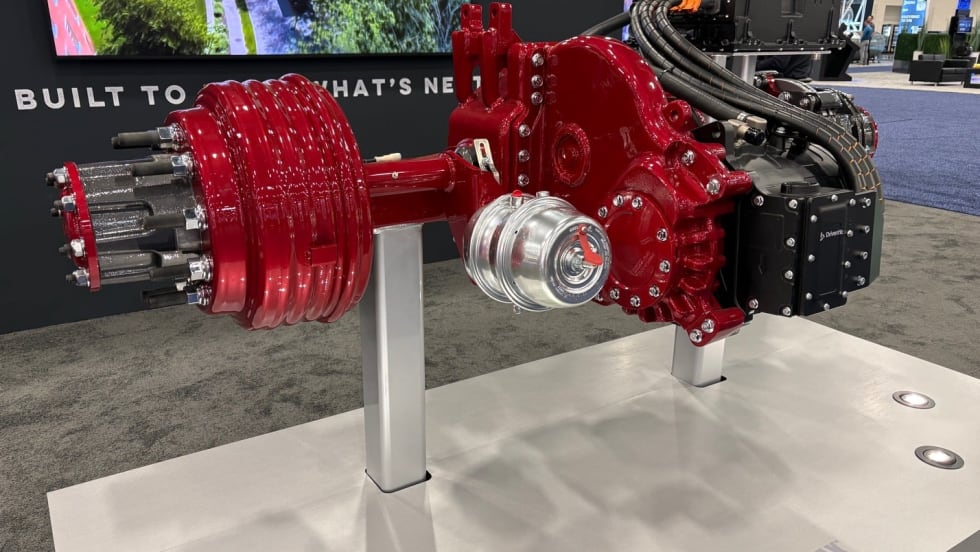
Hendrickson Debuts Electraax E-Axle for Medium-Duty Trucks
Developed with Driventic, Hendrickson's new integrated e-axle is designed to improve efficiency, reduce weight, and extend range in Class 6-7 EV applications.
Read More →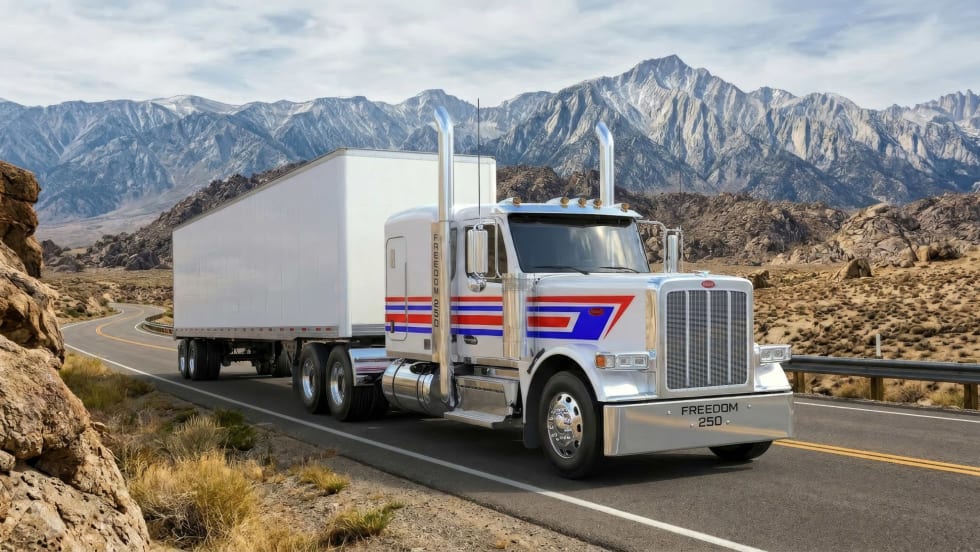
Peterbilt Unveils Freedom 250 Special Edition Model 589
Peterbilt’s just-announced limited-run patriotic Model 579 tractor celebrates America’s 250th birthday with custom styling and premium features.
Read More →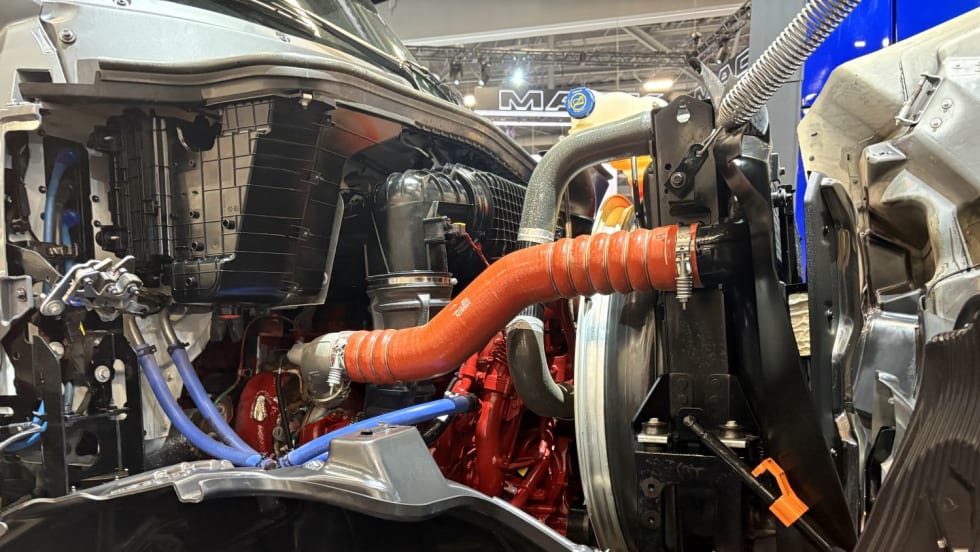
Mack Unveils EPA 2027-Compliant MP13 Engine With More Power, Better Fuel Economy
Along with unveiling its EPA 2027-compliant MP13 engine, Mack outlined powertrain changes across its Class 6-8 lineup, including new Cummins-based X10 engines.
Read More →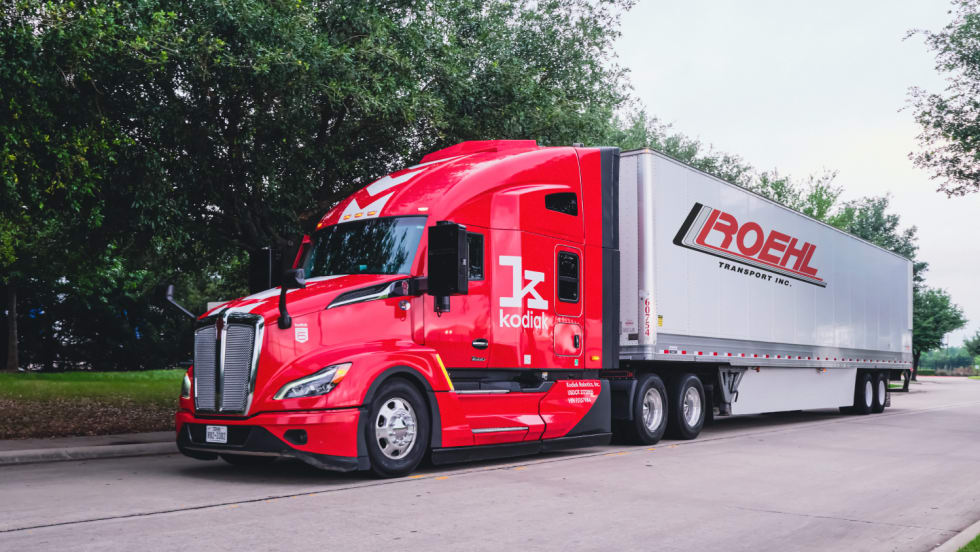
Kodiak and Roehl Transport Launch Autonomous Route Between Dallas and Houston
Kodiak AI and Roehl Transport have begun autonomous freight operations on a regular Dallas-Houston route, marking another step toward Kodiak’s planned driverless launch by the end of 2026.
Read More →