




Where Old Tires Go to Die
Prevailing thinking has it that trailers are a good place to squeeze the last few miles of tread life out of used steer and drive tires prior to retreading or disposing of them

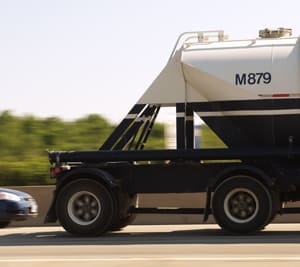
You have a lot more trailer tires in your fleet than steer or drive tires. Don't treat them as disposable. (Photo by Jim Park)
Prevailing thinking has it that trailers are a good place to squeeze the last few miles of tread life out of used steer and drive tires prior to retreading or disposing of them.
There are some characteristics of the trailer position that make it an ideal location for shallow treads, whereas shallow treads might not serve other wheel positions as well.
The need for traction at the steer and drive positions is self-evident. While deeper treads here are an advantage, steering and torque inputs to tires at these positions can help curb irregular wear - barring any external problems. There are few external forces acting on a trailer tire, so deeper treads on trailer tires tend to promote irregular wear, and once it starts, it's impossible to stop.
Take Goodyear's G316 LHT trailer tire, for example. Goodyear's commercial tire marketing and communications manager, Tim Miller, describes it - in jest - as a "half-worn" steer tire.
"It's not a lower quality or lower performing casing. It's the same as a steer tire in most regards, but it starts with just 12/32 of tread as opposed to 16/32 or 18/32 on a steer tire," he says. "When you start with a shallower tread on the trailer, you get a longer-wearing tire, because the shallower tread is more stable and less prone to squirming. If you start with deep treads at the trailer position, you wind up with noisy, ugly-looking tires that wear faster."
For many fleets, however, irregular wear on trailer tires is not a worry, Bridgestone tells us. "Either it's not a problem, or if it is, they don't worry about it."
Even without the torque and steering inputs, trailer tires are subject to external forces that can cause problems, like lateral scuffing caused by crosswinds or misalignment, curb damage, etc.
Trailer tires are often designed with various defense mechanisms built in to mitigate these kinds of wear and damage, such as the Defense Grooves and Equalizer Rib found on the Bridgestone R195F. Bridgestone says these features are self-sacrificing by design in order to preserve the integrity of the rest of the tread.
Ultimately, what you want to do is get every possible mile out of every 32nd of tread on the tire - without risking the integrity of the casing in the final few 32nds, says Michelin's product marketing manager, Don Baldwin.
"The shallower the tread, the less able it is to protect against penetration," he says. "You can take a tire down to the point where the tread life is maximized, but if you push too far you can damage the casing, and that could hurt the ROI on your tire program. We recommend not taking the tread much below 4/32. The casing still has some protection there."
Flat protection
You can take your chances with thin-treaded trailer tires - they are, after all, more efficient at that stage of life. But a potentially valuable casing hangs in the balance. A couple of thousand more miles of tread life, or zero value for wrecked casing. It's a roll of the dice.
James Mason, maintenance director for bulk cement hauler McConnell and Sons, of Little Rock, Ark., says he has found the silver bullet for trailer tire protection: Goodyear's Dura-Seal Technology. He's less concerned about casing penetration today, because he knows the self-sealing feature of Dura-Seal will prevent air loss in holes up to 1/4-inch in diameter.
"We had a problem with debris picked up on jobsites, and used to see 10-15 flat tires per month," Mason says. "Some of those tires were repairable; many were not, and those were good casings destroyed by running them soft or flat."
Some trailers may not get to maintenance facilities for months at a time, especially when they are dropping at customer yards. A tire can lose up to 5 psi over a month all on its own - through osmosis. If there's a slow leak, it'll be even worse. When a driver pulls a soft tire down the road, it's a death sentence for that tire. Automatic inflation systems can earn their keep here in these cases.
According to Al Cohn, director of new market development and engineering support for the Meritor Tire Inflation System by PSI, a slow-leaking puncture in the tread is the number one reason for tire-related road-service calls.
"If you don't lose the tire altogether, fuel economy will certainly be compromised," Cohn says. "Fuel economy can drop by 2-3 percent if tires are running at reduced air pressure." And if a service call is warranted, you've probably crucified the casing, too.
"There are financial gains from auto inflation systems beyond improved fuel economy, like extended tread life, and the better prevention of blowouts due to incorrect tire pressure," says Steve Slesinski, director of product management for the Commercial Vehicle Products Group of Dana Holding Corp. "In any event, the paybacks are substantial when you compare the benefits of a tire management system to using nothing at all."
You can throw your old skins back to the trailer in hope of getting a few thousand miles more before decommissioning them and hope for the best, or you can manage the risk, get the miles, and preserve casing value, too.
From the August 2010 issue of Heavy Duty Trucking.
More Equipment
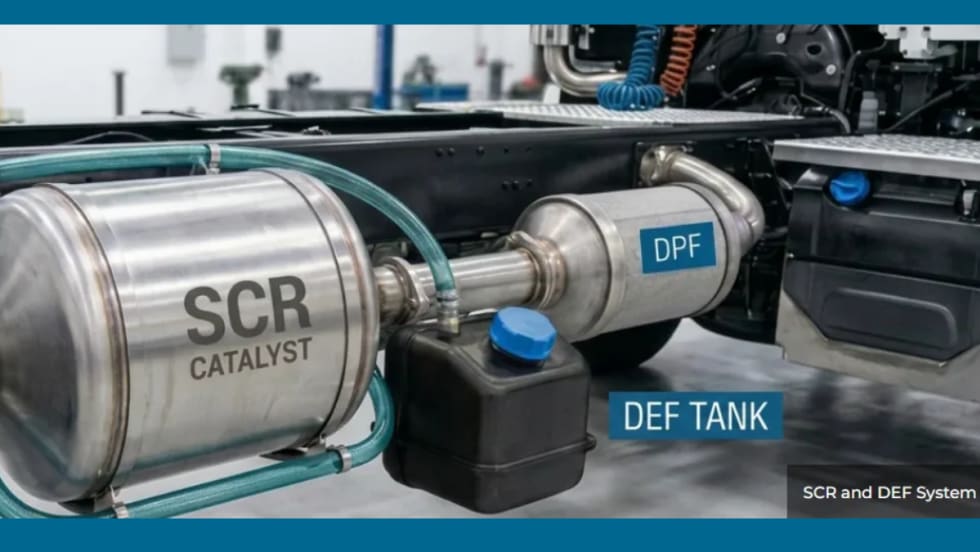
Engine Technology Forum Launches SCR, DEF Resource Center Amid Emissions Debate
The Engine Technology Forum’s new online hub aims to provide fleets, policymakers, and equipment owners with fact-based information about selective catalytic reduction technology, diesel exhaust fluid and emissions compliance.
Read More →
Prime Inc. to Open $7.9M Flagship Used-Truck Dealership
A new driver-focused facility to sell Prime Inc's used trucks and trailers will be the first purpose-built location in the company's history.
Read More →
Lessons Learned About Alternative Fuels: Start Small, Stay Flexible
Practical advice on adopting alternative fuels and ZEVs from HDT's 2026 Top Green Fleets, from renewable diesel and natural gas to electric trucks.
Read More →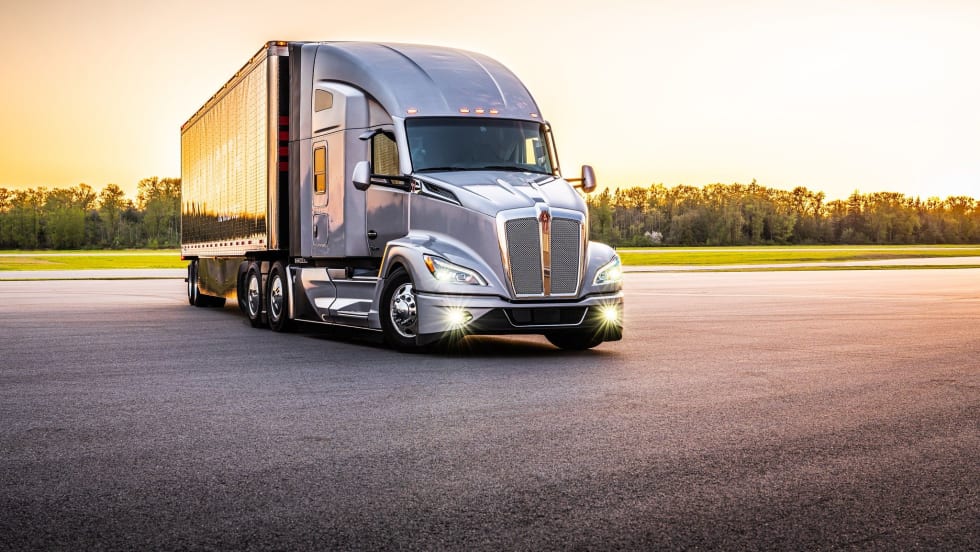
Kenworth Names Peter Ahrens General Manager
Leadership changes at Kenworth take effect July 1 as the OEM promotes two longtime Paccar executives to key management roles.
Read More →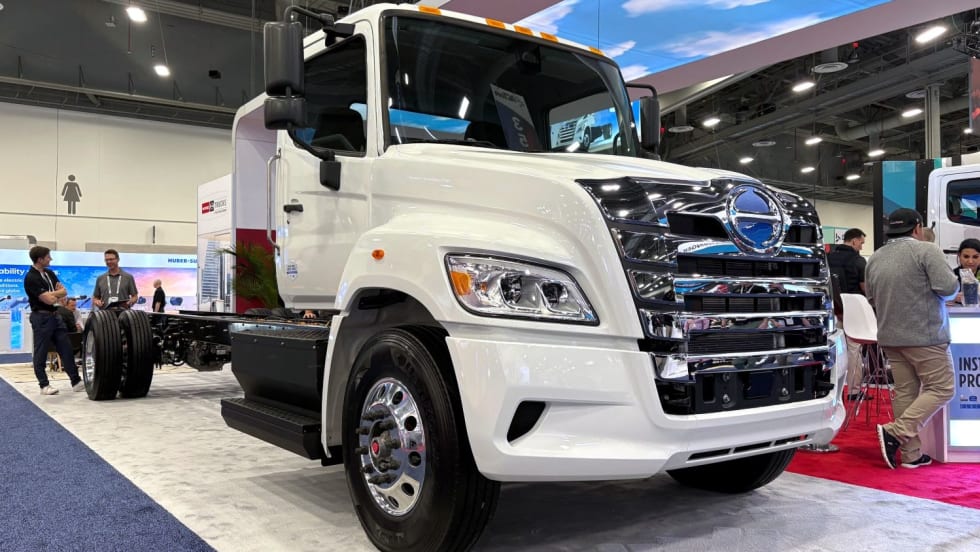
Hino Adds Electric Class 6/7 Truck
Hino says the Le Series is an important step in the company's efforts to reduce environmental impact and support its customers’ sustainability goals.
Read More →
ACT Expo 2026: Highlights in Photos
The 2026 Advanced Clean Transportation Expo featured a broad range of commercial vehicle technologies, from EVs to autonomous trucks to the latest diesel and alternative-fuel engines.
Read More →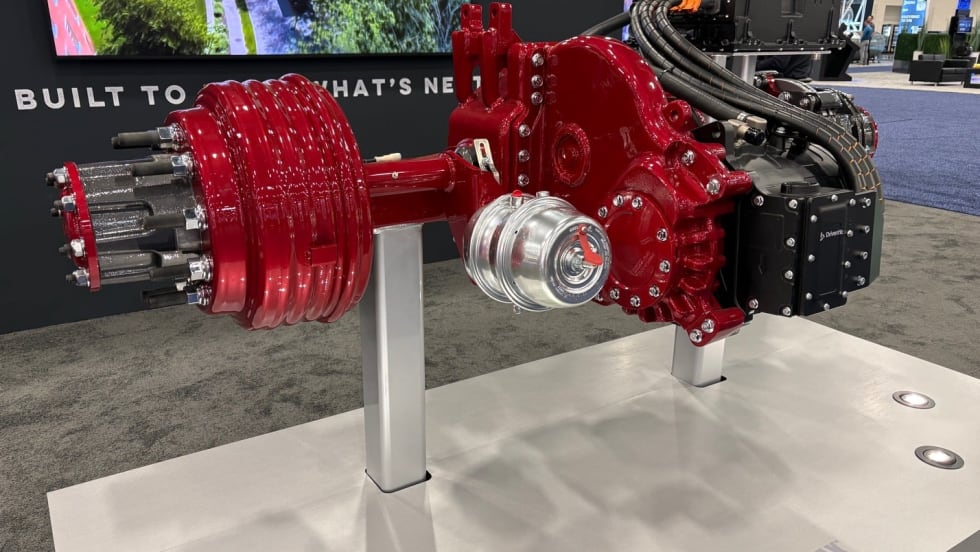
Hendrickson Debuts Electraax E-Axle for Medium-Duty Trucks
Developed with Driventic, Hendrickson's new integrated e-axle is designed to improve efficiency, reduce weight, and extend range in Class 6-7 EV applications.
Read More →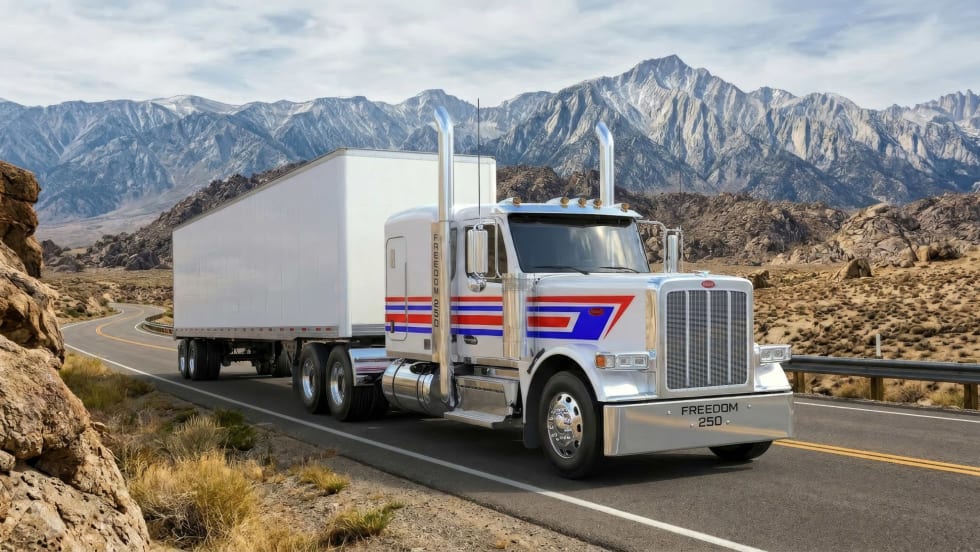
Peterbilt Unveils Freedom 250 Special Edition Model 589
Peterbilt’s just-announced limited-run patriotic Model 579 tractor celebrates America’s 250th birthday with custom styling and premium features.
Read More →
Mack Unveils EPA 2027-Compliant MP13 Engine With More Power, Better Fuel Economy
Along with unveiling its EPA 2027-compliant MP13 engine, Mack outlined powertrain changes across its Class 6-8 lineup, including new Cummins-based X10 engines.
Read More →
Kodiak and Roehl Transport Launch Autonomous Route Between Dallas and Houston
Kodiak AI and Roehl Transport have begun autonomous freight operations on a regular Dallas-Houston route, marking another step toward Kodiak’s planned driverless launch by the end of 2026.
Read More →