




Test Drive: Kenworth's New T700
The first impression on being presented with a line-up of trucks at the Paccar Tech Center is that Kenworth's new T700 - unlike its T2000 predecessor - is recognizably from the same stable as the highly popular T660
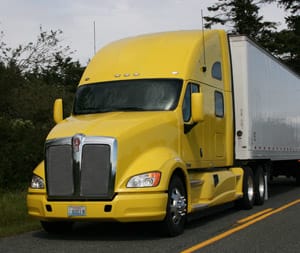
Kenworth's new T700 has a strong family resemblance to Kenworth's familiar T660. But subtle changes to the doors, the big roof cap and a stylish hood make the T700 new. (Photo by STF)
The first impression on being presented with a line-up of trucks at the Paccar Tech Center is that Kenworth's new T700 - unlike its T2000 predecessor - is recognizably from the same stable as the highly popular T660.
Fresh, sharp-edge styling and the design of the headlamps set in the fender give it a much crisper look that performs better in the wind-tunnel too, says Chief Engineer Preston Feight.
But the T700 is much more than a restyled wide-cab aero replacement for the T2000. There's more room inside with a full-height ceiling, a whole new dashboard with multiplexed engineering, and new comfort features.
It all adds up to a new truck.
The truck
The T700 is Kenworth's answer for customers who want the best aerodynamics with a full-width cab for maximum room for drivers who like space to move around and for teams that share the workplace. It is configured only as a high-roof 75-inch sleeper cab and thus is targeted at over-the-road fleets and owner-operators.
The T700 is designed to accommodate big-bore engines. That includes Paccar's own 12.9-liter MX, which the company anticipates will be high on customers' priority list. "Customers know about the quality of the Paccar brands (Kenworth and Peterbilt)," said Marketing Director Alan Treasure at the recent launch of the MX. "They asked if the same quality, reliability and durability will be delivered by the engine. Our answer is Yes. 'Then that's for me' they have responded," Treasure said.
So at the ride-and-drive, set up to experience over a day both the T700 and the MX along with other KW models and optional Cummins engines, was a big, yellow T700 powered by a 485-horsepower, 1,650-pounds-feet Paccar 12.9 engine. The peak horsepower rating is reached early at 1,575 rpm and then remains flat out to 1,900. Peak torque is available between 1,100 and around 1,525 rpm. So while the peaks may not be as high as some, the engine offers enormous flexibility, even down to 1,000 rpm where it is still making 1,500 pounds-feet.
The 2010 model-year engine combines exhaust gas recirculation combustion and selective catalytic reduction aftertreatment to comply with EPA's 2010 emissions regulations. It also makes the T700 a 2011 model-year truck. The diesel exhaust fluid tank and the combo diesel particulate filter and SCR chamber are neatly folded into the passenger step. A single horizontal exhaust was featured on this T700.
Backing up the Paccar MX engine was the latest in Eaton's automated mechanical transmissions, a 10-speed UltraShift Plus. This is a true two-pedal, automated clutch transmission. It replaced the previous centrifugal-clutch design, which had a number of limitations. The latest UltraShift addresses all of these and is comparable with the ZF-Meritor and Volvo I-Shift automateds. Drive was by Eaton axles: 3.70-to-one Dana Spicer DSP41 on a 40,000-pound AG400L suspension. This suspension is the somewhat funky-looking curved spring air-ride tandem that comes originally from the Peterbilt side of the house.
Complementing this up front was Kenworth's air-ride AG130 and a Bendix disc-braked Dana Spicer E-13221 steer axle, rated for 13,200 pounds. This rating is becoming an industry standard as the weight of the engines and aftertreatment spiral up. But it's worth noting that the MX is actually around 400 pounds lighter than the 15-liter Cummins ISX that is also available in the T700. (As an aside, the Cummins ISX 11.9 will be available around August this year at a comparable weight to the MX.)
The cab
The main cab structure has not changed significantly from the T2000 to the T700. The new model incorporates all the significant updates that over its 14-year life made the somewhat dubious early T2000 into a reliable and durable truck. Earlier issues with door sealing, for instance, are now a thing of the past, with a new second seal between door and frame.
The roof cap is all new, rising inside to 8 feet. This cap, said Feight, was turned over to the aerodynamicists, not the stylists. The main concern was the function of this major contributor to whole-truck aerodynamics. The hood, while it was profiled using computational fluid dynamics, has the definite influence of the stylists in its sharp side contours and minimal intrusion into the airflow by turn repeaters, lights and so on. It's worth noting that the three-piece design means less expensive accident repair.
The dash is new in the T700, replacing the dated instrumentation of the older truck. On this multiplexed dash, instruments can be positioned wherever a customer prefers. There are round dials with chrome bezels on the B panel and enough real estate to accommodate Kenworth's new NavPlus navigation and information system as it becomes available.
Inside, the dash is like other new Kenworths - modern, ergonomic and attractive. On the road, the differentiated switches in the center of the dash proved easy to identify without looking down at them. They were satisfyingly positive in the flip action as you'd expect in a Kenworth. Optional, though not on this truck, is a multiplexed steering wheel with switches for the engine brake and cruise control - an option I certainly like.
The big windshield carries over, giving the same splendid forward view. There's no sun visor; just a smooth transition into the roof cap with minimal intrusion by the LED clearance lamps.
The doors themselves are interesting. They are the same as the T2000 doors and frames, but a modification and addition of a small panel to the lower edge transforms the appearance of the low cab side, making it look very clean. Likely it will keep the top step cleaner, too.
In the sleeper
The tall interior means a driver can stand up straight out of the seat and walk back into the sleeper through the nearly 30-inch space between the seats.
There are some new trim designs that enhance the look and feel of the comfortable cab and sleeper. The Splendor interior and options on the evaluation T700 were quite luxurious, but you can step up a notch to the Diamond VIT and enjoy some wood grain accents as well. I liked the modern trim design, begun on the headliner in the cab and continued into the sleeper. But for the traditionalists, there's still the buttoned diamond pleat in the rich Kenworth tradition.
A neat new feature is the option of the top-filling fridge. This has a drawer that pulls out so the contents can be easily accessed, whether sitting in the passenger seat or on the bunk. There's a freezer in there too for a very practical and attractive upgrade. Above this is a flat-screen TV install kit, opening up the side surface and freeing up a cabinet.
The lower bunk lifts to access under-bunk storage. There's a pull-out desk and Xenon lighting for good nighttime illumination. The "cathedral" ceiling allows for a more open top bunk that you can actually sit up on. There's now storage on the back of cab for both upper and lower bunk. In all, Kenworth says, the more than 60 cubic feet of storage is an industry-leading figure.
On the road
There are no real grades in the area, though the pull up to Deception Pass and over across the strait to Whidby Island on the high, narrow bridges made the engine work. Putting the sound meter on this climb revealed that though the sound quality of the Paccar MX was different from the Cummins ISX I tried earlier, the numbers came out exactly the same: a maximum of 67 db(A) at full throttle at any point in the rev range. Once at cruise it dropped to 64-65 db(A). These numbers are outstanding. To give some context, during a downpour, the noise of the rain on the windshield was louder than the noise from the mechanicals.
I anticipated the MX being a shade quieter than the Cummins, but they were exactly the same. The air compressor, which is driven by the rear-mounted accessory drive on the MX, is close to the bulkhead and made its presence known i
More Equipment

Detroit Opens Orders for EPA 2027 Engines
Detroit isn’t starting from scratch to meet EPA 2027 diesel emissions standards. Its Gen 6 DD13 and DD15 engines keep much of today’s platform while updating the fuel and aftertreatment systems.
Read More →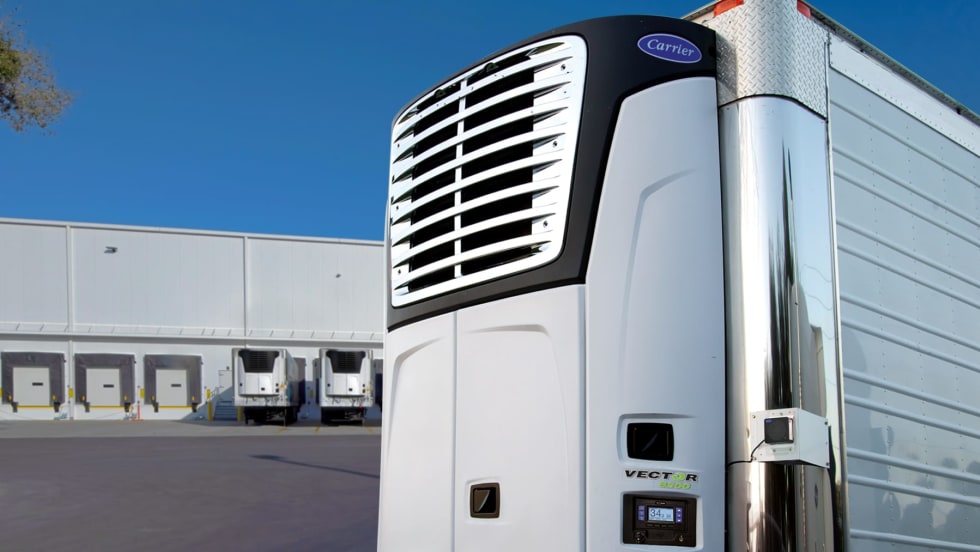
Carrier Transicold Adds All-Electric TRU for Stationary Cold Storage
Carrier Transicold’s new Vector 8200 all-electric transport refrigeration unit gives fleets a diesel-free option for temporary refrigerated and frozen trailer storage.
Read More →
A Closer Look at Kenworth’s Electric T880E Vocational Truck [Video]
Learn more about Kenworth's T880E battery-electric vocational truck at the Paccar Technical Center, including its range, applications, upfitting considerations, and PTO options, in this HDT Spotlight video.
Read More →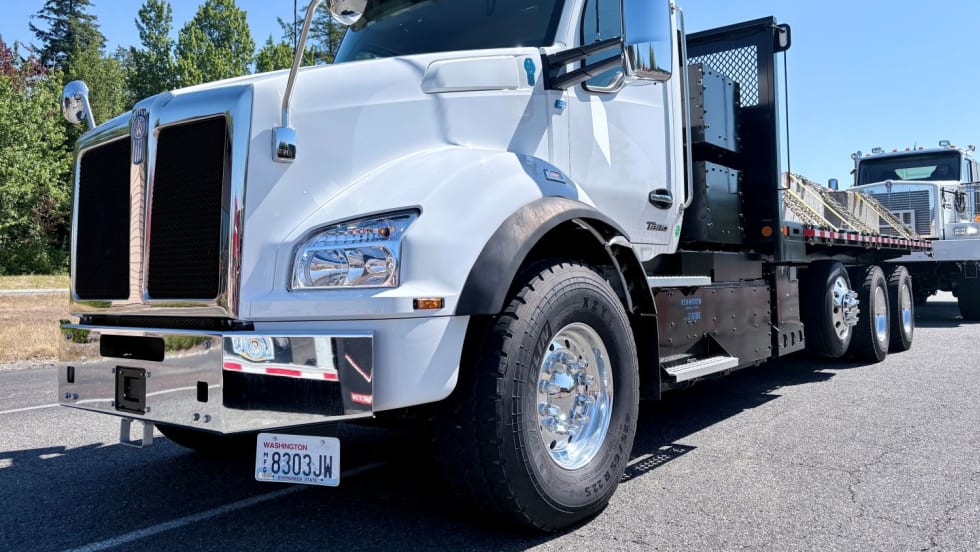
Kenworth T880E Brings EV Power to Vocational Trucks
A closer look at the Kenworth T880E’s range, charging, powertrain and upfit options — and where fleets are showing the most interest.
Read More →
What the U.S.-Canada Trade War Means for Trucking
Escalating U.S.-Canada tariffs could disrupt cross-border freight, reduce truck volumes, raise costs, and create new uncertainty for carriers on both sides of the border.
Read More →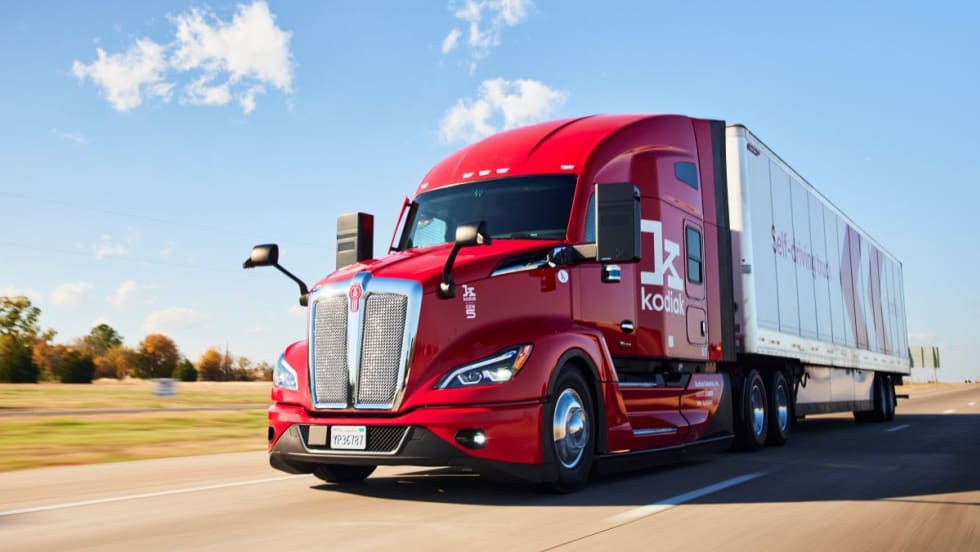
Autonomous Truck Testing Moves Ahead in California as Teamsters Challenge Rules
California has begun permitting heavy-duty autonomous truck testing, with Aurora and Kodiak among the first to receive approval, as the Teamsters sue the DMV over the new regulations.
Read More →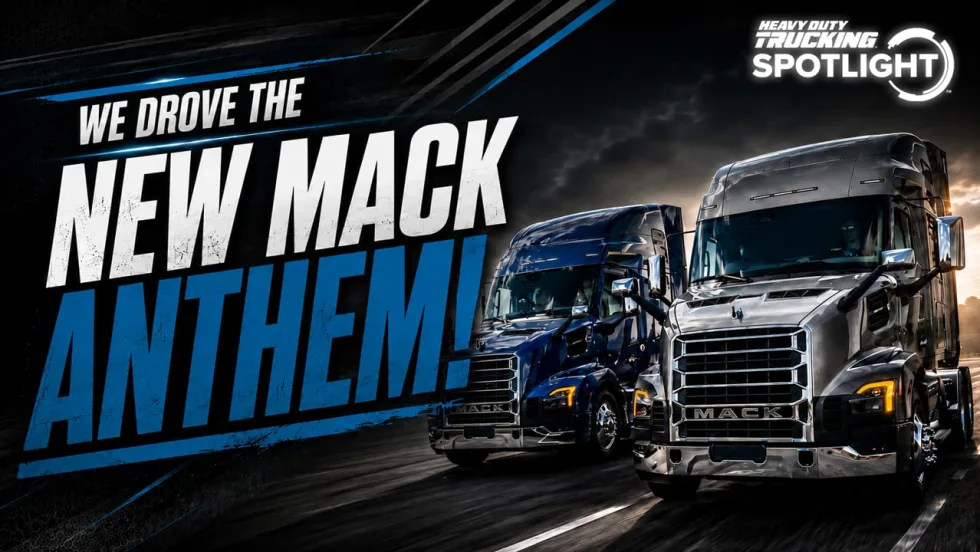
Behind the Wheel of the New Mack Anthem [Video]
HDT takes the new Mack Anthem around Mack’s Pennsylvania test track to see how its driver-focused design, technology, visibility and handling perform from behind the wheel.
Read More →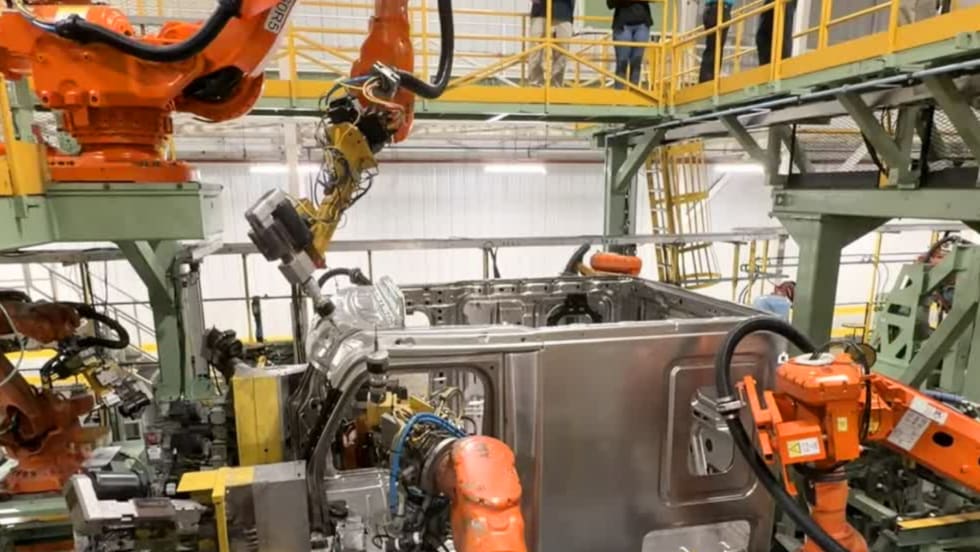
DTNA Plans New U.S. Truck Plant as Manufacturing Footprint Shifts
Daimler Truck North America is evaluating sites for a new assembly plant expected to open in 2029 while winding down operations at its longtime Portland manufacturing facility.
Read More →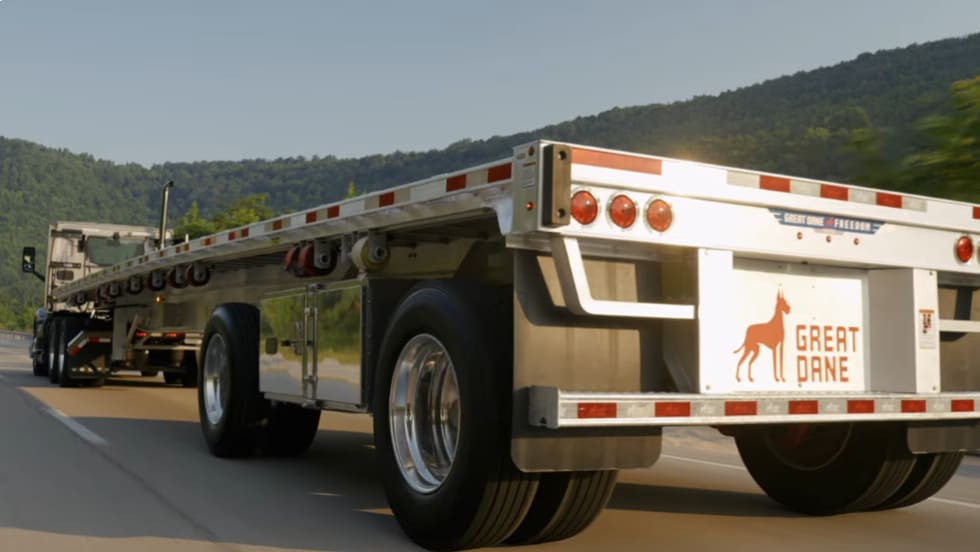
Great Dane Flatbed Trailer Offers Light Weight and Strength
Freedom Ultra is designed for a wide range of open-deck applications, including building materials, lumber, machinery, steel products, industrial freight, and coil hauling.
Read More →
What It's Like Inside this Custom 2025 Peterbilt 589?
Take a driver's-eye tour of this customized 2025 Peterbilt 589 in this video, as longtime driver Ingrid Brown explains its features, compares it to previous models, and shares plenty of personality along the way.
Read More →