




Class 8 Update: In the Trenches
If it weren't for what's being nicknamed "The Great Recession," news in the Class 8 truck business would be all about engines


If it weren't for what's being nicknamed "The Great Recession," news in the Class 8 truck business would be all about engines.
American truck and engine builders have spent tremendous amounts of time, effort and money preparing to meet the next round of federal diesel-emissions limits, scheduled for this January (see cover story). Builders are hoping a recovered economy will push customers to buy the new products so investments can be recouped soon. That may or may not happen. For all the attention they've gotten, the new engines will be expensive, and like it or not, most customers will avoid them as long as possible.
Sales of Class 8 trucks have been dropping since 2007 and are still sour, as they are for almost all types of trucks and automobiles. But builders hope a recovery begins later this year, as some economists predict. It will be too late to save two complete lines of trucks - all of Sterling's heavy and medium-duty models, along with the Daimler-owned company itself, and the mostly midrange Chevrolets and GMCs from General Motors - killed off this year by the economy and slow sales.
Falling fuel prices gave breathing room to many truckers, but most didn't use that extra cash to buy new trucks. Freight movements are still slow, and trucks already out there are not being used as heavily and so are not wearing out as fast as usual.
Now fuel prices are following crude-oil prices back up the charts, just as we all knew they would. That means fuel economy will affect buying and spec'ing decisions when fleets do return to the market.
North American truck and component makers hope customers will have to replenish worn-out vehicles soon. Some probably will, but the resumption in volume purchasing will probably be more measured. A few major fleets have avoided going on a pre-buying spree leading up to 2010. Yet some users are stocking up on trucks with Caterpillar or Cummins power that they know won't be available from their usual builders after January.
Original equipment manufacturers are reluctant to talk about current sales conditions. Even those with European ties are hurting, since the worldwide recession stalled economies and truck-buying there and in Asia. But most builders appear to have prepared better for this downturn than previous ones. They scheduled production cutbacks and layoffs and generally tightened staffing, and should emerge from this dark period healthier than before.
Used trucks have fallen steadily in value as demand has dropped off. Some used trucks are still exported to eastern Europe and Russia, where buyers favor American-style tractors with long hoods and big sleepers. But exports have declined. Some once-incredible prices on good used equipment are now available, and while it's not correct to say that "no one's buying anything," not enough are. Does a reawakening economy, boosted by federal stimulus money, and with it revived truck sales, lie on the near horizon? Time will tell.
Military Business Saves the Day
Meanwhile, some builders are benefiting from business with the U.S. military, which uses hundreds of thousands of trucks to support shooting wars and to sustain armed forces around the globe. Really rough duty and high-mileage convoying in Iraq and Afghanistan are destroying and wearing out "tactical wheeled vehicles" and civilian-based cargo trucks at a rate many times higher than in peacetime, military brass have said.
The enemy's use of roadside bombs - the dreaded improvised explosive devices, or IEDs - have bred a new type of armored truck: mine-resistant, ambush-protected, or MRAP.
MRAPs are heavy Class 7 or Class 8 trucks that use bulky armor plating and V-shaped hulls that deflect explosive blasts and shrapnel, saving the troops riding inside. MRAPs use commercial powertrains, including diesels, automatic transmissions, and high-capacity suspensions and axles. But they are otherwise purpose-built machines with beefy wheels and run-flat tires that, along with their fortress-like bodies, bear little resemblance to anything on the roads back home.
MRAPs from Navistar
Navistar Defense, however, built MRAP trucks using a 7000 series vocational chassis. Its nose has the familiar International orange diamond logo and streamlined grille, though the latter is drably painted to match camouflage coloring on the rest of the truck. Navistar calls it the MaxxPro, for maximum protection, and built more than 6,000, mostly for the U.S. Marine Corps and Navy. It has a crew of two and can carry a dozen troops and their gear.
As production ramped up in summer of 2007, technicians from several International Truck dealer locations in the South went to a plant at West Point, Miss., where special armor and other parts were installed on chassis made at Navistar's factory in Garland, Texas. The techs were all volunteers, and 20 to 30 at any one time worked on the line alongside regular employees. They helped install some of the more technical equipment in the complex vehicles, said Tom Waters, principal of Waters International in nearby Columbus, and Dick Sweebe, president and CEO of Diamond Companies in Memphis, Tenn., another manpower contributor.
Navistar Defense supplies several types of civilian-based trucks to foreign governments, and is bidding on several government contracts covering replacement for existing military vehicles. One is for Humvee-type 4x4 utility trucks, built since the mid-1980s by AM General using General Motors diesels and Hydra-matic transmissions. Another is for the Family of Medium Tactical Vehicles, a large group of 4x4 and 6x6 cargo and support trucks now made by a division of BAE Systems (formerly Stewart & Stevenson). The cab-over-engine FMTVs use cabs from Styer of Austria with Caterpillar-Allison powertrains and Meritor axles and transfer cases. Some of those components could change if Navistar or someone else gets any of the new contracts.
Army's 'Linehaul'
Since the late 1980s, Freightliner has been building a series of highway and on/off-road tractors and trucks for the U.S. Army. Some were glider kits that reused engines from older trucks in the Army's inventory. All are based on the FLD-SD, the builder's severe-duty vehicle, and use Detroit Series 60 engines, Allison automatic transmissions and Meritor axles, among other commercial components. The majority are M-915-series 6x4 tractors that are used by active, reserve and National Guard units around the world. The Army calls them "linehaul" tractors, though they don't have sleepers. The others include 6x6 dump trucks and lowboy tractors used by Army Engineers.
When roadside bombs became the major single cause of American casualties in the Iraq war, "up-armoring" of vehicles became an intense effort. The Army requested Freightliner engineers to harden the M-915A3, then the latest in the linehaul series, against explosive blasts, as well as to accommodate increased electrical-power demands and the soldiers' combat and personal gear. The result is the new M-915A5, now with a wider Western Star cab with a short sleeper compartment for extra storage.
The Freightliner M-915A5's floor and firewall have armor plating, and a "B kit" includes more extensive armor covering. Armor is heavy, so suspensions are beefier and the Detroit Series 60 is rated at 500 horsepower and 1,650 pounds-feet, up from the A3 S60's 430 and 1,450, to maintain good performance. The engine spins a 450-amp alternator to support power-hungry communications gear, but electricity is nonetheless conserved by LED lights, including four LED headlamps like those Truck-Lite just introduced to the civilian market. The A5 tractor will enter production later this year, the builder says.
More Military
Mack Trucks is building 152 Vision Elite Axle-Back tractors under an Army contract for use by security contractors and government agencies in Iraq and Afghanistan. Except for their dull,
More Equipment

Tesla Wants a Self-Driving Semi. Are Cameras Enough?
Could Tesla’s camera-only autonomous driving technology work on an 80,000-pound Semi? In this commentary, HDT's Deborah Lockridge takes a look at Tesla, Cybercab, and how autonomous trucks see the road.
Read More →
Kodiak: Driverless Long-Haul Truck Launch on Track for 2026
Kodiak AI says its driverless long-haul safety case is 93% complete and it remains on track to begin commercial operations by year-end 2026.
Read More →
What DOT’s Automated Vehicle Strategy Means for Trucking
The U.S. Department of Transportation issued a new automated-vehicle strategy that outlines plans for driverless-truck regulations, cross-state freight corridors, and federal safety standards.
Read More →
East Coast Port Launches $45M Electric Truck Push
The Port Authority of New York and New Jersey announced millions in incentives for zero-emission drayage trucks, yard tractors, and new charging hubs near the port.
Read More →
PlusAI Going Public to Fund Autonomous Truck Launch
A SPAC deal could provide PlusAI with up to $300 million as it works toward a 2027 commercial launch of factory-built autonomous trucks.
Read More →
NHTSA Moves to Rewrite Truck Fuel-Economy Rules
The National Highway Traffic Safety Administration says it lacks authority to regulate medium- and heavy-duty truck engines separately from complete vehicles, but the existing standards have not yet been eliminated.
Read More →
Detroit Opens Orders for EPA 2027 Engines
Detroit isn’t starting from scratch to meet EPA 2027 diesel emissions standards. Its Gen 6 DD13 and DD15 engines keep much of today’s platform while updating the fuel and aftertreatment systems.
Read More →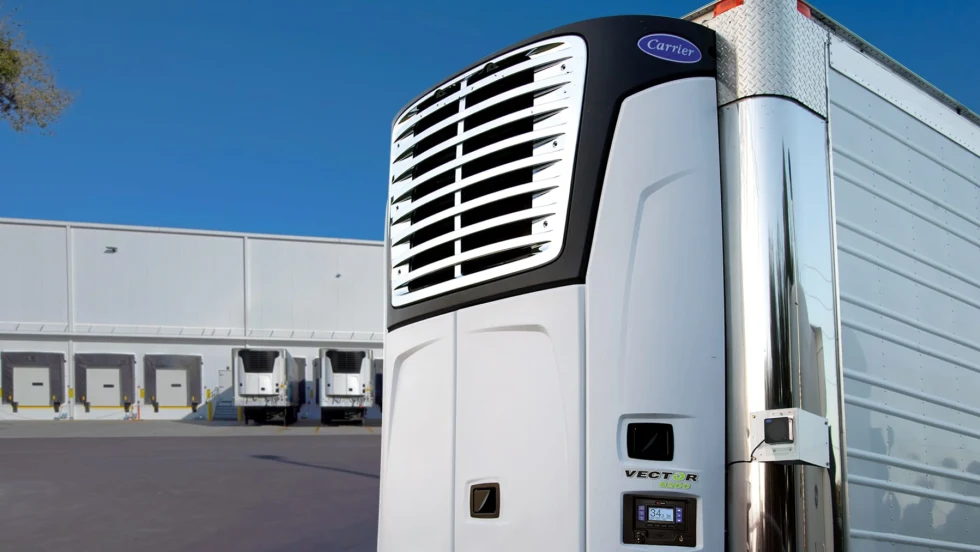
Carrier Transicold Adds All-Electric TRU for Stationary Cold Storage
Carrier Transicold’s new Vector 8200 all-electric transport refrigeration unit gives fleets a diesel-free option for temporary refrigerated and frozen trailer storage.
Read More →
A Closer Look at Kenworth’s Electric T880E Vocational Truck [Video]
Learn more about Kenworth's T880E battery-electric vocational truck at the Paccar Technical Center, including its range, applications, upfitting considerations, and PTO options, in this HDT Spotlight video.
Read More →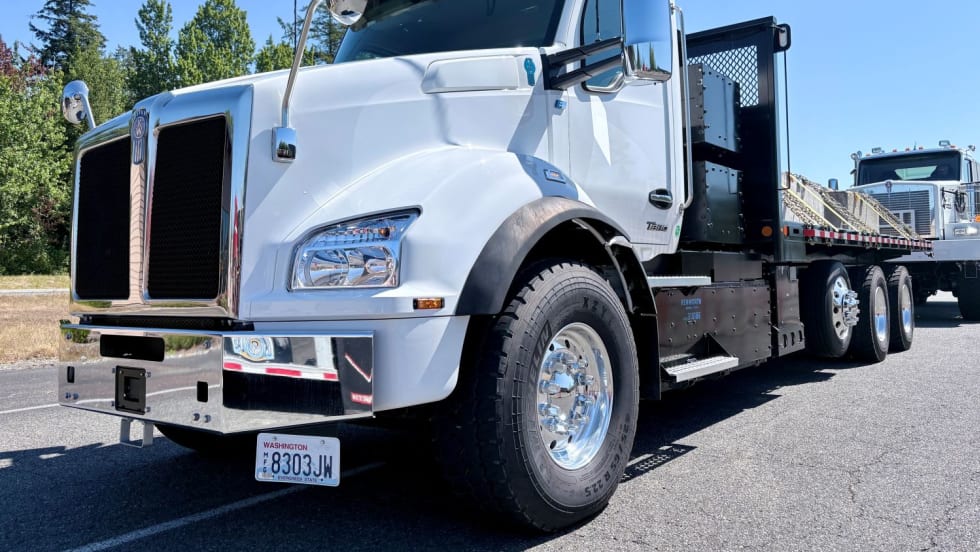
Kenworth T880E Brings EV Power to Vocational Trucks
A closer look at the Kenworth T880E’s range, charging, powertrain and upfit options — and where fleets are showing the most interest.
Read More →