




Running Lean: Lightweight specs no longer just for payload
Weight, and what we're willing to pay to shed pounds, is relative. Tare isn't quite as critical to a typical truckload carrier as it is to a bulk or beverage hauler

Weight, and what we're willing to pay to shed pounds, is relative. Tare isn't quite as critical to a typical truckload carrier as it is to a bulk or beverage hauler,
but fuel costs are forcing even the modestly weight-sensitive over-the-road crowd to re-examine their specs.
Federal Highway Administration estimates suggest the average over-the road truck grosses slightly less than 70,000 pounds. That's not universal, of course, and even with lighter payloads, axle weight can still be a concern - though maybe not the biggest concern anymore.
"Historically, fuel savings derived from expensive weight reduction strategies were insignificant," explains Mark Wagner, vice president and general manager of ConMet. "Most of the attention focused on chassis weight reduction for capacity gains." But with the price of diesel near $5 a gallon, that's changing.
In its Recommended Practice 1112, the Technology and Maintenance Council of the American Trucking Associations offers a "fuel improvement factor" of 0.0375 mpg per 1,000 pounds for trucks in the 60,000- to 80,000-GVW range. The factor is used in calculating overall weight-related cost savings potential with fuel cost, mileage, and time as variables (see page 92).
"At 40 to 90 cents per year per pound of weight saved in fuel costs with $5-a-gallon diesel, and with savings increasing with mileage, the high-milers can really save," Wagner notes.
To the highly weight-sensitive bulk crowd, pounds saved means dollars in the bank, plain and simple. But they, too, can save on the backhaul. Normally running empty half the time, tank and dump operators gain a fuel cost advantage too. Lighter tare means less cost moving the truck over those non-revenue-producing deadhead miles.
But there's a growing concern about the EPA-inspired weight gains we've experienced since October 2002. As the sidebar on the next page, "Trucking's 800-Pound Gorilla," explains, adding all that emissions-related hardware to the chassis is cutting steer axles out of the payload-bearing picture. With EPA 2010 fast approaching, chassis weight will become even more of an issue.
What Gets Cut
It's remarkable what you can accomplish when you put your mind to it. Coover Trucking in Erie, Kan., hauls cement in bulk tanks. Owner Dave Coover is very sensitive about weight; to him, whacking 1,000 pounds from the truck means a net revenue gain of a nickel a mile. Five years ago, he was happy with a 26-ton payload, but working with his suppliers, and trimming everywhere it made sense to trim, he has increased his carrying capacity to 27.5 tons.
His Peterbilt Model 365 tractors, with 120 gallons of fuel and a pneumatic unloading pump on board, tip the scales at just 16,300 pounds. The basic spec includes a 410-horsepower Cummins ISM, a Fuller 10-speed transmission, 370:1 rears, Dana axles with Peterbilt Low Air leaf suspension, 22.5-inch wheels with low-profile tires, a single 120-gallon fuel tank, a fixed fifth wheel, Centrifuse brake drums, and a 36-inch flat-top sleeper. The door weight stamped on the trucks is between 14,400 and 14,500 pounds, Coover says.
"The Model 365 is typically spec'd as a concrete mixer in super-heavy-duty configuration," he notes. "I was real surprised that they were game to spec one as a small-sleepered road truck. These trucks came in 1,200 pounds lighter than their regular set-forward-axle conventional."
He gave up nothing in terms of strength and durability, and the cost was very competitive. He got the trucks on a Paccar full-service lease for less than he'd pay an owner-operator - and PacLease takes responsibility for maintenance and warranty issues as well as residual values. One wouldn't expect PacLease to spec and put into service a truck they didn't expect to make money on.
Working with the leasing experts at The Larson Group, the Peterbilt-PacLease franchise in Springfield, Kan., Coover selected the lighter weight components he needed while the engineering team did the engineering calculations.
"I can't imagine how many times PacLease must have run and rerun these numbers. A few of the sales guys told me they couldn't build a truck this light, but they did," says Coover. "Since Paccar is on the hook over the life of the lease for the stability of the trucks, they must be thinking it's still robust enough for them to recoup the risk and make a profit. That was good enough for me."
There are a bunch of obvious alternatives right off the top when spec'ing light. If you don't need big-block torque and horsepower, go to a medium-range engine, an 11- or 12-liter engine instead of a 14- or 15-liter model. A 9- or 10-speed transmission will weigh less than a 13- or 18-speed, and the lower engine torque will allow for a lighter-spec driveline, and lightweight brake drums can save 120 pounds on a three-axle tractor. Under-hood air cleaners are lighter - and more aerodynamic - than dual cowl-mounted breathers, and aluminum can make a difference in many instances.
Switching to aluminum components is a good strategy, if cost and weight savings are calculated carefully, says Kenworth's on-highway marketing planning manager, Andy Zehnder.
"The cost benefit analysis of an aluminum frame, for example, just doesn't pay out anymore," he says. "But it works for crossmembers. We use a five-piece crossmember with aluminum gussets to minimize weight while maintaining strength. They will save you close to 10 pounds each and the cost/benefit holds."
An aluminum frame might be 100 pounds lighter over 240 inches, but the cost increase over steel would be nearly prohibitive today. Other popular aluminum alternatives that still work include wheels (268 pounds) and air tanks (40 pounds).
Cost/Benefit Analysis
One of the easiest cost-per-pound weight savings to justify comes from wide-base single tires. According to Michelin, fleets can save 740 pounds when spec'ing its X One tires on aluminum wheels over a comparable dual-tire spec. And the wide-base singles have been proven to reduce rolling resistance, thereby providing quantifiable fuel savings. No brainer, right? Not always.
Interestingly, Coover Trucking decided against using wide-base single tires despite the significant weight and fuel savings. In his world, on-time deliveries are everything.
"We looked at them very seriously, but in the end, our biggest concern was the delivery schedules. We're on a schedules with a 15-minute window. The loads are all timed, so we can't afford to be late and risk shutting down a job," Coover told us. "One blow-out and we've messed that guy's day right up. On dual tires, a driver could most likely limp in to make the delivery, but with the wide-base singles, when one goes down, the truck goes down."
Coover avoids retreaded tires for the same reason. "All the tire problems we've ever had were related to treads peeling," he says. "Sure, we could work harder at managing tire pressure, but there's a cost to that, too."
Keith Herrington, Freightliner's product marketing manager for the on-highway market, told us spec'ing for lighter weight used to be a big topic back in 2000/2001, but it's drifted off the radar screen in recent years. Linehaul trucks don't run at max GVW that often, so those truck owners really haven't embraced lightweight specs in a big way, he says, adding it's a different world for the bulk and the beverage haulers.
"In that world, every pound they can take off is another pound of product that can load. In the linehaul truckload world, the concern is more life-cycle cost and durability," Herrington says. "EPA is pushing their SmartWay concept. Their brochures say if you can take 2,000 pounds off a Class 8 truck you can save a certain amount of fuel. While it sounds good in theory, with the amount of influence weight has, you can accomplish the same thing in other ways. Drivers remain the number one influence on fuel economy; next is the most
More Equipment
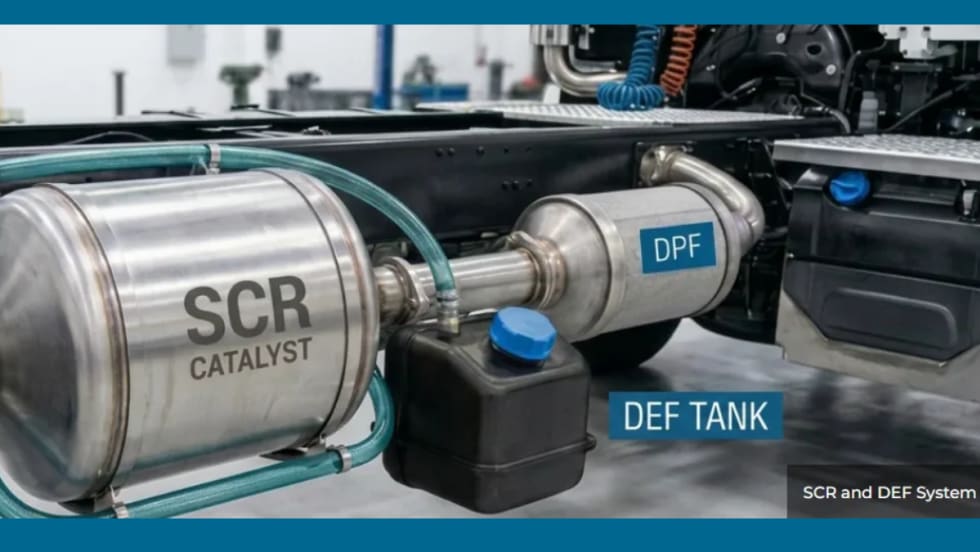
Engine Technology Forum Launches SCR, DEF Resource Center Amid Emissions Debate
The Engine Technology Forum’s new online hub aims to provide fleets, policymakers, and equipment owners with fact-based information about selective catalytic reduction technology, diesel exhaust fluid and emissions compliance.
Read More →
Prime Inc. to Open $7.9M Flagship Used-Truck Dealership
A new driver-focused facility to sell Prime Inc's used trucks and trailers will be the first purpose-built location in the company's history.
Read More →
Lessons Learned About Alternative Fuels: Start Small, Stay Flexible
Practical advice on adopting alternative fuels and ZEVs from HDT's 2026 Top Green Fleets, from renewable diesel and natural gas to electric trucks.
Read More →
Kenworth Names Peter Ahrens General Manager
Leadership changes at Kenworth take effect July 1 as the OEM promotes two longtime Paccar executives to key management roles.
Read More →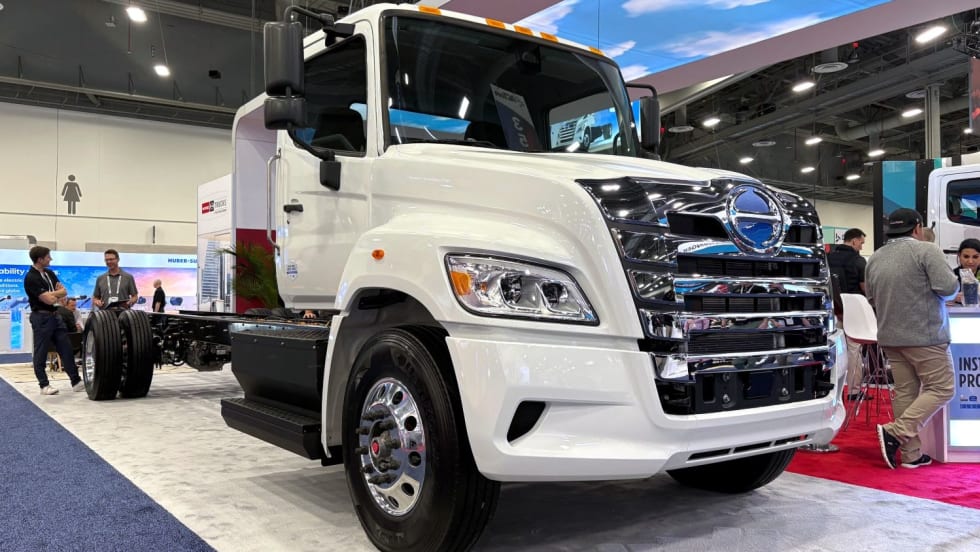
Hino Adds Electric Class 6/7 Truck
Hino says the Le Series is an important step in the company's efforts to reduce environmental impact and support its customers’ sustainability goals.
Read More →
ACT Expo 2026: Highlights in Photos
The 2026 Advanced Clean Transportation Expo featured a broad range of commercial vehicle technologies, from EVs to autonomous trucks to the latest diesel and alternative-fuel engines.
Read More →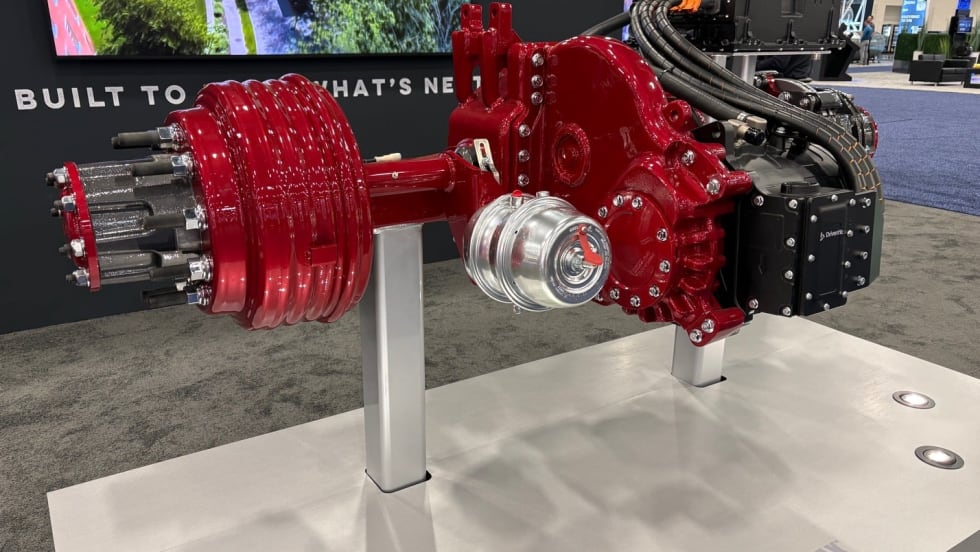
Hendrickson Debuts Electraax E-Axle for Medium-Duty Trucks
Developed with Driventic, Hendrickson's new integrated e-axle is designed to improve efficiency, reduce weight, and extend range in Class 6-7 EV applications.
Read More →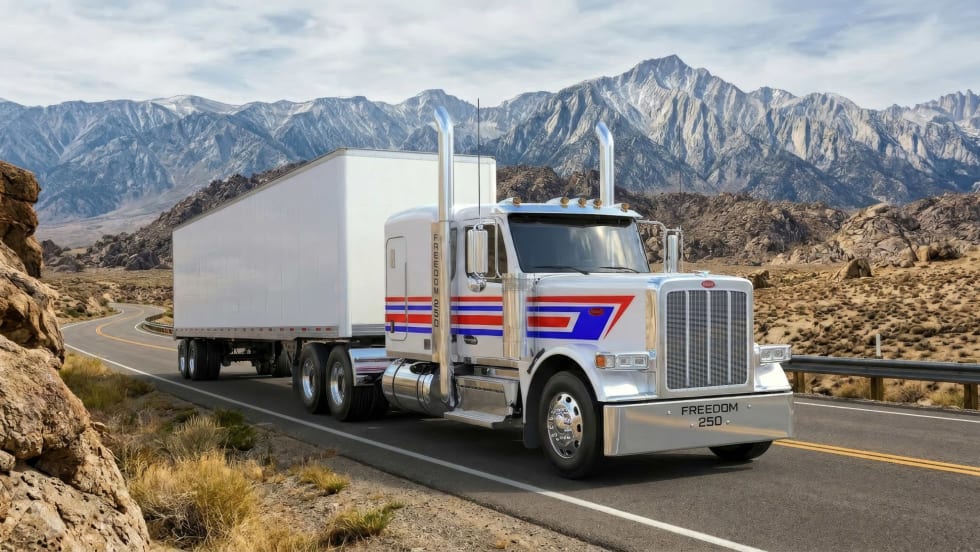
Peterbilt Unveils Freedom 250 Special Edition Model 589
Peterbilt’s just-announced limited-run patriotic Model 579 tractor celebrates America’s 250th birthday with custom styling and premium features.
Read More →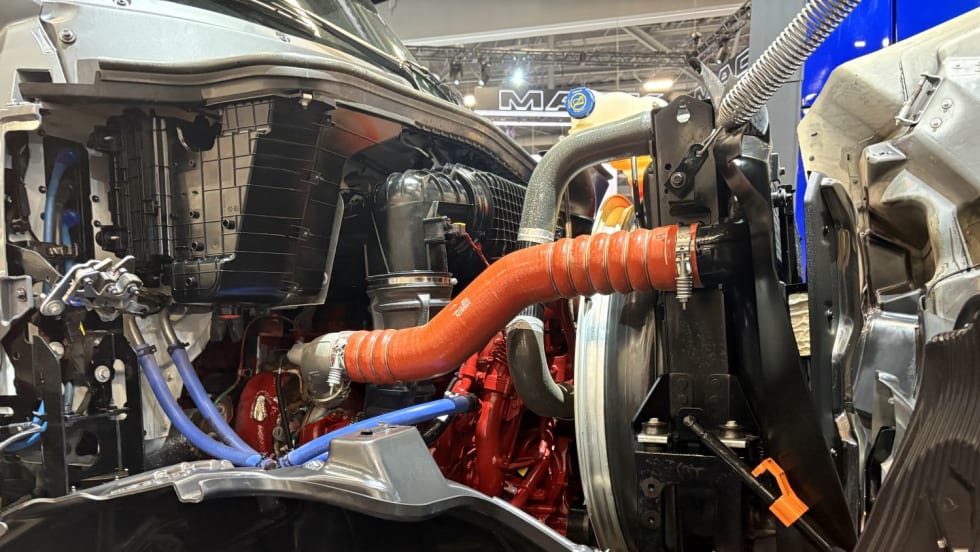
Mack Unveils EPA 2027-Compliant MP13 Engine With More Power, Better Fuel Economy
Along with unveiling its EPA 2027-compliant MP13 engine, Mack outlined powertrain changes across its Class 6-8 lineup, including new Cummins-based X10 engines.
Read More →
Kodiak and Roehl Transport Launch Autonomous Route Between Dallas and Houston
Kodiak AI and Roehl Transport have begun autonomous freight operations on a regular Dallas-Houston route, marking another step toward Kodiak’s planned driverless launch by the end of 2026.
Read More →