




Related: Why Tesla Matters
Report: Autonomous Vehicles Could Save Trucking $300 Billion in Labor Costs
A report by a Wall Street analyst firm says the potential savings from autonomous technology are huge, but notes that new costs will be created as it takes hold in trucking.
by Staff
November 21, 2017
Autonomous technology could offer trucking net savings between $100 billion and $125 billion, according to a report by Wall Street analysts. Photo: Jack Roberts
3 min to read
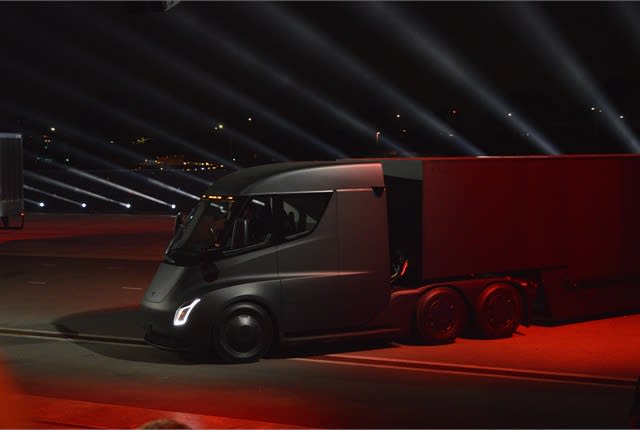
Autonomous technology could offer trucking net savings between $100 billion and $125 billion, according to a report by Wall Street analysts. Photo: Jack Roberts
The trucking industry could save hundreds of billions of dollars in labor costs annually if it continues to embrace self-driving technology.
That’s according to a Wall Street analyst firm, as reported in Business Insiderearlier this week.
According to the Bernstein analyst group:
Full automation of the trucking industry could save $300 billion in labor costs, according to Bernstein analysts.
The net savings are likely to be between $100 billion and $125 billion because the costs of using self-driving trucks would offset some of the savings from wages.
"At face value, full automation of the $719B trucking market results in ~$300B in potential labor savings," a team of Bernstein analysts, including David Vernon said, according to Business Insider. "This benefit is expected to grow due to structural challenges in the labor market," including a rise in trucking rates after 2000 partly caused by labor shortages and regulatory changes.
The report noted the then-pending launch of Tesla’s new, all-electric truck, which will come standard with autonomous vehicle technology including platooning capabilities. Additionally, the analysts pointed to recent reports that autonomous technology company Embark is already operating autonomous trucks between Texas and California — though with a human rider. Mercedes-Benz first put a self-driving big-rig on a public road in 2015, and Uber started its efforts in the space a year later.
According to Bernstein analysts, nearly half of the trucking industry's costs — 43% — go toward labor. Fuel is the second-largest cost, at 21%.
"The gains from automating heavy truck activity have far-reaching implications across the broader transportation landscape," Vernon said. "Companies in our coverage that will benefit from this include UPS (high-cost union truck labor in line haul and feeder operations), FedEx (truck-intensive ground network), J.B. Hunt Transportation Services (across services)."
However the analysts noted, cost savings from operating without drivers would most likely be put back into what it takes to replace them. That means the net savings for the industry are likely to be between $100 billion and $125 billion, Vernon said.
"While the savings potential is large, new costs will be created out of automation (IT maintenance fees, more working hours dedicated to truck maintenance, higher taxes to fund the highway cost infrastructure) that will offset some of the potential cost benefits," Vernon said.
Vernon added that the lower costs might not necessarily pass through in the form of lower trucking rates. That's because the biggest beneficiary of cost savings would be better-capitalized firms with the resources to dive into the new technology. Smaller firms, which have a marginal influence on market rates, may be left with higher costs that they'd pass on to their clients.
In all, the effect of the savings may still be too far in the future for investors to take advantage of right now, Vernon said. Partially automated platoons of trucks closely following each other could be rolled out over the next five to seven years. But full implementation of technological changes that would save companies the big bucks could take up to 20 years, he said.
More Drivers

From One Generation to the Next: How Mentorship Builds Safer Truck Drivers
After three decades in trucking, Harold Perry shares what he's learned about driver safety, mentorship, and helping the next generation build confidence behind the wheel.
Read More →
Truck Drivers Need More Than Another Alert
Fleets have more visibility into truck health, safety events, and driver activity than ever. The next challenge is turning all that information into useful guidance for the person who has to decide what to do next.
Read More →
FMCSA Removes 110 Truck Driver Training Schools from Certified ELDT List
Federal regulators also are targeting more than 160 additional training providers and launching a nationwide audit of third-party CDL skills testers as part of a broader crackdown on trucking fraud.
Read More →
Hours of Service Pilot Programs: FMCSA Readies for 2027 Rollout
Two pilot programs could eventually reshape hours-of-service rules, giving truck drivers options to pause their 14-hour clock or use longer split sleeper rest periods.
Read More →
Medical Cards, English Proficiency Reshape Roadcheck Violations
Medical-card violations jumped to the top of the driver out-of-service list during CVSA’s 2026 International Roadcheck, while English-language proficiency violations appeared among the leading violations for the first time.
Read More →
Driver Trust Can Make or Break the Success of Fleet Safety Technology
New Teletrac Navman research suggests that onboarding, transparency about driver data, and positive feedback can play a significant role in how commercial drivers respond to safety and coaching technology.
Read More →
EEOC Sues KLLM Over Alleged Sex Discrimination in Driver Training
KLLM is facing a federal sex-discrimination lawsuit over policies the EEOC alleges put female truck driver trainees at a disadvantage.
Read More →
FMCSA Moves to Codify English Language Requirements for Commercial Drivers
By changing regulations on English-language proficiency requirements for commercial drivers, rather than relying on a guidance memo, the FMCSA said future administrations won't be able to walk back the Trump administration's stricter enforcement with just a memo.
Read More →
Drivers Put Western Star Trucks to the Test at Star Nation Experience
Watch to get an inside look at the Western Star trucks, technology, and community behind the Star Nation Experience 2026!
Read More →
Trump Administration Looks to Put More Veterans Behind the Wheel
The Freedom Haulers program pulls together existing and expanded programs at several federal agencies to recruit veterans to drive commercial heavy-duty trucks and cut the red tape for them to get a CDL, training, and employment.
Read More →